The Greek dishes worth ordering are souvlaki, moussaka, horiatiki salad, tiropita, gemista, grilled octopus, saganaki, Cretan dakos, Santorini fava and loukoumades. Most cost €3 to €18 in a local taverna or grill shop as of 2026. Here is each one, with where it is best and what to look for on the menu.
1. Souvlaki and Gyros
Souvlaki is pork on a skewer, usually wrapped in pita with tomato, onion and tzatziki, while gyros is meat shaved from a rotating spit. In Athens a wrap from a grill shop costs approximately €3 to €4, rising to €5 or more near the Acropolis. Our Greek street food guide settles the souvlaki versus gyros question.
Where: Monastiraki, where Athens grill shops have operated for decades. See our Athens restaurants guide.
Local tip: Order a portion of skewers at a table with bread and tzatziki for around €12 to €16 if you want something more than a wrap.
2. Moussaka
Layers of aubergine, spiced mince and potato topped with a thick béchamel, baked until golden. It is heavy, so locals eat it at lunch, and a taverna portion costs approximately €10 to €14.
Where: Family tavernas in Athens and Thessaloniki. Read our Thessaloniki restaurants guide for northern versions.
Local tip: Choose a place where it is served in a dish from the oven rather than reheated from a tray in the window.
3. Horiatiki (Greek Salad)
The real Greek salad has tomato, cucumber, onion, olives and a slab of feta, dressed with olive oil and oregano, with no lettuce. In summer it is the best-value lunch in Greece because the tomatoes are at their peak.
Where: Anywhere on the islands, especially at a beach taverna. See our Greek food guide for the full list of staples.
Local tip: Ask for extra bread to mop up the oil and juices at the bottom of the plate, which is the point of the dish.
4. Tiropita and Spanakopita
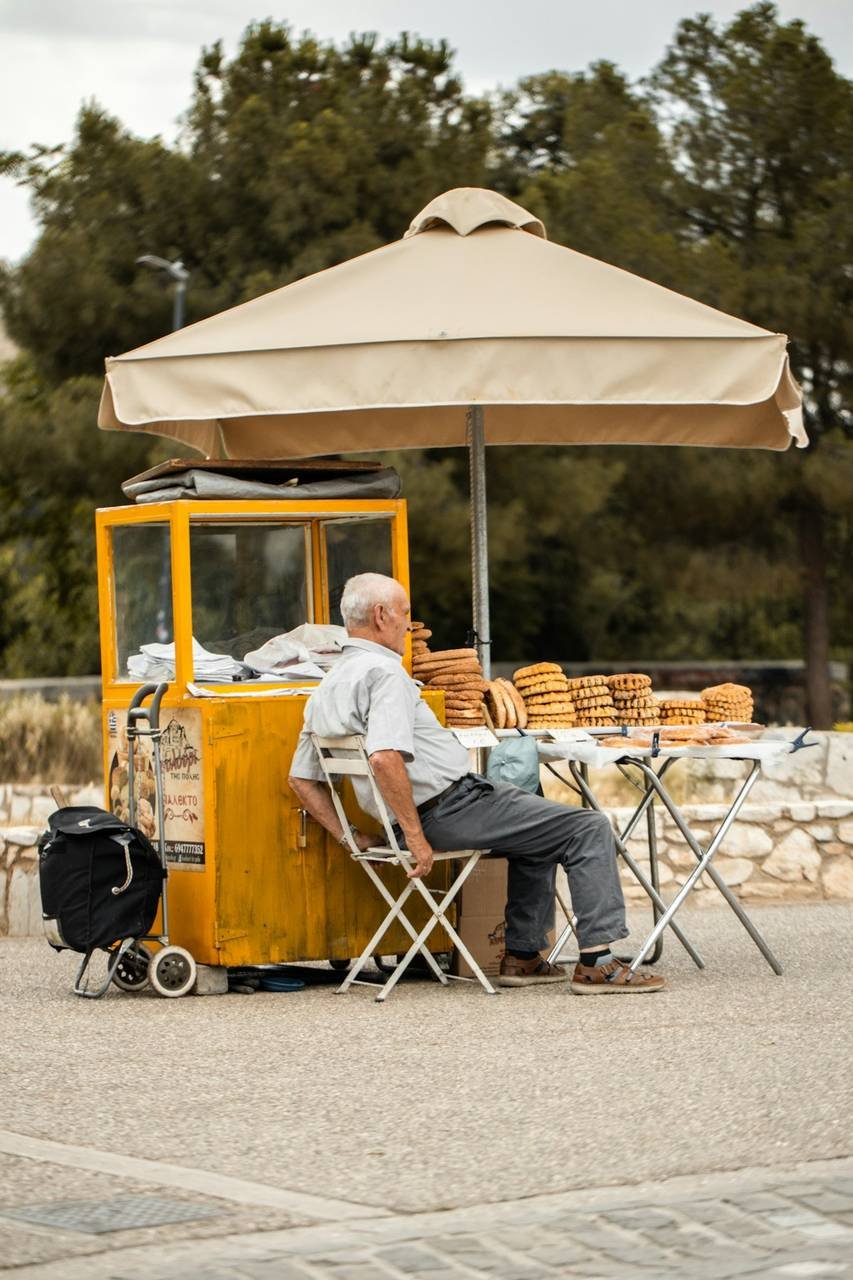
Cheese or spinach-and-feta pies in flaky filo, sold from bakeries across the country. A slice costs approximately €1.50 to €3, and a slice with a Greek coffee makes a breakfast for about €3 to €4. You will see koulouri, the sesame bread rings, sold from street carts for well under a euro.
Where: Neighbourhood bakeries in Athens, and every island port.
Local tip: Buy it warm in the morning, since by afternoon the best bakeries have often sold out.
5. Gemista
Tomatoes and peppers stuffed with rice and herbs and baked until soft. It is a summer staple, and it is usually vegetarian unless mince is added, so ask.
Where: Home-style tavernas, called mageirio, which serve a rotating daily menu of oven dishes. Browse the Greek meze guide for more small plates.
Local tip: Mageirio kitchens often have gemista at lunch only, so go before 3pm.
6. Grilled Octopus
Octopus is dried in the sun on lines by the harbour and then grilled with olive oil and lemon. It is one of the most photographed dishes on the islands. Seafood is priced by weight, so expect to pay approximately €12 to €18 for a meze portion of octopus.
Where: Harbour tavernas on Naxos, Paros and Aegina. Our best seafood in Greece guide names the regions to prioritise.
Local tip: Ask to see the fish if you order by weight, and have it weighed before cooking.
7. Saganaki
Fried cheese, named for the small two-handled pan it is cooked in. Kefalograviera or graviera is the usual cheese, and it arrives sizzling with a lemon wedge. A plate costs approximately €7 to €14.
Where: Any taverna that does mezedes, which are small plates ordered to share.
Local tip: Squeeze the lemon over it straight away, because it firms up as it cools.
8. Dakos (Cretan Rusk Salad)
A barley rusk soaked briefly in olive oil, topped with chopped tomato, crumbled myzithra cheese and oregano. It is Crete’s signature starter and a good example of the island’s olive-oil cooking. Our Cretan cuisine guide goes deeper, and the Crete food tour is a good way to try it with a guide.
Where: Chania and Heraklion tavernas. Browse Crete tours for other food experiences.
Local tip: Cretan raki is often served free at the end of the meal, so do not order it separately.
9. Santorini Fava
A smooth purée made from yellow split peas grown on the island, served with capers, onion and olive oil. It is typically one of the cheapest starters on the menu at around €5 to €8.
Where: Tavernas in Fira, Oia and the villages inland. See our Santorini restaurants guide and the Santorini food tour.
Local tip: Order it with local tomatokeftedes, the tomato fritters, which are also a Santorini speciality.
10. Loukoumades
Small fried dough balls soaked in honey and dusted with cinnamon. A portion of ten costs approximately €4 to €5, and it is a cheap dessert or an evening snack. Our Greek desserts guide covers the rest of the sweet menu.
Where: Specialist shops in central Athens, and street stalls near the main squares.
Local tip: Eat them within minutes of frying, because they go chewy once cool.
Ordering tips
Greek menus are built for sharing, so order a few plates for the table and let them arrive as they are ready rather than in courses. House wine by the carafe is usually inexpensive and drinkable, with a 500ml jug at approximately €4 to €7, and our Greek wine guide covers the regional bottles. If you want a guided introduction, a food tour in Athens is a quick way to try several dishes in one afternoon.