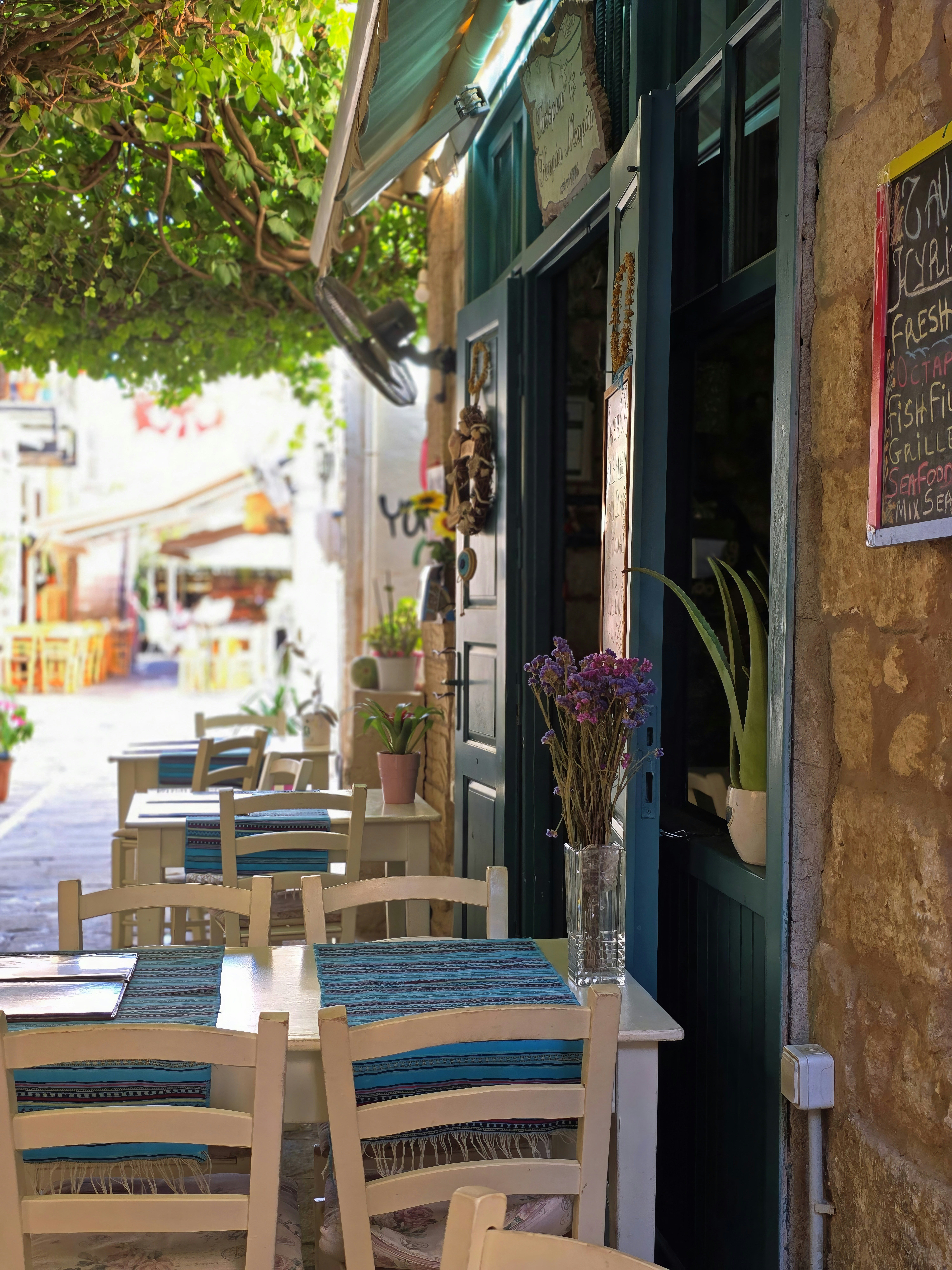
Crete has the most distinct culinary identity of any Greek island. The Cretan diet - olive oil, legumes, wild greens, cheese, and very little meat relative to the mainland - has been studied by nutritionists since the 1960s and continues to influence how people eat across the island today. When you sit down at a good Cretan restaurant, you’re eating a cuisine that’s had millennia to develop in near-isolation from the rest of Greece.
This guide covers where to eat specifically in Heraklion and Chania - the island’s two main cities and most likely arrival points for visitors. Both have thriving food scenes, though they operate at different registers: Heraklion is a working city where restaurants serve a local clientele, while Chania leans more toward the visitor market without having entirely abandoned its Cretan roots. For context on what makes Cretan food distinctive, read the Cretan cuisine guide.
Heraklion: Where to Eat
Peskesi
Peskesi is the single most important restaurant in Heraklion for understanding traditional Cretan cooking. Chef Nikos Kotaras has spent years researching historical Cretan recipes and sourcing direct from small farms across the island - everything from rare heritage breed pork to wild herbs picked from the White Mountains. The setting is a restored Venetian stone building near Lions Square.
Expect to pay approximately €14–22 for mains as of 2026. The dakos here - barley rusk softened with ripe tomato, topped with crumbled aged mizithra and a drizzle of estate olive oil - is a benchmark version of this Cretan staple. The lamb kleftiko (slow-cooked in parchment with wild herbs) requires advance ordering and is worth planning ahead for. Booking recommended in summer; walk-in is easier at lunch.
Address: Kapetanaki 6–8, Heraklion. Closed Mondays.
Brilliant Bistro
On the rooftop terrace of the Lato Boutique Hotel, Brilliant Bistro offers the best elevated view of the old Venetian port and Koules fortress while serving a menu that updates Cretan classics with modern technique. It bridges the gap between tourist-accessible and genuinely good.
Prices run approximately €15–28 for mains. The grilled octopus with fava purée and capers is consistently well executed, and the lamb in carob sauce draws on a Cretan flavour tradition most visitors never encounter. Open for lunch and dinner; the sunset slot on the terrace fills quickly.
Address: Epimenidou 15, Heraklion (enter via Lato Hotel).
Giorgiakis
A few minutes’ walk from the 1866 Market, Giorgiakis is the kind of Heraklion institution that keeps no website and has exactly one table for reservations. Local business owners, market traders, and the occasional archaeologist take up the remaining seats. The kitchen produces slow-cooked pots of stifado (beef and onion stew), chickpea soup, and the daily moussaka, all at prices that feel stranded in 2010 - approximately €8–13 for a main.
There’s no printed menu. The waiter recites what’s available. Point if the Greek fails you.
Psaradika Heraklion (Harbour Fish Restaurants)
Several fish tavernas line the area near Heraklion’s old port, particularly on and around Sofokli Venizelou Street. These aren’t destination restaurants but they serve the freshest catch at consistent prices. A grilled whole sea bream for one runs approximately €14–18 depending on weight; a plate of fried calamari comes in at around €9–12. Ask what came in that morning rather than ordering from the fixed menu.
Chania: Where to Eat
To Maridaki
To Maridaki is Chania’s best straightforward fish taverna - a small, noisy room tucked into a backstreet behind the Venetian harbour. The focus is entirely on what’s fresh: whitebait (marides, which give the restaurant its name), grilled whole fish, boiled octopus, and seasonal shellfish. Nothing is overthought; everything is cooked with confidence.
Prices for mains approximately €13–24 for fish dishes, as of 2026. The marinated anchovies with lemon and herbs are a reliable starter, and the kakavia (fisherman’s soup) is exceptional when available. No tablecloths, no view - that’s the point.
Address: Daskaloyianni 19, Chania. Lunch and dinner; expect a queue at peak hours in July and August.
Tamam
Built into a converted Ottoman hammam (Turkish bath), Tamam serves Cretan-Mediterranean cooking in a setting that reflects Chania’s layered history. The domed ceilings and stone walls make it one of the most atmospheric rooms in the city.
The menu leans toward vegetable-forward Cretan dishes: black-eyed pea salad with capers, stuffed courgette flowers with rice and herbs, and grilled haloumi-style cheeses. Lamb and chicken dishes run approximately €14–20 for mains; vegetarian plates come in at €10–16. Booking is strongly advised for dinner from May to September.
Address: Zambeliou 49, Chania Old Town.
Glossitses
Glossitses is the most local-feeling restaurant on this list - a small meze spot in the Splantzia neighbourhood where the menu changes based on what came from the farms and fishing boats that day. The style is Cretan kafeneion updated for a slightly younger clientele: small plates, good local wine by the glass (Cretan varieties including Vidiano and Kotsifali), and a kitchen that doesn’t charge for the basket of bread and olives that arrives automatically.
Budget approximately €10–18 per person for a shared-plate meal. The kalitsounia (small fried or baked cheese pastries) are reliably excellent, as are the seasonal wild greens.
Address: Skoufon 6, Splantzia, Chania.
Harbour Front Dining
The restaurants lining Chania’s inner harbour (Akti Kountourioti and Akti Enoseos) charge a significant premium for the view of the lighthouse and Venetian fortifications. Most serve competent if unremarkable Cretan-Mediterranean food at prices roughly 30–40% above equivalent backstreet tavernas: expect €18–32 for fish mains, €14–20 for meat dishes.
If you want to eat at the harbour, go at lunch rather than dinner - the same view, lower prices, and shorter waits. Thalassino Ageri, at the far end of the harbour near the lighthouse, has a better kitchen than most of its neighbours.
What to Eat in Crete: Ordering Guide
Dakos - Order this everywhere. The quality of the rusk, the ripeness of the tomato, and the grade of olive oil will vary, and you’ll develop strong opinions fast.
Kalitsounia - Small pastry parcels filled with soft mizithra cheese (sweet) or wild herbs (savoury). Both versions exist; the savoury version is harder to find outside Crete.
Antikristos - Lamb roasted on a spit at an angle next to an open fire, rather than over it. Only a handful of restaurants in Crete do this properly; ask in advance if they serve it.
Cretan wine - The island has six protected wine regions. Vidiano (white, from central Crete) is the most food-friendly - crisp and versatile. Kotsifali (red, soft and low-tannin) works well with the slow-cooked meat dishes.
Rakomelo - A warm digestif made from raki and honey, sometimes flavoured with cinnamon. Served at the end of the meal, usually free. Accept it.
Take a Guided Food Tour of Crete
Crete’s food is the most documented and prestigious in Greece, but accessing the best of it independently requires knowing which market stalls, which village tavernas, and which producers are the genuine article. A guided food tour in Heraklion or Chania moves through the 1866 Street market with a guide who can explain the difference between single-estate Cretan oil and supermarket-grade blends, who knows which aging cheese counter at the market sells graviera from named cooperatives, and who can take you to the agrotourism restaurants in the foothills where the Cretan diet - the one with UNESCO recognition - is still being cooked from local ingredients. Cooking classes that use the season’s produce are also widely available in both cities.
Browse Crete food tours, cooking classes, and culinary experiences → GetYourGuide
Ordering Tips
Cretan restaurants typically open for dinner later than visitors expect - most kitchens don’t fire up until 7:30pm, and 9pm is a normal dinner hour for locals. If you arrive at 6pm, you’ll find an empty room.
Portions are larger than mainland Greece. When ordering meze-style, two starters and one main is often sufficient for two people.
Always ask what the kitchen recommends from that day’s catch or seasonal produce. This question - “Ti einai fresko simera?” (What’s fresh today?) - consistently gets you better food than ordering directly from the printed menu.
Most tavernas in Crete include a small carafe of house raki (tsikoudia) at the end of the meal, often complimentary. This is a gesture of hospitality; you’re not expected to leave.
Book food tours in Heraklion and Chania with GetYourGuide for guided access to Crete’s markets, producers, and agrotourism restaurants. Find hotels in Crete on Booking.com. Pick up a Greece eSIM before you fly. Cover your trip with travel insurance for Greece.