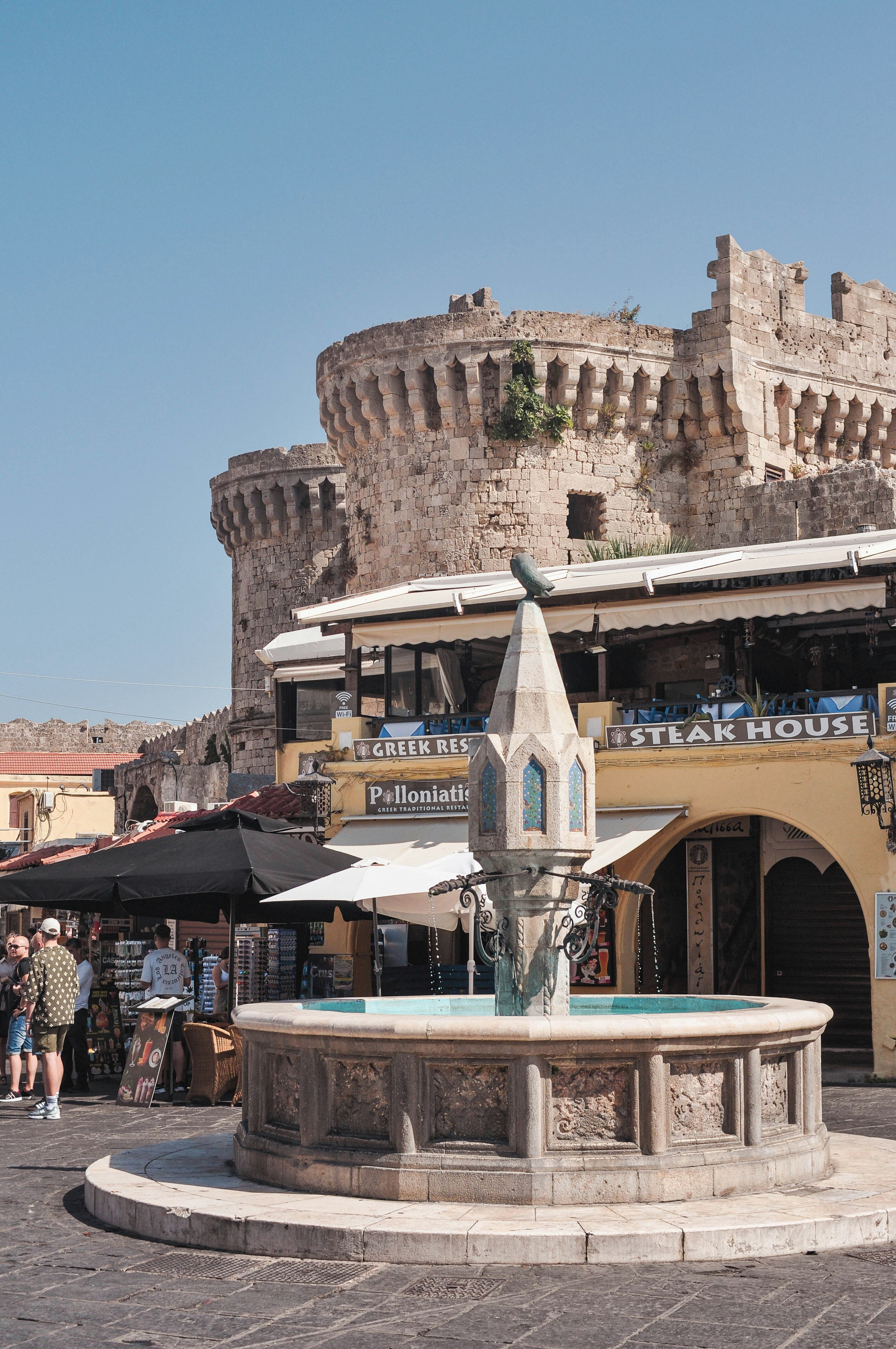
Rhodes has been feeding travellers for a long time. The island sits at the crossroads of Aegean and Eastern Mediterranean trade routes, and its cuisine reflects that position - ingredients and techniques that absorbed influence from Ottoman, Italian (Venetian and later Fascist-era Italian), and indigenous Greek cooking over several hundred years. The result is a kitchen with more depth than most visitors explore.
The Old Town, a UNESCO World Heritage site enclosed by 4km of medieval walls, contains the most interesting restaurants. Beyond those walls, the New Town’s Mandraki harbour area has a parallel food scene serving a more local clientele. Lindos, 55km to the south, has its own dining culture, anchored by one of the most historically significant family restaurants in Greece.
Rhodes Old Town: Best Restaurants
Alexis 4 Seasons
Alexis 4 Seasons has been operating in Rhodes Old Town since 1957 and is one of the most respected fish restaurants in the Dodecanese. The original Alexis Ziminis built the restaurant around a simple principle: buy what the boats bring in that morning, cook it with minimum intervention. The family’s third generation continues that approach.
The emphasis is on whole grilled fish and exceptional shellfish - fresh sea urchins when in season, grilled crayfish, and whatever whole fish (sea bass, gilt-head bream, dentex) arrived that day. Prices are set by weight for fish: expect approximately €70–90 per kilo for premium species, as of 2026. A full seafood dinner for two with wine runs approximately €90–130. Worth every euro for the quality.
Address: Sokrates 18, Rhodes Old Town. Booking recommended in summer.
Marco Polo Mansion
Set in a restored 15th-century Ottoman building with a courtyard garden, Marco Polo Mansion is as much about the setting as the cooking - though the cooking holds up. The menu leans toward refined Greek-Mediterranean: slow-cooked lamb with vegetables, grilled octopus, mezedes with local cheeses and preserved goods.
Mains approximately €18–28, as of 2026. The garden tables are sought-after on warm evenings. Booking for dinner strongly advised from May to October.
Address: Fanourious 42, Rhodes Old Town.
Nireas Fish Restaurant
Nireas is the most accessible fish restaurant in the Old Town - not the most expensive, not the most formal, but consistently well-executed and honest about what it serves. The psarosoupa (fish soup with rice and vegetables) is among the best versions on the island; the fried whitebait and the fresh calamari are reliable starters.
Mains approximately €14–24 for fish dishes. The house white wine (Muscat de Rhodes) pairs well with the seafood menu. Walk-in friendly at lunch; book for dinner from June through September.
Address: Sofokleious 22, Rhodes Old Town.
Pizanias Taverna
Tucked into a residential corner of the Old Town a few minutes’ walk from the tourist centre, Pizanias serves Rhodian home cooking to a mixed local-and-visitor clientele. The daily specials chalked on the board are the best guide: kolokithokeftedes (courgette fritters with mint and feta), pitaroudia (chickpea fritters), braised goat with orzo, and the occasional rabbit stifado.
Mains approximately €11–18. This is the most affordable good food in the Old Town. Cash preferred.
New Town and Mandraki
Argo Restaurant
Overlooking Mandraki harbour - where the Colossus of Rhodes is said to have stood - Argo is a landmark New Town restaurant with a kitchen that takes fresh fish seriously. The harbourfront terrace fills with both tourists and working Rhodians, and the menu spans the full Greek seafood range: grilled swordfish, baked sea bream with lemon and herbs, prawn saganaki with tomato and feta.
Mains approximately €16–30. The view of the three windmills and the harbour entrance makes the location as good as anything in the Old Town.
Address: Pap. Konstantinou, Mandraki harbour area, Rhodes New Town.
Street of Griva (Taverna Row)
The street of Orfanidou (locally called Griva) in Rhodes New Town is lined with small tavernas that primarily serve the island’s residents rather than tourists. The kitchens turn out straightforward grilled meat and fish at prices that feel disconnected from the resort economy: approximately €9–15 for mains, with a half-litre of house wine at €5–7.
Ask for whichever taverna is busiest with Greek customers - that’s the one worth sitting at. Menu items are written on boards, and portions are family-size.
Lindos
Mavrikos Restaurant
Mavrikos has operated in Lindos since 1933, making it one of the oldest continuously running family restaurants in Greece. The current owners, brothers Michalis and Dimitri Mavrikos, have maintained the kitchen’s reputation while earning international recognition.
The cooking bridges traditional Rhodian and contemporary Greek: local rabbit stewed with herbs, fresh fish from Lindos Bay, wild greens cooked with olive oil and lemon, and a mezedes spread that uses island-produced honey and preserved vegetables. It’s more expensive than the restaurant it used to be but the quality justifies it. Mains approximately €20–35, as of 2026.
Address: Plateia Lindou, Lindos. Open for lunch and dinner; booking advised for dinner. Best visited at lunch to avoid the worst of the day-tripper crowds.
Rhodian Specialties to Order
Pitaroudia - The most distinctive Rhodian meze: fried chickpea fritters flavoured with spring onion, mint, and parsley. They’re found across the island but they originated here. Order them as soon as you sit down; good kitchens bring them quickly.
Kolokithokeftedes - Courgette and feta fritters, a Greek taverna staple elevated in Rhodes by the quality of the local courgettes and fresh herbs. Different from the Cretan version - slightly firmer, more herb-forward.
Mavromatika - Black-eyed peas dressed with olive oil, lemon, and parsley. Simple, exceptional when made well. A standard cold meze at every traditional taverna.
Muscat de Rhodes - The island’s protected white wine designation, made from Muscat of Alexandria grapes grown in the northern part of the island. Sweet to off-dry, fragrant, and exceptional with fresh shellfish. Local restaurants stock it; ask specifically for Rhodian Muscat rather than the generic house white.
Thyme honey - Rhodian honey from bees that work the thyme-covered slopes of Mount Attavyros is darker and more intense than most mainland Greek honey. Most good restaurants offer it as a cheese accompaniment or dessert ingredient. Worth buying a jar to take home.
Fish and Meze Ordering Guide
Fish restaurants in Rhodes (and throughout the Dodecanese) price fresh whole fish by weight. Before ordering, ask to see the fish on display in the refrigerated case and confirm the price per kilo. A sea bream of 400g at €75/kg will cost approximately €30. This pricing is standard and not a scam, but it means a seafood dinner for two can reach €80–120 without wine if you’re not watching portion sizes.
For meze, order two or three shared plates to start and wait to see whether you want more - the servings are larger than they look on the menu. A good meze spread of three or four dishes for two people runs approximately €25–35.
The bread basket in Rhodes, as elsewhere in Greece, is charged at approximately €1–2 per person (listed on the menu as “cover” or “couvert”). This is legal and standard.
Take a Guided Food Tour of Rhodes
The Rhodes Old Town is the best-preserved medieval city in the eastern Mediterranean, and eating your way through it without a guide means spending most of your time avoiding the tourist-adapted restaurants on the main drag. A guided food walk of the Old Town moves through Socratous Street’s market shops (Rhodian honey, wine, and olive oil), into the backstreets where the actual tavernas used by locals operate, and through the morning fish market at Mandraki harbour. Rhodes also has a specific culinary tradition - pitaroudia (chickpea fritters), marides (small fried anchovies), and the local Muscat wine - that a good food guide contextualises and connects to the island’s Byzantine and Ottoman layers.
Browse Rhodes food tours and culinary experiences → GetYourGuide
A Day’s Eating in Rhodes
For those with a single day in Rhodes Town focused on food:
Morning (8:00–10:00am): Breakfast at a kafeneio near Hippocrates Square in the Old Town. Fresh koulouri (sesame bread rings, approximately €0.80), local olives, and Greek coffee. Most kafeneions in the Old Town open by 7:30–8:00am.
Lunch (1:00–3:00pm): The Old Town restaurants are significantly less crowded at lunch than dinner. Alexis 4 Seasons, Nireas, and Pizanias all accept walk-ins at lunch with far more ease than in the evening. Pizanias’s daily specials board is worth checking - the home-cooked dishes like braised goat with orzo or the bean soups rotate and represent better value than the fixed menu. A meze lunch for two runs approximately €25–40 without wine.
Afternoon (4:00–6:00pm): The market shops along Socratous Street in the Old Town specialise in Rhodian honey, olive oil, and local wine. This is the best window to buy Rhodian thyme honey (look for honeys specifically labelled “Attavyros” or “Rhodian thyme” - the darker, more intense varieties) and a bottle or two of Muscat de Rhodes to take home. The shops are less crowded at this hour than mid-morning.
Dinner (8:30pm–11:00pm): Book ahead for Alexis 4 Seasons or Marco Polo Mansion. If you want a New Town alternative, the Griva taverna row (Orfanidou Street) operates on a walk-in basis and fills with a local clientele rather than tourists. The Old Town quiets from midnight; the Mandraki harbour area stays lively later.
Lindos day trip: If you’re planning to eat at Mavrikos in Lindos, arrive for lunch (targeting a 1:00pm table) to beat the afternoon day-tripper arrivals from Rhodes Town. The drive along the east coast road takes approximately 50–55 minutes. Book Mavrikos in advance for any evening visit in July and August - the village fills with tour groups mid-afternoon and reservation availability at peak times is limited.
Book Rhodes Old Town food tours and guided walks with GetYourGuide. Find hotels in Rhodes on Booking.com. Pick up a Greece eSIM before you fly. Cover your trip with travel insurance for Greece.