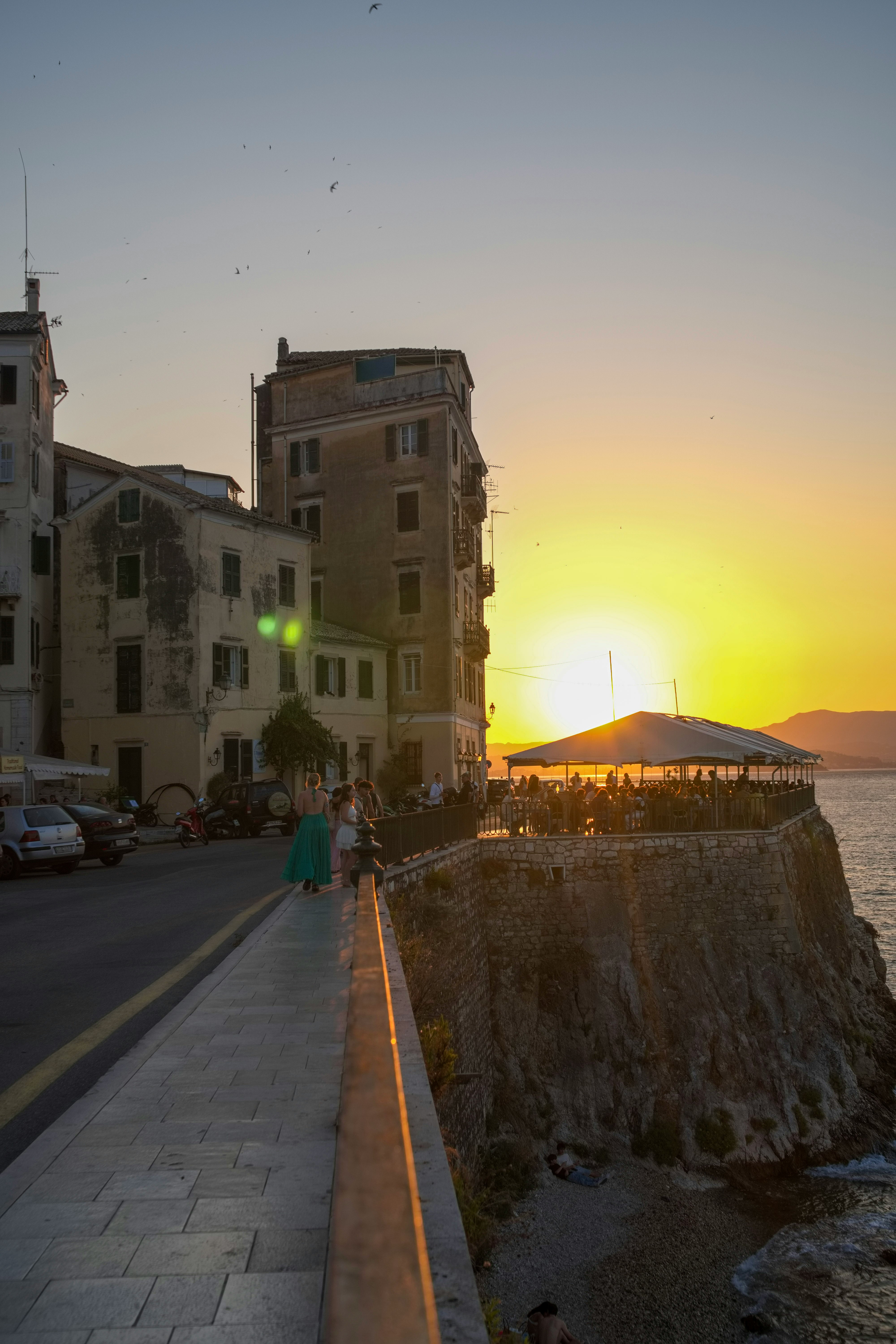
Corfu is the most culturally complex of the Greek islands when it comes to food. Four centuries under Venetian rule, followed by periods of French and British administration, produced a cooking tradition that absorbed continental European techniques and ingredients and made them distinctly local. The result sits somewhere between Greek, Italian, and something neither - dishes that developed in isolation on an island that was always in conversation with the wider Mediterranean but never quite part of it.
Sofrito, pastitsada, bourdeto, bianco - these are Corfu’s signatures, and none of them exist in quite the same form anywhere else. When you sit down at a traditional Corfiot table, the food tastes familiar but slightly off-key from what you’d find in Athens or Thessaloniki. That’s the point.
Corfu Old Town: Best Restaurants
Rex Restaurant
Rex has operated in a Venetian-era building in Corfu Town since 1932, and its longevity reflects what it does well: consistent, traditional Corfiot cooking for a clientele that includes both visitors and longtime island residents. The setting is a formal dining room with white tablecloths and oil paintings - more grand café than taverna.
The menu at Rex is where you go to try all of the island’s signature dishes in one sitting. The sofrito is reliably good - veal escalopes in white wine and garlic sauce, served over rice. The pastitsada (pasta with slow-cooked rooster in a spiced tomato and red wine sauce) is ordered the same day, needs long cooking time, and is occasionally unavailable if they’ve run out. Mains approximately €16–26, as of 2026.
Address: Kapodistrou 66, Corfu Town. Open for lunch and dinner; booking recommended for dinner in summer.
Etrusco
Located in a restored manor house in Kato Korakiana (25 minutes’ drive from Corfu Town), Etrusco holds the position of finest restaurant on the island and one of the most respected in Greece. Chef Ettore Botrini trained in Italy and elsewhere before returning to his family’s estate in Corfu to build a tasting menu restaurant around the island’s produce.
The cooking is sophisticated: local Corfiot ingredients (olive oil from century-old groves, herbs from the hills, local cheeses) treated with Italian-influenced technique. A tasting menu runs approximately €80–120 per person, as of 2026, not including wine. The wine list draws heavily on Greek producers. This is a special-occasion restaurant; booking weeks in advance for summer weekends is necessary.
Address: Kato Korakiana, Corfu. Open evenings only, Tuesday through Sunday.
Rouvas
In the old market area below the Liston, Rouvas is the most local-feeling restaurant in Corfu Town - a place where local workers eat lunch, families bring children for Sunday dinner, and the menu is handwritten on a board. There are no concessions to the tourist economy: the dishes are what Corfu actually eats every day.
The daily specials rotate through traditional Corfiot cooking: sofrito on Fridays, pastitsada on weekends, bourdeto when fresh rockfish arrives. Mains approximately €9–15. The lentil soup is legendary among locals. No reservations; arrive early at lunch if you want a table during peak hours.
Address: Guilford 13, Corfu Old Town.
Bellissimo
On a back street near the New Fortress, Bellissimo is a solid mid-range Corfiot restaurant that bridges the gap between tourist convenience and genuine local food. The menu covers the island’s Venetian-inflected canon alongside more familiar Greek taverna dishes, and the kitchen executes both well.
Try the bianco here - white fish (often grouper or sea bream) slow-cooked in a broth of olive oil, garlic, lemon, and potatoes. The dish sounds simple and is: the quality depends entirely on the freshness of the fish and the restraint of the cook. Mains approximately €14–22.
Address: Fleischer 4, near New Fortress, Corfu Town.
Outside the Old Town
Taverna Klimataria (Benitses)
The fishing village of Benitses, 12km south of Corfu Town, has shed its 1980s package-holiday reputation and now supports a small cluster of serious fish tavernas. Klimataria is the best: a simple family operation right at the water’s edge, specialising in the freshest fish from the local fleet.
Bourdeto - the spicy Corfiot fish stew made with scorpionfish and cayenne pepper - is almost always on the menu here because the boat brings in the right fish. This is the most distinctive Corfiot seafood dish and one that’s best eaten at source, in a coastal village, rather than in the town. Whole grilled fish approximately €16–28 depending on species and weight; bourdeto approximately €14.
Address: Benitses harbour, 12km south of Corfu Town. Open lunch and dinner; closed Tuesdays.
Panorama Kanoni
The viewpoint at Kanoni, overlooking the twin islets of Vlacherna Monastery and Mouse Island, is one of the most photographed spots in Corfu. The restaurant at the viewpoint capitalises on the setting, which means you’re paying for the panorama as much as the food. But the kitchen produces competent Corfiot cooking - sofrito, local fish, a good tiropita - and the location is genuinely spectacular.
Mains approximately €14–22. Go for lunch (better light, fewer crowds) and order the sofrito.
Address: Kanoni, 3km south of Corfu Town.
Corfiot Dishes: A Guide
Sofrito - Thin veal slices browned in butter or olive oil, then simmered in white wine, white vinegar, minced garlic, and parsley until the sauce reduces to a glossy coating. The vinegar is what distinguishes it from mainland Greek veal dishes. Served over rice. Order it if it’s on the menu - it’s the dish that most clearly captures what Venetian influence did to Corfiot cooking.
Pastitsada - The island’s most celebratory dish: pasta (usually thick, ridged macaroni called tagliatelle Corfiot) sauced with a slow-cooked meat in tomato, red wine, cinnamon, cloves, and allspice. The meat is traditionally rooster (kokkoras), though beef is common now. The spice combination is the Venetian inheritance - fragrant, sweet-savoury, unlike anything in mainland Greek cooking.
Bourdeto - Fish stew using whole fish (scorpionfish and rockfish traditionally) cooked in olive oil and cayenne pepper. The heat level is assertive by Greek standards. The name comes from the Venetian ‘bordatino’, though the dish has evolved far from its origin. Best in a coastal taverna in the south of the island.
Bianco - White fish (grouper or sea bream) slow-cooked in olive oil, lemon juice, garlic, and potatoes, with no tomato. The simplest and most purely Corfiot of the island’s dishes. The quality depends on the freshness of the fish: if the kitchen can’t guarantee the catch came in that morning, skip it.
Kumquat liqueur and preserves - The kumquat tree was introduced to Corfu by a British botanist in the 19th century and has become the island’s most unexpected signature product. Kumquat liqueur (sold everywhere, quality varies) is a post-dinner digestif. Candied kumquats in sugar syrup are an excellent take-home product.
Take a Guided Food Tour of Corfu
Corfu’s food reflects the island’s Venetian past more visibly than anywhere else in Greece, and a guided tour of the Old Town’s food culture navigates the specific differences: sofrito, pastitsada, bianco, and bourdeto are all dishes shaped by four centuries of Italian influence, and most visitors eat around rather than into that tradition. A guided food walk of the Corfu Town market, the backstreets behind the Liston, and the Venetian Old Town connects the historical story with specific dishes and the producers - the kumquat distilleries, the olive oil mills on the island’s interior, and the fishermen supplying the harbour restaurants - that give Corfiot cuisine its character.
Browse Corfu food tours and culinary experiences → GetYourGuide
Ordering Tips
Corfu Town restaurants around the Liston charge a premium for the view and atmosphere. The arcade at the Liston was built by the French under Napoleon as a replica of the Rue de Rivoli in Paris, and restaurants have been trading on the association ever since. Coffee on the Liston is the experience to have; dinner is better one street back.
The most authentic Corfiot food outside the restaurants is found at the daily market on Desila Street, where local producers sell olive oil, honey, Corfiot olives (smaller and more bitter than Kalamata), and fresh cheeses.
Order the local Corfiot white wine rather than the generic Greek house wine. The island produces small quantities of Kakotrygis (a local white variety, light and slightly herbal) that pairs exceptionally well with the seafood dishes. Few restaurants stock it in quantity, but it’s worth asking.
Book food tours and cooking classes in Corfu with GetYourGuide to explore the island’s Venetian-influenced cuisine with a local guide. Find hotels in Corfu on Booking.com. Pick up a Greece eSIM before you fly. Cover your trip with travel insurance for Greece.