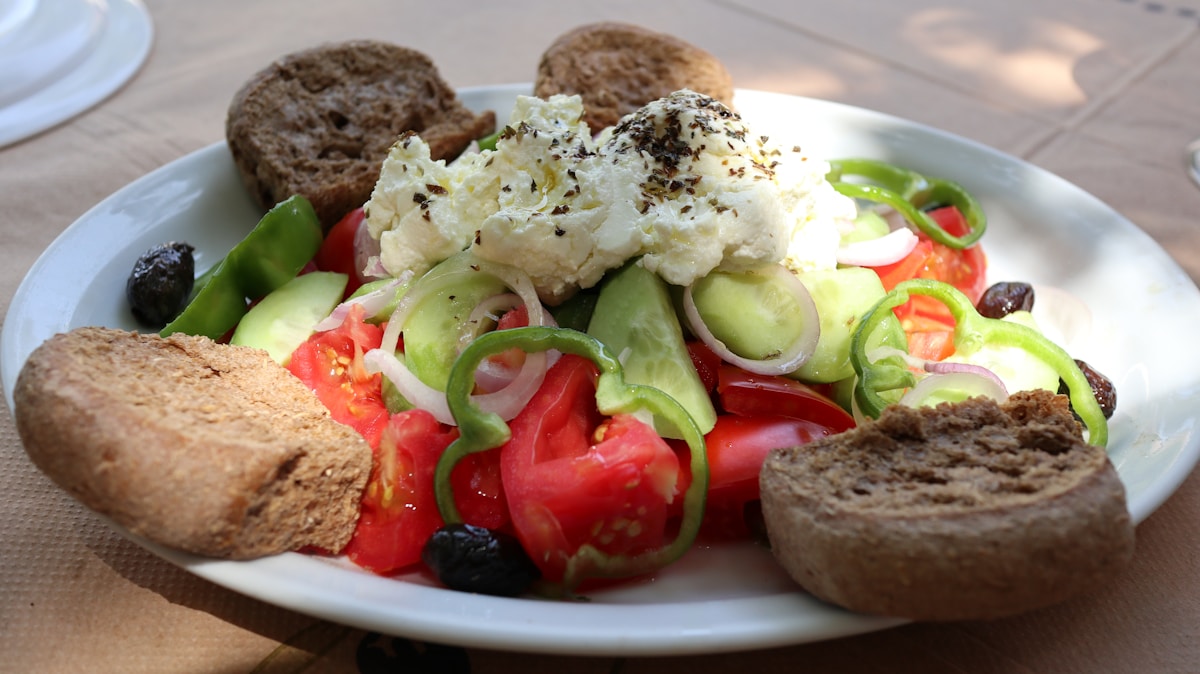
Cretan food is not simply Greek food served in Crete. The island’s cuisine developed in relative isolation - Crete was the last part of Greece to be liberated from Ottoman rule, in 1913, and spent centuries before that under Venetian and Byzantine control - and the result is a food culture with its own vocabulary, its own staple grains, its own cheese tradition, and its own approach to flavour. Eat well in Crete and you will notice that it does not quite taste like anywhere else in Greece.
Why Cretan Cuisine Is Distinct
The most studied aspect of Cretan food is the olive oil. Crete produces approximately 30% of Greece’s olive oil output from an island that represents roughly 5% of the country’s land area, and the oil is used in quantities that surprise visitors from northern Europe or mainland Greece. Vegetables are braised in olive oil, legumes are finished with it, bread is dipped in it, and salads are dressed with it liberally. The health benefits attributed to the Cretan diet in the landmark Seven Countries Study (1958–1970) were partly explained by this near-exclusive use of olive oil as the cooking fat.
The second distinctive element is the use of barley rather than wheat as the primary bread grain. Barley rusks (paximadia) were the staple food of Cretan farmers and shepherds because they kept for months without refrigeration - the double-baking process that creates the rusk removes moisture and prevents mould. These are not a heritage novelty. Cretans still eat them daily, and dakos - the grated tomato, fresh cheese, and oil preparation built on a paximadi - is the island’s defining starter.
The third element is the wild herb culture. Crete’s White Mountains and Mount Psiloritis support an unusually diverse flora, and Cretan cooks have used wild herbs - dittany of Crete (dictamo), wild savory, thyme, sage, and mountain oregano - as flavourings for centuries. Dictamo, a small herb that grows exclusively on Cretan mountain cliffs, is made into herbal tea and used in cooking; you will not find it elsewhere.
Essential Cretan Dishes
Dakos is the place to start. A barley rusk softened with a splash of water, topped with grated tomato pressed through your fingers until the juice soaks in, crumbled fresh myzithra or anthotyros cheese, a generous pour of local olive oil, and dried wild oregano. The rusk should be slightly softened but still have structural integrity - not soggy. The tomato should be fully ripe. The cheese should be fresh, not aged. When all three elements are right, dakos is one of the best starters in Greek cuisine.
Snails in rosemary (chochlioi boubouristi) is the most distinctly Cretan dish and one that polarises visitors. Snails are floured, fried in a pan with fresh rosemary and olive oil, then deglazed with a splash of wine vinegar. The technique - cooking them upside down in the pan so the shells face down - traps the juices inside. The flavour is earthy, herby, and slightly acidic. In Crete this is as natural a taverna starter as calamari is on the mainland.
Lamb with stamnagathi uses a wild bitter green (Cichorium spinosum, related to chicory) that grows in the coastal lowlands of Crete. It is the most common Cretan wild green after chorta, braised in olive oil and lemon until the bitterness mellows to something pleasantly sharp and bright. Combined with slow-roasted lamb shoulder, it is a defining combination of Cretan mountain cooking.
Hilopites are small egg pasta squares, typically dried and used in soups or baked dishes. Handmade hilopites from inland Cretan villages are a different product from the factory version - wider, slightly irregular, with a richer egg flavour. They are cooked with lamb in tomato sauce or served with local cheeses and sage-brown butter. Available in village tavernas and at regional markets.
Kalitsounia are small pastry pockets filled with fresh myzithra cheese and honey, sometimes with wild herbs. They are the Cretan equivalent of a cheese pie but smaller, richer, and served as a dessert or mid-morning snack. The best versions are made at home or in village bakeries - the commercial version sold at tourist shops is a pale substitute.
Apaki is Cretan smoked pork: pork loin marinated in wine vinegar with wild herbs, then cold-smoked over aromatic wood (often sage and savory). The result is a firm, deeply flavoured cured meat that bears no resemblance to commercial ham. It is served sliced at room temperature as a meze plate. Buy it vacuum-packed to take home - it is one of the best food souvenirs from Crete.
Best Villages for Eating in Crete
Archanes sits in a broad valley south of Heraklion surrounded by vineyards and olive groves. The village has preserved its traditional architecture and a food culture that the Heraklion restaurant scene has not displaced. The tavernas on and around the central square serve proper Cretan food: dakos made with local tomatoes, lamb dishes using animals from the surrounding hills, and the island’s best selection of local cheeses. Taverna Drosoulites is the most consistent recommendation from Cretan locals - the slow-roasted lamb shoulder and the wild greens are the things to order. Budget approximately EUR 20–28 per person.
Vamos in the Apokoronas district of western Crete is the centre of the island’s agrotourism movement. The village council converted a number of traditional stone village houses into small guesthouses in the 1990s, and the associated restaurant in the village square, Sterna tou Bloumosifi, serves a menu built almost entirely on produce from local farms and the village cooperative’s own olive oil and wine. The food is some of the most authentically Cretan you will eat anywhere, and the setting - a restored 19th-century stone building - is appropriately serious. Reservations required in summer. EUR 25–35 per person.
Anogia is a mountain village in central Crete, high on the slopes of Mount Psiloritis. The village has a reputation for musical traditions (it produced several notable Cretan lyra players) and for lamb - the combination of altitude and specific pasture plants in the Anogia area produces a flavour that Cretans consider distinctive. The lamb dishes at the tavernas on the main street are the reason to come. Budget EUR 18–25 per person. Access by car from Heraklion or Rethymno (approximately 1 hour drive).
Agrotourism Restaurants
Crete’s agrotourism dining has developed beyond novelty into one of the island’s most interesting food experiences. The farms in the Heraklion wine region - around Archanes, Peza, and Dafnes - serve meals alongside wine tastings from their own production. The Apokoronas district farms near Vamos offer olive oil tastings with food. A few properties have developed full restaurant operations.
Agreco Farm (near Rethymno) is the largest and best-known agrotourism operation in Crete, owned by the Grecotel group. It is a working reproduction of a traditional Cretan farm - animals, olive press, cheese-making, bakery - and serves meals from its own production in a traditional farmhouse setting. More polished and expensive than village tavernas (EUR 35–55 per person) but gives a comprehensive picture of Cretan traditional food production. Reservations required.
Thronos Agrotourism (Amari valley, central Crete) is a smaller and more authentic operation in the under-visited Amari valley, south of Rethymno. The village has Byzantine church frescoes and a food tradition centred on local lamb, mountain herbs, and the valley’s own olive oil. The meal is served in the family home. EUR 20–30 per person, advance booking essential.
Guided Cretan Food Experiences and Cooking Classes
Cretan food is worth spending a dedicated half-day on, not just eating as a side effect of tourism. Guided food experiences in Crete range from Chania and Heraklion market walks (where the point is understanding Cretan produce - the varieties of olive oil, the aging stages of graviera, the difference between wild and farmed snails) to agrotourism cooking classes in village homes where the preparation of dakos, boureki, and slow-roasted lamb is taught by the people who have been making them for generations. The best operators source ingredients from named farms and explain the agricultural history behind the Cretan diet’s UNESCO recognition. A half-day food experience here is the single most efficient way to understand what makes Cretan cooking distinct from Greek cooking elsewhere.
Browse Cretan cooking classes and food tours → GetYourGuide
Prices and Practical Notes
Cretan food at a traditional village taverna costs EUR 15–25 per person including wine. At an agrotourism restaurant or a more polished Heraklion or Chania venue, expect EUR 25–40. The island’s markets - particularly the central market in Heraklion (Odos 1866) - are the best place to buy Cretan food products to take home: aged graviera cheese, apaki, paximadia, local honey, and the small bottles of single-estate olive oil that do not travel outside Greece commercially.
The best season for Cretan cuisine is late September through November, when the new olive oil has just been pressed, the wine is in from the harvest, wild mushrooms appear in the markets, and the agrotourism restaurants are less crowded. The spring (April and May) brings the best wild greens. July and August are the most expensive months and the agrotourism restaurants require the most advance booking.
For specific restaurant recommendations in Heraklion and Chania, see our top restaurant picks in Crete.
Book Cretan cooking classes and food tours with GetYourGuide. Find hotels in Crete on Booking.com.