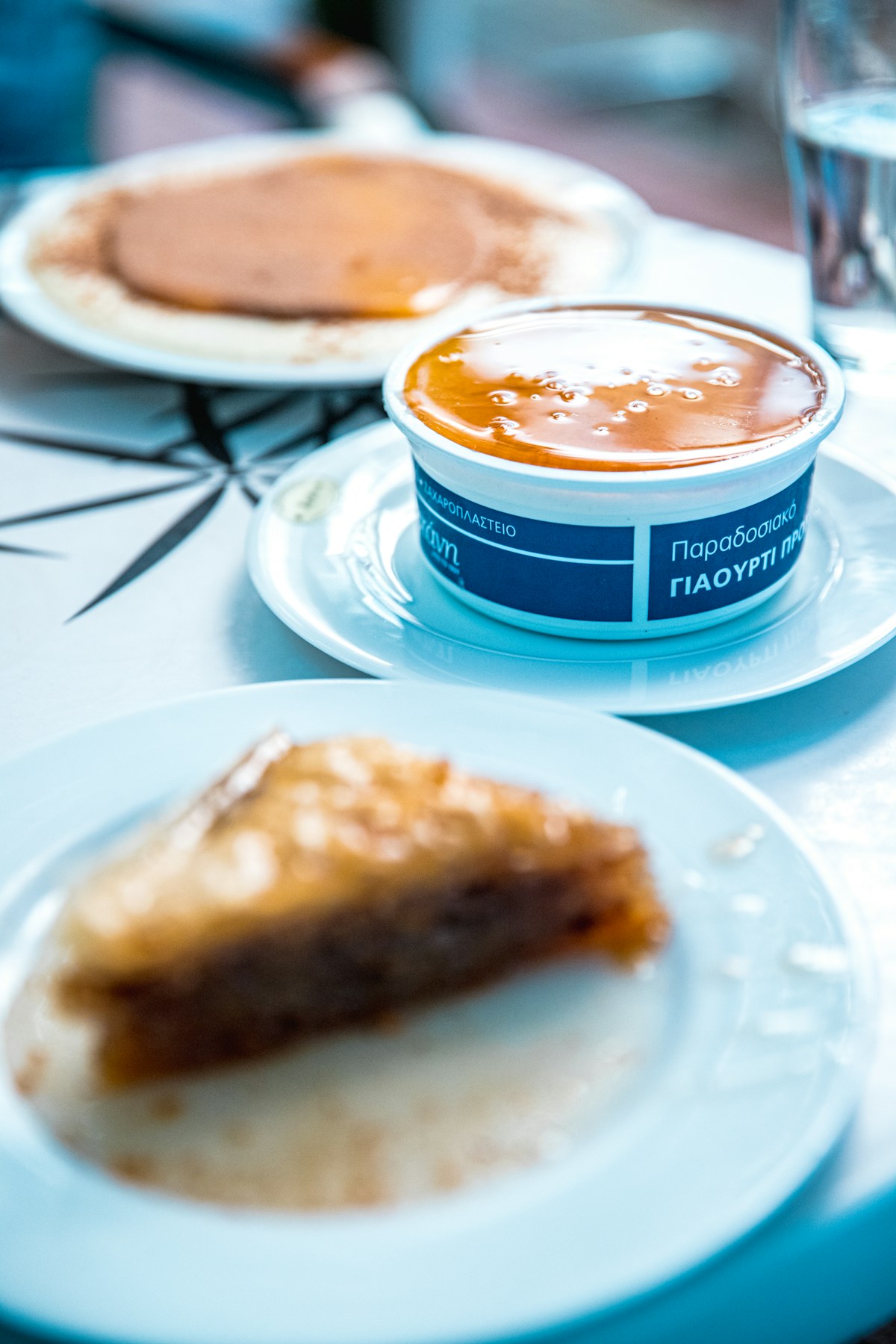
Greek food is Mediterranean in character but distinct from Italian or Spanish cuisine - shaped by Byzantine Christian fasting traditions (which created a rich repertoire of vegetable dishes), Ottoman culinary influence, and the wild herbs and olive oil of the Greek landscape. The fundamentals are simple: excellent olive oil, very fresh vegetables, and fish or meat cooked without complication.
The Fundamentals
Olive oil: Greek olive oil is among the best in the world - particularly from Crete, Kalamata, and Lesbos. Production is predominantly extra-virgin, cold-pressed, and very low in acidity. It is poured over almost everything. Don’t skip the bread course - the combination of Greek bread, olive oil, and sea salt is a meal in itself.
Cheese: Greece produces hundreds of named cheeses. The most important:
- Feta: PDO designation - authentic feta is made from sheep’s milk (or sheep and goat) in specific Greek regions. A different product from Bulgarian or Danish “feta.”
- Graviera: A nutty, slightly sweet hard cheese - excellent from Crete (Cretan graviera PDO) and from Naxos (Naxian graviera).
- Halloumi: Technically a Cypriot cheese but widely used in Greece - grills without melting.
- Anthotyros and Myzithra: Fresh white cheeses, similar to ricotta. Used in dakos and savoury pies.
The village salad (horiatiki): Tomato, cucumber, green pepper, red onion, olives, and a slab of feta, dressed only in olive oil and dried oregano. No lettuce. No vinegar (except on some islands). This is not a dressed salad - it is a plate of ingredients combined.
Essential Dishes
Souvlaki: Grilled pork skewers, served on a plate with pita and tzatziki, or wrapped in a pita with tomato and onion. Approximately €3–4 per wrap from a grill shop, €10–14 as a plate. The best souvlaki in Athens is at Kostas on Plateia Agias Irinis.
Gyros: Pork or chicken cooked on a vertical rotisserie, shaved and served in pita. The most common street food; approximately €3–4.
Moussaka: Baked layered dish of minced lamb (or beef), fried aubergine, and béchamel sauce. A restaurant staple rather than street food - good at traditional tavernas, mediocre at tourist traps.
Kleftiko: Slow-roasted lamb sealed in parchment and baked for hours - extremely tender, falling off the bone. A Sunday dish at many tavernas and a Cypriot specialty, but found across Greece.
Gemista: Tomatoes and peppers stuffed with rice and herbs, baked until soft. Classic summer taverna dish, eaten warm or at room temperature.
Stifado: A rich stew of rabbit or beef with pearl onions, red wine, vinegar, and cinnamon - one of the more complex Greek dishes, Venetian in origin.
Taramosalata: Smoked carp roe blended with bread or potato, lemon, and olive oil. The good version is pale pink and has a delicate flavour; the lurid pink supermarket version bears little resemblance.
Tzatziki: Strained yogurt with cucumber, garlic, and dill - not a dip, technically, but a condiment that comes with everything grilled.
Seafood
Greek seafood is among the best in the Mediterranean, but it requires knowing how to order.
Fish by weight: Most harbour tavernas sell fish priced by the kilogram - you choose from the display, the fish is weighed before cooking, and you pay accordingly. Prices range approximately €55–90/kg depending on the fish. Barbouni (red mullet), lavraki (sea bass), and tsipoura (sea bream) are the most common; octopus and squid are more affordable.
Avoid: Pre-cooked or frozen fish passed off as fresh. Restaurants at tourist hotspots (caldera-view Santorini, Mykonos harbour, Corfu waterfront) frequently do this. Signs of fresh fish: clear eyes, red gills, firm flesh.
Grilled octopus: Hung to dry in the sun (the distinctive image of Greek harbour walls), then grilled over charcoal. Should be tender, slightly charred, and dressed with olive oil and lemon.
Fried kalamari: Fresh squid, lightly floured and fried - entirely different from the rubbery rings found elsewhere. Order it at any harbour taverna.
Mezedes Culture
Mezedes (the plural of mezes) are small shared dishes, ordered for the table. Eating mezedes is the most enjoyable way to eat in Greece - the variety and sociability of the format suits the food perfectly.
How to order: In a mezedopoleio or ouzerie, tell the waiter approximately how many people you have and whether you want mainly vegetables, seafood, or meat. They will make suggestions. Order in rounds; start with 4–5 dishes for two people, add more as needed.
Classic mezedes: Taramosalata, tzatziki, saganaki (fried cheese), grilled halloumi, spanakopita (spinach and feta pie), tyropita (cheese pie), horta (boiled wild greens with olive oil and lemon), fava, dolmades (stuffed vine leaves), grilled octopus, fried kalamari, marinated anchovies.
Drinking in Greece
Wine: Greece has been producing wine for 4,000 years - and the modern wine scene is finally catching up with its history. Key wines: Assyrtiko from Santorini (crisp, mineral, exceptional with seafood), Xinomavro from Naoussa in Macedonia (tannic, complex, Greece’s answer to Barolo), Agiorgitiko from Nemea (soft and food-friendly red). Ask for local wine; most tavernas have a barrel wine (varelisio) - usually good and inexpensive (€4–7 per 500ml).
Ouzo: The anise-flavoured spirit of Greece - drunk with ice or cold water (which turns it milky), always with food. The best ouzo comes from Lesbos (Ouzo Mini, Ouzo Barbayannis). Never drink ouzo without food - it is not a solo drink.
Tsipouro: An unaged grape marc spirit (similar to Italian grappa or French marc), produced in Thessaly, Macedonia, and Epirus. Stronger than ouzo, less sweet. Drunk cold, with mezedes. The best come from Thessaly.
Greek coffee: Unfiltered, thick, served in small cups with the grounds in the bottom. Specified by sweetness: sketos (no sugar), metrios (medium - approximately 1 tsp), glykos (sweet). Wait for the grounds to settle before drinking.
Frappe: Cold shaken Nescafé with water and milk - invented in Greece in 1957, still ubiquitous at every café. Not the most sophisticated coffee, but the national summer drink.
Regional Specialties
Crete: Dakos (barley rusk with grated tomato and myzithra), Cretan graviera, antikristo (whole animal cooked upright around a fire), kalitsounia (small cheese pies), local olive oil (among the world’s best).
Thessaloniki: Bougatsa (custard-filled pastry, eaten for breakfast), koulouri (sesame-studded bread ring, sold by street vendors), the grilled meat culture (the city’s butcher shops and grill houses are legendary).
Epirus (Ioannina): Hortopita (wild greens pie), kontosouvli (slow-roasted pork), smoked eel from Lake Pamvotis, village cheeses.
Santorini: Tomatokeftedes (fried cherry tomato fritters - the small volcanic Santorini tomatoes are uniquely sweet), fava (yellow split pea purée from Santorini’s volcanic soil), white aubergine.
Lesbos: Olive oil (the island’s defining product), ouzo, local sardines, and ladotyri (olive-oil preserved cheese).
For city-specific dining guides, see our Athens restaurants guide and Thessaloniki restaurants guide.
Book Athens food tours and cooking classes with GetYourGuide.
See Also
- Athens Restaurants Guide - the best places to eat in Athens by neighbourhood
- Thessaloniki Restaurants Guide - food capital of Greece with bougatsa, mezedes, and more
- Best Restaurants in Athens - specific restaurant recommendations with prices
- Best Restaurants in Thessaloniki - tavernas, market dining, and fine dining
- Best Tours in Athens - food tours, market walks, and cooking classes
- Greece Travel Tips - eating customs, tipping, and dining culture in Greece
- Best Time to Visit Greece - seasonal ingredients and when Greek food is at its best
- Greece Vegan Food Guide - plant-based dishes, fasting-compliant menus, and vegan-friendly regions
- Vegan Eating on the Greek Islands - island-by-island vegan guide from Santorini to Corfu