Greece has one of the most naturally plant-based cuisines in the Mediterranean - and most visitors don’t realise it. Long before “vegan” was a category on a menu, Greek Orthodox fasting traditions had already produced hundreds of meat-free and dairy-free recipes. In villages across the country, a meal of horta, fava, and briam is completely ordinary. Here is what to look for, what to ask, and how to navigate eating vegan in Greece with confidence.
Why Greece Works Well for Vegans
The Greek Orthodox calendar includes around 180 fasting days per year, during which observant Greeks abstain from meat, fish, dairy, and eggs. Restaurants in smaller towns and on islands often mark fasting dishes clearly, or a quick ask (“nistisimo?”) confirms whether a dish is fasting-compliant - which, for most dishes, means fully vegan.
The Mediterranean diet also leans heavily on vegetables, legumes, olive oil, and grains by default. Even heavily meat-focused menus typically include a substantial vegetable section. The challenge is not finding plant-based food in Greece - it is knowing which traditional dishes are already vegan and which contain hidden dairy or eggs.
Core Vegan Dishes to Know
Horta - wild greens, usually dandelion, chicory, or a mix, boiled and dressed with olive oil and lemon. Every taverna in Greece serves this. It is one of the most nutritious and cheapest things on any menu, typically €3–5. Order it confidently.
Fava - yellow split pea purée, served warm or at room temperature with capers, red onion, and olive oil. The Santorini version, made from locally grown split peas, is particularly well known. Usually around €5–7.
Gigantes plaki - large white beans baked slowly in a tomato sauce with onion, garlic, and olive oil. A staple of Greek home cooking and a reliable taverna dish. Check that no meat has been added - traditionally there isn’t any. Around €6–8.
Gemista - tomatoes and peppers stuffed with rice, herbs, and olive oil, baked until tender. One of the classic summer dishes. The rice version is fully vegan; occasionally restaurants add mince, so it is worth confirming.
Briam - a slow-roasted vegetable dish made with courgettes, aubergines, potatoes, tomatoes, and plenty of olive oil. Similar to French ratatouille but heavier on the olive oil. Rich, filling, and naturally vegan.
Dolmades - stuffed vine leaves. The rice-and-herb version served with lemon is vegan; the version stuffed with meat is not. The rice dolmades are more common in home cooking and tavernas serving mezedes. Usually €5–7 for a plate.
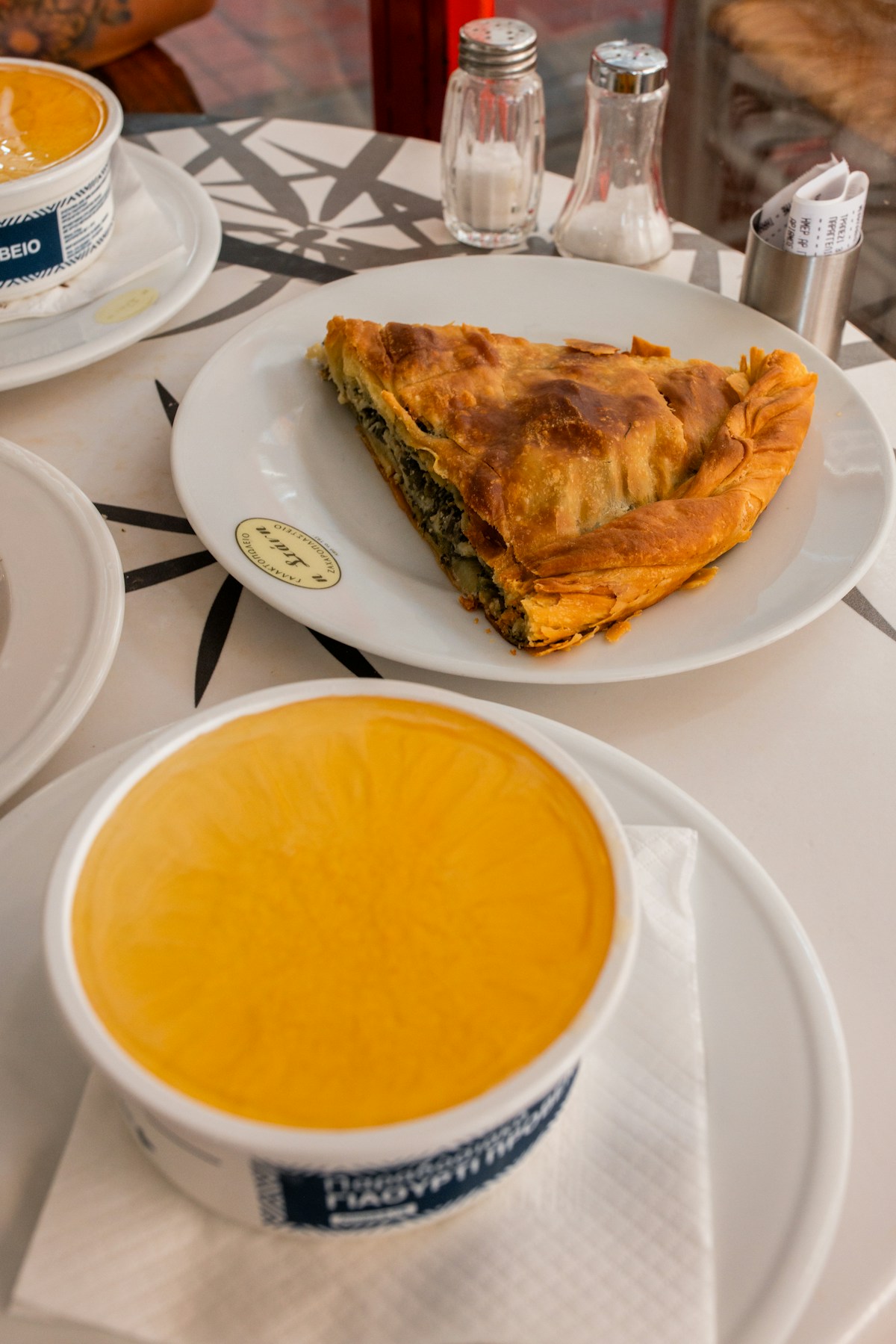
Spanakopita - spinach and herb pie. The traditional version contains feta. However, an increasing number of bakeries and cafes now offer a dairy-free version (“spanakopita horis feta” or just labelled vegan). Worth asking in cities and larger towns.
Htapodi (octopus) - not vegan, but worth mentioning because it appears on almost every menu. The genuine vegan dishes are all listed above.
Fasolakia - green beans braised in olive oil, tomato, and garlic. A humble dish that appears across the country, and often the most comforting thing on a summer menu. Around €5.
Dakos - Cretan rusk bread topped with crushed tomato, olive oil, and herbs. The standard version includes mizithra cheese; ask for it without (“horis tyri”) and you have a completely vegan dish.
What to Watch Out For
Butter in bread and phyllo - most Greek bread is made with olive oil, not butter, but always worth confirming in bakeries. Traditional phyllo pastry is made with butter; vegan phyllo exists but is less common.
Fish-based salad dressings - rare, but some taramosalata (fish roe dip) might appear in a mezze spread. Easy to avoid by identifying it before eating.
Yogurt garnishes - some dishes like tzatziki come as a standard side. Simply request dishes without the yogurt accompaniment.
Cheese on salads - Greek salad (horiatiki) contains feta. Ask for it without and you have a fully plant-based dish: tomatoes, cucumber, onion, olives, oregano, olive oil.
Navigating Menus and Ordering
A few useful phrases:
- “Είστε vegan φιλικοί;” (Eeste vegan filikee?) - Are you vegan-friendly?
- “Χωρίς κρέας, ψάρι, γαλακτοκομικά ή αβγά” - Without meat, fish, dairy, or eggs
- “Νηστίσιμο;” (Nistisimo?) - Is it fasting food? (means dairy and meat free)
- “Χωρίς τυρί” (Horis tyri) - Without cheese
The word nistisimo is genuinely useful in smaller villages and islands where restaurant staff may not be familiar with the word vegan.
Supermarkets and Self-Catering
Greek supermarkets - AB Vassilopoulos, Sklavenitis, and the smaller local masoutis - stock a wide range of plant-based staples: tahini, legumes, olive oil, fresh vegetables, and fruit. In cities and larger towns, you will find dedicated vegan and health-food sections with oat milk, soy products, and plant-based cheeses.
Farmer’s markets (laiki agora) run weekly in most towns and sell seasonal vegetables, olives, herbs, and local pulses. Prices are significantly lower than supermarkets and the produce is often grown within a few kilometres.
Seasonal Considerations
Summer (June–August) is the best season for vegan eating in Greece. Markets overflow with courgettes, aubergines, tomatoes, peppers, and fresh herbs. Traditional Greek cooking is at its most vegetable-forward in summer, when gemista and briam dominate home kitchens.
Spring brings the best horta - wild greens are most tender and flavourful from February to April. Winter menus lean more heavily on stews and baked legume dishes like gigantes and lentil soups, which are almost always vegan.
Restaurants with Vegan-Specific Offerings
Dedicated vegan restaurants are concentrated in Athens (see our Athens vegan guide) and to a lesser extent in Thessaloniki. Outside major cities, most vegan eating involves ordering plant-based dishes from standard Greek menus rather than going to specialist restaurants.
In tourist areas - Santorini, Mykonos, Crete’s resort towns - restaurants have become much more accommodating in recent years. Staff in tourist-facing restaurants generally understand vegan requirements without the need for the nistisimo shorthand.
Greek Vegan Dishes Worth Seeking Out by Region
Crete - the Cretan diet is famously plant-forward even by Greek standards. Look for stamnagathi (wild chicory), apaki-free kalitsounia (spinach pies that can be made without cheese), and slow-braised broad beans with olive oil.
The Aegean islands - fava on Santorini, capers and tomato-based dishes on Sifnos (Sifnos is known as the island of chickpea soup, revithada, which is cooked slowly in a clay pot overnight - fully vegan). For a full island-by-island breakdown, see our vegan eating on the Greek islands guide.
Northern Greece - heavier bean stews and legume-based dishes from the mountainous interior. Fasolada (white bean soup) is the national dish of Greece by some accounts, and it is entirely plant-based.
The Peloponnese - olives, olive oil, artichokes, and dried legumes dominate traditional cooking. Many local tavernas still cook the old way, producing dishes that happen to be vegan without labelling them as such.
Budget Expectations
Eating vegan in Greece is not expensive. A plate of horta or fasolakia rarely exceeds €5. A full mezze spread of dolmades, gigantes, fava, and salad at a mid-range taverna comes to around €15–20 per person. In tourist areas the same spread might run €25–30. Dedicated vegan restaurants in Athens typically charge €10–15 for a main.
Greece’s natural abundance of fresh vegetables, legumes, and olive oil means that plant-based eating here tends to be both affordable and genuinely delicious - and it is rooted in a centuries-old culinary tradition rather than a recent trend. For guided food experiences, browse Greece food and market tours for tours that specialise in local produce, olive oil tastings, and traditional cooking.