Money and Payments
Greece uses the Euro (€). Credit and debit card payment has become more widespread, but cash remains important in rural areas, small tavernas, markets, and on small islands.
ATMs: Widely available in cities and main tourist areas. On smaller islands, there may be only one ATM - and it can run out of cash on busy weekends. Withdraw cash before reaching remote areas. Most ATMs accept VISA, Mastercard, and Maestro.
Currency exchange: Available at airports (poor rates), city banks (better rates, queues), and tourist exchange bureaux (variable). The best strategy for most visitors is to use your home bank card at local ATMs and pay the foreign transaction fee, rather than exchanging cash in advance.
Tipping: Not obligatory but appreciated. 5–10% at restaurants for table service; round up taxi fares; €5–10 per person for good guided tours.
SIM Cards and Connectivity
EU roaming: If you have an EU/EEA mobile plan, it works in Greece at domestic rates - no extra charge.
Non-EU visitors: Local SIM cards are available from Cosmote, Vodafone Greece, and Wind Hellas stores - carry your passport for registration. Plans from approximately €10–20/month with data. Cosmote has the widest coverage on mainland Greece and larger islands; Vodafone is competitive in cities.
Airalo eSIM: Available for purchase before travel - activate remotely, avoid queuing at a phone shop. Coverage uses local network agreements; check the Greece coverage page before buying.
Wi-Fi: Good in hotels, cafes, and restaurants throughout tourist areas. Variable on smaller islands.
Search hotels in Greece on Booking.com
Language
Greek is the official language; the Greek alphabet is used. In tourist areas, English is widely spoken - particularly by anyone working in hospitality, retail, or transport. Outside tourist areas (small villages, rural markets), English is less common but people will generally try to help.
Learning a few words of Greek is appreciated:
- Hello: Yiasas (formal) / Yiasou (informal)
- Thank you: Efharisto
- Please / You’re welcome: Parakalo
- Yes / No: Nai / Ohi
- Do you speak English?: Milatε Anglika?
The Greek word for “no” (Ohi) sounds like English “okay” - don’t confuse them.
Etiquette and Culture
Dress at religious sites: Greece has strict dress codes at churches and monasteries - shoulders and knees must be covered. Many sites provide wraps for those who arrive unprepared. The Acropolis has no dress code; churches and monasteries do.
Siesta: The Greek siesta is real, particularly outside tourist areas - many shops close 2pm–5pm (particularly in summer). Don’t expect lunch service before 1pm or dinner before 8pm; Greeks eat late.
The kafeneion: The traditional Greek coffee house - often a male-dominated space in villages, serving Greek coffee (strong, unfiltered), ouzo, and conversation. Tourists are generally welcome but the kafeneion has its own rhythms. Order coffee, sit, and watch.
Meze culture: Sharing food is central to Greek eating - mezedes (small dishes) are meant to be ordered for the table, not individually. In traditional tavernas, the menu is a guide; the waiter will often tell you what’s fresh.
Safety
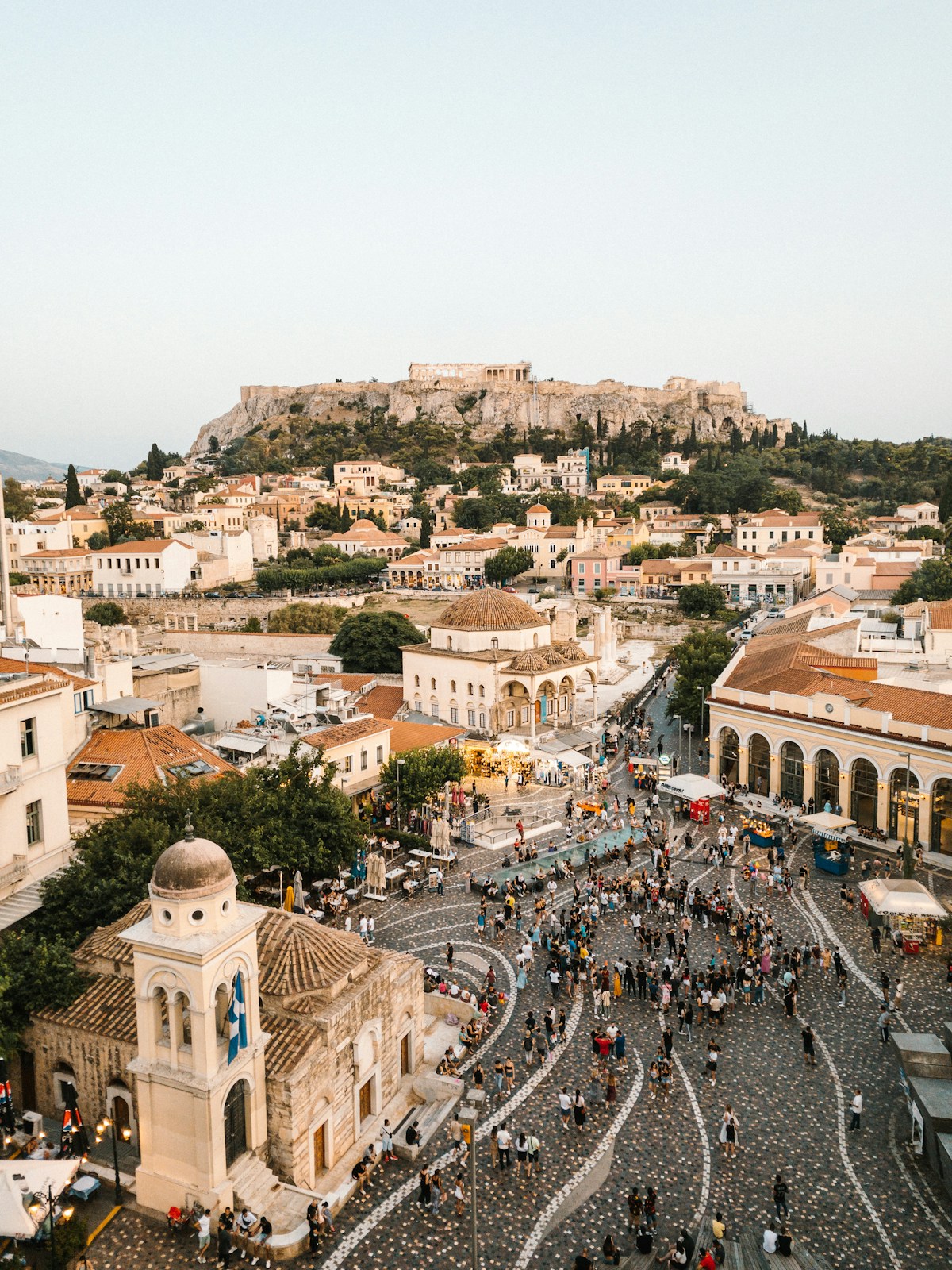
Petty theft: The main risk. Be particularly aware in crowded Athens tourist areas (Monastiraki, Omonia metro, Plaka) and on crowded ferries. Don’t leave bags unattended on beaches.
Road safety: The main genuine hazard, particularly on islands. ATV and quad bike accidents are a consistent problem in Santorini, Mykonos, and Corfu. If you are not an experienced rider, hire a car rather than an ATV - hospital care on smaller islands is limited. Motorcycle helmets are legally required.
Sun: Real danger in July and August - temperatures reach 38°C on exposed archaeological sites with no shade. Bring water, sunscreen (SPF 50 recommended), and a hat. The Acropolis in particular is fully exposed.
Sea conditions: The Meltemi wind (a dry northerly) blows hard across the Aegean in July–August. It creates rough conditions on exposed beaches and can cancel catamaran ferry services. The Ionian coast (Corfu, Lefkada, Kefalonia) is generally calmer.
Emergency numbers:
- Emergency: 112 (EU standard)
- Police: 100
- Ambulance: 166
- Fire: 199
- Tourist Police: 1571 (English-speaking)
What to Pack
Clothing:
- Light breathable clothing (cotton, linen) for summer
- A layer for evenings, particularly on islands where sea breezes cool things quickly after sunset
- Cover for shoulders and knees for religious sites
- Comfortable walking shoes with grip - the Acropolis path and most archaeological sites have worn limestone that is slippery
Practical:
- High-factor sunscreen (available in Greece but expensive at tourist shops)
- Reusable water bottle - tap water is drinkable in most of mainland Greece and Crete; bottled water recommended on smaller islands
- Portable power bank - useful on long ferry crossings
- EU travel adaptor (Greece uses Type C/F plugs, 230V)
Documents:
- Passport or EU national ID
- European Health Insurance Card (EHIC) for EU citizens - provides access to Greek public healthcare at local rates
- Travel insurance policy - recommended for all visitors; essential for activities (hiking, watersports)
Off the tourist trail: For a different side of Greece, Ioannina in the northwest and Kavala in the northeast are well-connected mainland cities with Byzantine heritage, strong food scenes, and far fewer visitors than the islands. For a detailed safety overview, see our is Greece safe guide. And don’t leave home without reviewing our Greece packing list.
Book Greece experiences and tours with GetYourGuide.
See Also
- Greece Packing List - what to bring by season and activity
- Is Greece Safe for Tourists? - safety overview and common scams
- Basic Greek Phrases - the words that make a real difference
- Greece Budget Travel Guide - how to keep costs down without missing out
- Getting Around Greece - ferries, buses, domestic flights, and driving
- Best Time to Visit Greece - avoiding peak season crowds and costs
Plan Your Trip
✈️ Book your flights to Greece 🛡️ Get travel insurance 📱 Stay connected with an eSIM 🚗 Rent a car