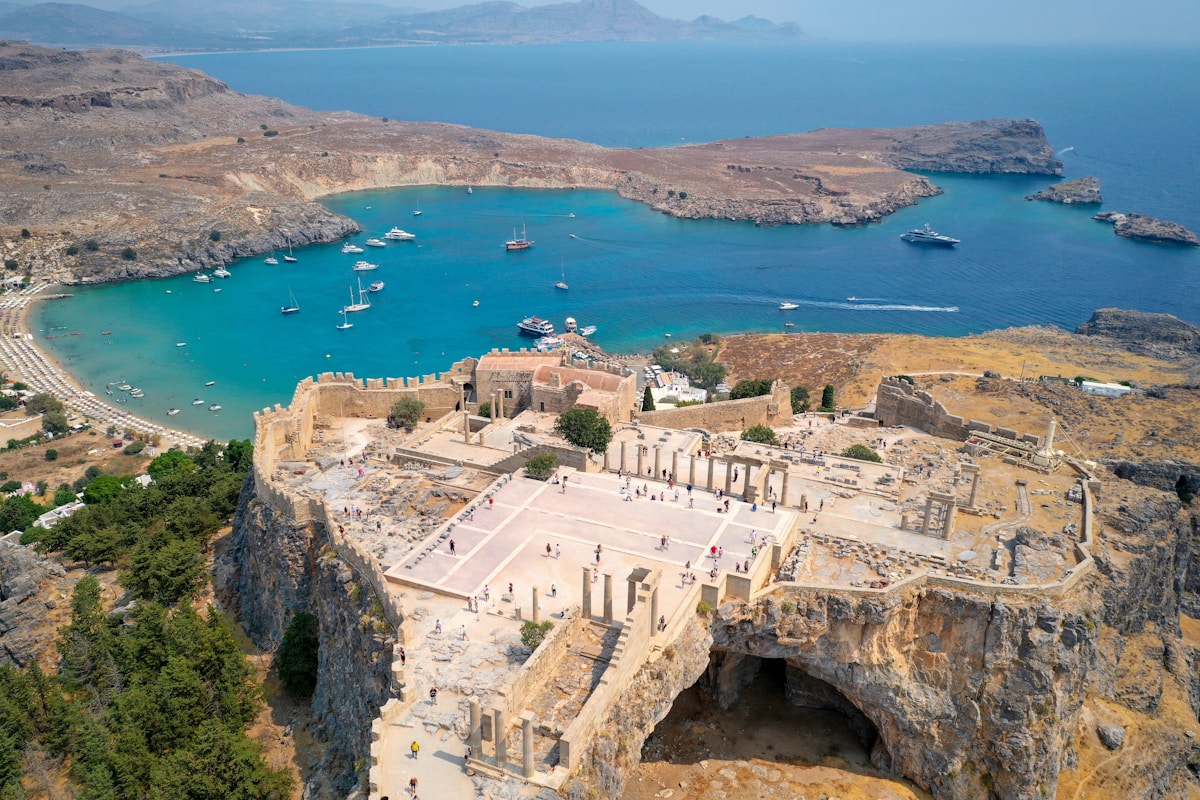
The ferry from Athens to Rhodes is one of the great Aegean crossings - a long haul through the Dodecanese that deposits you in one of Greece’s most storied destinations. There’s no bridge, no shortcut: if you’re going by sea, you’re committing to an overnight journey, and that’s part of the appeal.
This guide covers operators, journey times, ticket types, prices, booking tips, and what to expect on the crossing.
The Route: Piraeus to Rhodes
All ferries to Rhodes depart from the Port of Piraeus, roughly 10 km southwest of central Athens. You can reach Piraeus by metro (Line 1, green line, to Piraeus station - about 40 minutes from Monastiraki) or by taxi.
Most departures use Gate E1 or Gate E2 in the eastern section of the port. These gates handle the large overnight ferries to the Dodecanese. Your ticket will confirm the exact gate - arrive at least 45 minutes before departure.
The ferry arrives at Rhodes Town Commercial Port (also called Kolona Port), adjacent to the medieval Old Town. The port is walkable to most accommodation in and around the historic centre.
Ferry Operators
Blue Star Ferries
Blue Star Ferries is the dominant operator on the Piraeus–Rhodes route and the one most travellers use. Their ships are large, modern, and well-equipped, with comfortable seating areas, restaurant-style dining, a cafeteria, private cabins, and outdoor deck space.
Sailings typically depart Piraeus in the early evening (around 18:00–19:00) and arrive in Rhodes the following morning, often stopping at intermediate islands including Patmos, Leros, Kos, and sometimes Kalymnos. Journey time is approximately 14–18 hours depending on how many stops are made.
Anek Lines
Anek Lines also serves the route on certain days and shares some itineraries with Blue Star under a commercial cooperation. Onboard facilities are comparable - cabins, restaurant, outdoor decks. Check schedules carefully, as Anek itineraries may serve different intermediate stops or travel via Heraklion on extended sailings.
Seajets (High-Speed)
Seajets operates high-speed catamaran services in summer, cutting the crossing to around 12 hours 50 minutes. These services are seasonal (typically May to October), cost more than the conventional overnight ferries, and are more susceptible to cancellation in rough weather. They depart later in the morning and arrive in the afternoon. If you want to maximise time in Rhodes on arrival day and the price premium is acceptable, Seajets is worth considering.
Journey Time
| Service | Operator | Approximate Duration |
|---|---|---|
| Conventional overnight | Blue Star Ferries / Anek Lines | 14–18 hours |
| High-speed (seasonal) | Seajets | ~12 hours 50 minutes |
The conventional figure ranges because intermediate island stops add time. Direct or near-direct sailings are faster; itineraries via Kos and multiple Dodecanese stops take longer.
Ticket Prices
Prices vary significantly by season, ticket type, and how far in advance you book. The figures below are approximate as of 2026:
| Ticket Type | Approximate Price (one way) |
|---|---|
| Deck / economy seat | from €40 |
| Airline-style seat (reclining) | from €60 |
| 4-berth cabin (interior) | from €75 per person |
| 2-berth cabin (interior) | from €90 per person |
| 2-berth cabin (sea view) | from €120 per person |
| Vehicle (car) | from €140 |
High season (July–August) commands a significant premium - prices for cabins can roughly double compared to October departures. Deck tickets are technically the cheapest option but amount to sleeping in a chair or finding floor space, which is uncomfortable on an 18-hour crossing. For overnight travel, a 4-berth cabin is the sensible base choice.
Book via Ferryscanner - the most comprehensive Greek ferry search platform - to compare schedules and prices across all operators before committing to a date.
Frequency
In peak season (June–September), there are typically one to two sailings per day from Piraeus to Rhodes, served between Blue Star Ferries and Anek Lines, with Seajets high-speed departures adding additional options.
In the shoulder and off-season (October–May), frequency drops to approximately four to seven sailings per week. Rhodes is served year-round - it is one of the few Aegean islands with a consistent winter schedule.
Seasonal Variation
The Aegean in July and August can be busy enough that popular cabin categories sell out weeks in advance. Book as early as possible if you’re travelling in peak summer. High-speed Seajets services are only available from approximately May to October.
In autumn and spring, the crossing is often calmer and cheaper, and you’re more likely to find availability without advance planning. Winter sailings still run but are primarily conventional ferries - no high-speed options.
For the best combination of price and reliability, May, June, and September are ideal months to make the crossing. The weather is stable, the sea is calm, and fares are measurably lower than peak summer.
Booking Tips
Book cabins at least 2–3 weeks ahead in July and August - Rhodes is one of the most popular ferry destinations in Greece, and premium cabin categories fill fast. The Seajets high-speed service in particular sells out quickly.
Travel on weekday departures where possible. Friday and Sunday sailings (when Athenians travel to the islands for weekends) are typically more expensive and busier than midweek options.
Arrive at the port early. Piraeus is a large working port. Allow yourself time to find the correct gate and board. Vehicle drivers should arrive at least 90 minutes before departure.
Check intermediate stops. Some itineraries stop at four or five Dodecanese islands before reaching Rhodes. If your priority is a quick arrival, look for services with fewer stops - itinerary details are listed on booking platforms and operator websites.
Pack for the overnight journey. Even in summer, it can be cool on deck at night. Bring a layer, and if you’re in a cabin, a travel pillow is worth having - cabin pillows vary in quality.
Getting to Piraeus from Athens
- Metro Line 1 (green): From Monastiraki, Omonia, or Thissio to Piraeus station (~35–45 minutes). This drops you at the top of the port - follow signs to E1/E2 gates for the Dodecanese ferries.
- Taxi / ride-hailing: Around 30–45 minutes from central Athens depending on traffic. Expect approximately €20–30. Avoid rush hour (07:30–09:30 and 17:00–19:30).
- Bus X96: Runs from Athens International Airport directly to Piraeus Port, useful if you’re arriving at the airport and connecting to a same-day ferry.
What to Expect Onboard
Blue Star and Anek ships are large enough to have several separate spaces: deck chairs and sun loungers at the rear, a cafeteria, a sit-down restaurant, interior seating areas, and the cabin decks. Wi-Fi is available but variable in quality. The crossing through the Aegean can be scenic - passing small islands and open sea - especially on the early part of the journey before dark.
The onboard restaurant typically serves hot food at reasonable prices; the cafeteria is cheaper and simpler. Most travellers in economy seats spend the night dozing in reclining chairs or finding a quiet patch of floor. A cabin makes an overnight crossing significantly more comfortable.
Intermediate Stops: Making the Most of the Journey
Most Blue Star and Anek sailings on the Piraeus–Rhodes route stop at between two and four Dodecanese islands before reaching Rhodes. The most common stops:
Patmos (approximately 7–8 hours from Piraeus): The Cave of the Apocalypse - where St John wrote the Book of Revelation - and the 11th-century Monastery of St John Theologian dominate the upper town. The island is small, unhurried, and completely different in character from Rhodes. Entry to the cave is approximately €5; the monastery museum is an additional €8 as of 2026. If you have flexibility in your itinerary, a night here on the way south is a genuine detour.
Leros (approximately 9–10 hours from Piraeus): The waterfront at Lakki is an exceptional piece of 1930s Italian Rationalist architecture - a planned town built under the Mussolini administration that is now gradually being restored. Far less visited than Kos or Rhodes and much quieter for it.
Kos (approximately 11–12 hours from Piraeus): The largest Dodecanese island before Rhodes. The Asclepion - the sanctuary where Hippocrates taught medicine, 4 km from Kos Town - is one of the most significant ancient sites in the region, with sea views back toward Turkey. The beaches on the north coast of Kos are long, sandy, and well-serviced. Kos makes a logical extension of a Rhodes itinerary: the two islands share a ferry connection (approximately 2.5 hours), allowing you to split the return journey.
If you’re planning a Dodecanese island-hop, search multi-leg itineraries on Ferryscanner - it shows all operators across every leg and lets you book each crossing independently.
For tours, food experiences, and activities in Rhodes once you arrive, explore Rhodes tours and excursions on GetYourGuide.
Search hotels in Rhodes on Booking.com
Plan your trip: Book this ferry | Flights to Greece | Travel Insurance | Greece eSIM
Plan Your Trip
✈️ Book your flights to Greece 🛡️ Get travel insurance 📱 Stay connected with an eSIM 🚗 Rent a car