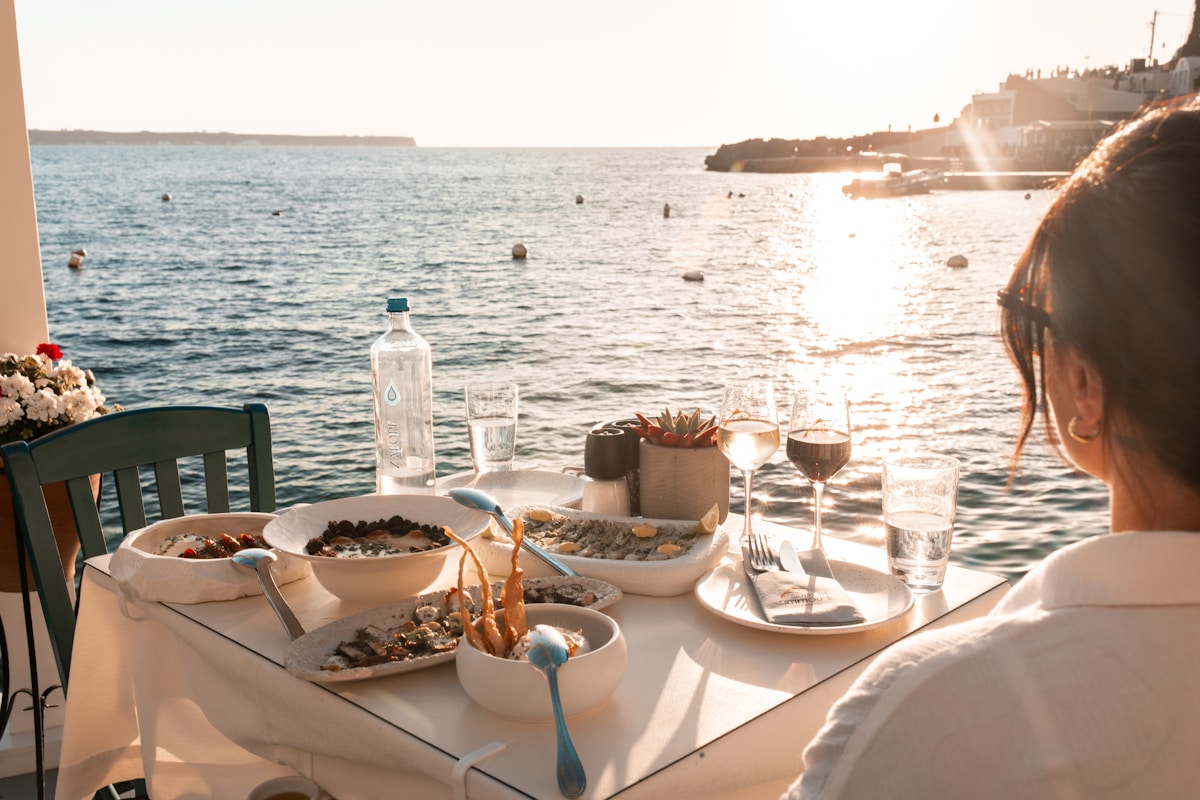
Santorini produces three protected local ingredients that no other Greek island replicates: fava (yellow split peas from volcanic soil, sweeter and nuttier than any mainland equivalent), tomatokeftedes fritters made from the island’s small cherry tomatoes - intensely flavoured from near-zero irrigation and mineral-rich soil - and Assyrtiko grapes trained in basket-shaped nests to survive the caldera wind. These are the food culture of Santorini; any serious kitchen on the island will feature at least one. Knowing what you are eating - not just where - is the better half of eating well here.
Santorini has two restaurant problems. The first is the view premium: sit on a caldera-view terrace in Oia and you will pay 30–50% more than you would for the equivalent meal in a village five kilometres inland. The second is the tourist menu problem: the most photographed restaurants are sometimes the least interesting kitchens, because they know you will come back for the view regardless of the food.
This guide skips both problems. The recommendations here are chosen on the food first, the location second. Some have views. Some do not. All of them serve something worth eating.
Oia: What to Know Before You Book
Oia’s caldera-front restaurants are legitimately spectacular. The setting - white buildings cascading down volcanic rock, the caldera stretching below, the sunset turning the water orange and pink - is as good as any restaurant view in Europe. The pricing reflects this.
For the best Oia experience without paying the sunset premium, eat lunch rather than dinner. The same caldera-front tables, the same view, food served earlier and usually better (kitchens are less stretched at noon than at 9pm), and a bill that comes in 20–30% lower than an equivalent dinner.
Roka (Nikolaou Nomikou, Oia old village) is the honest pick in Oia. It sits inside the village rather than on the caldera lip, serves proper Greek food rather than Mediterranean fusion, and prices reflect what the food is worth rather than where you are sitting. The village salad with Santorini tomatoes and capers, the grilled octopus, and the fava with caramelised onion are all worth ordering. Budget approximately EUR 35–45 per person with wine.
Lauda (Andronis Boutique Hotel, Oia) is the caldera-front splurge option done correctly. The kitchen is serious - the chef works with local products and changes the menu with the season - and the views are the best seats in Oia. Expect EUR 80–120 per person. Book six weeks ahead for July and August sunset tables.
For a budget meal in Oia, the bakery on the main pedestrian street sells fresh tiropita, spanakopita, and cheese pies from around EUR 2.50. It is not a restaurant but it is one of the more honest food experiences in the village.
Fira: The Widest Range on the Island
Fira is Santorini’s commercial capital and has the most varied restaurant scene. It lacks Oia’s photogenic perfection but more than compensates with variety and value.
Argo (Erythrou Stavrou, Fira) has caldera views and cooks Greek food properly. The moussaka here is made daily - proper bechamel, good minced lamb, not frozen - and the house wine is drinkable. Budget EUR 25–35 per person. It fills up fast; arrive by 7:30pm or 8:30pm at the latest.
Naoussa (Dekigala 24, Fira) focuses on northern Greek cuisine in a setting that feels like Thessaloniki rather than a Cycladic tourist hub. The pies, the grilled meats, and the cheese selection are exceptional. EUR 20–30 per person. One of the better value places on the island.
Lucky’s Souvlakis (Erythrou Stavrou, Fira) is not trying to be anything other than what it is: a walk-up souvlaki counter serving pork, chicken, and lamb skewers from around EUR 3, pita wraps from EUR 3.50. Get the pork souvlaki, eat on the street, spend the money you saved on wine somewhere else.
For upscale Fira dining, Selene (Pyrgos, technically outside Fira but within easy reach) is Santorini’s most respected serious restaurant. The chef uses island ingredients throughout - the Santorini fava, white aubergine, and local cheese feature prominently - and the wine list is the best on the island. Expect EUR 70–100 per person. Reservations essential.
Akrotiri: The Underrated Corner
Akrotiri sits at the island’s southern tip, near the ancient excavation site and the red beach. Most visitors come for the archaeological site and leave before eating. This is a mistake.
Dolphin (near Akrotiri lighthouse) is the best seafood taverna on the island that tourists regularly overlook. The fish arrives daily from the fishing boats at Vlychada harbour. Order the sea bream grilled whole, the calamari stuffed with feta and herbs, and the grilled octopus that has been hung in the sun that morning. Expect EUR 28–40 per person with local wine. It has a terrace that looks toward the lighthouse. No reservations required; arrive by noon for lunch.
To Psaraki (Vlychada port) is the local fisherman’s taverna format done correctly: whiteboard menu that changes based on the morning catch, plastic chairs, paper tablecloths, and proper fish at prices that reflect what you are actually eating rather than where you are sitting. Budget EUR 18–25 per person.
Interior Villages: Best Value on the Island
Pyrgos, Megalochori, and Emporio are the island’s medieval villages set back from the caldera, with almost no tourist infrastructure. The tavernas here charge honest prices and the food is consistently better than the caldera-front tourist restaurants.
Metaxy Mas (Exo Gonia, near Pyrgos) is frequently cited as the best traditional taverna on the island. The menu does not change much: stuffed vine leaves, htipiti, fava, grilled meats, and local cheeses. The owner makes his own wine. Budget EUR 20–28 per person. Reservations recommended for weekends.
Nikolas (Megalochori village centre) is a family-run taverna that has been feeding the locals for decades. The moussaka, pastitsio, and daily specials are all worth ordering. EUR 15–22 per person. Lunch only on weekdays.
Take a Guided Food and Wine Tour of Santorini
Santorini has some of the most distinctive local produce in Greece - the island’s cherry tomatoes (grown in volcanic soil with almost no irrigation), the white aubergines, the fava (yellow split peas from Santorinian fields), and the Assyrtiko wine from basket-trained vines that survive the caldera wind - and all of it rewards guided attention. A food tour of Santorini moves from the morning market in Fira through a tasting of the island’s specific produce, into a winery visit in the Pyrgos or Megalochori area, and to the traditional tavernas in the interior villages where the island’s own residents eat rather than the sunset-facing restaurants in Oia. The combination of volcanic geology, distinct agriculture, and a wine tradition going back to antiquity makes Santorini the single best island for a guided food and wine experience in Greece.
Browse Santorini food tours and wine tastings → GetYourGuide
Perissa and Kamari: Beach Dining
The black sand beach resorts on the eastern side of the island have the lowest restaurant prices on Santorini and the least caldera drama. If you are based at Perissa or Kamari, the tavernas along the beach front are significantly better value than anything in Oia or Fira for equivalent quality.
Lava (Perissa beach) serves proper grilled seafood and Greek classics at prices that feel closer to Athens than to Oia. The kalamari here is fresh, not frozen. Budget EUR 18–25 per person with a carafe of local wine.
The general rule for both villages: avoid the restaurants directly at the beach-side promenade in favour of places one street back, where the rent is lower and the food tends to be better. The same quality at EUR 5 less per person.
Book Santorini food tours and wine tastings with GetYourGuide. Find hotels in Santorini on Booking.com.