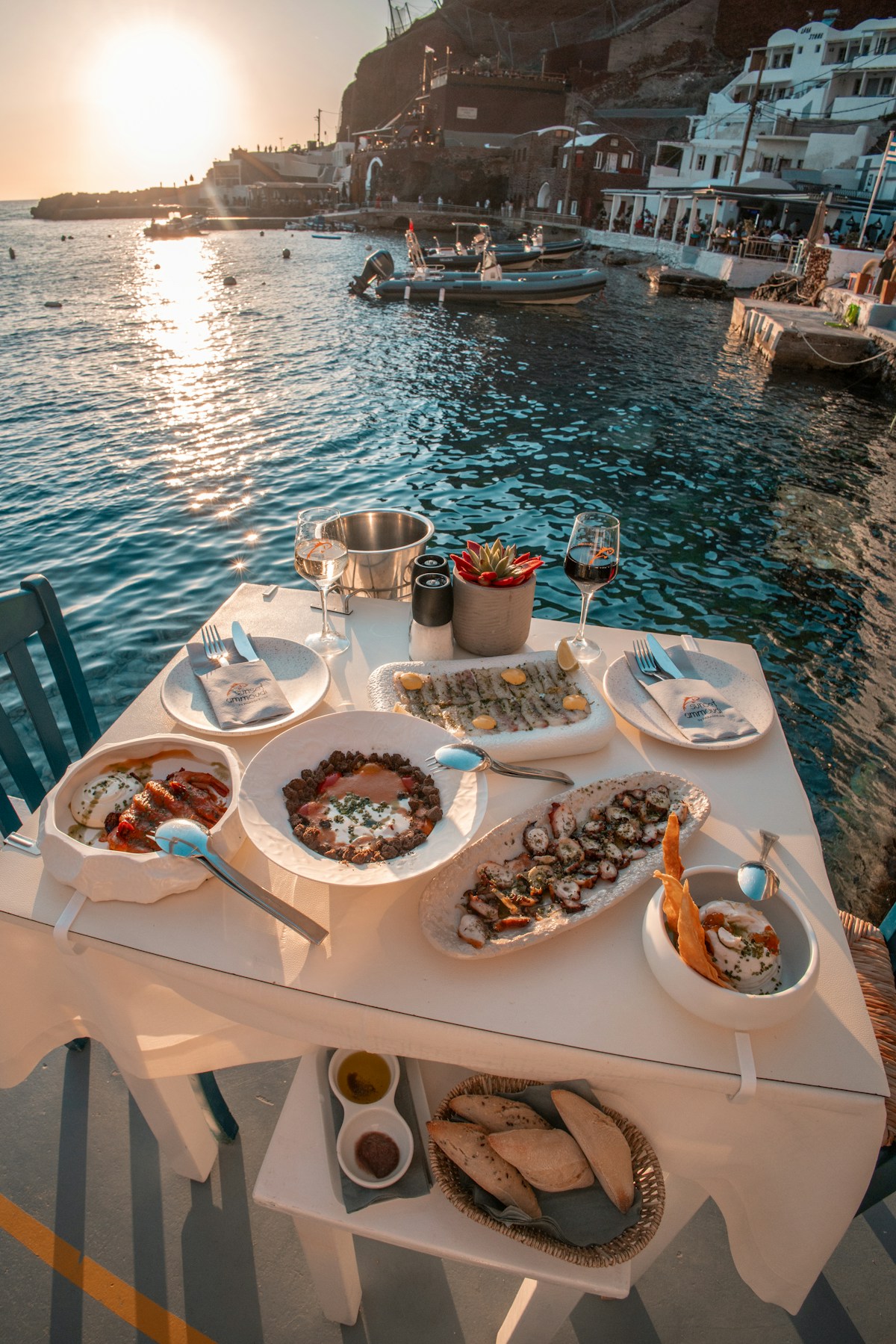
Santorini’s food identity runs deeper than the caldera-view restaurants most visitors photograph. The island’s volcanic soil produces a handful of ingredients found nowhere else in Greece, and a well-guided food tour is the most direct way to understand the difference between the tourist-facing caldera dining and what the island actually produces. All prices below are approximate as of 2026.
Top Tours at a Glance
Here’s a quick comparison of top-rated tours on GetYourGuide:
| Tour | Duration | Price (from) | Group Size | Highlights |
|---|---|---|---|---|
| Santorini Culinary Walking Tour | 3.5 hrs | from $82/person | Small group (max 8) | Fava, cherry tomatoes, local taverna stop |
| Food & Wine Bike Tour: Megalochori & Pyrgos | 4 hrs | from $96/person | Small group (max 10) | E-bike, producers, wine tasting included |
| Santo Wines Vineyard & Food Pairing | 2.5 hrs | from $72/person | Group | Caldera vineyard walk, 4 wine pairings |
| Santorini Cooking Class in Oia | 4 hrs | from $108/person | Small group (max 6) | Market, private kitchen, fava & eggplant dishes |
| Santorini Village Food Tour: Off the Beaten Track | 3.5 hrs | from $78/person | Small group (max 8) | Pyrgos, Firostefani, local spots not in guidebooks |
Browse all Santorini food tours → GetYourGuide
What Makes Santorini Food Unique
The volcanic soil here, a mix of pumice and ash from the Minoan eruption roughly 3,600 years ago, stresses the plants that grow in it. Water is scarce, the soil is low in nutrients, and the yields are small. The result is agricultural products with concentrated flavour.
The key ingredients to look for on any food tour:
Santorini fava is not the same as the fava beans found elsewhere in Greece. It is made from yellow split peas (Lathyrus clymenum) grown on the island since antiquity, with a creamy, slightly sweet flavour. It is typically served as a puree with olive oil and capers. Protected by a PDO designation, genuine Santorini fava commands a premium.
Cherry tomatoes (tomataki Santorinis) are small, sweet, and intensely flavoured. They grow in the volcanic soil with minimal irrigation and are dried on rooftops or served fresh. A plate of Santorini tomatoes tastes markedly different from supermarket varieties.
White eggplant is a local variety with thinner skin, fewer seeds, and a milder flavour than standard eggplant. It appears in sfougato, a Santorinian omelette-style dish, and in various roasted preparations.
Assyrtiko wine is made from a grape variety indigenous to Santorini that thrives in volcanic soil. The wine is dry, high in acidity, and has a minerality that reflects the terroir. Any food tour worth the price includes at least one Assyrtiko tasting.
Tour Operators
Santorini Culinary Adventures runs a 3.5-hour walking food tour covering the market, three to four tasting stops in the back streets of Fira, and a sit-down tasting plate of Santorini-specific products. The tour visits a family-run taverna in the Firostefani neighbourhood that does not appear in guidebooks. Guides are fluent in the island’s agricultural history.
Duration: 3.5 hours
Price: Approximately EUR 85 per person
Group size: Maximum 8
Includes: All tastings, one glass of local wine, guide
Best time: Morning departure, 9am to 9:30am
Yummy Pedals combines a food tour with a cycling element, riding between villages on electric bikes with stops for tastings at local producers. The route covers Megalochori and Pyrgos, two of the best food villages. The cycling component keeps the group moving between stops rather than walking the caldera hill paths.
Duration: 4 hours
Price: Approximately EUR 99 per person
Group size: Maximum 10
Includes: Electric bike, all tastings, guide, helmet
Best time: Morning or late afternoon
The Winery Food Tour operates from Santo Wines on the caldera edge near Pyrgos and focuses on the connection between volcanic soil, winemaking, and local cuisine. The tour includes a guided walk through the vineyards, explanation of the bush-vine training method used in Santorini (where vines are coiled into baskets on the ground to protect from wind), and a seated tasting of four Assyrtiko wines paired with Santorini products.
Duration: 2.5 hours
Price: Approximately EUR 75 per person
Includes: Vineyard walk, 4 wine tastings, food pairings
Best time: Late afternoon for sunset over the vines
Cooking Classes
For a more hands-on experience, several operators offer cooking classes that begin with a market visit and end with a shared meal. Expect to make two to three dishes using Santorinian products, typically a fava puree, a tomato-based dish, and something using white eggplant or capers.
Nikolas Cooking Class in Oia runs one of the most consistently reviewed sessions on the island. The class begins at the village vegetable seller, moves to a private kitchen, and ends with lunch for the group.
Duration: 4 hours
Price: Approximately EUR 110 per person
Group size: Maximum 6
Best Season for a Food Tour
May, June, September, and October are the best months for a food tour on Santorini. The cherry tomato harvest runs through August and September, making September ideal for seeing the tomato-drying process on village rooftops. June and September have the most manageable temperatures for walking food tours; July and August are very hot and some outdoor market activity moves to early morning or evening. The Assyrtiko harvest is in August; winery tours in September visit facilities still busy from the recent harvest.
Booking Tips
Book food tours at least a week ahead in high season. The best small-group operators (maximum 8 people) sell out first. If a tour includes a village restaurant that is not usually open to visitors, that is a sign of a genuine operator relationship rather than a standard tourist stop. Prices listed here are approximate as of 2026.
Book a Santorini food tour on GetYourGuide to see current operators and availability.
Need a base? Search hotels in Santorini.