Greek desserts split into three worlds: syrup-soaked filo pastries, fried and honeyed dough, and the quiet spoon sweets and yoghurt that end a taverna meal. Many of these traditional Greek sweets arrived with Greeks from Asia Minor and Constantinople, which is why Thessaloniki and Athens bakeries are so strong on syrup and custard. This guide covers what to order, what it should taste like, and where to buy it. For savoury food first, start with our Greek food guide.
Baklava
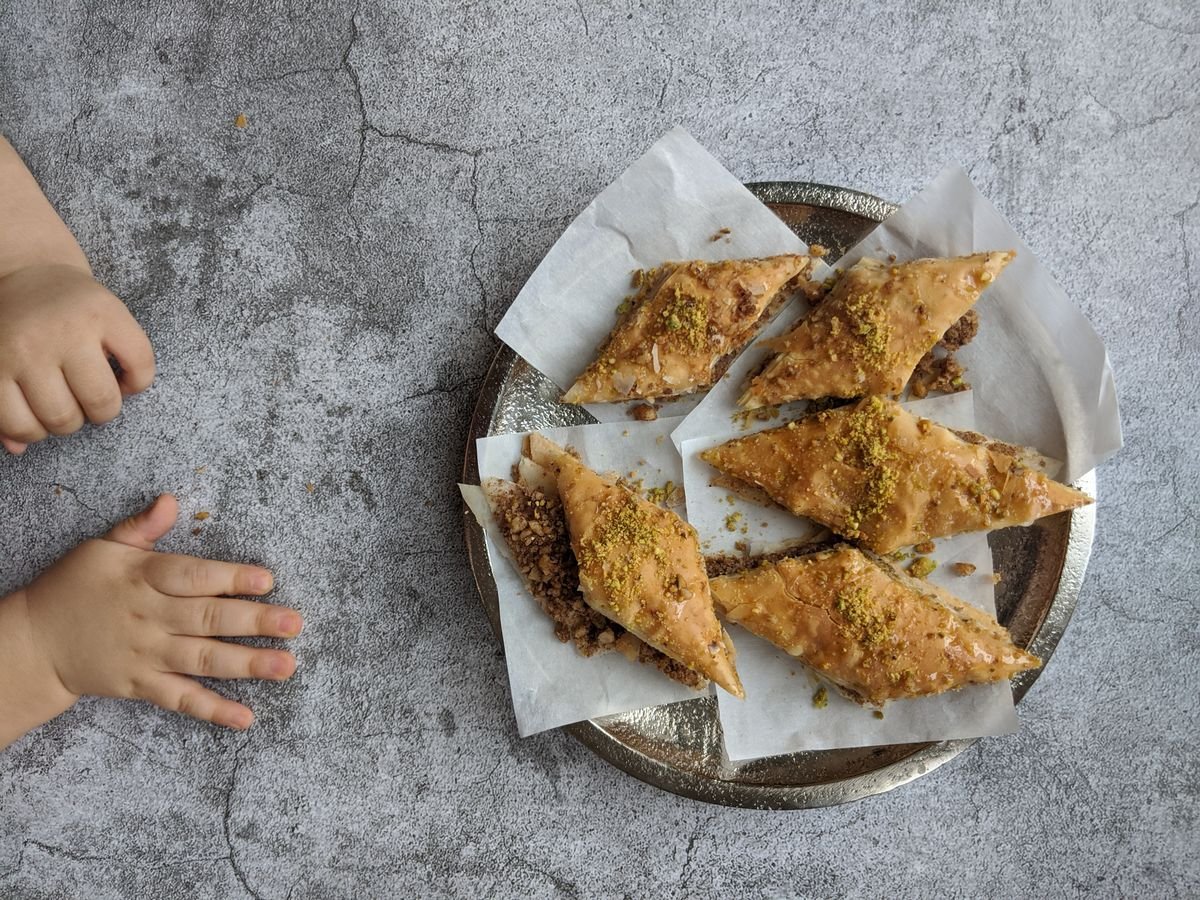
Baklava is layered filo, chopped nuts and a syrup of sugar, honey and often cinnamon or clove. The Greek version usually uses walnuts or almonds (pistachio is more common in Turkish and Levantine shops) and is cut into diamonds. A good piece is crisp on top, dense at the centre and sweet without being cloying. Expect to pay approximately EUR 2-4 for a single piece in a bakery, more in a patisserie, as of 2026.
Tip: buy baklava from a shop that bakes in-house and sells it in trays, not from pre-wrapped boxes. Fresh filo shatters; stale filo goes leathery.
Loukoumades
Loukoumades are fried dough balls, crisp outside and airy inside, served hot with honey syrup, cinnamon and often walnuts. Variants add chocolate, pistachio cream or ice cream. A portion of around ten costs approximately EUR 4-6 as of 2026. They are best eaten immediately, standing or at a small table.
In central Athens, the Aiolou Street area near Monastiraki Square is the traditional place to go. Krinos, a historic pastry shop on Aiolou, and Lukumades are the two names most often recommended. The shops differ on their founding dates in different sources, so go for the product rather than the story. We cover the savoury side of this neighbourhood in our Greek street food guide.
Galaktoboureko
Galaktoboureko is the dessert to order if you only try one. Semolina custard is baked between sheets of buttered filo and the whole tray is soaked in syrup, often flavoured with lemon zest or orange. It should be warm or at room temperature, with a custard that wobbles slightly and a top that still crackles. Some shops sell it by the slice for roughly EUR 3-4.
It is a pastry-shop and home-cooking classic rather than a street snack, so look for traditional zacharoplasteia (sweet shops) in residential neighbourhoods, where turnover is high and the tray is likely baked that morning.
Portokalopita
Portokalopita is orange cake made with stale filo shredded into small pieces, baked with yoghurt, eggs and orange zest, then soaked in orange syrup. It is moist, fragrant and less heavy than baklava, and many tavernas serve a square of it free after the meal, often with a spoonful of ice cream or yoghurt. It is a good choice if you find the pastry-and-syrup family too sweet.
Bougatsa and Thessaloniki’s pastry culture
Bougatsa is a filo pie, most famously filled with warm semolina custard and dusted with icing sugar and cinnamon. It is a breakfast, not a dessert, and Thessaloniki treats it as a morning ritual. The pie is baked in large trays, cut to order with scissors and served on a paper plate. Cheese (tiri) and minced meat versions exist, but the custard version is the one to try first. Bantis, Serraikon and Bougatsa Giannis near the White Tower are among the shops most often named by local food writers; the custard pie at a busy shop will be fresh, and a portion costs approximately EUR 3-4 as of 2026. Serraikon lists its heritage as dating to 1952, and Bantis to around 1969.
Thessaloniki is also the best place for tsoureki (a braided sweet bread scented with mahlab) and for chain patisseries such as Terkenlis, founded in 1948, which sells trays of syrup pastries, cream cakes and chocolates. If you are planning a food-led stay, see our Thessaloniki restaurants guide, and our comparison of Athens vs Thessaloniki if you are deciding where to spend time.
Halva
Halva in Greece comes in two main styles. Tahini halva is a crumbly slab of sesame paste and sugar, sold by weight at markets and sometimes studded with pistachios or almonds. Semolina halva (halvas simigdalenios) is a warm, pudding-like cake of toasted semolina, syrup, raisins and cinnamon, sliced and served at tavernas. During Orthodox Lent, vegan-friendly (nistisimo) halva is a common sweet that uses no dairy. Our vegan food guide to Greece is the place to look if you eat plant-based.
Spoon sweets (glyka tou koutaliou)
A spoon sweet is whole fruit or peel preserved in syrup and served on a teaspoon with cold water and often a coffee. Classic flavours are sour cherry (vyssino), bergamot, quince, fig, tiny green walnuts and orange peel. The name tells you the serving: one spoonful is the portion. Many tavernas and cafes in Athens and on the islands offer a spoon sweet or two, and jars are an easy gift to carry home from a delicatessen or island cooperative.
Kourabiedes and melomakarona: Christmas sweets
These two cookies define a Greek winter. Kourabiedes are crumbly butter-and-almond shortbread, often with a clove pressed on top, covered in icing sugar. Melomakarona are oval, spiced semolina biscuits dipped in honey syrup and sprinkled with walnuts. Bakeries stock them from late November. If you visit then, our Greece in December guide covers what else is on, from markets to ski weather.
Yoghurt, honey and everyday sweets
Do not overlook the simplest dessert: thick strained Greek yoghurt with thyme honey and walnuts. Other common finishes include rizogalo (rice pudding), kataifi (shredded filo with nuts), ravani (semolina and syrup cake) and sweet tsoureki. Many tavernas bring a free plate of fruit or a small sweet with the bill.
Where to buy Greek sweets in Athens
- Aiolou Street and Monastiraki: loukoumades and traditional pastry at Krinos and Lukumades.
- Kolonaki and residential neighbourhoods: more refined patisseries, and quieter shops for galaktoboureko and cakes.
- Aristokratikon: a long-established confectioner in central Athens known for chocolates and sweets, useful for gifts.
- Athens central market area (Athinas Street): halva, nuts, dried fruit and spoon sweets from delicatessens.
Prices at central shops are higher than in neighbourhood bakeries. To taste several in one outing, a guided Athens food tour saves hours of trial and error. For an overview of the city’s tavernas, see our Athens restaurants guide.
Where to buy sweets in Thessaloniki
Start your morning at one of the bougatsa shops above, then walk the market streets around Modiano and Kapani for tsoureki, nuts and syrup pastries. Terkenlis has branches around the city for gifts. A Thessaloniki food tour usually includes a bougatsa stop and is the easiest way to sample the city’s sweet culture with a local guide.
Tips for ordering Greek desserts
- Syrup pastries last, fresh ones first. Baklava and kataifi keep well; galaktoboureko and loukoumades do not.
- Sweets are shared. A tray of three or four desserts between two or three people is normal at the end of a meal.
- Pair with Greek coffee or a small spirit. Bitter coffee balances syrup, and raki or tsipouro often arrives for free.
- Check opening hours. Bougatsa shops open early and close by mid-afternoon; some stay open late into the night.
- Bring cash. Smaller bakeries may be cash-only.
For more on regional cooking, read our Cretan cuisine guide, and see the Thessaloniki tourism bougatsa page for the official city description of the pie.