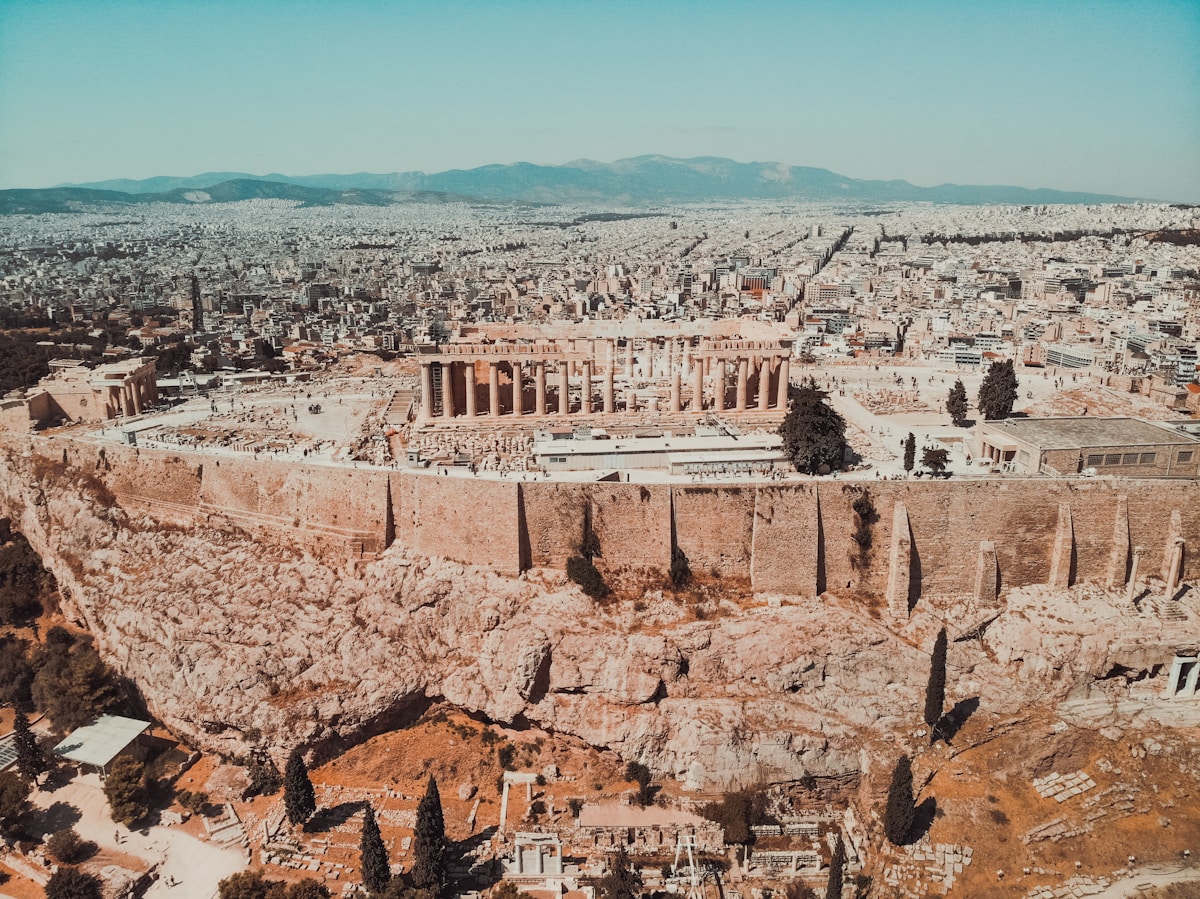
Athens and Thessaloniki are both unmissable Greek cities, but they deliver completely different experiences. Athens is the obvious entry point for first-time visitors - the monuments, the history, the sheer scale. Thessaloniki is what experienced Greece travellers come back for: better food, more genuine atmosphere, lower costs, and a pace of life that feels far less tourist-oriented.
Quick Verdict
| Category | Athens | Thessaloniki |
|---|---|---|
| Ancient history | ★★★★★ | ★★★ |
| Byzantine history | ★★★ | ★★★★★ |
| Food scene | ★★★★ | ★★★★★ |
| Nightlife | ★★★★ | ★★★★★ |
| Budget friendliness | ★★★ | ★★★★ |
| Beaches nearby | ★★★ | ★★★★ |
| Day trip options | ★★★★★ | ★★★ |
Go to Athens if you’re visiting Greece for the first time, you want ancient history, or you’re island-hopping from Piraeus port. Go to Thessaloniki if you want the best food in Greece, a more local experience, a younger city vibe, or a gateway to northern Greece and the Balkans.
History and Culture
Athens
Athens contains monuments that require no introduction. The Acropolis - the Parthenon, the Erechtheion, the Propylaea - remains one of the most significant archaeological sites in the world. The surrounding area, including the Ancient Agora, the Theatre of Dionysus, and the Odeon of Herodes Atticus, adds days of exploration. The Acropolis Museum (entry approximately €20 as of 2026) is one of the finest museums in Europe and worth half a day.
Beyond the ancient core, Athens has multiple worlds: Monastiraki’s flea market, Psyrri’s bar scene, Kolonaki’s upmarket shopping streets, and Exarchia’s gritty alternative culture. The city is sprawling and initially confusing - it rewards those who stay at least 3 nights.
Thessaloniki
Thessaloniki’s history is equally long but differently layered. The city was a major centre of the Byzantine Empire, then an Ottoman city for nearly 500 years, then a cosmopolitan trading hub with a large Sephardic Jewish population. The result is a remarkable concentration of Byzantine churches (Hagia Sophia, Rotunda, Acheiropoietos - all UNESCO-listed), Ottoman bathhouses, and early 20th-century apartment blocks. The Archaeological Museum of Thessaloniki (entry approximately €12 as of 2026) holds an extraordinary collection of Macedonian gold from the royal tombs at Vergina.
The White Tower, the symbol of the city, is a 15th-century Ottoman lighthouse overlooking the seafront promenade. The Ladadika and Modiano market districts give you Ottoman commercial architecture still in active use.
Food
Athens has a strong and varied food scene − both traditional and modern Greek:
- Souvlaki: Thanasis (Monastiraki Square) and Kostas (Plateia Agia Irini) are the two most cited spots, €3–4 per pita. The best cheap lunch in the city.
- Mezedes: Karamanlidika tou Fani (Sokratous 1) − charcuterie and meze from an Anatolian Greek tradition, €12–18 per dish. Diporto Agoras is a hidden lunch-only market taverna near Monastiraki with no sign and no menu − ask locals.
- Modern Greek: Seychelles (Exarchia, creative vegetable-forward dishes, €15–22 per dish), Nolan (contemporary Greek-Asian fusion, higher-end).
- Street food: Loukoumades (fried dough with honey and sesame) from Loukoumades shops near Monastiraki, €4–6 per portion. Spanakopita from a bakery near Syntagma, €2–3.
For traditional best value, the Nea Smyrni and Pangrati neighbourhoods − favoured by Athenians rather than tourists − have the best price-to-quality ratio. A full dinner at a good Athens taverna runs €25–45 per person with wine.
Thessaloniki has a different kind of food culture and most Greek food writers will quietly admit it beats Athens for traditional eating. The city has:
- Bougatsa: The famous custard (or cheese, or meat) pastry sold at dedicated shops from early morning. Serres and Trigona Panoramatos in Thessaloniki are institutions. A portion costs around €2.50.
- Seafood meze: Ladadika district has excellent fish tavernas; Modiano market is the place to buy fresh produce. Expect to spend €25–40 per person with wine for a full seafood meal.
- Meze culture: Thessaloniki has a stronger drinking-with-small-plates culture than Athens. You’ll pay €6–10 per meze dish at a traditional ouzeri.
- Street food: Koulouri (sesame-crusted bread rings), spetzofai (spicy pork sausage), tiropita (cheese pie) - all better in Thessaloniki.
Recommended spots in Thessaloniki: Extravaganza (modern Greek), Myrsini (traditional meze), Zythos Dore (craft beer and food), Thanasis Barbecue for grilled meat.
In Athens: Diporto Agoras (hidden lunch-only market taverna), Karamanlidika tou Fani (charcuterie and meze), Seychelles (creative Greek in Exarchia), To Kati Allo for late-night souvlaki.
Nightlife
Athens
Athens’s nightlife is concentrated in Gazi, Psyrri, and Kolonaki. Clubs don’t really get going until 1am, and the city has a strong bar culture in between. In summer, many clubs move outdoors to coastal venues in Glyfada. Athens has international DJ bookings and a music scene that covers everything from rock to electronic. Koukaki neighbourhood has good, relaxed cocktail bars.
Thessaloniki
Thessaloniki is Greece’s student city - three major universities and a large young population create a nightlife scene that arguably exceeds Athens for raw energy and authenticity. The Ladadika district and the streets around Aristotelous Square fill up from 10pm. The city has a strong live music tradition (rock, jazz, metal all have dedicated venues). Prices are lower than Athens - expect to pay €6–8 for a cocktail rather than €10–12.
Cost Comparison
| Category | Athens | Thessaloniki |
|---|---|---|
| Midrange hotel (per night) | €80–200 | €55–130 |
| Dinner per person with wine | €25–50 | €20–40 |
| Coffee | €3.50–5 | €2.50–4 |
| Museum entry (major) | €10–20 | €6–12 |
| Airport taxi to centre | €35–45 | €20–30 |
Thessaloniki is consistently cheaper than Athens across all categories - roughly 20–30% lower. For budget travellers, this is significant over a week-long trip: a couple spending five nights in mid-range accommodation could save €200–350 by choosing Thessaloniki over Athens. The food and nightlife savings stack up quickly too; cocktails in Thessaloniki’s student bars run €5–7, versus €9–12 in Athens’s Kolonaki or Gazi neighbourhoods.
Athens is more expensive for reasons of volume. The city hosts 25+ million visitors a year, and accommodation, restaurants, and attractions price accordingly. Thessaloniki, drawing roughly a fifth of that visitor traffic, has a far less touristically inflated price base.
Accommodation
For Athens, the best areas to base yourself are Monastiraki and Plaka for proximity to the ancient sites, Koukaki (south of the Acropolis) for better value mid-range options, and Psyrri for a younger crowd and bar access. Book at least 4–6 weeks ahead for April–June and September–October - good mid-range rooms sell fast.
Athens:
- Hotel Grande Bretagne - 5-star on Syntagma Square, €300–600+/night
- Athenaeum InterContinental Athens - 5-star, €300–600+/night
- Athens Was Hotel - midrange, from €70/night
- Pella Inn Hostel - budget, from €25/night
Search all Athens hotels on Booking.com
For Thessaloniki, stay in the centre near Aristotelous Square for the easiest access to the waterfront, Ladadika, and the main Byzantine monuments. The area around the White Tower is the best mid-range zone. Thessaloniki’s Thessaloniki International Fair week in September drives a sharp spike in hotel rates - avoid that week if cost is a priority.
Thessaloniki:
- Electra Palace Thessaloniki - 5-star, Aristotelous Square, €150–300/night
- Mediterranean Palace Hotel - €100–200/night
- City Hotel Thessaloniki - midrange, from €70/night
- Rent Rooms Thessaloniki - budget, from €20/night
Search all Thessaloniki hotels on Booking.com
Getting Around
Athens has a metro system (Lines 1–3), buses, and trams. The metro is clean, efficient, and runs until midnight (later on weekends). A single ticket costs €1.40 as of 2026; day passes are available. Taxis use meters (minimum fare €4). Ride-sharing apps (Beat, Bolt) work well.
Thessaloniki is largely walkable in the centre, but has limited public transport by comparison - mainly buses. The main sights can be covered on foot. For the beach towns on the Halkidiki peninsula (an hour south), a car or organised tour makes more sense.
Day Trips
From Athens:
- Delphi (3 hours by coach or car): The ancient sanctuary of Apollo, set on the slopes of Mount Parnassus above a valley stretching to the sea. One of the most atmospherically situated ancient sites in Greece. Entry approximately €12 as of 2026. Guided day trips from Athens run approximately €45–70/person including transport.
- Cape Sounion (2 hours): The clifftop Temple of Poseidon on the southern tip of Attica - spectacular at sunset, with views over the Aegean to several islands. Entry approximately €8. A coastal road south passes a string of Athenian beach clubs.
- Nafplio and the Peloponnese (2–2.5 hours): The most elegant small town in mainland Greece, with a Venetian fortress (Palamidi, €8), a waterfront promenade, and easy access to Mycenae (the Bronze Age citadel of Agamemnon, €12) and the ancient theatre of Epidaurus (€12 - remarkable acoustics). A longer day or overnight gives more time.
- Saronic Islands (1–2 hours by ferry from Piraeus): Aegina (Temple of Aphaia, pistachio farms), Hydra (car-free island with a photogenic harbour), Spetses (horses and bicycles only). Frequent ferries depart from Piraeus Port Gate E8. One-way tickets: approximately €15–30 depending on the island and ferry type.
- Meteora (4–4.5 hours by car or train via Kalambaka): The Byzantine monasteries perched on rock pinnacles are one of Greece’s most visually distinctive sights. A long day trip but possible; better as an overnight. The train from Athens to Kalambaka takes approximately 4 hours and costs €25–35.
From Thessaloniki:
- Vergina (1.5 hours): The royal tombs of the Macedonian kings, including the tomb of Philip II (Alexander the Great’s father), are housed in a remarkable underground museum. One of the most significant archaeological finds of the 20th century. Entry approximately €12. Guided day tours from Thessaloniki from approximately €35–50/person.
- Pella (1 hour): The ancient Macedonian capital, with extraordinary pebble mosaic floors from the 4th century BC showing hunting and mythological scenes. Entry approximately €6. Often combined with Vergina.
- Mount Olympus (2 hours to Litochoro village): Greece’s highest mountain (2,917m). Litochoro at its base is a pleasant town and the starting point for hiking routes. Lower trails (to the Prionia refuge, around 3 hours return) are accessible without full mountaineering gear; the summit requires a multi-day approach.
- Halkidiki (1 hour): Three peninsulas of beach southeast of Thessaloniki. Kassandra (first peninsula) is the most developed with large beach complexes. Sithonia (second peninsula) has better water and a more relaxed atmosphere. Athos (third peninsula) is a monastic republic - men can apply for a limited permit (diamonitirion) to enter; women are not permitted.
Verdict: Athens has more internationally famous day trips. Thessaloniki’s are less known but historically extraordinary - Vergina in particular is world-class and almost always uncrowded.
When to Visit
Both cities work year-round, but the calculus is different for each.
Athens: Summer (July–August) means 35–40°C temperatures, the Acropolis crowded with 3,000+ visitors per hour at peak, and hotel prices at their highest. The best months are April–May (18–25°C, wildflowers on Philopappos Hill, good spring light) and September–October (22–28°C, crowds thin out, hotel prices drop 20–30% from the August peak). December–February is mild (8–14°C) and very quiet - excellent for museums and cafes, but the open archaeological sites lose some atmosphere in overcast winter light. Easter in Athens is the best single cultural event of the year if you’re timing a visit.
Thessaloniki: Peaks in autumn. The Thessaloniki International Film Festival runs in November (usually the second or third week), filling the city with an energised crowd of film industry visitors and local cinephiles. The Dimitria Festival in October brings concerts, theatre, and dance events across the city. The Thessaloniki International Fair in September is a major annual business event that fills hotels and drives prices up for that week. Summer (June–August) is hot but Thessaloniki handles it better than Athens - many residents leave for the coast, creating a quieter-than-expected city in July–August, though evenings on the seafront promenade remain lively.
Verdict: April–May or September–October for Athens. October–November for Thessaloniki at its cultural peak.
Our Verdict
First-time in Greece? Athens first, without question. The Acropolis is not optional.
Second visit, or travelling specifically for food and atmosphere? Thessaloniki. You’ll eat better, spend less, and feel like you’ve seen a side of Greece that the Athens crowd misses entirely.
Can you do both? Yes - they’re 4 hours apart by express train and the combination makes an excellent land-based Greece trip. Start in Athens for 3 nights, then take the train to Thessaloniki for 2–3 nights, or reverse if you’re continuing into the Balkans. Book the Athens–Thessaloniki train on Omio and compare with the bus option. See our guide to getting around Greece for full transport options.
Search flights to Greece across multiple airlines in one place. Pick up a Greece eSIM before you fly - keeps you connected without roaming charges. Sort out travel insurance for Greece before you leave.
See Also
- Athens Travel Guide - the full city guide to Greece’s capital
- Thessaloniki Travel Guide - Byzantine churches, markets, and food scene
- Best Restaurants in Thessaloniki - where to eat in Greece’s food capital
- Getting Around Greece - trains, buses, and ferries between cities
- Two Weeks in Greece Itinerary - combining cities and islands
- Where to Stay in Athens - neighbourhood breakdown and hotel picks
Still deciding? More comparisons:
- Athens vs Santorini - Athens vs the most famous Greek island
- Which Greek Island Should You Visit? - the full island decision guide
- Best Greek Islands - all major islands compared by vibe and beach type
Plan Your Trip
✈️ Book your flights to Greece 🛡️ Get travel insurance 📱 Stay connected with an eSIM 🚗 Rent a car