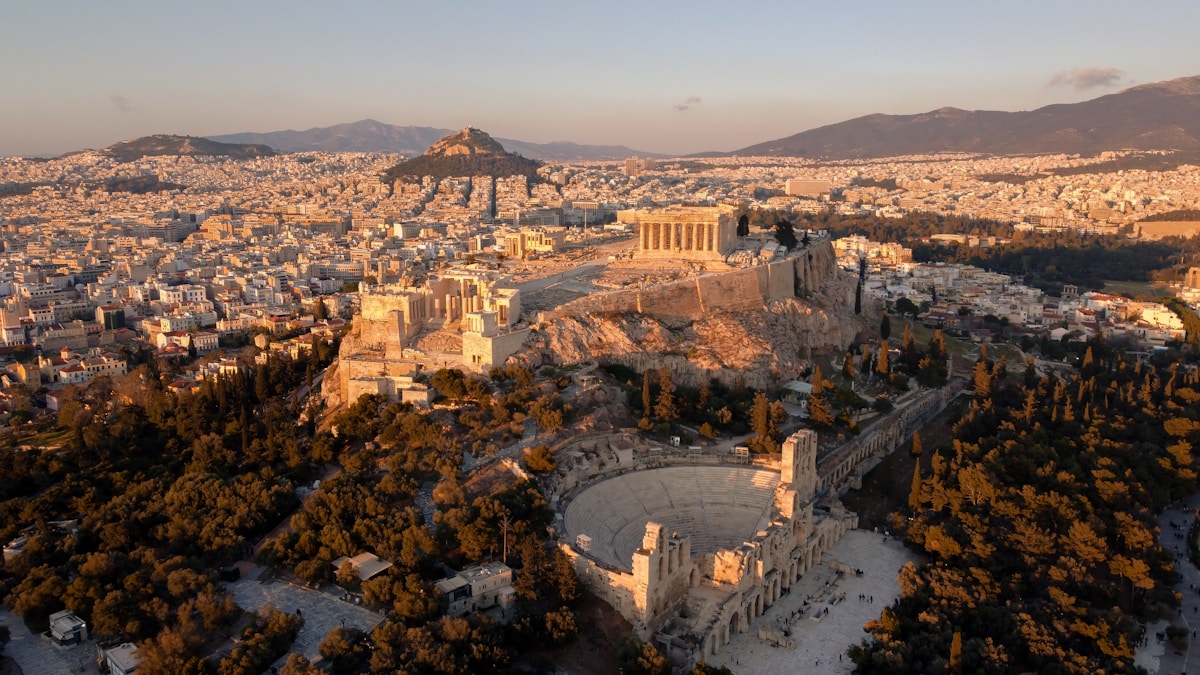
Athens Travel Guide: Acropolis, Plaka & Monastiraki
Acropolis at sunrise, Plaka old town, National Archaeological Museum, and Monastiraki street food: with honest practical advice on what to skip.
Guides for Athens
Athens is one of the oldest inhabited cities on earth, with continuous settlement going back more than 3,000 years. For most visitors it is primarily the Acropolis, but the city rewards spending more time - the National Archaeological Museum is one of the world’s finest, the food scene has improved dramatically in the past decade, and the neighbourhoods below the Acropolis (Monastiraki, Koukaki, Exarchia) are genuinely interesting places to be.
The Acropolis and Acropolis Hill
The Acropolis sits on a limestone plateau 156m above sea level, dominating the city. The Parthenon (447–432 BC) is the centrepiece - a Doric temple to Athena, goddess of the city. Despite 2,500 years, two explosions (1687 and 1826), and decades of modern pollution damage, it remains remarkably intact. See our Acropolis guide for entry details and what to look for once inside.
Entry: Combined ticket (Acropolis + 6 other sites) is €30/adult, €15 reduced (as of 2026). Free entry on the first Sunday of each month (October to March) and several national holidays. Book online at etickets.tap.gr to avoid the gate queue.
Opening hours: 8am–8pm in summer (April–October), 8am–5pm in winter.
Getting there: Metro to Acropolis (Line 2/red) or Monastiraki (Line 1/green, Line 3/blue). The main entrance is on the south side via the Beulé Gate.
What to see beyond the Parthenon: The Erechtheion (with its famous Caryatid porch), the Propylaea gateway, the Temple of Athena Nike, and the spectacular views across the city and toward Piraeus and the Aegean.
The Acropolis Museum (€10 adult, open 9am–5pm Mon–Thu, 9am–10pm Fri–Sun) sits at the base of the hill and houses the original surviving sculptures and friezes. Worth 2–3 hours.
The Ancient Agora
The Agora was the commercial and civic heart of ancient Athens. It lies northwest of the Acropolis and is included in the combined Acropolis ticket.
The best-preserved building is the Temple of Hephaestus (c.450 BC), one of the most complete ancient Greek temples anywhere. The Stoa of Attalos, a reconstructed 2nd-century BC colonnade, now houses a museum with everyday objects from ancient Athenian life.
National Archaeological Museum
The finest collection of ancient Greek art and artefacts in the world. Highlights include the Mask of Agamemnon (found at Mycenae, possibly 16th century BC), the Antikythera mechanism (an ancient analogue computer), and the Bronze Poseidon of Artemision.
Entry: €12 adult, €6 reduced (as of 2026). Located in Exarchia (28 Oktovriou-Patision 44). Metro to Omonia, then 10 minutes’ walk.
Opening hours: 9am–4pm Mon, 9am–8pm Tue–Sun.
Where to Stay in Athens
Budget (up to €60/night): Athens Backpackers (Monastiraki, from approximately €20/dorm, reliable hostel with Acropolis views), City Circus Athens (Monastiraki, creative design hostel, from €22/dorm or €65/private).
Mid-range (€80–180/night): Hotel Athens Was (Monastiraki, good value with rooftop views, from approximately €110), O&B Athens Boutique Hotel (Monastiraki, design-focused, from approximately €140), Herodion Hotel (Koukaki, quiet location near Acropolis entrance, from approximately €120).
Upmarket (€200+/night): Hotel Grande Bretagne (Syntagma Square, Athens’s grandest historic hotel, from approximately €350), New Hotel (Filellinon, Philippe Starck design, from approximately €280).
Where to Eat in Athens
Monastiraki and Psirri: Thanasis (best souvlaki in the city, Mitropoleos 69, approximately €3 per skewer), Karamanlidika tou Fani (excellent deli-taverna specialising in charcuterie and mezedes, Sokratous 1, approximately €20–30 per person), Diporto (hidden taverna with simple, cheap traditional food, no menu, just what’s available that day, Theatrou Square).
Koukaki and Petralona: Steki tou Ilia (the city’s most famous lamb chop restaurant - tables on Thessalonikeon Street, approximately €18 per kilo for chops), Mavro Provato (modern Greek food using quality ingredients, Arrianou 31, approximately €30–40 per person).
Central Market (Varvakios Agora): The Athens Central Market on Athinas Street is one of the finest covered markets in Europe - fish hall, meat hall, herbs, and produce. Eat at the simple tavernas inside the market; lunch from approximately €8–12.
Getting Around Athens
The metro is the most useful transport for tourists - three lines, single ticket €1.40 (valid 90 minutes, includes transfers). The Airport Express (Line 3/blue) runs from Monastiraki/Syntagma to Athens International Airport (Eleftherios Venizelos) in approximately 40 minutes; €10 single, €18 return. For a fixed-price, door-to-door arrival, Welcome Pickups offers meet-and-greet transfers from the airport.
Buses cover the wider city; tickets are the same €1.40 price. Taxis are metered - expect approximately €3.50–5 base fare, then €0.74/km within Athens. The app Taxibeat (Beat) allows you to book taxis and see the estimated price in advance.
Walking is the best way to cover the central area - from Monastiraki to the Acropolis entrance is 10 minutes, and most of Plaka, Monastiraki, and Psirri is walkable in under 20 minutes.
Day Trips from Athens
Cape Sounion (70km): The Temple of Poseidon sits on a dramatic cliff above the Aegean - worth visiting at sunset. KTEL buses from Pedion tou Areos depart regularly; approximately €7 single, 2 hours.
Delphi (180km): The ancient oracle site, arguably the most atmospheric ancient Greek site after the Acropolis. Bus from Liossion Bus Terminal (KTEL Fokidas), approximately €18 single, 3 hours.
Nafplio (145km): The most beautiful small city in Greece - Venetian old town, a clifftop castle, and excellent restaurants. Bus from Kifissos Bus Terminal (KTEL Argolidos), approximately €15 single, 2.5 hours.
Aegina (island): 40-minute ferry from Piraeus (approximately €8 single), a peaceful Saronic island with an intact ancient temple of Aphaia and excellent pistachios.
For more detail, see our guides to things to do in Athens, Athens restaurants, Athens food guide, day trips from Athens, and where to stay in Athens.
Planning how long to spend? See our 2-day Athens itinerary, 3-day Athens itinerary, and Athens and islands itinerary - or for a full Greece trip, the 1-week Greece itinerary and two-week Greece itinerary. For organised excursions, day trips from Athens covers the best options by distance and type.
Deciding between Athens and another destination? See Athens vs Santorini and Athens vs Thessaloniki.
Book tours of Athens and day trips from Athens with GetYourGuide.
See Also
- Things to Do in Athens - the Acropolis, Plaka, and the best museums
- Best Restaurants in Athens - from Monastiraki souvlaki to rooftop dining
- Day Trips from Athens - Cape Sounion, Delphi, Nafplio, and Aegina
- Day Trips from Athens - organised tour options by distance and category
- Best Tours in Athens - Acropolis tours, food tours, and day trips
- Acropolis Guide - the Parthenon, Erechtheion, and Propylaia in detail
- Where to Stay in Athens - the best neighbourhoods and hotels by budget
- Athens Food Guide - a neighbourhood-by-neighbourhood dining guide
- 2-Day Athens Itinerary - making the most of a short visit
- 3-Day Athens Itinerary - a more relaxed pace with day trips
- Athens and Islands Itinerary - combining the capital with island hopping
- Cape Sounion Guide - the Temple of Poseidon, 70km south of Athens
- Athens vs Santorini - city or island for your Greece trip
Frequently Asked Questions
- How many days do you need in Athens?
- Three days is enough to see the major sites - Acropolis, Ancient Agora, National Archaeological Museum, and the main neighbourhoods. Four to five days allows for the full museum circuit plus day trips to Cape Sounion or Delphi.
- What is the best area to stay in Athens?
- Monastiraki and Psirri are the most central, walking distance from the Acropolis and the main sites. Koukaki (south of the Acropolis) is quieter, better value, and has excellent restaurants. Kolonaki is upmarket but further from the main sites.
- Is Athens safe for tourists?
- Athens is generally safe. Pickpocketing on the metro (especially lines 2 and 3 to the airport) and in Monastiraki Square is the main risk. Omonia Square at night has a rough reputation. The tourist areas - Monastiraki, Plaka, Koukaki - are safe to walk at night.
- Is the Acropolis worth visiting?
- Yes, unambiguously. The Parthenon is in much better condition than most visitors expect, and the views across Athens from the rock are exceptional. Buy tickets online in advance - lines at the gate can be 90 minutes in summer.
Upcoming Events in Athens
- Oxi Day 2026
Greece marks Oxi Day on 28 October with military parades in Athens and Thessaloniki honouring the 1940 refusal to capitulate to Axis forces.
- Athens Classic Marathon 2026
44th Athens Classic Marathon on 1 November 2026, running the original 42km route from Marathon to the Panathenaic Stadium, the race that inspired all others.
Book an experience
Top experiences in Athens
Explore the best tours and activities in Athens, with instant confirmation and free cancellation on most bookings.