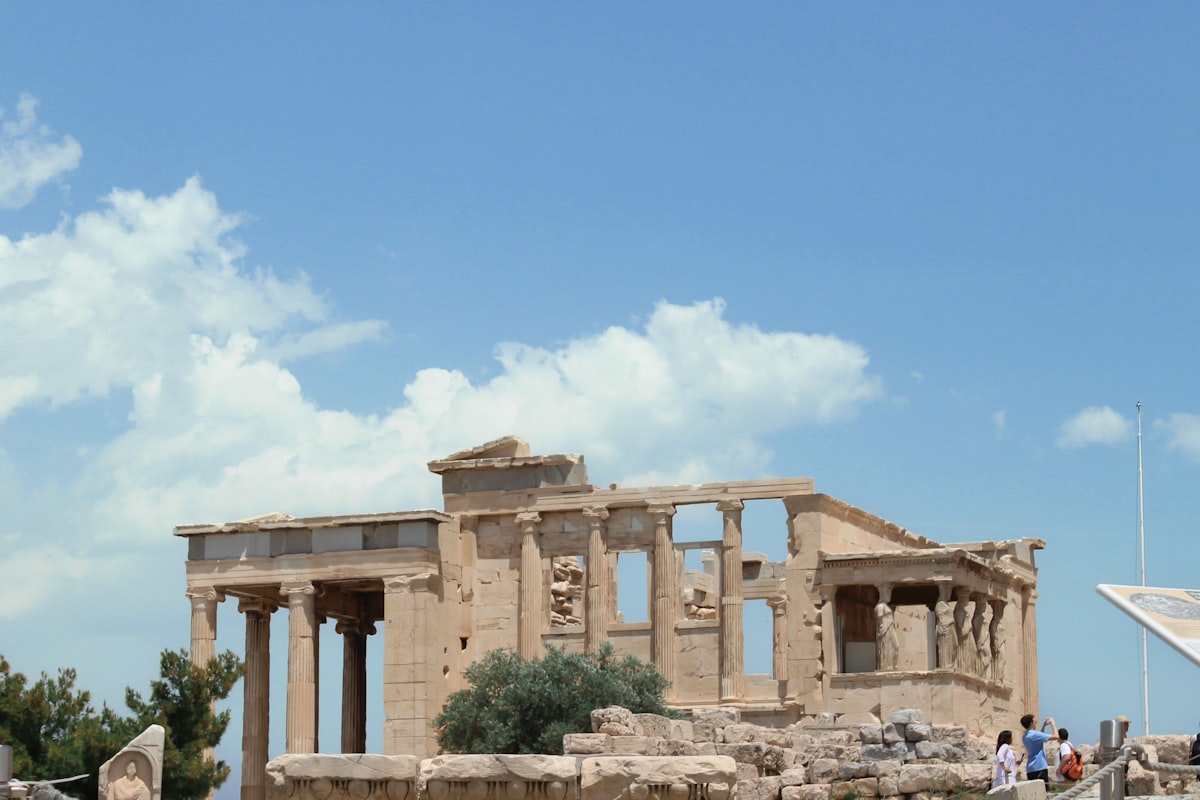
Athens is one of Europe’s most strategically placed cities for day trips. Within three hours by road or ferry you can reach a UNESCO World Heritage oracle sanctuary, car-free Aegean island towns, medieval Venetian fortresses, one of Europe’s oldest marathon courses, and the most dramatic Byzantine monasteries on the continent. Here’s what’s worth the journey, how to get there, and how much it costs. All prices are approximate as of 2026.
Top Day Trips at a Glance
| Destination | Distance | Price (from) | Transport | Highlights |
|---|---|---|---|---|
| Cape Sounion | 70km | from EUR 30/person | Coach | Temple of Poseidon, coastal drive, half-day |
| Delphi | 180km | from EUR 50/person | Coach | Temple of Apollo, ancient theatre, Charioteer of Delphi |
| Hydra | 2 hrs by ferry | from EUR 60/person | Hydrofoil + guide | Car-free island, harbour town, Saronic Gulf walks |
| Nafplio + Peloponnese | 140km | from EUR 60/person | Coach | Venetian fortress, Epidaurus theatre, medieval old town |
| Meteora | 350km | from EUR 70/person | Coach | Byzantine monasteries on rock pillars, UNESCO site |
Browse all Athens day trips → GetYourGuide
Cape Sounion - Temple of Poseidon
Distance: 70km south of Athens | Time needed: 4–5 hours including travel
The Temple of Poseidon at Cape Sounion stands at the tip of the Attica peninsula, 60 metres above the sea on a dramatic headland. Built around 444 BC, it was the last landmark Greek sailors saw when leaving Athens and the first on their return. The setting - temple columns against an Aegean horizon - is one of the most compelling views in Greece.
How to get there independently: Buses run from Athens Pedion tou Areos terminal on Plateia Egiptiou near Areos Park. The coastal route bus (via Vouliagmeni) takes approximately 2 hours and costs approximately EUR 6.80 each way (as of 2026). The inland route is faster but less scenic. Several buses depart daily from early morning.
Entry: Approximately EUR 10 as of 2026.
By tour: Guided coach tours from Athens central (Syntagma area) run approximately EUR 30–50 per person and include English commentary. Half-day tours return by 1pm, allowing an afternoon back in Athens.
Worth knowing: Lord Byron is said to have carved his name in one of the columns (a claim repeated at every Cape Sounion visit). The coastal drive via Vouliagmeni passes several good beaches if you want to extend the trip.
Delphi - The Sanctuary of Apollo
Distance: 180km northwest of Athens | Time needed: Full day
Delphi was the most influential religious site in the ancient Greek world for nearly 900 years. The sanctuary climbs the slopes of Mount Parnassus at 570m, giving the site an imposing mountain backdrop that enhances the archaeological drama. The Sacred Way (the processional route to the Temple of Apollo), the ancient theatre, and the stadium at the top of the site together form one of the best-preserved ancient sanctuaries in Greece.
The Delphi Museum is a necessary companion to the site - it holds the Charioteer of Delphi (one of the finest surviving bronzes from antiquity), the Sphinx of the Naxians, and the Antinoos relief. Allow at least 90 minutes in the museum.
How to get there independently: KTEL buses depart from Athens Liosion Terminal (Metro Line 2, Agios Antonios station). Journey time approximately 2.5 hours, cost approximately EUR 16.60 each way as of 2026. There are 3–4 services daily depending on season. The last bus back typically departs Delphi in late afternoon - confirm the schedule before leaving Athens.
Entry: Site approximately EUR 12, museum approximately EUR 12, combined ticket approximately EUR 20 (as of 2026).
By tour: Full-day guided tours from Athens run approximately EUR 50–80 per person including transport and a guide. The additional context provided by a knowledgeable guide is particularly valuable at Delphi, where understanding the Oracle’s role requires background that isn’t obvious from the physical remains.
Hydra - Car-Free Island Town
Distance: Approximately 2 hours by hydrofoil from Piraeus | Time needed: Full day
Hydra is the Saronic island with the most distinct character. There are no motorised vehicles on the island - transport is by donkey, boat, or foot. The harbour town (simply called Hydra Town) is a remarkably intact 18th-century seafaring settlement, with stone mansions climbing the hillsides and a small fleet of colourful fishing boats in the port.
The main town is pleasant for a morning walk and lunch. For more sustained interest, the walk to the Monastery of the Profitis Ilias (approximately 1.5 hours uphill from the port) rewards with sweeping views across the Saronic Gulf. The swim at Vlychos (a 30-minute walk from town) or the boat-accessible coves requires no facilities beyond a towel.
How to get there: Hellenic Seaways and other operators run hydrofoils from Piraeus (Gate E8) and from the Zea Marina. Journey time approximately 1 hour 40 minutes, cost approximately EUR 27–35 each way as of 2026. Flying Dolphins are faster but more expensive than conventional ferries. Book ahead in summer.
By tour: Guided day trips to Hydra from Athens (sometimes combined with Aegina or Poros) run approximately EUR 60–90 per person including boat transfers and a guide at the port.
Aegina - Temple of Aphaia and Pistachios
Distance: Approximately 1 hour by ferry from Piraeus | Time needed: Full day
Aegina is the most practical Saronic island for a day trip - closer to Piraeus than Hydra, with more frequent ferry connections and a compelling ancient site. The Temple of Aphaia (circa 500 BC) sits on a pine-covered hill above the island and is one of the best-preserved temples in Greece outside Athens - its triangular pediment sculptures were among the models used when scholars reconstructed the development of Classical Greek sculpture style.
Aegina Town is also the centre of Greek pistachio production. The streets around the port are lined with vendors selling locally grown pistachios in several forms - worth taking some back.
How to get there: Regular ferries from Piraeus Gate E8, approximately 1 hour 10 minutes by conventional ferry (approximately EUR 9 each way), 35 minutes by hydrofoil (approximately EUR 14 each way). Services are frequent throughout the day.
Temple of Aphaia entry: Approximately EUR 6 as of 2026. Taxis from the port run approximately EUR 12–15 to the temple.
Nafplio - Venetian Fortress Town
Distance: 140km southwest of Athens | Time needed: Full day
Nafplio was Greece’s first capital after independence in 1829, and it retains an elegance - Venetian architecture, a great harbour fortress (Bourtzi), and the massive Palamidi castle on the hill above the town - that distinguishes it from most Greek provincial towns. The old town is compact and walkable, with good restaurants, a handful of interesting museums, and the Byzantine fortress of Acronafplia above the harbour.
The combination of Nafplio with Epidaurus (30km away, home to one of the best-preserved ancient theatres in the world) makes the most complete day trip from Athens - ancient, medieval, and modern Greek history in a single day.
How to get there: KTEL buses from Athens Kifissos Terminal (Metro Line 3, Nikaia direction, or bus to the terminal). Journey approximately 2.5 hours, cost approximately EUR 14 each way as of 2026. By car (rent in Athens), the journey is 1.5 hours via the Corinth highway - and a car lets you combine Nafplio with Epidaurus and Mycenae in a single day.
Palamidi castle entry: Approximately EUR 8 as of 2026. The 999 steps up from the town are the traditional route - allow 30 minutes each way.
By tour: Day tours to the Peloponnese (Nafplio, Mycenae, Epidaurus) run approximately EUR 60–85 per person. Worth considering if you don’t want to manage bus connections.
Meteora - The Monasteries on the Rocks
Distance: 350km northwest of Athens | Time needed: Full day minimum, ideally overnight
The rock pillars of Meteora in the Thessaly plain rise up to 400 metres from the valley floor, and the Byzantine monasteries built on their summits from the 14th century onwards are among the most surreal human constructions in Europe. Six monasteries are open to visitors today - the Grand Meteoro (largest), Varlaam, Rousanou, Agios Nikolaos, Agios Stefanos, and Agias Triadas.
As a day trip from Athens, Meteora is possible but demanding: roughly 4 hours each way by road leaves only 3–4 hours on the rocks. Two nights in Kalambaka (the town below the rocks) is the significantly better option - it gives you a full day at the monasteries including the sunset view from the ridge road, which most day-trippers miss.
How to get there independently: Trains from Athens Larissa station to Kalambaka (via Palaiofarsalos), approximately 4.5 hours, from approximately EUR 20 each way as of 2026. Local buses between monasteries run in summer but infrequently - a taxi or rental car from Kalambaka is more practical for visiting multiple sites in a day.
Monastery entry: Each monastery charges approximately EUR 3 entry as of 2026. Dress code is strict - covered shoulders and knees are required; wraps are often available at the entrance.
By guided tour: Full-day tours from Athens to Meteora run approximately EUR 70–100 per person including coach and a guide. This is one of the cases where a guided tour genuinely earns its price - the driving logistics, monastery schedule, and historical context are all handled, and you spend your time looking rather than navigating.
Marathon - The Original 42km
Distance: 42km northeast of Athens | Time needed: 3–4 hours
Marathon is one of those places where the historical association and the physical reality are equally resonant. In 490 BC, an Athenian army of approximately 10,000 defeated a Persian force estimated at three to four times that size on this coastal plain - one of the decisive battles in European history. The burial mound (Soros) where the 192 Athenian dead were interred still stands in the olive groves, and the Marathon Archaeological Museum holds finds from the battle and the prehistoric settlement at Brauron nearby.
The Marathon Lake (the artificial reservoir created in the 1920s with a dam faced in Pentellic marble) and the town of Nea Makri below Marathon are additional stops if time allows.
How to get there: Bus from Athens Pedion tou Areos terminal (Line 316), approximately 1.5 hours, approximately EUR 3.80 each way as of 2026. Taxis from Athens run approximately EUR 35–45 each way.
Museum entry: Approximately EUR 6 as of 2026.
For a full guide to Athens itself - the Acropolis, Ancient Agora, Monastiraki, and where to base yourself - see our Athens travel guide. For guided tours covering multiple day-trip destinations, see our Athens tours guide. Planning a short stay? See our 2-day Athens itinerary and 3-day Athens itinerary. Cape Sounion is one of the most popular day trips - our Cape Sounion guide covers entry details, transport, and the best time to visit.
Book Athens tours and day trips with GetYourGuide. Compare car hire options in Greece - essential for exploring beyond the main towns. Pick up a Greece eSIM before you fly - keeps you connected without roaming charges.
Search hotels in Athens on Booking.com
See Also
- Athens Travel Guide - full city guide with where to stay and neighbourhood guide
- Things to Do in Athens - the best Athens attractions and experiences
- Best Restaurants in Athens - where to eat across Athens
- Cape Sounion Guide - the Temple of Poseidon, 70km from Athens
- Ancient Delphi Guide - the oracle sanctuary, 177km from Athens
- Epidaurus Guide - the ancient theatre, 140km southeast of Athens
- Day Trips from Athens - organised tour options for all day trips
- Athens and Islands Itinerary - combining Athens with island hopping
- Nafplio Travel Guide - the Peloponnese’s most beautiful small city