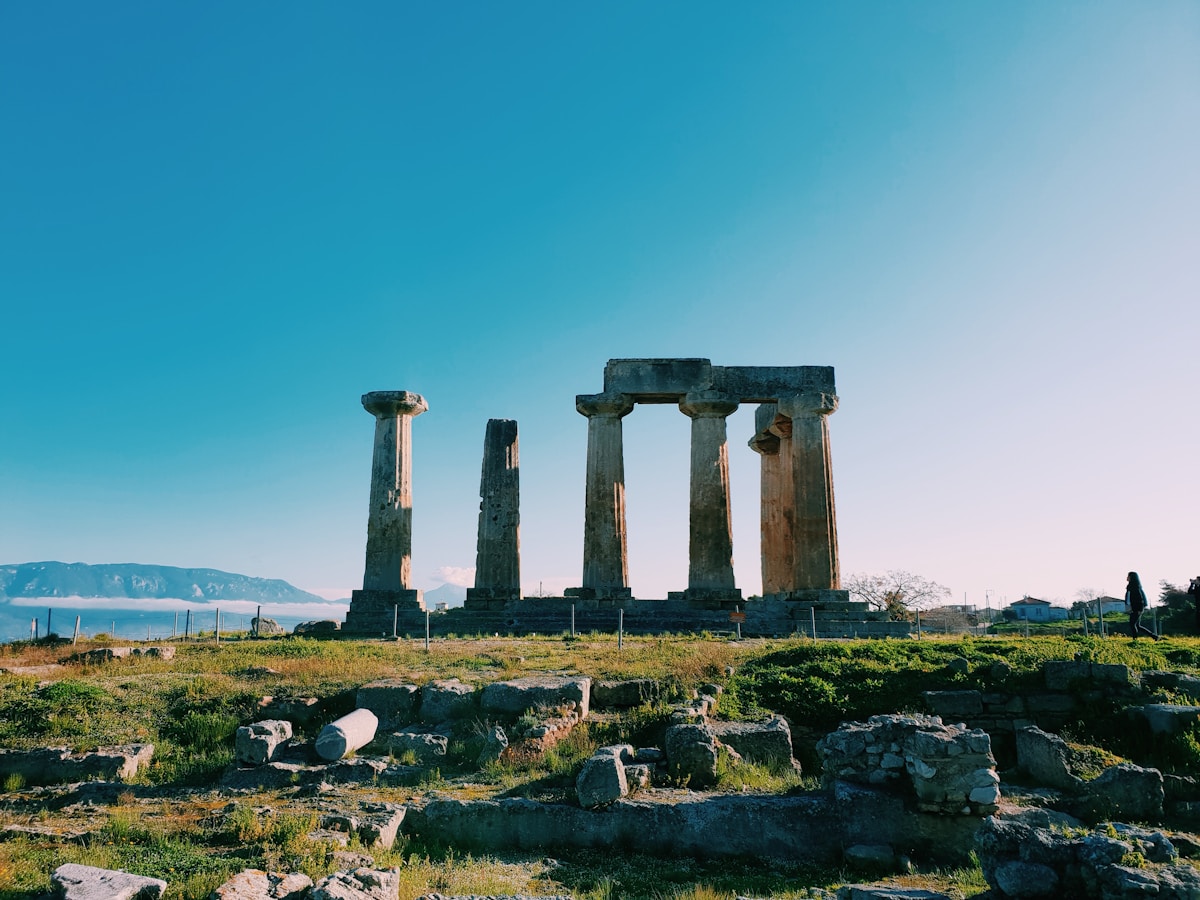
Delphi was, for centuries, the centre of the ancient Greek world. The Oracle of Delphi - the Pythia, a woman who inhaled volcanic vapours and delivered cryptic prophecy - was consulted by kings, generals, and city-states before any major decision from the 8th century BC until the 4th century AD. The site itself is extraordinary: a terrace of monuments and treasuries cut into the steep slope of Mount Parnassos, 600m above the Gulf of Corinth, in a landscape of olive groves and ruined rock faces that the ancients considered the navel of the world.
The Archaeological Site
The main site is entered from the lower east gate and climbs the Sacred Way - the processional road used by ancient pilgrims - past the monuments, treasuries, and finally the Temple of Apollo.
Treasury of the Athenians: The most intact building on the site - a small but beautifully preserved Doric treasury built by Athens after the Battle of Marathon (490 BC). The metopes (carved panels) on the south and west sides depict the labours of Herakles and Theseus.
The Halos (Threshing Floor): A circular paved area where the sacred rites preceding the consultation of the Oracle were performed.
Temple of Apollo: The centrepiece of Delphi - a large Doric temple (4th century BC, replacing a series of earlier temples) where the Oracle delivered her prophecies. Six columns remain standing; the interior, where the Pythia sat above the earth fissure, is now open ground. The tripod of the Oracle stood here - the priests of Apollo interpreted the Pythia’s ecstatic utterances and communicated them to petitioners.
The Theatre: A well-preserved 4th-century BC theatre above the main sanctuary - seating 5,000, with excellent views down the site and across the valley. Still used for performances during the Delphi Festival.
The Stadium: A 10-minute walk above the main site - the best-preserved ancient stadium in Greece, seating 6,500, with the original stone starting blocks still visible at the sprint line. Used for the Pythian Games (the predecessor of the Olympic Games).
The Delphi Archaeological Museum
One of the finest regional museums in Greece - the sculptural finds from Delphi are outstanding.
The Charioteer (Iniochos): The most famous object - a life-size bronze figure (478 or 474 BC) with extraordinary detail: the eyes are inlaid with onyx and glass, the eyelashes are individual copper strips. One of the finest surviving bronzes from antiquity.
Sphinx of Naxos: A 2.2m tall marble sphinx (570–560 BC) that once stood on a 10m column at the sanctuary entrance.
Naxian frieze and metopes: Detailed documentation of the sculptural program from the Siphnian Treasury.
The kouroi of Argos (Kleobis and Biton): Two large Archaic kouroi - the best-preserved examples in Greece.
The Castalian Spring and Gymnasium
The Sacred Spring (below the main site, at the base of the Phaedriades cliffs) where pilgrims performed ritual purification before consulting the Oracle. The carved niches where sacred vessels were stored are visible in the cliff face.
The Gymnasium (below the road from the main site) - a large athletic training complex with a running track, baths, and a covered drill area (xystos). Entry is covered by the combined ticket.
The Tholos of Athena Pronaia
The most photographed structure at Delphi - a circular 4th-century BC monument of unknown function (the purpose of the tholos has never been definitively established), with three columns re-erected in the 1930s. Located 10 minutes’ walk east of the main site, at the sanctuary of Athena Pronaia. Included in the combined ticket.
The Oracle: How It Actually Worked
The Oracle of Delphi (the Pythia) was not a single person but an office held by a succession of local women, typically over 50, who were chosen for their character and purity. She sat in the inner sanctum of the Temple of Apollo above a fissure in the earth from which volcanic gases (ethylene, methane, hydrogen sulphide) rose - modern geological surveys of the site have confirmed the existence of the fault lines and residual gas traces. The intoxicating effect of the gases induced a trance state.
The Pythia’s utterances were interpreted and rendered into verse by the male priests of Apollo. The famous ambiguity of Delphic oracles - “if Croesus crosses the Halys, a great empire will be destroyed” (it was his own) - may reflect the challenge of communicating an ecstatic utterance coherently, or deliberate political caution by the priests, or both.
The Oracle was consulted on matters of war, colonisation, religious ritual, and personal decisions. City-states paid enormous sums in dedications (the Treasuries were the physical gifts of grateful or supplicating states). The Oracle’s political influence declined gradually from the Persian Wars onward, as Greek city-states grew more sceptical, and ended with the Theodosian decree of 390 AD.
Delphi Village
The modern village of Delphi (population approximately 1,200) sits immediately above the main archaeological site - a string of hotels, restaurants, and tourist shops along the main road. Staying overnight gives you the morning light on the site before tour groups arrive.
Where to eat: Taverna Epikouros (reliable traditional food, approximately €15–22 per person), Symposium (good selection of local products and Parnassian cheeses, approximately €20–30 per person), Iniohos (the most consistently recommended restaurant in the village, terrace views, approximately €20–30 per person).
Where to stay: Amalia Hotel Delphi (the most comfortable hotel in the village, pool, from approximately €110/night), Hotel Fedriades (mid-range, good views, from approximately €75/night), Hotel Pan (budget, from approximately €55/night), Sibylla Hotel (clean, central, from approximately €60/night).
Practical Notes
Timing: Most tour buses arrive between 10am and 2pm. Visit at opening (8am) for a significantly quieter experience. The morning light on the valley below - the Gulf of Corinth visible in the distance - is worth the early start.
Walking: The Sacred Way rises steeply. Allow 2 hours for the main site and 1.5 hours for the museum. Combine with the Tholos (10-minute walk east) and the Gymnasium/Castalian Spring (below the main road) only if you have a full day.
Weather: At 570m altitude, Delphi can be noticeably cooler than Athens - a layer is useful in spring and autumn. In winter, snow is possible.
Book Delphi guided tours and day trips from Athens with GetYourGuide.
For the full Delphi city guide including where to stay and eat, see our Delphi travel guide. For things to see at the archaeological site and museum, see the Delphi things to do guide. For excursions to Arachova, Galaxidi, and Hosios Loukas, see our day trips from Delphi guide. Delphi is a common stop on the journey north - see our 1-week Greece itinerary for a route combining Athens, Delphi, and Meteora. For other major ancient sites, see our guides to Ancient Olympia and the Acropolis.
Search hotels in Delphi, Greece on Booking.com
See Also
- Delphi Travel Guide - where to stay, what to eat, and how to get there from Athens
- Things to Do in Delphi - the Oracle site, museum, Tholos, and stadium
- Day Trips from Delphi - Arachova, Hosios Loukas Monastery, and the Gulf of Corinth
- Day Trips from Athens - Delphi as part of an Athens excursion programme
- Acropolis of Athens - the other great ancient sanctuary, 177km east
- Ancient Olympia - the birthplace of the Olympic Games, 250km southwest
- 1-Week Greece Itinerary - placing Delphi in a broader Greece trip plan