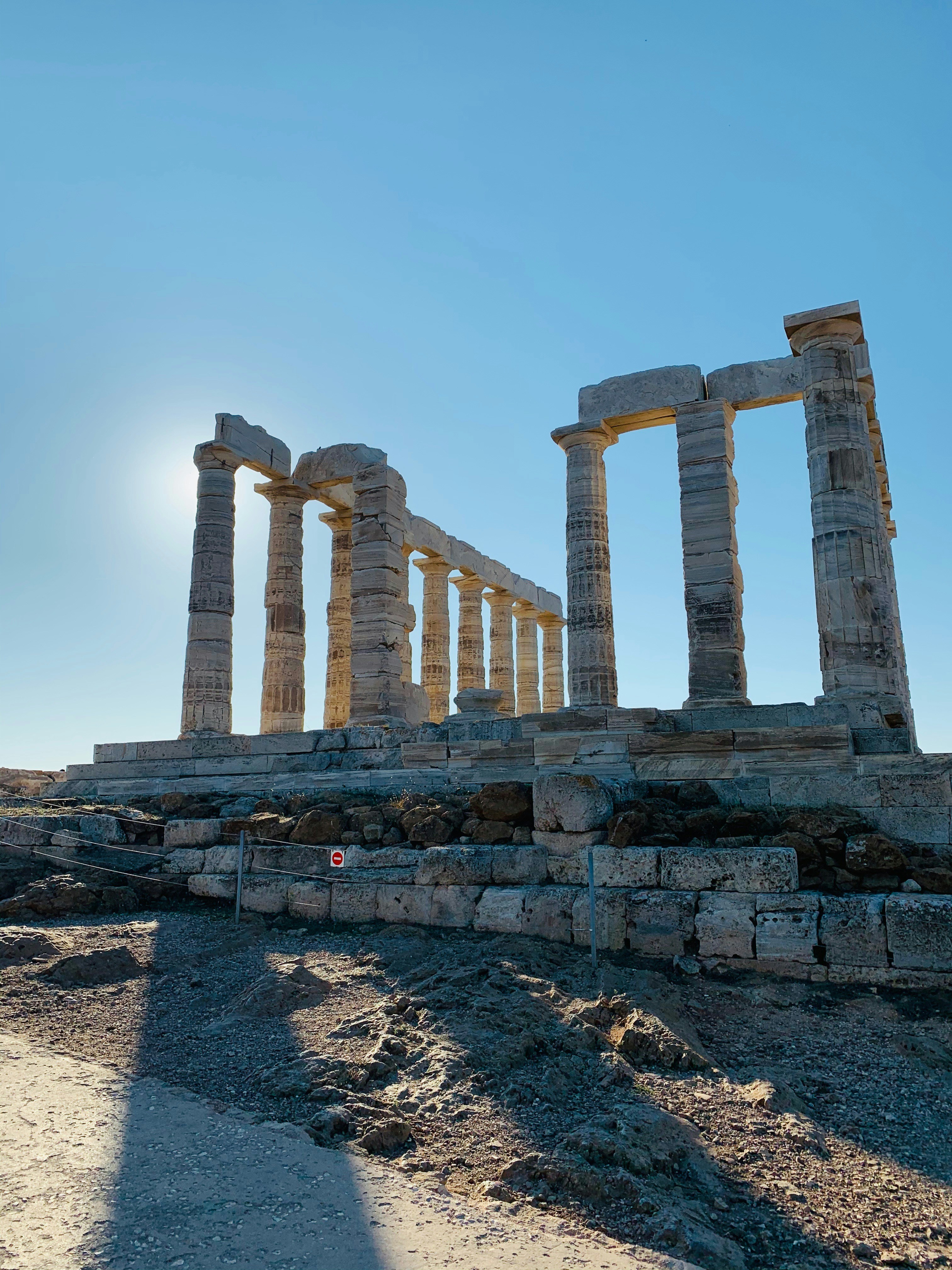
Cape Sounion, 70km south of Athens at the southern tip of the Attica peninsula, is where the ancient Greeks placed the Temple of Poseidon - god of the sea - in a position visible to ships approaching from all directions. Sailors who rounded the cape knew they were home. Standing on the headland today, with 16 surviving Doric marble columns looking out over the Aegean toward the Cyclades, the logic is clear.
Sounion is one of the most visited sites in Attica after the Acropolis. The combination of archaeological significance, dramatic natural setting, and the sunset spectacle makes it a standard day trip from Athens. Prices listed here are approximate as of 2026.
The Temple of Poseidon
The temple standing today was constructed around 444–440 BC - the same period as the Parthenon, during the Pericles building programme. It replaced an earlier Archaic temple destroyed by the Persians in 480 BC during the invasion of Attica.
The temple is Doric, with columns approximately 6.1 metres tall and originally 34 in number (now reduced to 16 standing). The marble came from the Agrileza quarries in Attica. Unlike the Parthenon’s columns, Sounion’s columns have only 16 flutes (rather than 20) - a modification believed to reduce the impact of sea salt erosion.
The structure sits on a fortified rocky promontory at 60 metres above sea level. In antiquity, the cape was visible from ships at a distance of several kilometres and served as a landmark confirming the approach to Athens.
Byron’s inscription: On one of the southern columns, a carved inscription reads “BYRON” - carved by the poet George Gordon Byron during his visit to Greece in 1810. Byron was so moved by the cape that he wrote about it in his poem Don Juan (“Place me on Sunium’s marbled steep”). The inscription is genuine though considered defacement by the Greek authorities. It is visible at close range on the lower portion of the second column from the entrance side - look for it deliberately rather than stumbling upon it.
The temple precinct has several small walls and platform remnants, and the view from the perimeter drops sheer to the sea on three sides.
The Sanctuary of Athena
Less visited than the main temple, the Sanctuary of Athena Sounias lies at the base of the headland, approximately 500 metres before the main site entrance on the road approach. This is a separate, smaller sanctuary - an unusual arrangement having two divine precincts at the same cape.
The Athena sanctuary predates the Poseidon temple (some elements date to the 7th century BC) and excavation finds suggest it was an important maritime sanctuary in its own right. The remains are more fragmentary than the Poseidon temple but worth the stop, particularly for visitors with a car who can park briefly.
The Coastal Drive from Athens
Cape Sounion is at the end of one of Attica’s most scenic roads - the coastal highway running south from Athens through the Attica Riviera (the stretch from Glyfada to Vouliagmeni to Lagonissi). The drive passes several beaches, rocky headlands, and small marinas.
Combining with a swim: Several beaches along the Attica Riviera are suitable for a stop on the way back from Sounion. Vouliagmeni Lake (approximately 40km from Athens on the return route) is a warm saline lake fed by underground sea channels, popular for swimming and spa-like soaking (entry approximately €10, open year-round). Attica beaches at Varke, Varkiza, and Lagonissi are accessible to day visitors.
The coastal road adds approximately 15–20 minutes to the drive versus the inland route but is significantly more pleasant.
Visiting at Sunset
Cape Sounion’s sunset reputation is well-earned. In summer (June–August) the sun sets over the Aegean to the west-southwest, and the columns of the Poseidon temple are lit in gold and then orange before the light drops. The site fills significantly on clear summer evenings - expect crowds at the cliff edge around the temple perimeter in the final hour before closing.
Arriving early enough to walk the full site (45 minutes to an hour before sunset) means you see the structure properly rather than just positioning yourself for photographs. The sunset from the headland’s east-facing edge looks toward the Cyclades - Kea and Kythnos are visible on clear days, with more distant islands in the right conditions.
Sunset times: Check current times before visiting (approximately 8:30pm in June–August, earlier in April–May and September–October). The site closes at or shortly after sunset.
Practical Information
By bus from Athens: KTEL Attica buses from Pedion Areos terminal, central Athens. Approximately 2 hours, approximately €7 each way as of 2026. Service runs several times daily; check current timetable at ktelattikis.gr.
By car from Athens: Take the coastal Poseidonos Avenue south from Athens through the Attica Riviera (approximately 1 hour, parking at the site - a paid car park is immediately below the cape). Avoid weekday rush hours (7–10am, 4–7pm) on the Athens end of the coastal road.
Organised tours from Athens: Half-day and sunset tours from Athens combining Cape Sounion with the Attica coast are widely available from agencies in the city centre (approximately €35–50 per person including transport and entry as of 2026).
Entry: Approximately €10 adults (April–October), €5 (November–March). No advance booking required; tickets at the entrance gate.
What to bring: Sun protection (the site is fully exposed), water (a small cafe operates near the entrance but nothing within the site), and a layer for the evening if visiting at sunset - the headland catches sea wind.
Cape Sounion is one of the most popular day trips from Athens. For the full programme of things to do around Athens, see our day trips from Athens guide. For tours that combine Sounion with the Attica Riviera, see our best tours in Athens guide. Planning your Athens visit? See our Athens travel guide and 3-day Athens itinerary. For other major ancient sites in the region, see our guides to the Acropolis and Mycenae.
Book Cape Sounion tours with GetYourGuide. Pick up a Greece eSIM before you fly - keeps you connected without roaming charges.
Search hotels in Athens on Booking.com
See Also
- Athens Travel Guide - full city guide for the starting point of the Sounion day trip
- Things to Do in Athens - Acropolis, Agora, Plaka, and the major museums
- Day Trips from Athens - Cape Sounion alongside Delphi, Nafplio, and Hydra
- Best Tours in Athens - guided Cape Sounion and Attica Riviera tours
- 3-Day Athens Itinerary - how Cape Sounion fits into a 3-day Athens programme
- Acropolis of Athens - the other great Athens-area ancient site
- Day Trips from Athens (city-sub) - the broader Athens day trips guide