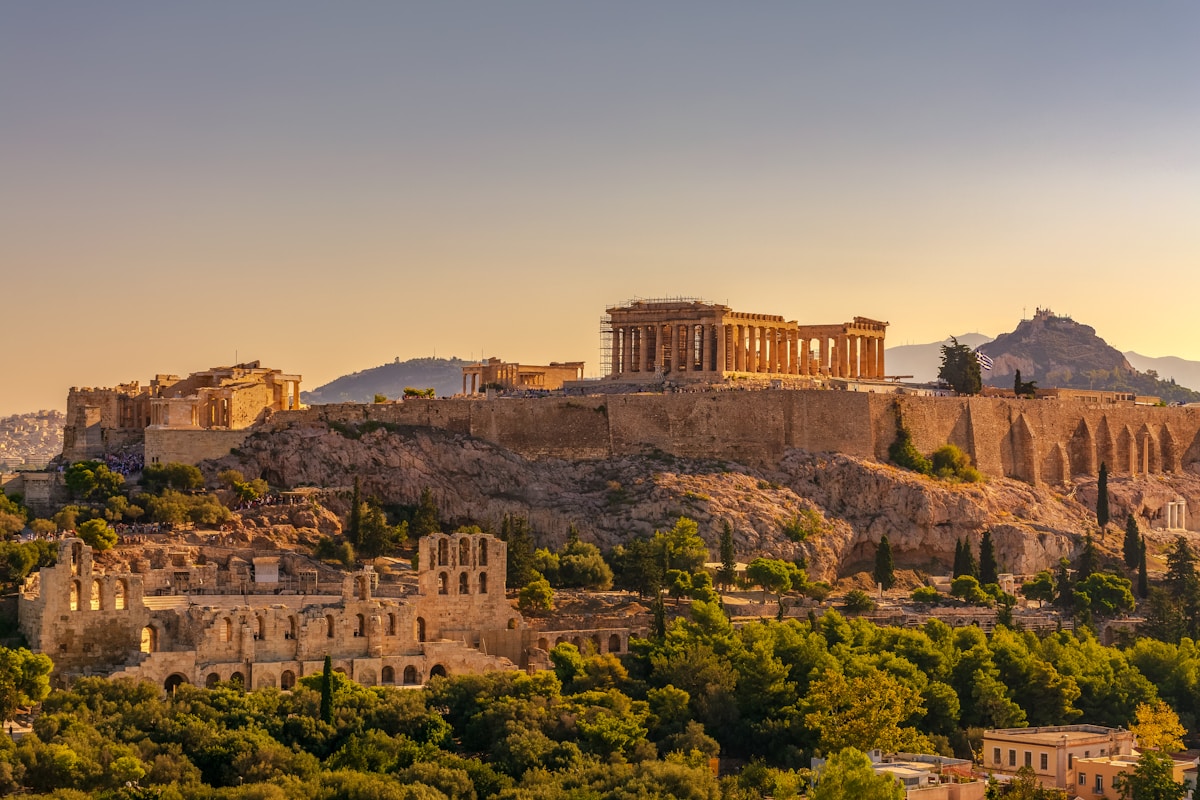
Athens rewards a focused three-day visit. The archaeological sites are concentrated enough that you can walk between most of them, the museum collection is among the best in Europe, and the food scene - particularly in Psyrri and Koukaki - has improved significantly over the past decade. This itinerary covers the essential ancient sites, the two must-visit museums, and a day trip to one of the most photographed temples in Greece.
We have structured this so that mornings go to the big-ticket sites (arrive early to beat both heat and crowds) and afternoons shift to neighbourhood exploration and food. The combined archaeological ticket at approximately EUR 30 as of 2026 covers the Acropolis, Ancient Agora, Roman Agora, Hadrian’s Library, Temple of Olympian Zeus, Kerameikos, and the Aristotle’s Lyceum - buy it at the Acropolis on Day 1 and skip ticket queues at every subsequent site.
Where to Stay in Athens
Budget: AthenStyle (Monastiraki) - from approximately EUR 55 per night for a double. Rooftop bar with direct Acropolis views. Clean, well-located, basic rooms.
Mid-range: Herodion Hotel (Koukaki) - from approximately EUR 120 per night. Directly below the Acropolis south slope. Rooftop restaurant with unobstructed views. Quiet street but 5 minutes from Plaka on foot.
Upper mid-range: Hotel Grande Bretagne (Syntagma Square) - from approximately EUR 220 per night. The most famous hotel in Athens. Rooftop pool and restaurant facing the Acropolis and Lycabettus Hill. Book well ahead for summer.
See our full where to stay in Athens guide for neighbourhood comparisons and more options.
Search hotels in Athens on Booking.com
Day 1: The Acropolis, Acropolis Museum, and Plaka
Morning: The Acropolis
Arrive at the south slope entrance (Dionysiou Areopagitou street) by 8:00am - the site opens at 8:00am April through October and the first hour is the least crowded. The Acropolis combined ticket costs approximately EUR 30 as of 2026 and is valid for five days across seven sites.
The main circuit takes 60–90 minutes. Walk through the Propylaea gateway, past the Temple of Athena Nike on the right, and up to the Parthenon - the 5th-century BC temple that defined Classical Greek architecture. The Erechtheion with its Caryatid porch is on the north side. The Theatre of Dionysus on the south slope is where Greek drama was born - Sophocles and Euripides premiered work here.
The Odeon of Herodes Atticus (161 AD), visible from the south slope path, still hosts performances during the Athens and Epidaurus Festival in summer. Tickets for performances range from approximately EUR 15 to EUR 80 depending on the event.
Late Morning: Acropolis Museum
Walk directly downhill to the Acropolis Museum (15 Dionysiou Areopagitou). Entry is approximately EUR 15 as of 2026. The museum is open 8:00am–8:00pm in summer (shorter hours in winter - check ahead).
The ground floor has a glass floor over an excavated ancient neighbourhood. The top floor houses the Parthenon Gallery - a 1:1 reconstruction of the temple’s frieze in natural light, with gaps where the Elgin Marbles remain in London. Allow 90 minutes minimum.
Afternoon: Plaka and Anafiotika
Walk into Plaka, the oldest neighbourhood in Athens, directly below the Acropolis north slope. The streets are pedestrianised and lined with neoclassical houses, small churches, and tavernas.
Lunch at Scholarchio (14 Tripodon Street) - one of the oldest tavernas in Athens, operating since 1932. Moussaka and grilled meats for approximately EUR 10–14 per main course. No reservations needed for lunch.
After lunch, climb the narrow lanes above Plaka to Anafiotika - a cluster of whitewashed Cycladic-style houses built by workers from Anafi island in the 1840s. It feels more like a Greek island village than a capital city. The Church of Agios Georgios tou Vrachou sits at the highest point.
Evening
Walk along Adrianou Street as the sun drops. Dinner at Tzitzikas kai Mermigas (12–14 Mitropoleos Street, near Syntagma) - a modern mezedopoleio with well-executed small plates. Expect approximately EUR 18–25 per person for a full meal with wine.
Day 2: Ancient Agora, National Archaeological Museum, and Psyrri
Morning: Ancient Agora
Enter from Adrianou Street (covered by your combined ticket). The Ancient Agora was the civic heart of Classical Athens - Socrates taught here, citizens voted here, and merchants traded in the Stoa of Attalos (now fully reconstructed and housing the Agora Museum). The Temple of Hephaestus, dating to 449 BC, is the best-preserved ancient Greek temple in the world. Allow 60–90 minutes. Opens at 8:00am.
Late Morning: National Archaeological Museum
Take the metro from Monastiraki to Victoria station (Line 1, approximately EUR 1.20 single fare) or walk 25 minutes north. The National Archaeological Museum (44 Patission Street) is the largest archaeological museum in Greece and one of the most important in the world. Entry is approximately EUR 12 as of 2026. Open 8:30am–8:00pm in summer.
The Mycenaean collection is the highlight - the Mask of Agamemnon, gold funeral items from Grave Circle A, and the gold cups from Vaphio. The bronze collection includes the Artemision Bronze (either Zeus or Poseidon - scholars still debate which). The Antikythera Mechanism, a 2nd-century BC astronomical calculator recovered from a shipwreck, is in Room 38.
Allow 2–2.5 hours. The museum is large and you will not see everything - prioritise the Mycenaean Hall, the bronze collection, and the Thera frescoes.
Afternoon: Monastiraki and Psyrri
Walk back south through Exarchia (Athens’ alternative district - good street art, independent bookshops) to Monastiraki. The Monastiraki Flea Market operates daily but is largest on Sundays, sprawling across Avyssinias Square and surrounding streets. Antiques, records, books, and general curiosities.
Cross into Psyrri for a late lunch at Oineas (9 Aischylou Street) - grilled octopus and creative Greek dishes in a converted warehouse. Mains from approximately EUR 12–18.
Evening
Return to the Psyrri area after dark - it is the best neighbourhood in Athens for evening atmosphere without the tourist prices of Plaka. Baba Au Rum (6 Klitiou Street) is regularly listed among the world’s best cocktail bars. Drinks from approximately EUR 12.
Day 3: Cape Sounion Day Trip, Kolonaki, and Rooftop Dinner
Morning: Temple of Poseidon at Cape Sounion
The KTEL bus to Sounion departs from Pedion Areos (near Victoria metro) and follows the Athens Riviera coast road. Journey time is approximately 1.5–2 hours. Fare is approximately EUR 7 each way as of 2026. Buses depart roughly every 1–2 hours - check the timetable the day before at ktelattikis.gr.
The Temple of Poseidon sits on a cliff 60 metres above the Aegean at the tip of the Attica peninsula. Built in 444 BC, the same period as the Parthenon, it has 16 of its original Doric columns still standing. Lord Byron carved his name into one of the columns in 1810 (look for it on the south side). Entry is approximately EUR 10 as of 2026. The site opens at 9:00am.
The view from the temple across the Saronic Gulf is one of the most photographed in Greece. On clear days you can see the islands of Kea, Kythnos, and Aegina.
There is a cafe at the site but options are limited. If you want lunch, the small harbour at Sounion Bay below the temple has a couple of fish tavernas - Ilias serves grilled fish by weight (approximately EUR 40–50 per kilo for fresh catch) with a view up to the temple.
Afternoon: Kolonaki
Return to Athens by early afternoon. Walk or take the metro to Kolonaki, Athens’ upscale neighbourhood on the slopes of Lycabettus Hill. The streets around Kolonaki Square have independent boutiques, art galleries, and the best coffee in the city. Da Capo on Tsakalof Street is an Athens institution - espresso from approximately EUR 3.50.
If energy permits, take the Lycabettus Hill funicular (approximately EUR 10 return as of 2026) to the summit for a 360-degree panorama of Athens, the Acropolis, and the sea. The Chapel of St. George at the top dates to the 19th century. The funicular runs every 30 minutes.
Evening: Rooftop Dinner with Acropolis Views
End the trip with dinner at a rooftop restaurant facing the illuminated Acropolis. A for Athens (2 Miaouli Street, Monastiraki) has a rooftop bar with direct Parthenon views - cocktails from approximately EUR 12, small plates from EUR 8. For a proper sit-down meal, Sense Rooftop Restaurant at the AthensWas Hotel (Dionysiou Areopagitou 5) serves modern Greek cuisine with the Acropolis lit up directly above. Mains from approximately EUR 22–35. Reserve ahead in summer.
Budget Summary
| Category | Budget | Mid-Range | Upper |
|---|---|---|---|
| Hotel (per night, double) | EUR 50–70 | EUR 100–150 | EUR 200–300 |
| Meals (per person, per day) | EUR 25–35 | EUR 40–60 | EUR 70–100 |
| Acropolis combined ticket | EUR 30 | EUR 30 | EUR 30 |
| Acropolis Museum | EUR 15 | EUR 15 | EUR 15 |
| National Archaeological Museum | EUR 12 | EUR 12 | EUR 12 |
| Sounion KTEL bus (return) | EUR 14 | EUR 14 | EUR 14 |
| Sounion Temple entry | EUR 10 | EUR 10 | EUR 10 |
| Metro/transport (3 days) | EUR 10 | EUR 10 | EUR 10 |
| 3-day total (per person) | EUR 280–370 | EUR 430–570 | EUR 700–1,000 |
All prices are approximate as of 2026.
Getting Around Athens
Athens has three metro lines and an extensive bus network. A single metro/bus ticket costs approximately EUR 1.20 and is valid for 90 minutes. A 3-day tourist ticket covering metro, buses, and trams costs approximately EUR 20 as of 2026 and includes one return trip to the airport on Line 3.
Walking is the most practical way to move between the Acropolis, Plaka, Monastiraki, Psyrri, and Syntagma - everything in this itinerary’s Day 1 and Day 2 is within a 20-minute walk. Taxis are affordable - a ride within central Athens rarely exceeds EUR 5–8. Use the BEAT app for reliable pricing.
Book tours and activities across Greece with GetYourGuide. Compare car hire options in Greece - essential for exploring beyond the main towns. Pick up a Greece eSIM before you fly - keeps you connected without roaming charges.
Related Athens Guides
- Athens Things to Do - full activities guide including lesser-known neighbourhoods
- Best Restaurants in Athens - neighbourhood breakdown
- Day Trips from Athens - Cape Sounion, Delphi, Nafplio, and Aegina
- Acropolis Guide - full coverage of the Parthenon and hilltop sites
- 2 Days in Athens - for a shorter stay
- Athens and Islands Itinerary - combining the city with an island extension
Book Your Trip
- Flights - Flights to Greece guide · Find the best fares to Greece
- Travel Insurance - Greece travel insurance guide · Get covered before you go
- eSIM - Greece eSIM guide · Stay connected from landing
- Airport Transfers - Pre-book your transfer from Athens or Thessaloniki
- Car Rental - Greece car rental guide · Compare prices across providers
- Tours & Activities - Browse Greece tours on GetYourGuide