Crete and Santorini are both among the most visited islands in Greece, but they are fundamentally different places. Santorini is a small caldera island with one extraordinary landscape feature and a concentrated, premium experience. Crete is the largest Greek island - a country within a country - with mountains, gorges, archaeological sites, and a cuisine distinct from the rest of Greece.
Choosing between them is not complicated if you know what you’re looking for.
The Quick Summary
Go to Santorini if: You want the caldera view, a romantic/honeymoon trip, wine tourism, special-occasion dining, and the most iconic Greek scenery in a compact visit.
Go to Crete if: You want a fuller island experience - beaches, mountains, archaeology, local food, hiking, and room to explore for a week or longer.
Go to both if: You have 10+ days. They serve completely different purposes and do not overlap in what they offer.
Size and Geography
Santorini is a tiny island - approximately 73km² - defined entirely by its volcanic origin. The main residential and tourist area is the caldera rim: the towns of Fira and Oia are perched 300m above the sea on the crater’s edge. The rest of the island is comparatively unremarkable. You can drive across Santorini in 20 minutes.
Crete is 260km long and covers approximately 8,300km² - by far the largest Greek island and the fifth largest in the Mediterranean. It has three mountain ranges (the White Mountains, Mt Idi/Psiloritis, and the Lasithi mountains), gorges (including Europe’s longest, Samaria), a south coast that faces Africa rather than mainland Greece, and enough internal variety to sustain a two-week trip. It takes 3–4 hours to drive across by the main north-coast road.
Verdict: Crete is a destination; Santorini is a view.
Scenery
Santorini
The caldera view is one of the most distinctive landscapes in the world - not just in Greece. The flooded volcanic crater, the cliff villages clinging to the rim, the volcanic islets below, the colour of the sea. At sunset from Oia, this is genuinely extraordinary. Santorini earned its reputation for a reason.
The rest of the island: the black and red volcanic beaches (Perissa, Kamari, Red Beach) are dramatic but not what most visitors imagine. The island’s interior (Pyrgos, Megalochori) has good wine estates and quieter roads. But outside the caldera zone, the island loses its defining quality.
Crete
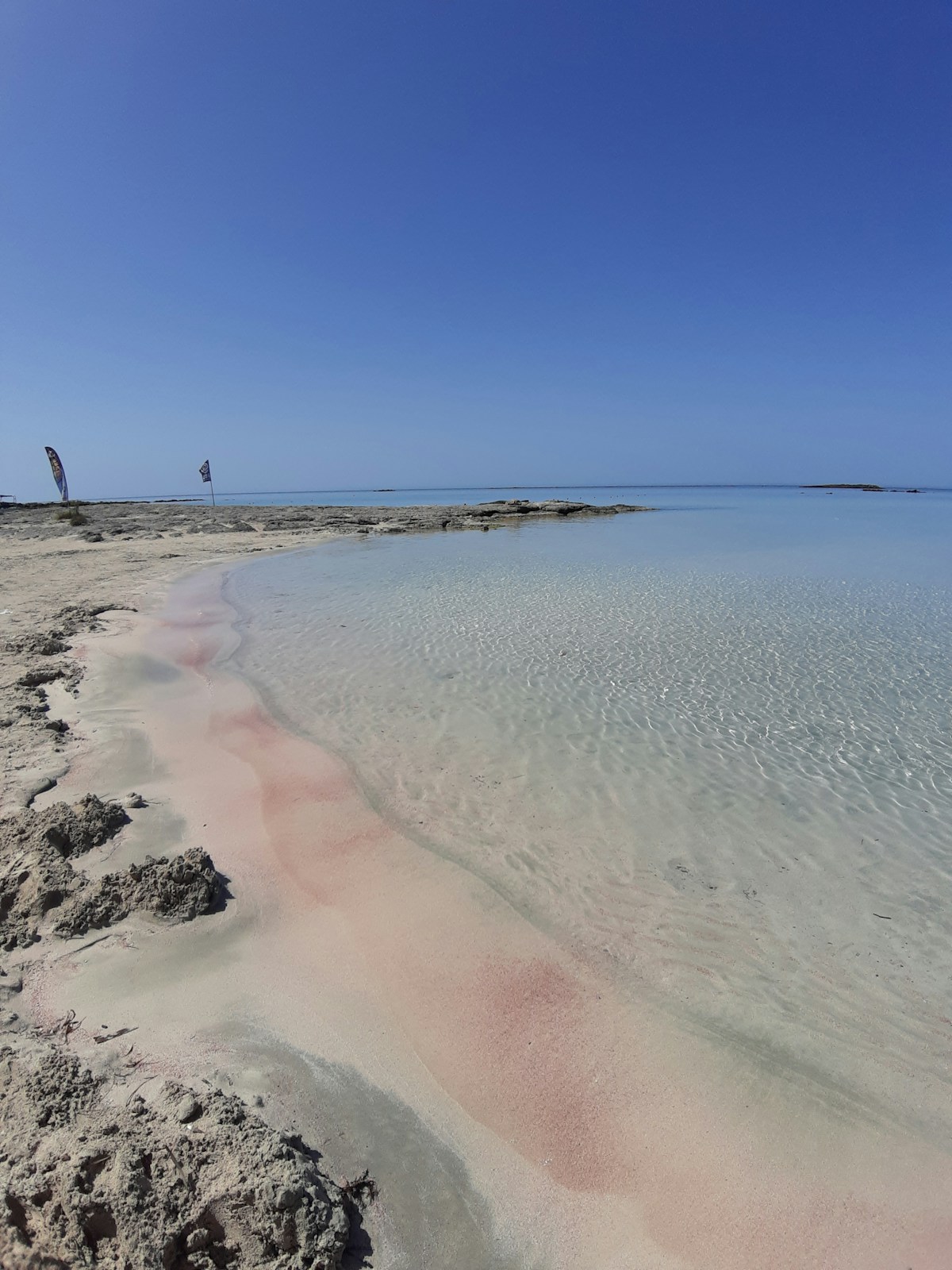
Crete has no single landscape as iconic as the Santorini caldera - but it has more landscape variety than any other Greek island. The White Mountains (Lefka Ori) are snow-capped into May. The Samaria Gorge descends 1,200m through a 16km limestone canyon. The south coast at Preveli has a freshwater lagoon meeting the sea. The Lasithi plateau is a flat agricultural bowl at 820m altitude ringed by mountains, the site of hundreds of windmills. Elafonisi in the southwest has a pink-tinged sand lagoon with shallow water stretching to a small islet.
Verdict: Santorini for a single iconic view. Crete for landscape breadth.
Beaches
Santorini
Santorini’s beaches are visually dramatic but functionally limited. The volcanic geology produces black and dark grey sand (Perissa, Kamari, Vlychada), red sand (Red Beach near Akrotiri), and white pumice. The sea is clean but dark - the volcanic floor gives the water a bluish-black cast rather than the turquoise of the Cycladic norm. Red Beach is visually striking but partially fenced due to rockfall.
The beaches are not why you visit Santorini.
Crete
Crete has some of the best beaches in Greece - and enough of them that you can find empty ones well into July. The main categories:
- North coast: Organized, accessible, calm water - best for families. Vai (Europe’s only natural palm forest, on the east coast), Stavros (where Zorba the Greek was filmed), and the beaches around Elounda
- South coast: Wilder, more remote, accessed by boat or mountain road. Preveli (palm forest and lagoon), Matala (sea caves), Agia Galini
- West coast: Elafonisi (pink-tinged lagoon, extremely popular - arrive early), Falasarna (long crescent of pale sand on an exposed headland)
Verdict: Crete, definitively. Santorini’s beaches are a secondary attraction; Crete’s are a primary reason to go.
Food and Wine
Santorini
Santorini has the most celebrated restaurant scene in Greece and a genuine local wine identity. Assyrtiko - a white grape grown in volcanic soil, producing wines of striking minerality and high acidity - is one of Greece’s most distinctive wine varieties. The island’s micro-production of fava (yellow split peas, not the same as broad beans), tomatokeftedes (sun-dried tomato fritters), and white aubergines also set it apart from generic Greek island cooking.
The caldera-view restaurants are expensive (€40–70 per person with wine for dinner) and worth planning for at least one meal. The wine estates - Santo Wines, Estate Argyros, Domaine Sigalas - are open for tasting and usually have spectacular views.
Crete
Crete has the most developed regional cuisine in Greece. The Cretan diet has been studied as one of the healthiest in the world (the original Mediterranean diet research was based substantially on Crete). Key elements:
- Olive oil: Cretan olive oil is rated among the best in the world. Everything is cooked in it generously
- Dakos: Barley rusk topped with crushed tomato, feta, and olive oil - the quintessential Cretan starter
- Lamb and goat: Cooked with herbs from the mountain pasturelands
- Cheese: Graviera (hard, nutty), xinomizithra (sharp fresh cheese), and anthotyros
- Wines: Crete has PDO wine regions (Archanes, Dafnes, Peza) with indigenous varieties - Vidiano, Vilana, Kotsifali, Mantilari
Cretan tavernas in the villages (Vamos, Zaros, Argyroupolis) often serve food from their own land. This is the best version of traditional Greek food available anywhere.
Verdict: Both are excellent for different reasons. Santorini for a special-occasion dinner and wine tourism. Crete for the best everyday food in Greece.
Activities and Things to Do
Santorini
- Caldera boat trip (volcano islet, hot springs, sunset cruise)
- Wine tasting at Santo Wines, Argyros, or Domaine Sigalas
- Akrotiri archaeological site (a Minoan settlement buried by the volcanic eruption, comparable to Pompeii in preservation - entry approximately €12 as of 2026)
- Oia village walk (sunset viewing - arrive 45 minutes early for a position)
- Fira to Oia cliff path (8km walk along the caldera rim, 2–3 hours, excellent views)
Activities on Santorini run out after 3–4 days. The island is designed for relaxation, wine, and the view - not for activity variety.
Crete
Crete has a full activity programme that can easily fill 10 days:
- Samaria Gorge (16km hike, Europe’s longest gorge - May to October)
- Palace of Knossos (Minoan palace complex, 1700–1380 BC, the largest Bronze Age site in the Aegean - entry approximately €15 as of 2026)
- Heraklion Archaeological Museum (the best Minoan collection in the world)
- Spinalonga fortress (former Venetian fortress and last active leper colony in Europe, accessed by short boat trip from Elounda)
- Rethymno and Chania old towns (Venetian harbours, minarets, fortress ruins)
- Sea kayaking along the south coast
- Village taverna trail in the Amari valley
Verdict: Crete for activity variety. Santorini for focused relaxation with the caldera.
Cost Comparison (July)
| Category | Crete | Santorini |
|---|---|---|
| Midrange hotel per night | €70–180 | €150–400 |
| Caldera view / premium hotel | Not applicable | €400–1,000+ |
| Dinner per person with wine | €20–40 | €35–70 |
| Beach sunbed + umbrella | €8–15 | €15–30 |
| Car hire per day | €30–50 | €40–70 |
Crete is consistently more affordable across every category. The price difference for accommodation is particularly stark: the same budget that covers a comfortable midrange hotel on Crete barely covers a basic room in Santorini’s caldera villages in July.
Getting There
Crete: Direct flights from Athens (approximately 55 minutes) and direct European charters. Ferry from Piraeus (Athens port): approximately 8–9 hours on overnight ferry; a cabin berth makes this comfortable and saves a hotel night.
Santorini: Flights from Athens (approximately 45 minutes) and European charters. Ferry from Piraeus: approximately 5–8 hours (standard) or 4–5 hours (high-speed). Fly if time is short.
Between Crete and Santorini: Direct high-speed ferry in approximately 1.5–2 hours (Seajets seasonal route). Also direct flights in season.
7-Night Combined Itinerary: 4 Nights Crete + 3 Nights Santorini
This split works well for most trips of one to two weeks. Crete gets the larger allocation because it needs it - there’s simply more to see. Santorini is best used as a concentrated final chapter: arrive, enjoy the caldera and wine, depart.
We recommend doing Crete first, Santorini second. Crete’s wider variety of activities, lower cost, and longer days on foot make it the better way to ease into a Greece trip. Finishing on Santorini means you end with the most visually concentrated experience and can fly out directly from Santorini Airport.
Day 1 - Arrive Heraklion, Crete
Fly into Heraklion (HER) - direct flights operate from most European airports in season, and from Athens in under an hour year-round. Check in at a hotel in central Heraklion or the nearby resort strip at Amoudara. Evening: walk the Venetian harbour, look for a table in the Koules fortress area, and eat dakos and grilled fish. Heraklion has better food options than most visitors expect - avoid the tourist strip near the Lions Square fountain and walk two streets back.
Day 2 - Knossos and the Archaeological Museum
Start early at the Palace of Knossos - arrive by 8:30am before the tour groups. The palace complex is Europe’s largest Bronze Age archaeological site, dated to 1700–1380 BC. Entry is approximately €15 as of 2026; combined ticket with the Heraklion Archaeological Museum costs €20. The museum is essential context - it holds the entire Minoan fresco collection and the Phaistos Disc. Allow a half-day for both. Afternoon: walk the old city, pick up Cretan olive oil and graviera cheese for home.
Day 3 - West Crete: Rethymno or Chania
Either base changes for days 3–4, or take a day trip. The two western towns are each worth a dedicated visit:
- Rethymno (1.5 hours west of Heraklion): the most intact Venetian old town in Crete. The Fortezza, the lighthouse harbour, and the labyrinthine streets behind the waterfront take a half-day. Good tavernas along the harbour.
- Chania (2.5 hours west): slightly larger, slightly more developed for tourists, but the old town and the Venetian lighthouse are among the most photographed in Greece. The covered market (Agora) is a good stop for lunch.
If you’ve based yourself in Heraklion, Rethymno is the more manageable day trip; Chania requires either a longer drive or an overnight.
Day 4 - Elafonisi or Samaria Gorge (then return to Heraklion)
Pick the day based on fitness and weather:
- Elafonisi: approximately 2.5 hours from Heraklion. The pink-sand lagoon at the southwest tip of Crete is worth the drive. Arrive by 9am to beat the crowds; shallow water makes it suitable for all ages. Return by mid-afternoon.
- Samaria Gorge: 16km descent through Europe’s longest gorge (1,200m drop). Accessed from Xyloskalo above Sfakia on the south coast. The hike takes 4–6 hours downhill; a boat from Agia Roumeli back to Sfakia connects to a bus return to Heraklion. This is a full day - start early, book the ferry in advance.
Evening back in Heraklion. Pack for the crossing to Santorini the following morning.
Day 5 - Ferry to Santorini, Afternoon Arrival
The high-speed ferry from Heraklion to Santorini (Athinios port) runs in approximately 1.5–2 hours on Seajets services, with departures typically at 9:00am and/or 2:00pm in peak season. Check the current schedule and book ahead - see the ferry logistics section below for details.
Arrive at Athinios (Santorini’s main ferry port at the base of the caldera cliff) mid-morning or early afternoon. Take the bus (€2.50) or taxi (approximately €15–20) up the 300m switchbacks to Fira. Check in, drop bags. Afternoon: walk the caldera rim path south from Fira toward Imerovigli (30–40 minutes one way). Sunset from Imerovigli or Oia - if Oia, leave by 4pm, as the viewpoints fill quickly.
Day 6 - Oia, Wine Tasting, Boat Trip
Morning: walk to Oia (8km from Fira via the caldera rim path - allow 2.5–3 hours at a relaxed pace, or take a bus to Oia and walk back). The path passes through the villages of Firostefani and Imerovigli with continuous caldera views. Oia itself is worth a few hours: the windmills, the castle ruins, the Cycladic architecture.
Afternoon: wine tasting. Estate Argyros and Domaine Sigalas are among the best Assyrtiko producers on the island and both run visitor tastings (approximately €20–35 per person for a tasting flight). Santo Wines has the most dramatic caldera-view terrace and is the most accessible from Fira.
Optional: afternoon boat trip. The standard route visits the active volcano islet (Nea Kameni), the warm sulphuric hot springs, and the islet of Thirassia. Half-day trips depart from the old port below Fira from approximately €35–55 per person. Book the day before.
Day 7 - Akrotiri, Beach, Evening Caldera Dinner
Morning: Akrotiri archaeological site on the south of the island - a Minoan settlement buried by the volcanic eruption, preserved under ash comparable to Pompeii. Entry approximately €12 as of 2026. The covered excavation is well-presented and takes 1.5 hours.
Nearby: Red Beach is a 10-minute walk from the Akrotiri site. The red volcanic cliffs are visually striking; the beach itself is small and partially fenced due to rockfall risk, but it’s worth a look. For a swim, continue to Perissa or Kamari on the east coast - organised black-sand beaches with sunbeds (approximately €15–20 per pair).
Evening: book a caldera-view dinner in advance. The concentration of special-occasion restaurants in Santorini is unmatched in Greece. Budget approximately €45–70 per person with wine at a mid-to-upper caldera restaurant. Fly home from Santorini Airport (JTR) the following morning.
Ferry Connection: Crete to Santorini
The crossing between Heraklion (Crete) and Athinios (Santorini) is the most commonly used inter-island route in this itinerary. Key logistics:
High-Speed Ferry (Recommended)
Operator: Seajets runs the main high-speed service on this route seasonally. The vessel type varies (catamaran or high-speed monohull); journey time is 1.5–2 hours in calm conditions.
Frequency: In peak season (late June–September), typically one to two sailings per day. Shoulder season (April–June, October) may have one daily sailing or reduced frequency - check current schedules closer to travel.
Cost: Approximately €40–70 per person in economy class (2026 prices). Prices increase in July–August and if booked late.
Booking: Book via Ferryhopper or Direct Ferries, or directly with Seajets. Book at least 2–3 weeks ahead in July–August - this crossing sells out. Bring ID; Greek ferries require it.
Conventional Ferry (Budget Option)
Slower ferries also operate Heraklion–Santorini, taking 5–6 hours, often overnight or late evening. These are cheaper (approximately €25–45) but add complexity if you’re on a 7-night schedule. Worth considering if you’re flexible on timing and want to save the ferry cost or avoid an early morning departure.
Arriving at Athinios Port
Athinios is at sea level, at the bottom of the caldera’s western wall. There is no direct access to Fira or Oia from the port on foot. From Athinios:
- Bus (KTEL): Runs to Fira bus station; fare approximately €2.50. Buses are coordinated with ferry arrivals in season but can be crowded.
- Taxi: Approximately €15–20 to Fira; pre-book if possible as the taxi rank at Athinios is small and overwhelmed on busy ferry days. Taxis to Oia or Perissa cost more - approximately €25–40.
- Pre-booked transfer: The most stress-free option on arrival with luggage. Several local operators offer fixed-rate transfers from Athinios to any Santorini hotel.
Alternative: Flying Crete to Santorini
Direct flights operate in season between Heraklion (HER) and Santorini (JTR) on Olympic Air and Aegean Airlines. Flight time is approximately 40 minutes. Fares range from approximately €50–120 depending on season and how far ahead you book. Flying makes sense if the ferry schedule doesn’t fit your timing or if you’re travelling with young children.
Our Verdict
For a first-time Greece visitor with a week: Go to Crete. More to see, more to do, better value, and a broader experience of Greece beyond the most photographed imagery.
For a couple’s trip or honeymoon of 4–5 nights: Santorini. The caldera view is the most romantic landscape in Greece and the restaurant and wine scene is exceptional. You will not regret it.
For a family holiday: Crete, clearly. Wider beaches, more activities for mixed ages, better price points, and no narrow caldera paths with a buggy.
For a long trip (10+ days): Split it - 3 nights Santorini, 7+ nights Crete. They ferry directly between each other and serve completely different purposes.
Book tours and experiences for both islands with GetYourGuide.
Related Guides
- Santorini Itinerary - 1, 3, and 5 day plans for Santorini
- Where to Stay in Santorini - Fira, Oia, and Imerovigli
- Where to Stay in Crete - Heraklion, Chania, and Rethymno
- Best Greek Islands Guide - comparing all major islands
- Greece Honeymoon Guide - Santorini, Mykonos, and beyond
- Greek Island Ferry Guide - booking the Crete–Santorini crossing
Book Your Trip
- Flights - Flights to Greece guide · Find the best fares to Greece
- Travel Insurance - Greece travel insurance guide · Get covered before you go
- eSIM - Greece eSIM guide · Stay connected from landing
- Airport Transfers - Pre-book your transfer from Athens or Thessaloniki
- Car Rental - Greece car rental guide · Compare prices across providers
- Tours & Activities - Browse Greece tours on GetYourGuide