Santorini Travel Guide: Caldera Villages, Beaches & Costs
Your honest guide to Santorini: the caldera villages, best beaches, where to stay, how to get there, and what the island actually costs.
Guides for Santorini
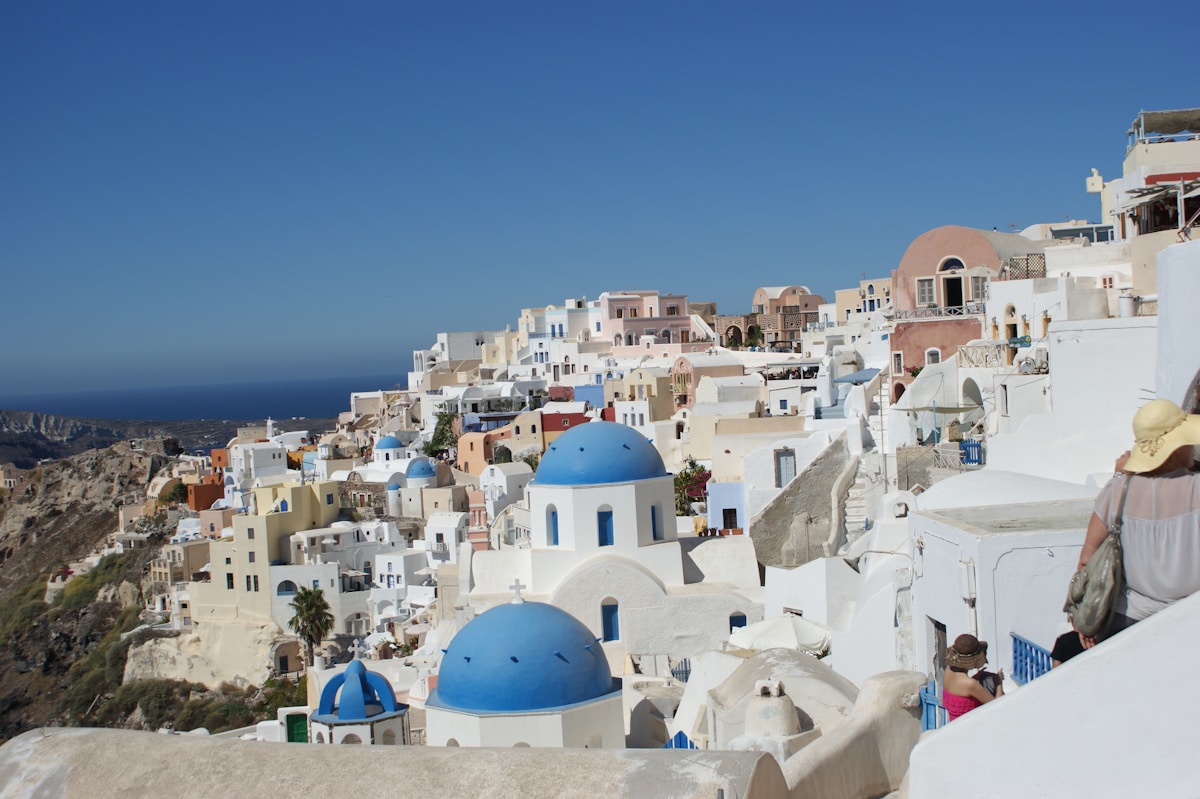
Santorini is the result of one of history’s most violent volcanic eruptions - the Minoan eruption of approximately 1600 BC, which destroyed a Bronze Age civilisation and may have inspired the Atlantis myth. What remains is a crescent-shaped island surrounding a submerged caldera, with cliffs rising up to 300m above the sea. The villages along the caldera rim - Oia, Fira, Imerovigli - are the most recognisable images of Greece.
The island’s reputation is fully deserved and fully exploited. Expect high prices, heavy crowds in summer, and an accommodation market that operates on the assumption that visitors will pay almost anything for a caldera view.
Oia
The northwestern village has become the most photographed in the world, largely because of a cluster of blue-domed churches and the famous sunset viewpoint at the kasteli (castle ruins). In high season (July–August), the sunset viewpoint attracts 1,500–2,000 visitors simultaneously, making it a crowd event rather than a romantic experience.
Oia is better in early morning - the light is excellent, the cruise ship visitors haven’t arrived, and the village has a different character.
Fira
The main town and transport hub. Less photogenic than Oia but more functional - the widest range of restaurants, bars, and services. The cable car down to the old port (€6 return) and the 588 steps down (donkeys available but frequently mistreated - we recommend the cable car or walking) are the main access points to the caldera base.
The Museum of Prehistoric Thira (Mitropoleos Street, €3 adult) houses artefacts from the Akrotiri archaeological site - very good, usually uncrowded.
Akrotiri Archaeological Site
The Bronze Age Minoan city buried by the volcanic eruption, often called the “Pompeii of the Aegean.” Three-storey buildings with intact frescoes (originals in the National Archaeological Museum in Athens; copies in the Museum of Prehistoric Thira in Fira). Entry €12 adult, open 8am–8pm daily (summer). Well worth visiting. For the volcano boat, Thirassia and guided Akrotiri options, see our Santorini day trips guide.
Beaches
Santorini’s beaches are volcanic and colourful - black sand at Perissa and Perivolos, red cliffs at Red Beach near Akrotiri, white sand at Vlychada. The swimming is excellent and the geology is unlike anywhere else in the Cyclades. See our full Santorini beaches guide for access details, conditions, and what each beach is actually like.
Where to Stay in Santorini
The caldera-rim villages (Oia, Fira, Imerovigli) are where the famous views are and where prices are highest. Staying in Perissa, Perivolos, or Karterados on the east and south coasts dramatically reduces costs while keeping good bus access to the caldera villages. Imerovigli is a quieter alternative to Oia and Fira on the caldera rim.
Budget (from approximately €65–100/night)
Guesthouses in Perissa on the east coast offer the most accessible prices on Santorini. The black-sand beach is on the doorstep and buses to Fira run regularly. The trade-off is no caldera view, but the beach and the access to Akrotiri are genuine advantages. From approximately €70/night as of 2026.
Studios in Karterados provide a practical budget base within a short drive or bus ride of Fira. The village has its own character and avoids the highest tourist prices. From approximately €68/night as of 2026.
Guesthouses in Perivolos near the black sand beaches of the south coast are consistently among the best-value options on the island. From approximately €65/night as of 2026.
Mid-range (from approximately €150–280/night)
Aroma Suites in Fira offers caldera-view rooms in the heart of the main town at prices below the top-tier Oia properties. The position in Fira gives easy walking access to restaurants, shops, and the cable car. From approximately €180/night as of 2026.
Santorini Princess near Imerovigli combines caldera views with a pool and well-appointed rooms at mid-range prices by the island’s own standards. From approximately €220/night as of 2026.
Oia Collection offers boutique rooms in Oia at prices that sit below the very top luxury tier. Rooms have caldera terraces and the characteristic Cycladic cave architecture. From approximately €260/night as of 2026.
Luxury (from approximately €400/night)
Canaves Oia is one of the most recognised luxury addresses in the Cyclades, with infinity pools hanging over the caldera and exceptional service. The view from the terraces is among the best on the island. From approximately €600/night as of 2026.
Astarte Suites near Akrotiri on the south caldera rim offers private-pool suites with full caldera views in a quieter position than the Oia and Fira properties. From approximately €450/night as of 2026.
Search hotels in Santorini on Booking.com
Where to Eat in Santorini
The food scene has improved but remains expensive - expect €35–60 per person at a caldera-view restaurant, compared to €20–30 at a taverna in Pyrgos village or the back streets of Fira. Full restaurant picks and price guidance are in our Santorini restaurants guide.
The Caldera: Geology and Context
The Minoan eruption (approximately 1600 BC) was one of the largest volcanic events in recorded history - estimated at 4–8× the force of the 1883 Krakatoa eruption. It destroyed the Bronze Age Minoan settlement now called Akrotiri, triggered tsunamis across the Eastern Mediterranean, and may have contributed to the decline of Minoan civilisation on Crete. The eruption left a submerged caldera approximately 12km across and 400m deep, visible from the caldera rim villages as the dark water of the bay.
The volcano is not extinct - Kameni island in the centre of the caldera is still active. The last significant eruption was in 1950. Boat trips from Fira or Oia visit the Kameni crater (approximately €20–35 per person including swimming stop at hot springs). For guided experiences on land, our Santorini wine tour guide covers the island’s volcanic vineyards, which produce some of Greece’s most distinctive whites.
Imerovigli
The village between Fira and Oia on the caldera rim - quieter than both, at the highest point of the rim, with unobstructed views in both directions. Often overlooked by visitors focused on Oia. Good boutique hotels, fewer restaurants (mostly at hotels), and a better base than Oia for watching both sunrises and sunsets without the crowds.
The Skaros rock - a dramatic volcanic outcrop below Imerovigli with a walking path - was the site of the island’s medieval capital before a 17th-century earthquake destroyed it.
Getting Around Santorini
Buses (KTEL Santorini) connect the main towns - Fira, Oia, Perissa, Akrotiri. Single tickets approximately €1.80–2.80. The bus schedule is reliable but buses fill up in summer.
Taxis from Fira to Oia cost approximately €15–20. For airport or port arrivals, Welcome Pickups offers fixed-price transfers to your accommodation. Car hire is the most flexible option - approximately €40–70/day for a small car from the major local operators. ATVs and quad bikes are popular but have a poor road safety record on the island.
Budget Realities
Santorini has a wide price range depending on location and season.
- Caldera view rooms (Oia, Fira, Imerovigli): From €150–250/night in shoulder season, €400–800+ in peak season
- Budget alternatives (Karterados, Messaria, Perissa): From €60–100/night in shoulder season, €100–180 in peak
- Dinner in Oia or Fira: Approximately €35–70 per person at a mid-range restaurant
- Dinner in Pyrgos or Karterados: Approximately €20–35 per person at a local taverna
The island’s geography creates a clear price gradient from caldera to coast. Staying in Perissa or Karterados and taking the bus or renting a scooter to the caldera villages is the standard budget strategy - functional and effective.
For detailed guides, see: things to do in Santorini, best beaches in Santorini, restaurants in Santorini, tours in Santorini, where to stay in Santorini, and our Santorini itinerary.
Comparing islands? See Santorini vs Mykonos, Crete vs Santorini, Milos vs Santorini, and Athens vs Santorini.
Book Santorini tours, sunset cruises, and caldera sailing trips with GetYourGuide. Booking within the week? Our last-minute tours page shows current availability - caldera sailing slots and Akrotiri guided tours go fast in peak season.
See Also
- Santorini Day Trips - volcano and hot springs boats, Thirassia, and Akrotiri
- Things to Do in Santorini - the caldera, Akrotiri, and the best beaches
- Best Beaches in Santorini - Red Beach, Perissa, Kamari, and the caldera swim spots
- Restaurants in Santorini - where to eat without paying caldera-view prices
- Best Tours in Santorini - sailing cruises, wine tours, and Akrotiri guided visits
- Where to Stay in Santorini - the best villages and accommodation by budget
- Santorini Itinerary - how to structure 3–5 days on the island
- Santorini vs Mykonos - choosing between the two most famous Cycladic islands
- Crete vs Santorini - island versus history
- Milos vs Santorini - volcanic beauty compared
- Greek Island Hopping Guide - placing Santorini in a multi-island itinerary
- Greek Island Ferry Guide - ferries from Santorini to Mykonos, Naxos, and Crete
Frequently Asked Questions
- Is Santorini worth the money?
- That depends entirely on your budget and expectations. The caldera view from Oia or Fira at sunset is one of the great travel experiences. But Santorini is very expensive - a mid-range dinner costs €35–60 per person, and caldera-view accommodation costs 2–3× what equivalent rooms cost elsewhere in the Cyclades. If budget is tight, consider staying in Akrotiri or Perissa and visiting the caldera villages on day trips.
- When is the best time to visit Santorini?
- April–May and September–October are the best months - warm enough to swim, less crowded than summer, and noticeably cheaper. July and August are peak season, when the caldera villages become extremely congested. Santorini is quieter than most people expect in spring and autumn.
- How do I get to Santorini?
- Ferry from Piraeus (Athens) approximately 5–8 hours depending on vessel type (conventional ferry from €35, high-speed ferry from €65). Domestic flight from Athens (approximately 45 minutes, from €40 with Aegean or Sky Express). The port is at Athinios, not in the caldera - buses and taxis run from the port to the villages.
- What is the difference between Oia, Fira, and Imerovigli?
- Oia (northwest tip) is the most famous - whitewashed houses, blue domes, the famous sunset viewpoint, but extremely crowded in summer. Fira is the main town with the widest range of restaurants, bars, and transport connections. Imerovigli sits on the highest point of the caldera rim - quieter than both Oia and Fira, with arguably better caldera views.
Upcoming Events in Santorini
- Apokries 2027: Greece's Carnival Season Dates & Celebrations
Apokries 2027 runs 21 February–14 March. Patras Carnival is the largest in Greece; Galaxidi flour war and Venice-style costume parades in Athens.
Book an experience
Top experiences in Santorini
Explore the best tours and activities in Santorini, with instant confirmation and free cancellation on most bookings.