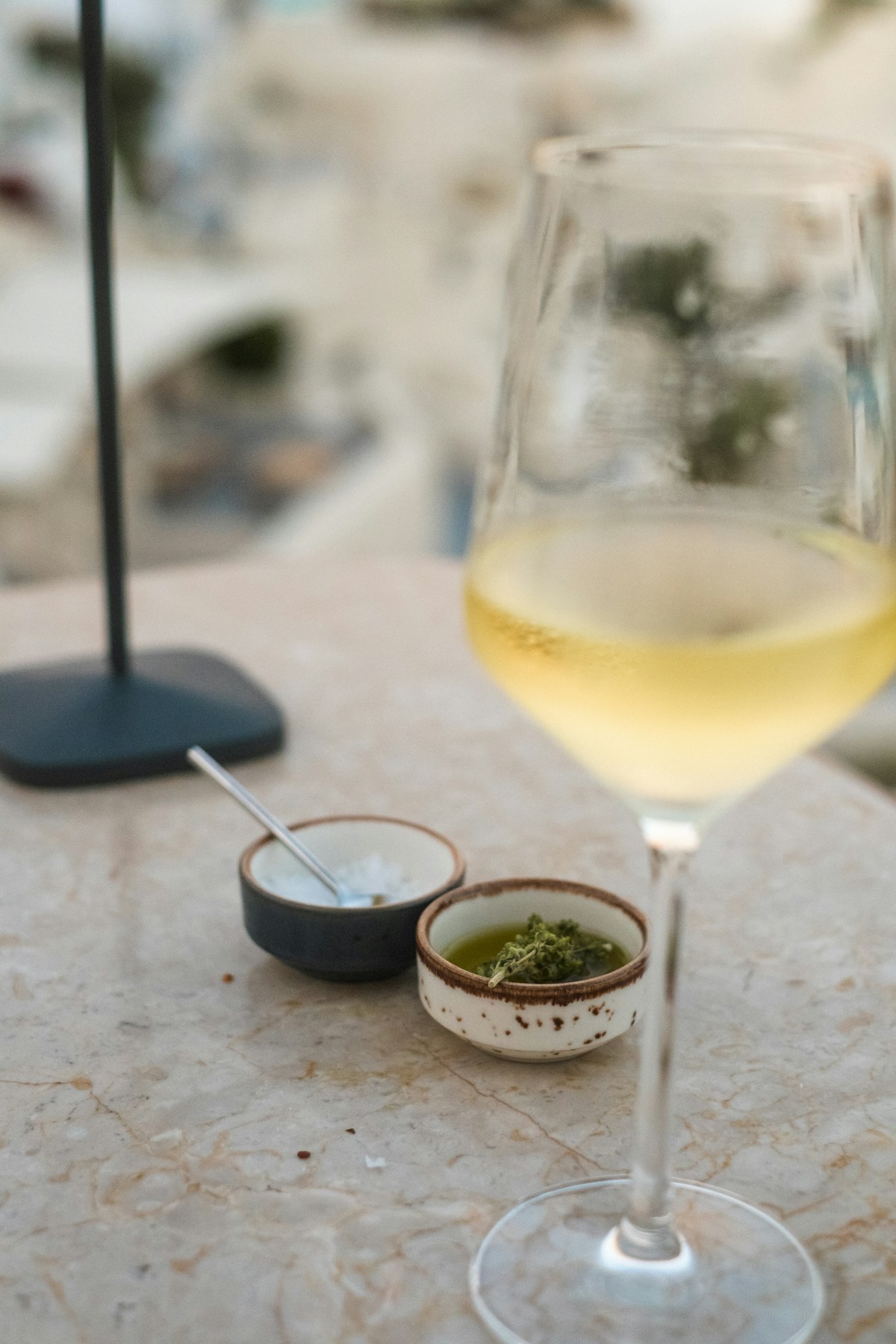
Santorini produces wines unlike anything else in Greece. The volcanic soil, the lack of phylloxera (which destroyed most of Europe’s vineyards in the 19th century), and the basket-pruning technique that protects vines from Aegean winds have created a wine culture with genuine depth. The island’s Assyrtiko is now ranked among the serious white wines of the Mediterranean. A wine tour here is not a novelty - it is one of the better ways to spend an afternoon. All prices are approximate as of 2026.
Top Tours at a Glance
Here’s a quick comparison of top-rated tours on GetYourGuide:
| Tour | Duration | Price (from) | Group Size | Highlights |
|---|---|---|---|---|
| Santorini Wine Tasting Tour: 3 Wineries | 4 hrs | from $92/person | Small group (max 8) | Venetsanos, Sigalas, family estate; caldera views |
| Sunset Wine Tour with Caldera Views | 3 hrs | from $78/person | Small group (max 10) | Santo Wines terrace, 3 Assyrtiko expressions |
| Santorini Food & Wine Walk | 3.5 hrs | from $85/person | Small group (max 8) | Volcanic terroir, fava & caper pairings |
| Private Winery Tour with Sommelier | 5 hrs | from $145/person | Private | 4 wineries, guided tasting, barrel samples |
| Santorini Vineyard & Vinsanto Experience | 2.5 hrs | from $65/person | Group | Vineyard walk, Vinsanto tasting, kouloura vines |
Browse all Santorini wine tours → GetYourGuide
Santorini’s Volcanic Terroir
The island’s soil is the starting point for understanding the wines. Santorini sits on a caldera - the collapsed crater of a massive volcanic eruption around 1600 BC. The soil is primarily volcanic ash, pumice, and aspa (a local volcanic substrate), with minimal organic matter. Vines here cannot be grafted onto phylloxera-resistant rootstock because the soil’s composition prevents the louse from surviving. As a result, Santorini’s Assyrtiko vines are own-rooted, many of them over 70 years old.
The basket training method (kouloura) keeps the grape clusters close to the ground, protecting them from the ferocious meltemi winds that blow across the caldera in summer. The combination of volcanic minerals, low rainfall, and old-vine root depth gives Santorini Assyrtiko its distinctive salinity and intensity.
Santo Wines
Santo Wines is the island’s main agricultural cooperative, founded in 1947 and representing over 1,200 grape growers. Their winery and tasting room sit on the caldera edge near Pyrgos, with one of the best sunset terraces in Santorini.
Standard tasting packages include the Santorini Tasting (3 wines, approximately EUR 16), the Premium Tasting (5 wines including Vinsanto and barrel-aged Assyrtiko, approximately EUR 28), and a Food Pairing option (5 wines with local products, approximately EUR 45). Tastings are self-guided with tasting notes provided, but guided tour options with a winemaker or sommelier are available at approximately EUR 55 per person and run twice daily.
The terrace fills in peak season. Booking the late-afternoon tasting (around 5pm to 6pm) secures the best light and avoids the midday crowd. Reserve in advance through their website or GetYourGuide from June through September.
Opening hours: Daily, approximately 10am to sunset (seasonal variation - check ahead for exact times)
Location: Pyrgos, approximately 6km from Fira
Venetsanos Winery
Venetsanos is one of the oldest privately owned wineries on the island, established in 1947 in a clifftop position near Megalochori. The winery building is cut directly into the volcanic rock - the original barrel cave is still in use for Vinsanto aging. The caldera view from the terrace is among the most dramatic on the island.
Their standard tasting (3 wines, approximately EUR 18) covers dry Assyrtiko, a late-harvest Assyrtiko, and Vinsanto. The premium package (5 wines with mezze, approximately EUR 45) adds older-vintage Vinsanto and guided commentary on the winery’s history. The architecture alone is worth the visit.
Opening hours: Daily, approximately 10am to 8pm (summer)
Location: Megalochori, approximately 9km from Fira
Domaine Sigalas
Sigalas is the winery most frequently cited by Greek wine professionals as producing the benchmark Santorini Assyrtiko. Founded in 1991 by Paris Sigalas, the estate focuses on single-vineyard expressions and extended-aging Vinsanto. The winery is in Oia, at the northern end of the island.
Tastings are smaller and less theatrical than Santo Wines or Venetsanos - the focus is on the wine itself. Standard tasting (3 wines, approximately EUR 20), premium tasting with barrel samples (EUR 35). The winery shop stocks older vintages not available at the other estates. Recommended for visitors who are primarily interested in the wines rather than the terrace views.
Opening hours: Daily, approximately 10am to 5pm (seasonal variation)
Location: Oia, approximately 12km from Fira
Hatzidakis Winery
Hatzidakis is a small, family-run estate in Pyrgos that produces some of the most mineral-driven Assyrtiko on the island. The tasting room is modest compared to the larger operations, but the wines are well-regarded by importers and critics. Standard tasting (4 wines, approximately EUR 15) includes their Assyrtiko, Nykteri (a traditional Santorini white made from late-harvested, barrel-fermented grapes), and Vinsanto.
This is the right choice for travellers who want a quieter tasting experience away from the caldera-view crowds.
Opening hours: Monday through Saturday, approximately 10am to 4pm
Location: Pyrgos
Guided Wine Tours
Several operators run Santorini wine tours that combine 2 to 3 wineries with transport, a guide, and a final dinner or mezze session. These typically run 4 to 5 hours and cost approximately EUR 85 to EUR 130 per person depending on what is included.
Santorini Wine Tours (independent operator) runs a 4-hour afternoon circuit visiting Venetsanos, a smaller family estate, and a village taverna. Approximately EUR 95 per person including tastings and dinner. Groups of up to 8. The guide covers the island’s wine history and the kouloura vine-training method at each stop.
GetYourGuide carries several multi-winery tour options, including sunset wine tours with caldera views and a combined food and wine walk through Oia. Browse Santorini wine tours - reviews are searchable by winery type and group size. Small-group options (under 10) are strongly recommended for summer visits when the major winery terraces can be overcrowded.
What to look for in a guided tour: Confirmation that tasting fees are included (not just transport), identification of which wineries are visited (some tours rotate between operators seasonally), and group size cap.
Santorini’s Other Grape Varieties
While Assyrtiko dominates, several other varieties are grown on the island.
Aidani is a white variety used to add aromatic complexity to blends and is an essential component in Vinsanto. Dry single-variety Aidani is rare but worth trying if you see it.
Athiri is a lighter white grape grown across Greece - Santorini versions are crisp and lower in alcohol than Assyrtiko. Often used in blends.
Mandilaria is the main red grape on the island, producing wines with deep colour and firm tannin. Not as celebrated as the whites but grown at several estates.
Nykteri: Santorini’s Traditional White
Nykteri (the name means “worked by night”) is a traditional style made by harvesting and pressing grapes after dark to preserve freshness in the summer heat. The wine undergoes barrel fermentation and extended aging. Nykteri has its own PDO classification within Santorini wines - look for it at Hatzidakis and Sigalas in particular.
Practical Notes
When to visit: April through October is the primary season. Summer tastings (July and August) require advance booking at all major wineries. Spring and autumn are less crowded and offer more flexibility for spontaneous visits.
Getting between wineries: Santorini’s road network is compact but the caldera roads can be slow in peak season due to tour buses and ATVs. Hiring a private driver for a half-day winery circuit (approximately EUR 80 to EUR 100) gives more flexibility than a fixed-itinerary bus tour. Taxis are available but can be slow to dispatch in high season.
Designated driver note: The tasting volumes at each winery are typically 3 to 5 glasses across a 90-minute session. If you plan to visit multiple wineries independently and drive yourself, pace accordingly or use a guided tour with included transport.
Food pairings: Local products that pair well with Assyrtiko include capers (the island grows its own), fava (yellow split pea puree), and fresh seafood from the Ammoudi port below Oia. Several wineries offer food-pairing packages; alternatively, plan a dinner at one of the Oia or Fira fish restaurants after the tasting circuit.