Milos and Santorini are both volcanic Cycladic islands, both offer dramatic scenery shaped by geology, and both have been on the ‘must-visit Greece’ shortlist for years. They appeal to similar travellers but deliver the experience very differently. The key difference: Santorini is famous for a specific view; Milos is famous for beaches.
Quick Verdict
| Category | Milos | Santorini |
|---|---|---|
| Beach quality and variety | ★★★★★ | ★★★ |
| Iconic scenery | ★★★★ | ★★★★★ |
| Caldera/volcanic drama | ★★★★ | ★★★★★ |
| Crowds | ★★★ | ★ |
| Budget value | ★★★★ | ★★ |
| Food scene | ★★★ | ★★★★★ |
| Wine | ★ | ★★★★★ |
| Authenticity | ★★★★★ | ★★ |
Go to Milos if you want extraordinary beaches, volcanic scenery without the Santorini crowds, lower prices, and a more authentic Greek island experience. Go to Santorini if the caldera view, Oia sunset, volcano cruise, and wine tourism are specifically on your list and you’re prepared to pay a premium for them.
Scenery
Santorini
Santorini’s scenery is in a category of its own in Greece. The flooded volcanic caldera - the inner sea surrounded by cliff villages perched at 200–300m elevation - creates a landscape found nowhere else in the Mediterranean. The village of Oia with its blue-domed churches, white walls, and caldera backdrop is one of the most photographed places on earth. The views from the cliff walks between Fira and Oia are genuinely extraordinary.
This is the island’s primary appeal, and it’s real. The sunset over the caldera from Oia is one of those experiences that justifies the travel.
Milos
Milos’s scenery is geological rather than architectural. The island’s volcanic origin created hundreds of coloured rock formations - white pumice cliffs, orange tuff columns, red and ochre volcanic rocks - combined with clear turquoise water in sheltered bays. The result is a colour palette unlike most Cycladic islands: earth tones and white rock rather than uniform blue and white.
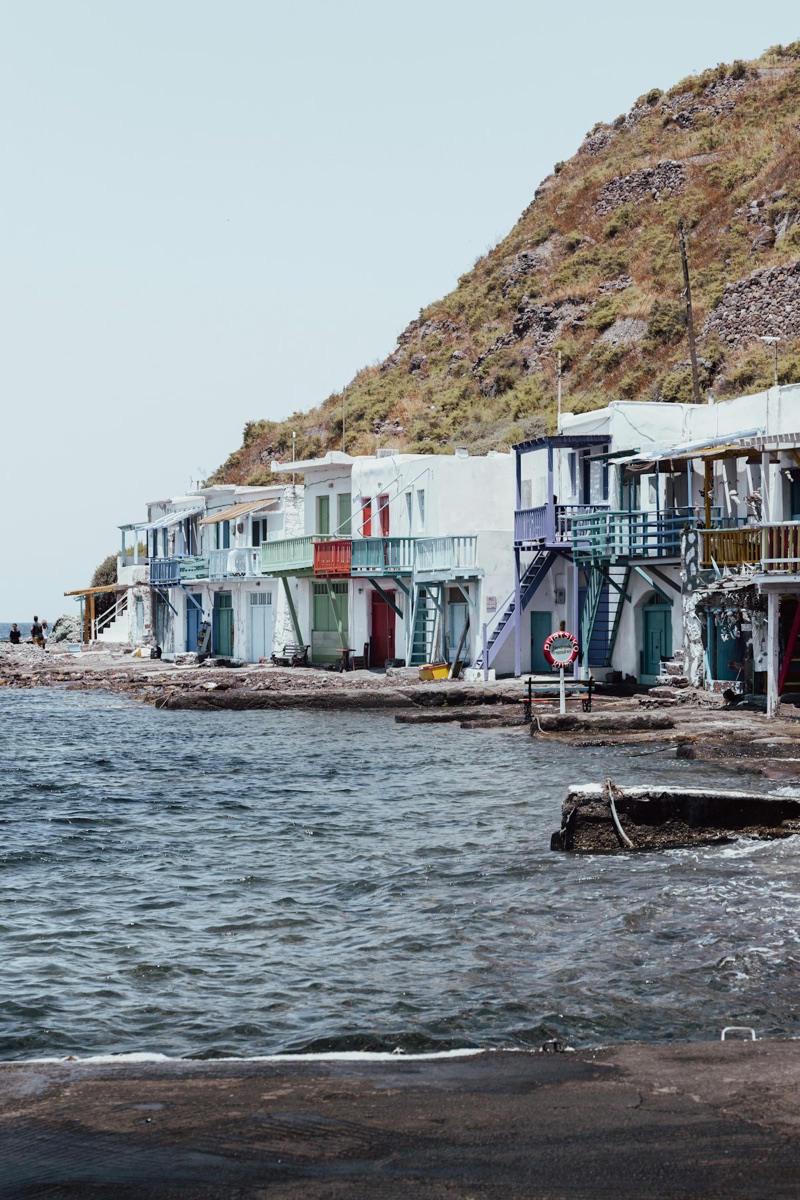
The most famous formation is Sarakiniko - a lunar landscape of smooth white volcanic rock near the island’s north coast, with rock pools of clear turquoise water. It’s extraordinary and completely different from any beach in Greece. The fishing village of Klima (brightly painted boat-houses called syrmata built into the cliff, with the living quarters directly above) is one of Greece’s most photographed villages and genuinely unique.
Beaches
Santorini
Santorini’s beaches are dramatic but not swimming-paradise beaches:
- Perissa and Perivolos: Black volcanic sand, organised with sunbeds and bars, can get very hot in summer.
- Kamari: Similar to Perissa with a beach road behind it.
- Red Beach (Akrotiri): Striking red cliff setting but small and crowded; partially closed due to rockfall risk.
- Vlychada: A quieter white pumice beach in the south.
The water at Santorini’s beaches is clean but darker than the Cycladic norm - the volcanic geology affects the colour. The iconic Santorini experience isn’t really about swimming; it’s about the caldera.
Milos
Milos has over 70 beaches and the variety is extraordinary:
- Sarakiniko: The white lunar rock landscape - not a swimming beach but one of the most unique spots in Greece.
- Kleftiko: Accessible only by boat - sea caves, white rock arches, and crystal-clear water. The best boat trip in the Cyclades.
- Firiplaka and Tsigrado: Two adjacent coves with exceptional turquoise water; Tsigrado requires a short rope descent but rewards with a near-private beach.
- Paleochori: A beach with natural hot springs seeping into the sea - warm water and sulphurous steam (a reminder of the volcanic activity below).
- Provatas: A calmer, sandier beach well-suited to families.
- Alogomandra: A remote south coast beach that sees almost no visitors.
Verdict: Milos comprehensively for beaches. Not even close.
Food and Wine
Santorini
Santorini has one of the best restaurant scenes in Greece. The combination of caldera-view dining, a local wine tradition (Assyrtiko is a world-class white wine grown in volcanic soil), and a concentration of serious restaurants makes it exceptional. The island’s produce is distinctive: sun-dried Santorini tomatoes (used in tomatokeftedes fritters), white aubergines, fava (yellow split pea purée from the island’s own Santorini fava variety), and Vinsanto dessert wine.
Milos
Milos has good taverna food - particularly seafood in the villages of Pollonia and Adamas - but doesn’t have Santorini’s restaurant sophistication. The island’s speciality is pitarakia (small cheese pies fried in olive oil), very good and widely available. Fishing is still an active local industry and fresh fish from the morning’s catch is reliable. Prices are considerably lower than Santorini.
Crowds
This is the sharpest contrast between the two islands. Santorini in July and August is one of the most crowded destinations in the Mediterranean. Oia’s sunset point has a pre-sunset queue; Perissa is wall-to-wall sunbeds; the narrow lanes between Fira and Firostefani are busy all day.
Milos sees far fewer tourists, though it has grown significantly in popularity over the past decade. In peak season the island fills up, but Sarakiniko at 8am, the boat trip to Kleftiko, and most of the island’s beaches retain an uncrowded character that Santorini cannot offer.
Cost Comparison
| Category | Milos | Santorini |
|---|---|---|
| Midrange hotel (per night) | €80–180 | €150–400 |
| Caldera/sea view premium | n/a | €400–1,500 |
| Dinner per person | €22–40 | €35–70 |
| Boat trip | €35–60 | €40–80 |
| Car hire (per day) | €35–60 | €45–75 |
Santorini’s caldera-view accommodation represents the most expensive category in Greece. Milos is significantly cheaper across all categories.
Accommodation
Santorini:
- Canaves Oia Epitome - 5-star, from €1,500/night
- Andronis Luxury Suites - €800+/night
- Astra Suites Imerovigli - boutique, €400–800/night
- Hotel Keti - midrange caldera-view, €180–350/night
Search all Santorini hotels on Booking.com
Milos:
- Milos Breeze Boutique Hotel - midrange, €90–180/night
- Patsidakis Studios - good value, €70–130/night
- White Coast Pool Suites - premium, €250–400/night
- Portiani Hotel - budget-friendly, from €60/night
Search all Milos hotels on Booking.com
Getting There
Santorini: Flights from Athens (45 minutes, multiple daily with Aegean and Sky Express). High-speed ferry from Piraeus: 4–5 hours. Multiple ferries connect to other Cyclades.
Milos: Flights from Athens (45 minutes). Ferry from Piraeus: 3.5 hours (high-speed) or 6–7 hours (standard). See our Greek island ferry guide.
Our Verdict
Go to Santorini for the caldera, the wine, the special-occasion restaurants, and the specific experience of watching sunset from Oia. Accept the crowds and the price. It’s worth it once.
Go to Milos for better beaches, more authentic character, significantly lower prices, and a volcanic island experience that’s genuinely surprising. Sarakiniko and Kleftiko alone justify the journey.
Can’t decide? A combined trip works well - both are connected by ferry (approximately 2 hours). Visit Santorini first for 3 nights (caldera, sunset, wine), then Milos for 3 nights (beaches, boat trips, authenticity). One of the best Cyclades combinations available.
Search flights to Greece across multiple airlines in one place. Pick up a Greece eSIM before you fly - keeps you connected without roaming charges. Sort out travel insurance for Greece before you leave.
See Also
- Santorini Island Guide - full planning guide to the caldera, villages, and wine
- Milos Island Guide - Sarakiniko, Kleftiko, and the catacombs
- Where to Stay in Santorini - Fira vs Oia vs Imerovigli
- Santorini Itinerary - how to structure 3–5 days on the island
- Best Tours in Santorini - catamaran, wine, and caldera tours
- Greek Island Hopping Itinerary - building a Cyclades route around both islands
Still deciding? More island comparisons:
- Rhodes vs Crete - Greece’s two largest islands compared
- Mykonos vs Ios - two Cycladic party islands compared
- Corfu vs Crete - Ionian vs Aegean island comparison
- Which Greek Island Should You Visit? - the full decision guide
Plan Your Trip
✈️ Book your flights to Greece 🛡️ Get travel insurance 📱 Stay connected with an eSIM 🚗 Rent a car