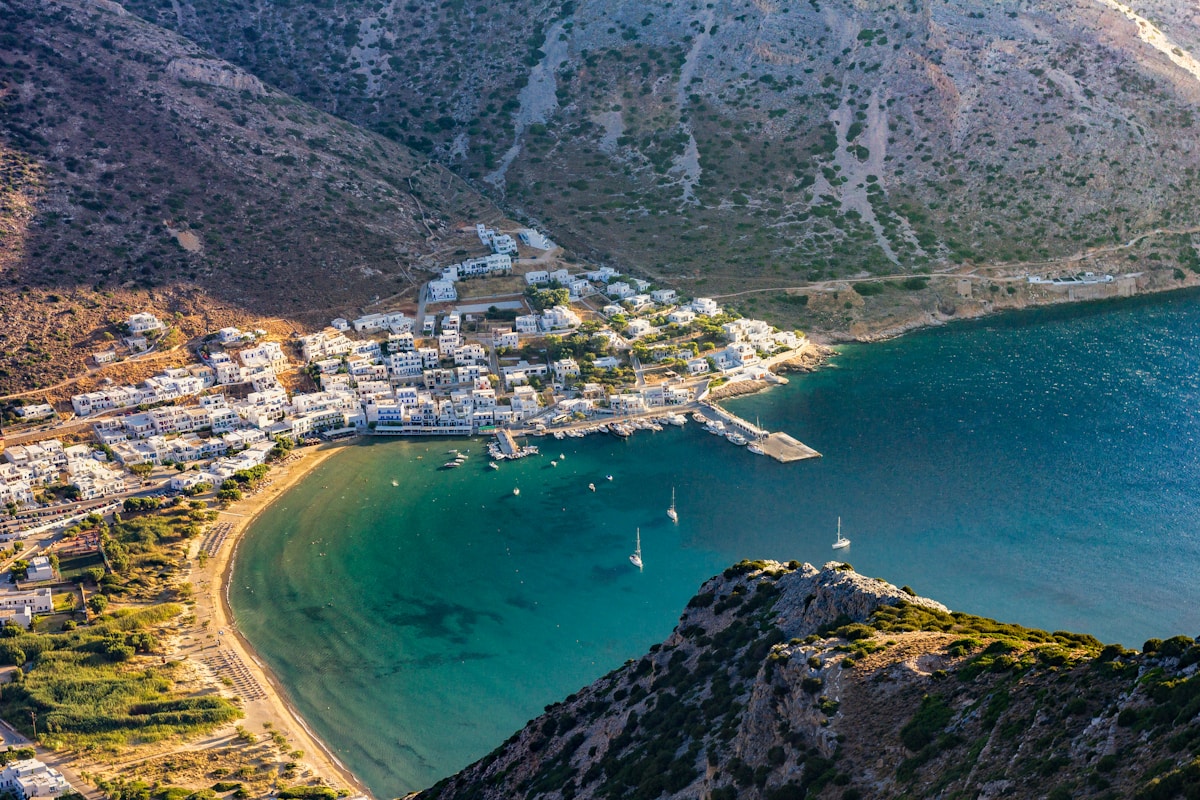
Rhodes and Crete are the two biggest holiday islands in Greece and both rank consistently in Europe’s top beach destinations. They are very different islands that happen to be compared constantly because they’re both “large Greek islands.” Knowing what each does well makes the choice straightforward.
Quick Verdict
| Category | Rhodes | Crete |
|---|---|---|
| Medieval history | ★★★★★ | ★★★ |
| Ancient (Minoan) history | ★★ | ★★★★★ |
| Beach variety | ★★★★ | ★★★★★ |
| Wild beaches | ★★★ | ★★★★★ |
| Capital city | ★★★★★ | ★★★★ |
| Size / variety | ★★★ | ★★★★★ |
| Budget value | ★★★★ | ★★★★ |
| Getting around without car | ★★★★ | ★★★ |
Go to Rhodes if you want a world-class medieval walled city, a more compact island easier to cover in a week, and easy day trips to Turkey and nearby islands. Go to Crete if you want the largest, most varied Greek island with ancient Minoan history, wild south-coast beaches, and enough to fill 2–3 weeks.
History and Culture
Rhodes
Rhodes Town contains one of the best-preserved medieval walled cities in Europe - a UNESCO World Heritage Site. The Street of the Knights (the Knights of St John built the city in the 14th century), the Palace of the Grand Masters, and the old town’s maze of Ottoman mosques, Byzantine churches, and Gothic buildings occupy a large area within the city walls. Walking the walls at sunset is one of Greece’s great free experiences.
Ancient Rhodes also has significant history - the Colossus of Rhodes (one of the Seven Wonders of the Ancient World, though no trace remains), the ancient acropolis of Lindos, and the ancient city of Kameiros.
Crete
Crete’s history runs deeper and older. The Minoan civilisation - Europe’s first advanced culture - flourished here from approximately 2700 to 1100 BC. The Palace of Knossos (near Heraklion) is the most significant Minoan site in the world; entry costs approximately €15 as of 2026 and is best visited with a guide to understand what you’re seeing. Other Minoan palaces at Phaistos, Malia, and Akrotiri are less restored but less crowded.
The Venetian period left Chania’s old harbour (one of the most photogenic in Greece) and the Venetian fortress and loggia in Heraklion. The Ottoman period added mosques and fountains in the main cities. The Battle of Crete (1941) and the island’s wartime resistance have significant memorials.
Beaches
Rhodes
Rhodes’s best beaches are concentrated on the east coast:
- Tsambika: A fine-sand beach with turquoise water, one of the best organised beaches on the island (sunbeds approximately €8–12 each).
- Lindos: Beautiful location below the acropolis, but tiny and crowded. Better for photos than swimming in July.
- Faliraki: The package-holiday strip beach - long, sandy, lots of water sports. Very busy.
- Prasonisi: The southern cape where the Aegean and Mediterranean meet - windsurfers’ paradise, wild and scenic.
- Stegna: A quieter, calmer beach in the north.
Crete
Crete’s beaches are more diverse:
- Elafonisi: A pink-tinged sand beach and lagoon near the southwest tip - one of Greece’s most beautiful. Gets very crowded; arrive early.
- Balos: A stunning lagoon accessible by boat from Kissamos or by rough track - shallow turquoise water and a sandbar.
- Preveli: A palm-lined freshwater river flowing into the Libyan Sea - unique in Greece.
- Vai: Europe’s largest natural palm forest behind a beach on the north-east coast.
- Falassarna: A wide, sandy west-coast beach with spectacular sunsets.
- Matala: Famous for the Roman-era caves used by hippies in the 1970s; decent beach.
Food
Crete has one of the most distinctive regional cuisines in Greece - often cited as the purest expression of the Mediterranean diet. The island is large enough to be food self-sufficient, and it mostly is: olive oil from the groves around Heraklion and Sitia (among the world’s finest, exported internationally), graviera cheese made from sheep’s milk (PDO-protected, nutty and semi-hard), lamb and goat slow-cooked with stamnagathi (wild greens foraged from the hills), dakos (barley rusk topped with crushed tomatoes, mizithra cheese, and olive oil - the quintessential Cretan starter), apaki (smoked cured pork with aromatic herbs), and sfakianes pites (thin pancakes filled with fresh cheese and drizzled with local honey).
Village tavernas in the Cretan interior - Zaros, Vamos, the Amari valley, Argyroupolis - serve food grown within a few kilometres. Cretan wine has also improved markedly: the Vidiano white grape (crisp and aromatic) and the Kotsifali and Mandilari reds from the Peza and Archanes PDO zones are worth trying specifically on the island. A full dinner at a village taverna typically costs €18–30 per person with wine - one of the best-value food experiences in Greece.
Rhodes has a distinct local food culture shaped by Dodecanese and Ottoman influences. Loukoumades (honey-drenched doughnut balls, €3–4 per portion) are the island’s most recognised sweet. Pitaroudia (fried chickpea fritters with onion and herbs, €5–8 as a mezze) are a Rhodes-specific specialty rarely found elsewhere. Melekouni (sesame and honey sweet pressed into bars) is sold at local shops and served at celebrations. The fish tavernas in Lindos village and Rhodes Old Town are consistently excellent − grilled fish, octopus, and fresh seafood meze. Recommended spots in the Old Town: Ta Kioupia (for Dodecanese specialties) and the harbour-side fish tavernas near the new harbour. Expect €25–45 per person for a full seafood dinner.
Winner: Crete for depth and variety of food traditions; Rhodes for fresh fish and the distinctive Dodecanese mezze culture.
Cost Comparison
| Category | Rhodes | Crete |
|---|---|---|
| Midrange hotel (per night) | €65–180 | €60–170 |
| Dinner per person | €22–45 | €20–40 |
| Car hire (per day) | €35–65 | €30–60 |
| Main site entry | €8–15 | €10–20 |
| Ferry to nearby island | €25–50 | €30–60 |
Both islands are in a similar price band - cheaper than the Cyclades, competitive with the Ionian islands.
Accommodation
Rhodes:
- Ikos Aria - 5-star all-inclusive, €500+/night
- Elakati Luxury Beach Resort - luxury beach resort, €200–400/night
- Melenos Lindos - boutique in Lindos village, €250–500/night
- Hotel Spirit of the Knights - midrange, Old Town, €90–160/night
Search all Rhodes hotels on Booking.com
Crete:
- Domes Noruz Chania - 5-star, €400+/night
- Kapsaliana Village Hotel - design hotel in olive oil estate, €180–350/night
- Porto Veneziano Chania - midrange harbour hotel, €80–160/night
- Minos International Hotel Heraklion - budget, from €50/night
Search all Crete hotels on Booking.com
Getting Around
Rhodes is smaller and more manageable by public transport. The KTEL bus network connects Rhodes Town to Lindos, Faliraki, Tsambika, and Kolymbia on a regular schedule throughout summer; the Rhodes Town–Lindos bus runs roughly every hour in peak season (approximately €6 one-way). A hire car (from approximately €35–65/day) opens up the rural interior, the southern cape at Prasonisi, and the quieter western coast, but it isn’t essential for a resort-based week. Rhodes Town itself is walkable - the medieval Old Town and the new town are both compact. Taxis from Rhodes airport to the Old Town cost approximately €25–35.
Crete requires either a car or very careful base selection. The island is 260km long from end to end - you cannot reach the south coast beaches (Elafonisi, Balos, Preveli) from Heraklion or Chania without significant travel time or a hire car (from approximately €30–60/day). The KTEL bus network connects the four main cities (Heraklion, Rethymno, Chania, Agios Nikolaos) reliably, with multiple departures daily. Southern coast beaches are accessible by KTEL to the nearest village, then taxi or local boat - but timetables are infrequent. Renting a car for at least part of your stay is strongly recommended for any Crete trip beyond the main city beaches. See our car rental guide for Greece.
Verdict: Rhodes is considerably easier to navigate without a car. Crete rewards - and to some extent requires - a hire car to access the south coast beaches and western peninsulas.
Day Trips
From Rhodes: The Dodecanese location makes Rhodes an excellent base for day trips. The island of Symi (1 hour by catamaran, approximately €25–35 return) is one of Greece’s most beautiful small islands - colourful neoclassical mansions rising above a horseshoe harbour, worth half a day at minimum. The Turkish coast: Marmaris is 1 hour by daily ferry (approximately €25–40 return including Turkish e-Visa); the day trip is popular and straightforward. Kos is reachable by catamaran in approximately 2 hours. Chalki (1 hour by boat) is quieter. Day boat trips around Rhodes’s own coastline - to St Paul’s Bay near Lindos, or to the Blue Lagoon of Prasonisi - are also available.
From Crete: Crete’s scale means most day trips happen within the island rather than off it. Heraklion to Knossos is 20 minutes by urban bus (€1.80, runs regularly). Chania to Elafonisi takes 1 hour by car (KTEL bus takes approximately 2 hours). Boat day trips to Balos run from Kissamos port (approximately €40 return including time ashore). Excursions to Santorini depart from Heraklion port on high-speed ferries (approximately 2 hours, €60–80 return) several times a week in summer. The Samaria Gorge (1 hour from Chania by bus) is one of Greece’s best hiking day trips - approximately 16km, requires reasonable fitness.
Verdict: Rhodes has better off-island day trip options (Symi, Turkey). Crete has more variety within the island itself for day excursions.
Our Verdict
Rhodes is the better choice if you want a compact, manageable island with world-class medieval history and organised beach tourism. It’s excellent for a week without a car and pairs well with day trips to Symi and Turkey.
Crete is the better choice if you want depth - more history, more beaches, more landscape variety, more authentic food culture. It rewards a 10–14 day visit with a car far more than a 7-day package holiday.
For planning either trip, start with our full island guides: Crete and Rhodes.
Search flights to Greece across multiple airlines in one place. Pick up a Greece eSIM before you fly - keeps you connected without roaming charges. Sort out travel insurance for Greece before you leave.
See Also
- Crete Island Guide - Heraklion, Chania, Rethymno, and the south coast
- Rhodes Island Guide - Old Town, Lindos, and the beaches
- Where to Stay in Crete - Heraklion vs Chania vs Rethymno
- Where to Stay in Rhodes - Old Town vs beach resorts
- Best Tours in Crete - Knossos, Samaria Gorge, and east coast day trips
- Corfu vs Crete - if Corfu is also on your shortlist
- Kefalonia vs Zakynthos - Ionian alternatives if neither Rhodes nor Crete fits
- Milos vs Santorini - smaller-island Cyclades alternative
- Which Greek Island Should You Visit? - the full decision guide
Plan Your Trip
✈️ Book your flights to Greece 🛡️ Get travel insurance 📱 Stay connected with an eSIM 🚗 Rent a car