Rhodes Travel Guide: The Complete Island Guide
Rhodes island: UNESCO Old Town (€6 entry), Lindos acropolis (€12), beaches (Faliraki, Anthony Quinn). Flights from €45, hotels from €70/night.
Guides for Rhodes
Rhodes is the largest of the Dodecanese islands and one of the most historically significant places in Greece. The Knights of St John held the island from 1309 to 1522 and left a medieval walled city that remains the most intact in the Mediterranean — a living city of Gothic churches, Ottoman mosques, Byzantine remains, and cobbled streets inhabited continuously for seven centuries.
Getting There from Athens
Flight: Domestic flights from Athens to Rhodes (Diagoras Airport, RHO) take approximately 1 hour. Fares start from approximately €45 one way with Aegean Airlines or Olympic Air; book four to six weeks ahead for best prices. The airport is 14km from Rhodes Town — bus approximately €2.50, taxi approximately €25.
Ferry: Overnight ferry from Piraeus takes approximately 16–20 hours depending on route and vessel. Deck class from approximately €40; cabin berths from approximately €65. Several operators run the route (ANEK, Blue Star Ferries). The ferry arrives at Kolona Harbour, a short walk from the Old Town.
Top 5 Beaches
Tsambika: The island’s most popular beach — a long arc of soft golden sand on the east coast, 27km from Rhodes Town. Calm water, good snorkelling at the northern end, full beach facilities, and a clifftop monastery above (395 steps, worth climbing for the view). KTEL bus approximately €3.
Anthony Quinn Bay: A small, rocky cove between Faliraki and Ladiko, named after the actor who filmed The Guns of Navarone here and later bought the bay. No sandy beach but exceptional clear water over white pebbles and rock. Much quieter than Faliraki, good for snorkelling.
Faliraki: The island’s largest resort beach — a 5km stretch of sand with full facilities (sunbeds, watersports, beach clubs). Busy in high summer, but the beach is long enough to spread out. The best-organised beach infrastructure on the island.
Prasonisi: The island’s southernmost point, where a sandbar splits the sea into two distinct bays — the western side is choppy (windsurfing and kitesurfing), the eastern side is flat (beginners and swimmers). Surreal geography; one of Greece’s best windsurfing spots.
St Paul’s Bay (Lindos): A small, perfectly enclosed turquoise cove directly below the Lindos acropolis. Walk down from the village or take a short boat from Lindos main beach. Clear water, dramatic cliff backdrop, tends to fill up by 11am in summer.
Rhodes Old Town
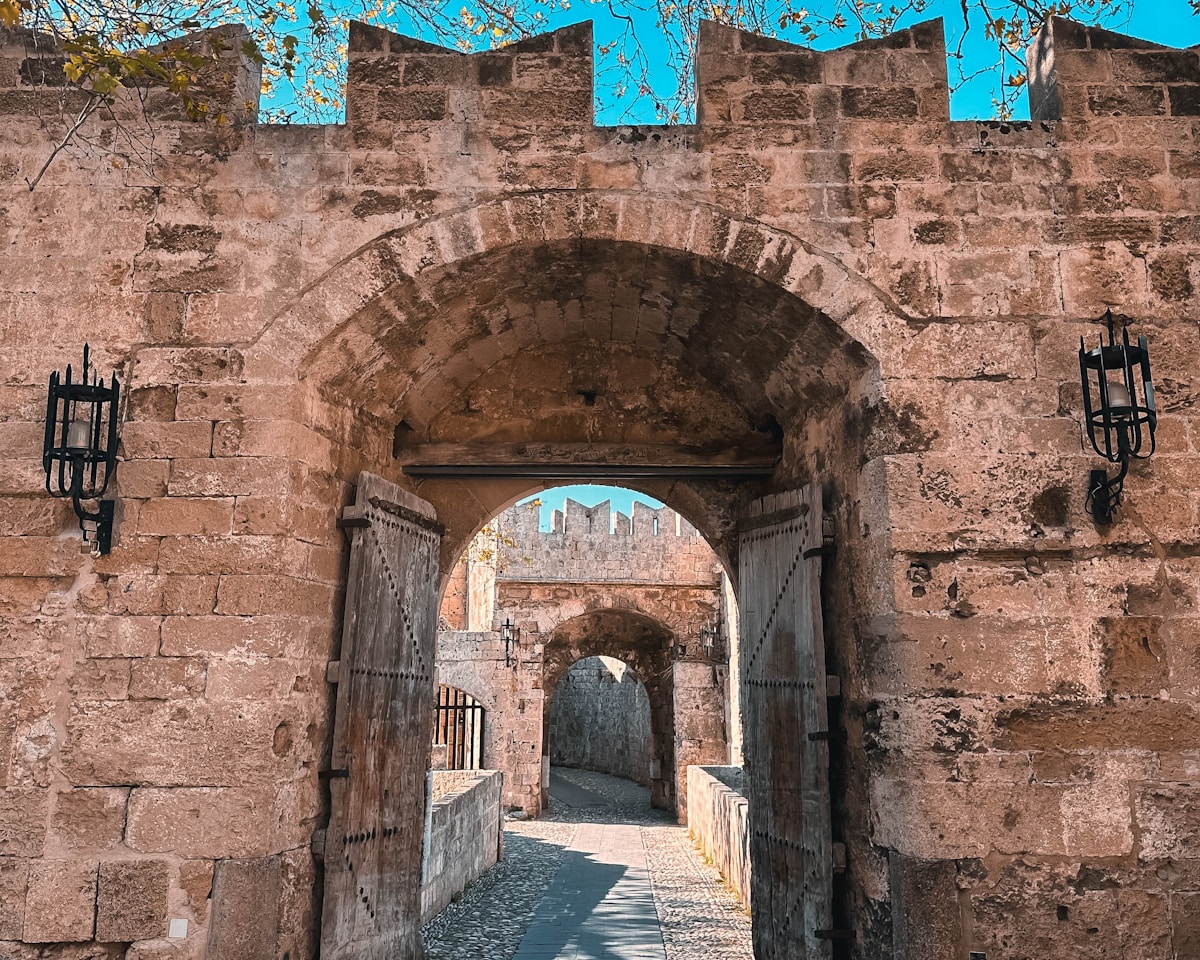
The Old Town is a UNESCO World Heritage Site and the dominant reason to visit Rhodes. The 4km of walls, built and reinforced by the Knights over two centuries, enclose an exceptionally sophisticated fortification system with eleven gates, moats, and towers.
Street of Knights (Ippoton): The ceremonial Gothic street with the inns of each nation arranged along it — free to walk, the most photographed street in Rhodes.
Palace of the Grand Master: The reconstructed seat of the Knights. Entry €6 adult (as of 2026), open 8am–8pm Tue–Sun. Two exceptional mosaic floors relocated from Early Christian basilicas by the Italians during their occupation.
Archaeological Museum: Housed in the former Knights’ hospital (15th century) — the Aphrodite of Rhodes is the highlight. Entry €6 adult.
Lindos
A clifftop acropolis above a whitewashed village, with a sandy bay below. The acropolis (€12 adult, open 8am–8pm daily in summer) contains a 4th-century BC Doric temple of Athena Lindia and an extensive Knights’ fortification. The village is beautiful but very crowded in summer.
Getting there: 47km south of Rhodes Town. KTEL bus approximately €3.50, 1 hour. Taxi approximately €50–60 one way.
Best Time to Visit
May and June are the best months for Rhodes — temperatures reach 25–28°C, the sea is warm enough to swim, the Old Town is walkable without crowds, and prices are 25–40% below peak. September is nearly as good. July and August bring heavy package tourism and the Old Town fills with coach groups by 10am — the experience is significantly diminished.
Where to Stay
Budget (€50–90/night): Hotel Spot (Old Town) is a clean, simple option within the walls from approximately €60/night in shoulder season. Hotel Anastasia (New Town) offers air-conditioned rooms from approximately €55/night with a short walk to the walls.
Mid-range (€110–180/night): Marco Polo Mansion (Old Town) is a restored 15th-century Ottoman house with eight individually decorated rooms; from approximately €130/night. Spirit of the Knights Luxury Rooms occupies a medieval building on a quiet Old Town lane; from approximately €145/night.
Luxury (€250+/night): Melenos Lindos in Lindos village is one of the finest boutique hotels in Greece — twelve individually designed rooms with Lindos-style carved furniture and caldera-style terraces; from approximately €350/night in season. Rodos Park Suites & Spa (New Town) offers modern luxury with a large pool from approximately €250/night.
Search hotels in Rhodes on Booking.com
Where to Eat
To Steno (Old Town, Agionos Street): A narrow mezedopoleion in the Turkish Quarter — small plates of local mezedes, excellent fried courgettes and grilled octopus. Approximately €18–28 per person. Busy in the evening; arrive before 8pm or expect to wait.
Hatzikelis (Mandraki Harbour, New Town): Rhodes’ most respected seafood restaurant — whole grilled fish, exceptional sea urchin, and a good wine list. Approximately €35–60 per person. Book ahead in July and August.
Day Trip: Symi
A stunning harbour island 50 minutes from Rhodes by high-speed boat — neoclassical mansions in shades of ochre, yellow, and terracotta climbing a steep hillside. No mass tourism, no cars in the main harbour town. Day trips approximately €35–50 per person (boat only); boats depart from Mandraki Harbour. The day is tight but completely feasible, and Symi is one of the most beautiful islands in the Aegean.
Getting Around
The main bus terminal (KTEL) is at Mandraki Harbour. Buses serve Faliraki (€2.20), Lindos (€3.50), and most resort areas. Car hire from approximately €35–55/day gives the most flexibility for smaller beaches and interior villages.
For guided tours, Old Town walking tours, and Lindos excursions, see GetYourGuide Rhodes.
See Also
- Things to Do in Rhodes - the Old Town, Lindos, and the best beaches
- Best Beaches in Rhodes - Anthony Quinn Bay, Tsambika, Prasonisi, and the east coast
- Restaurants in Rhodes - where to eat in the Old Town and beyond
- Best Tours in Rhodes - guided Old Town walks, Lindos tours, and Symi day trips
- Where to Stay in Rhodes - Old Town vs. New Town vs. beach resorts
- Symi Travel Guide - the most beautiful day trip from Rhodes
- Kos Travel Guide - the Dodecanese island with the best beaches
- Rhodes vs Crete - two of Greece’s largest islands compared
- Greek Island Ferry Guide - ferries from Rhodes to Kos, Symi, and mainland
- Best Greek Islands Guide - where Rhodes fits in the wider picture
Frequently Asked Questions
- Is Rhodes worth visiting?
- Yes - Rhodes has one of the finest medieval walled cities in Europe, excellent beaches on both coasts, and a well-developed tourism infrastructure. The Old Town is a UNESCO World Heritage Site and the most impressive in the Dodecanese. The island works for history, beaches, and food in combination.
- When is the best time to visit Rhodes?
- May–June and September–October offer good weather, manageable crowds, and significantly lower prices than peak season. July–August is peak season - the island is heavily booked by package tourists and the Old Town becomes congested. The island has one of the longest seasons in Greece - weather is good from April to November.
- How do I get to Rhodes?
- Domestic flight from Athens (approximately 1 hour, from €45 with Aegean or Olympic Air). Ferry from Piraeus (approximately 16–20 hours, overnight - from €40 deck class). High-speed catamaran from Kos (approximately 2–3 hours). Rhodes has good connections to other Dodecanese islands (Kos, Symi, Halki, Kalymnos).
- How much time do you need in Rhodes?
- Three to four days covers the Old Town properly, Lindos, and the main beaches. A week allows you to explore the quieter parts of the island - the west coast beaches, the interior villages, and the Valley of the Butterflies.
Book an experience
Top experiences in Rhodes
Explore the best tours and activities in Rhodes, with instant confirmation and free cancellation on most bookings.