Greece has over 200 inhabited islands, but most visitors are choosing between 10–15 well-connected destinations. The difference between islands is real and consequential for your trip: Mykonos and Paros are 45 minutes apart by ferry but they are different experiences in almost every way.
This guide compares the major islands by the criteria that actually matter when deciding where to go: vibe, beaches, cost, family-suitability, and how easy they are to reach.
The Cyclades: The Classic Greek Islands
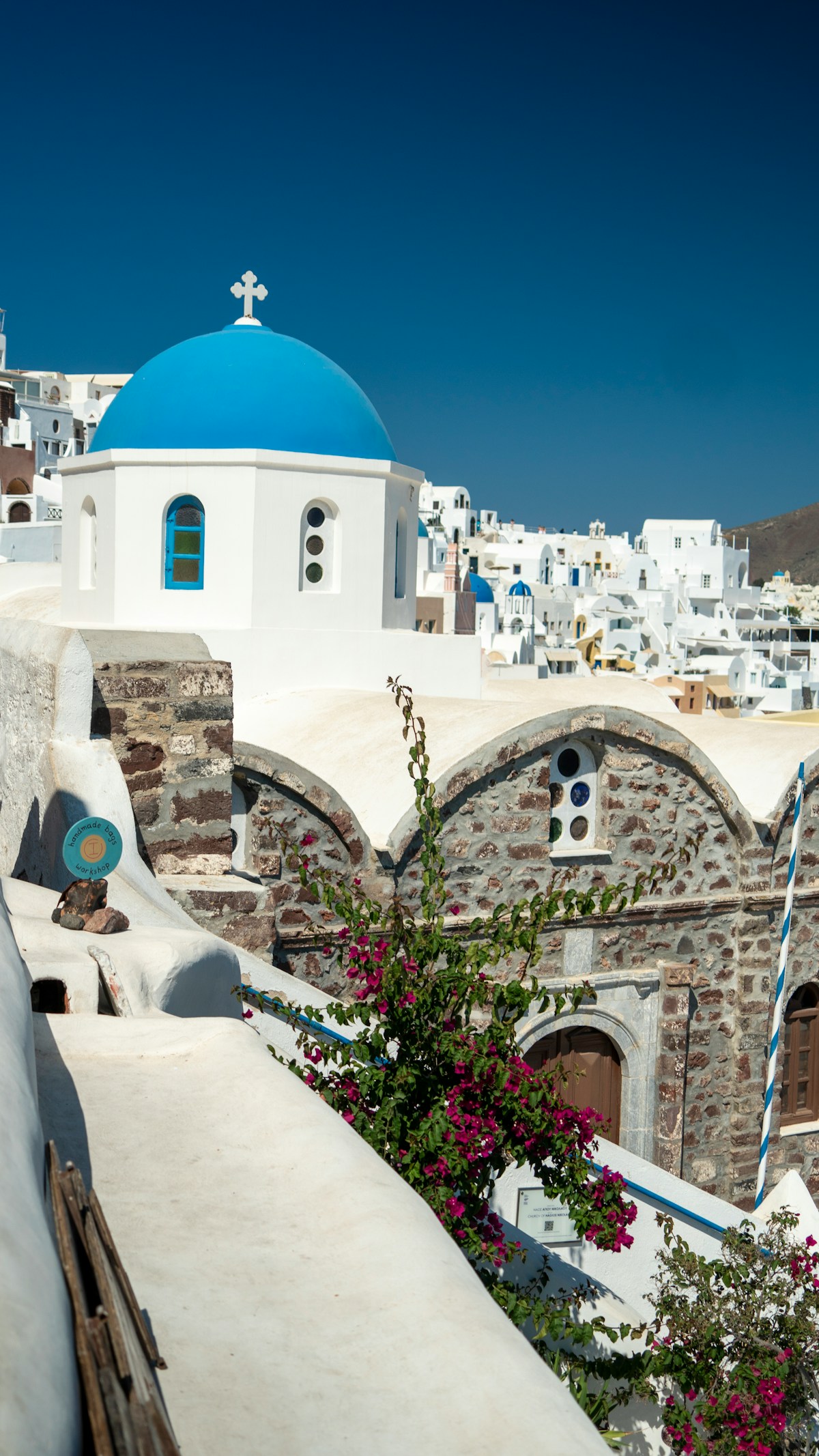
The Cyclades are the island group most visitors picture when they think of Greece - white cubic houses, blue-domed churches, and the Aegean spread out in every direction. The group has 24 inhabited islands; the main visitor islands are Santorini, Mykonos, Paros, Naxos, Milos, Ios, and Sifnos.
Santorini
Best for: Couples, honeymoons, sunsets, wine, dramatic scenery
Not ideal for: Families, budget travellers, beach holidays
The most visually striking island in Greece. Santorini sits in the flooded caldera of a volcanic eruption from around 1600 BC - the cliff villages of Fira and Oia perch at the caldera rim 300m above sea level, with the cobalt sea and the volcanic islets below.
The beaches (Perissa, Kamari, Vlychada) are black volcanic sand - striking to look at, hot underfoot in summer, and not the clear-water paradise you might expect. The island’s value is the caldera view, the local Assyrtiko wine, and the density of good restaurants per square metre. These come at a price: Santorini is one of the most expensive Greek islands and gets extremely crowded in July and August.
Average hotel cost (July): €150–400/night midrange; €400–1,000+ for caldera-view suites
Ferry time from Athens/Piraeus: approximately 5–8 hours (depending on route and ferry type)
Search hotels in Greece on Booking.com
Mykonos
Best for: Nightlife, beach clubs, a glamorous scene, LGBTQ+ travellers
Not ideal for: Budget travellers, families, peace and quiet
Mykonos is the Ibiza of Greece - a sophisticated, expensive, and party-focused island with an international reputation. The whitewashed Chora (main town) is photogenic, the beach clubs run from noon into the small hours, and the sunset cocktails at Little Venice are a genuine highlight. The island is also extremely LGBTQ+-friendly.
What Mykonos is not: a place for a quiet beach holiday. The beaches are organized party beaches (Paradise, Super Paradise) with sun loungers, DJs, and drinks service. Expect to pay Mykonos prices for everything: a gin and tonic at a beach club costs €20–30.
Average hotel cost (July): €200–500/night midrange
Ferry time from Athens/Piraeus: approximately 2–2.5 hours by high-speed
Paros
Best for: A balance of Cycladic beauty, beaches, and local life without the crowds or prices of Santorini/Mykonos
Not ideal for: All-night clubbing
Paros is the island that experienced Greece travellers recommend when asked where to go instead of Santorini or Mykonos. The architecture is the same whitewashed Cycladic style; the beaches (Kolymbithres, Golden Beach, Santa Maria) are some of the best in the group; the Parikia Venetian kastro and the Byzantine road to Lefkes are genuinely worth exploring. And the prices are approximately 40–50% lower than Mykonos.
Naoussa, the northern port village, has good fish restaurants, a small harbour, and a bar scene that runs until 2–3am in summer without the industrial-scale clubbing of Mykonos.
Average hotel cost (July): €90–200/night midrange
Ferry time from Athens/Piraeus: approximately 3.5–5 hours
Naxos
Best for: Families, beaches, hiking, local food
Not ideal for: Nightlife, dramatic landscape
Naxos is the largest Cycladic island and the most self-sufficient - it grows its own food, has villages inland as interesting as its beaches, and receives fewer international tourists than Paros despite being a better island for a week-long stay. The beaches on the west coast (Agios Prokopios, Agia Anna, Plaka) run for kilometres of flat, accessible, family-friendly sand. The mountain interior has Byzantine villages, hiking trails, and the ruins of a Venetian medieval castle at the village of Naxos Town.
The Portara - the marble doorway of an unfinished temple of Apollo from 530 BC - stands at the end of a causeway at the port entrance and is one of the most arresting archaeological sights in the Cyclades.
Average hotel cost (July): €80–180/night midrange
Ferry time from Athens/Piraeus: approximately 3.5–5.5 hours
Milos
Best for: Unusual beaches, dramatic volcanic scenery, diving, geology
Not ideal for: Nightlife, large resort hotels
Milos is shaped by its volcanic geology - the island has more than 70 distinct beach types, from the alien white pumice formations of Sarakiniko to hidden sea caves to bright orange cliff faces. It is small enough to explore by scooter or boat but has enough variety to fill a week. The Cycladic village of Plaka has the same whitewashed character as Paros or Naxos without the crowds.
Growing fast: Milos has moved from a well-kept secret to a mainstream island in the past five years. Book accommodation early.
Average hotel cost (July): €120–280/night midrange
Ferry time from Athens/Piraeus: approximately 3.5–4 hours
The Ionian Islands: Greener and Gentler
The Ionians lie off the west coast of mainland Greece in the Ionian Sea. The vegetation is lush (compared to the arid Cyclades), the architecture has Venetian and British influence, and the sea is the clearest in Greece.
Corfu
Best for: History, architecture, lush green scenery, beach variety
Not ideal for: Avoiding crowds in August
Corfu has the most historically layered old town in Greece - Venetian fortresses, French arcades, British cricket pitch - all packed onto a headland that is a UNESCO World Heritage Site. The north of the island has the best beaches (Paleokastritsa’s coves, Glyfada, Canal d’Amour at Sidari); the south is more developed. Good for a mixed history-and-beach trip.
Average hotel cost (July): €80–180/night midrange
Kefalonia
Best for: Dramatic scenery, caves, turtles, a slower pace
Not ideal for: Nightlife, urban buzz
Kefalonia is the largest Ionian island and has the most varied terrain - the imposing Mt Aenos, the turquoise coves of Myrtos and Antisamos, the caves of Melissani (a subterranean lake where light enters through an open roof hole). The pace is slower and the island receives fewer day-trippers than Corfu.
Petani and Lourdas beaches on the west coast are among the most spectacular in Greece.
Average hotel cost (July): €90–200/night midrange
Lefkada
Best for: Windsurfing, beaches, island-hopping by boat to Ithaca/Meganisi
Not ideal for: History lovers
Lefkada is technically connected to the mainland by a short bridge, making it accessible by car from Athens (approximately 5 hours). Porto Katsiki and Egremni on the west coast are among the most photogenic beaches in Greece - white cliffs dropping to turquoise water. Vasiliki is the windsurfing capital of Greece. The island is quieter and less expensive than most Ionian islands.
Average hotel cost (July): €80–160/night midrange
Crete: The Island That Stands Alone
Crete is in a category of its own. It is the largest Greek island by area, and the most self-contained - a 260km-long island with its own mountain ranges, gorges, wine regions, archaeological sites, and cuisine. You can spend two weeks in Crete and not feel you’ve exhausted it.
Best for: First-time visitors wanting depth, families, foodies, hikers, archaeology
Not ideal for: Short visits (3 nights is not enough)
The north coast (Chania, Rethymno, Heraklion) has the main towns, Venetian harbour architecture, and developed beach resort areas. The south coast (Matala, Agia Roumeli, Paleochora) is wilder, less developed, and harder to reach.
Highlights: The Palace of Knossos (Minoan, 2000–1380 BC), the Samaria Gorge (18km hike through Europe’s longest gorge), Elafonisi pink sand beach, the Lassithi plateau, Spinalonga fortress (former leper colony).
Average hotel cost (July): €70–180/night midrange (significant range between the resort coast and mountain villages)
The Dodecanese: Rhodes, Kos, and Samos
The Dodecanese are the eastern Aegean islands closest to Turkey. They have more Ottoman and Italian architectural layers than the Cyclades, and the sea is warmer and calmer.
Rhodes
The medieval walled city of Rhodes (a UNESCO World Heritage Site) is one of the best-preserved crusader fortifications in the world - the Knights Hospitaller held it from 1309 to 1522. The city is worth 2 days on its own. The beaches on the east coast (Lindos Bay, Tsambika) are excellent and well-organised.
Kos
Kos has a good ancient site (the Asklepion, where Hippocrates taught medicine), a flat terrain suitable for cycling, and popular resort beaches on the south coast. It receives a large package holiday market - more organized and tourist-facing than most other islands on this list.
Island Comparison Table
| Island | Best for | Beaches | Nightlife | Cost | Family |
|---|---|---|---|---|---|
| Santorini | Romance, sunsets | Black volcanic | Low-key bars | ★★★★★ | ✗ |
| Mykonos | Clubbing, gay scene | Organized party | Greece’s best | ★★★★★ | ✗ |
| Paros | All-rounder | ★★★★★ | Good bars | ★★★ | ✓ |
| Naxos | Families, food | ★★★★★ | Quiet | ★★ | ✓✓ |
| Milos | Geology, diving | ★★★★★ | Minimal | ★★★ | ✓ |
| Crete | Everything | ★★★★ | Moderate | ★★ | ✓✓ |
| Corfu | History, variety | ★★★★ | Moderate | ★★★ | ✓ |
| Kefalonia | Scenery, turtles | ★★★★★ | Quiet | ★★★ | ✓ |
| Lefkada | Beaches, windsurfing | ★★★★★ | Moderate | ★★ | ✓ |
| Rhodes | Medieval city | ★★★★ | Moderate | ★★★ | ✓ |
(Cost: more stars = more expensive)
How to Get Between Islands
Ferry: The main way to travel between Greek islands. Book in advance in July and August. Bluestar Ferries operates large car ferries; Hellenic Seaways and Seajets run high-speed catamarans. For Cyclades travel, Ferryhopper and Directferries aggregate schedules.
Domestic flights: Athens to Santorini, Mykonos, Rhodes, Corfu, Crete (Heraklion and Chania), and Kefalonia are all served by Sky Express and Olympic Air. A flight saves hours over a ferry but cuts out the experience of arriving by sea.
From Athens (Piraeus): The main departure port. Night ferries to Crete (overnight, 8–9 hours) are popular - book a cabin, arrive rested.
For a deeper look at specific islands: Ios and Kos are two of the most popular destinations not covered in depth above. If you’re drawn to the Cyclades as a group, our Cyclades guide covers the whole island chain. And if a romantic trip is the goal, our Greece honeymoon guide covers the best islands and hotels for couples.
Ready to plan? Our Greek island hopping itinerary covers a 10–14 day Cyclades route, while the two-week Greece itinerary combines islands with Athens and the mainland. For the best beaches specifically, our best beaches in Greece guide ranks the top spots by island.
Explore island tours and experiences with GetYourGuide.
See Also
- Greek Island Hopping Itinerary - a 10–14 day Cyclades route
- Two Weeks in Greece Itinerary - combining islands with Athens and the mainland
- Greece Honeymoon Guide - best islands and hotels for couples
- Best Beaches in Greece - top beaches ranked by island
- Greek Island Ferry Guide - how to book and navigate island ferries
- Best Time to Visit Greece - which islands suit which months
Plan Your Trip
✈️ Book your flights to Greece 🛡️ Get travel insurance 📱 Stay connected with an eSIM 🚗 Rent a car