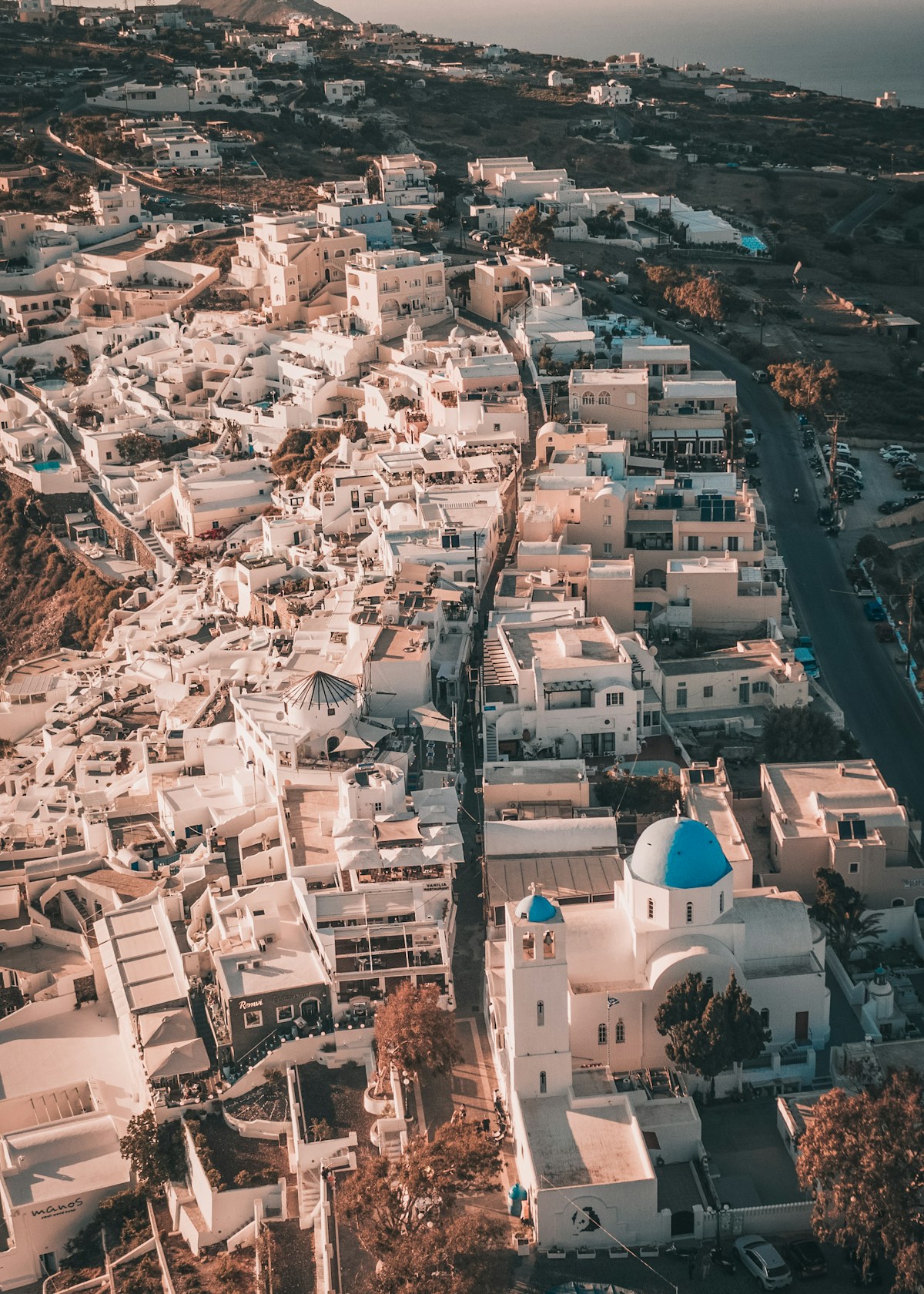
The Cyclades: Santorini to Naxos Island Hopping Guide
Whitewashed villages, caldera sunsets, and 24 inhabited islands from Santorini to Naxos: how to plan a Cyclades island hop without overpaying.
The Cyclades form the defining image of Greece that most people carry before they arrive - white cube houses against a blue dome, sea so clear it glows, volcanic cliffs dropping into the Aegean. They are a group of approximately 220 islands sitting in a rough circle (kyklos in Greek, hence the name) around the sacred island of Delos, scattered across the southern Aegean between Athens and Crete.
Twenty-four of those islands are permanently inhabited. Fewer still are regularly visited by travellers. Each has a distinct character: Santorini is volcanic drama; Mykonos is party culture and luxury; Milos is raw geological spectacle; Naxos is the hiker’s and foodie’s island; Sifnos is for those who want quiet and good cooking; Folegandros is for those who want almost nothing but cliffs, silence, and the sea.
Understanding the differences between them before you go is the most important planning step.
Island Character Guide
Santorini
The caldera - a drowned volcanic crater of staggering scale - makes Santorini the most instantly recognisable island in Greece. Oia’s blue domes and the 300-metre cliffs of Imerovigli exist exactly as advertised. So does the overcrowding in summer: cruise ships discharge thousands of passengers daily from Athinios port, and the narrow paths between Fira and Oia become difficult to walk between 10:00 and 16:00 in July and August.
Santorini is best experienced either in shoulder season (May, late September–October) or by staying long enough to find the quieter corners - the eastern coast, Akrotiri village below the famous lighthouse, the prehistoric site at Akrotiri itself (well worth the €12 as of 2026).
Best for: Bucket-list caldera views, wine (Assyrtiko white wine from the island’s volcanic soil is genuinely excellent), romantic couples travel, photography.
Not ideal for: Budget travel, families with young children, anyone who dislikes crowds in confined spaces.
Mykonos
Mykonos built its reputation on two things: beaches and nightlife. Both remain central to the island’s identity. The windmills and Little Venice in Mykonos Town (Chora) are pretty; the town itself is full of designer boutiques and restaurants that price for the luxury market. The beach clubs along Paradise and Super Paradise beaches are where the international party scene concentrates.
Mykonos also attracts a large LGBTQ+ community, particularly around Paradise Beach, and has some of the highest accommodation prices in Greece. It is possible to visit on a moderate budget (arriving by ferry from Paros rather than flying; staying in rooms rather than hotels) but the island’s general atmosphere is expensive.
Best for: Nightlife, beach clubs, LGBTQ+ travel, luxury accommodation.
Not ideal for: Budget travellers, anyone wanting a quiet Greek island experience.
Paros
The best-rounded of the Cyclades for a first-time visitor. Paros has excellent transport connections (it is a hub for ferries going in all directions), a range of accommodation from €30 budget rooms to boutique hotels, good beaches (Kolymbithres, Santa Maria, Golden Beach), and two towns with distinct characters: Parikia (the port, busy and practical) and Naoussa (the prettier fishing village turned resort town).
Parikia has a fine 4th-century Byzantine church (Ekatontapyliani, one of the best-preserved early Christian churches in Greece). The island is also excellent for windsurfing - the Pounta–Santa Maria corridor is one of the most reliable windsurf venues in the Mediterranean.
Best for: First-time Cyclades visitors, island-hopping base, windsurfing, a balanced mix of culture and beach.
Naxos
The largest and most fertile island in the Cyclades, Naxos is the one that could sustain you for a week without feeling the need to leave. The beaches on the west coast (Agios Prokopios, Plaka, Agia Anna) are some of the best in the archipelago. The interior is mountainous - the village of Apeiranthos, perched above 600m, is a whitewashed maze of marble streets and small museums. The island produces excellent potatoes, cheeses, and citrus; the local kitron liqueur (made from citron fruit found only on Naxos) is worth trying.
The Portara - a monumental marble doorway standing alone on a promontory above the port, all that remains of an unfinished 6th-century temple - is Naxos’s most photographed monument and an atmospheric place to watch the sunset with fewer people than Santorini’s Oia.
Best for: Families, hikers, food-focused travellers, those wanting the full Greece experience beyond just beach time.
Milos
Milos is the island that shocks first-time visitors. Nothing prepares you for Sarakiniko - a bay of white volcanic ash formations worn smooth by wind and water, giving it the look of the surface of the moon. The sea caves at Kleftiko (accessible by boat tour from Adamas port, approximately €35–€45 per person as of 2026) glow turquoise when the sun is at the right angle. The island has more than 70 named beaches.
Milos is considerably quieter than Santorini or Mykonos but its reputation has grown fast - book accommodation in July–August well in advance. Ferries from Piraeus take around 3 hours 30 minutes on the fast service (SeaJets or Golden Star Ferries).
Best for: Unusual geology and scenery, photography, travellers tired of the Santorini/Mykonos tourist trail.
Ios
Ios spent decades as Greece’s party island - the place young travellers went in the 1980s and 1990s to drink cheaply and sleep on the beach. That reputation has moderated but not disappeared. Ios Chora (the hilltop village) is genuinely attractive, and Mylopotas beach is one of the longest in the Cyclades. The legend that Homer is buried on Ios is unverified but the hilltop tomb is a pleasant walk.
In recent years Ios has attracted a broader visitor base beyond the party crowd. Outside August, the island is quieter and more accessible. Foodies should note that some of the best tavernas are up in the Chora, away from the beach bars.
Best for: Social travellers, young backpackers in peak season, those wanting a beach focus.
Sifnos
One of the most food-conscious islands in Greece - a tradition of pottery and cooking stretches back centuries. The ceramics shops in the village of Artemonas and the restaurants around Apollonia and Kastro serve some of the best-prepared mezedes in the Cyclades. The island is hillier than Paros but walkable - a network of old marble paths connects the main villages.
Sifnos is popular with Athenians in August and very quiet in May and September. The beaches (Platis Gialos, Faros, Vathi) are well-protected and calm. The island feels deliberately un-commercial; there are no beach clubs and very few nightclubs.
Best for: Food lovers, couples seeking a slower pace, repeat Greece visitors.
Folegandros
One of the smallest permanently inhabited Cyclades islands (population approximately 750). The Chora sits on the edge of a 200m cliff above the sea - one of the most dramatically positioned villages in all of Greece. There is one main settlement, a handful of decent restaurants, some excellent walking, and an almost complete absence of the facilities that make Mykonos and Santorini tick.
Folegandros rewards those who actively want disengagement. There is no ATM on some smaller nearby islands; cash in hand and a tolerance for limited choice is part of the appeal.
Best for: Those wanting total peace, walkers, travellers who find Santorini overwhelming.
Syros
The administrative capital of the Cyclades - Ermoupoli - is one of the finest examples of 19th-century neoclassical urban architecture in Greece, built during a brief period of great commercial wealth. Unlike every other Cyclades island, Syros has a real year-round town with opera houses, theatres, and a mixed Catholic/Orthodox cultural history dating to Venetian occupation. The island is less overtly touristic than its neighbours and better for experiencing how Cycladic people actually live.
Best for: Urban culture, architecture, travellers wanting something genuinely different from the standard Cyclades circuit.
Ferry Routes and Island Hopping
The Cyclades ferry network runs from Piraeus (Athens) as a hub, with secondary hubs at Paros, Naxos, and Syros. Main operators include Blue Star Ferries (large, slow but comfortable), SeaJets (fast catamarans), Golden Star Ferries, and Hellenic Seaways.
Key route times (approximate, fast ferry):
- Piraeus to Paros: 3 hours 30 minutes (fast), 5 hours (conventional)
- Piraeus to Naxos: 4 hours (fast), 5–6 hours (conventional)
- Piraeus to Santorini: 5–6 hours (fast), 7–8 hours (conventional)
- Piraeus to Milos: 3 hours 30 minutes (fast)
- Piraeus to Ios: 5 hours (fast)
- Piraeus to Mykonos: 3 hours 45 minutes (fast)
- Paros to Naxos: 45 minutes
- Santorini to Ios: 45 minutes (fast)
- Ios to Mykonos: 2 hours 30 minutes (fast)
Book through Ferryhopper or directly with the ferry company. The meltemi can disrupt fast catamaran services in July and August - conventional car ferries operate in more conditions.
Suggested Island Hopping Itineraries
Classic Cyclades (7–10 days)
Santorini → Ios → Paros → Naxos → Mykonos
Fly into Santorini (direct flights from most European cities in summer), spend 2–3 nights. Ferry to Ios (overnight if doing it cheap, or 45-min fast boat). 1–2 nights Ios. Ferry north to Paros (2 hours). 2 nights Paros. Day trip or short stay in Naxos. Ferry to Mykonos. Fly home from Mykonos (good connections).
Quieter Cyclades Alternative (7–10 days)
Athens → Milos → Sifnos → Folegandros → Paros → Naxos
Less crowded, more characterful. Requires checking ferry connections between Milos, Sifnos, and Folegandros as they are less frequent than the main tourist circuit.
Small Cyclades Extension (from Naxos, 3–5 days)
Naxos → Koufonissi → Schinoussa → Iraklia → Amorgos
The Small Cyclades (Mikres Kyklades) sit east of Naxos. Koufonissi is the most popular - small, intimate, turquoise water, excellent fish restaurants. Ferries run daily in summer from Naxos. This circuit is for experienced Greek island travellers who prefer discovering places before the crowds arrive.
Where to Stay
Accommodation prices in the Cyclades vary more dramatically by island than almost anywhere else in Greece. The island you choose determines your budget as much as the tier you book. Naxos is the best-value major island; Paros sits in the middle; Santorini and Mykonos are Europe’s most expensive island destinations. A €70 room on Naxos is a decent hotel; €70 on Santorini buys almost nothing.
Budget (from approximately €50–€70/night as of 2026)
Budget accommodation in the Cyclades works best on the affordable islands. Hotel Anixis in Naxos Town is a clean, family-run option from approximately €50/night with a rooftop terrace and easy walking distance to the port and Portara. Panorama Studio on Naxos’s hillside offers simple self-catering rooms from approximately €55/night with sea views without the caldera surcharge.
On Santorini, budget options are scarce but exist away from the caldera rim. Karterados Hotel in the inland village of Karterados - about 3 km from Fira by bus - offers simple double rooms from approximately €70/night, making it one of the few genuinely affordable bases on the island. On Mykonos, Pension Sofia in Mykonos Town offers small but well-placed rooms from approximately €60/night - a rare find given the island’s general pricing.
For travellers on tight budgets, the clear strategy is to spend the majority of nights on Naxos or Paros and make day trips or short overnight stays on Santorini or Mykonos rather than basing there.
Mid-range (from approximately €110–€150/night as of 2026)
The mid-range tier unlocks some of the Cyclades’ most rewarding stays on the less-visited islands. Porto Naxos hotel on the Naxos waterfront offers well-appointed rooms from approximately €130/night with direct beach access. On Milos, Milos Breeze Boutique Hotel in Adamas provides comfortable rooms from approximately €150/night with views toward the bay and convenient ferry connections.
On Sifnos, Sifnos Chrysopigi near the celebrated seaside monastery is a polished mid-range stay from approximately €120/night. On Folegandros, Hotel Notos in the Chora offers caldera-adjacent rooms from approximately €110/night - exceptional value for the clifftop setting compared to equivalent views on Santorini. For travellers splitting time across islands, mid-range options on Folegandros, Sifnos, and Milos consistently offer better quality-to-price ratios than equivalent spending on Mykonos or Santorini.
Luxury (from approximately €500/night as of 2026)
Santorini and Mykonos dominate the Cyclades luxury market. Mystique in Oia on Santorini is among the most acclaimed cave-house hotels in Greece, with infinity pools cut into the caldera cliff and suites from approximately €700/night in peak season. On Mykonos, Cavo Tagoo above Mykonos Town offers whitewashed cave-pool suites from approximately €500/night; Kensho Psarou near Psarou beach places guests within reach of the island’s most fashionable beach clubs from approximately €600/night.
Both Santorini and Mykonos luxury properties book out months ahead for July and August. Shoulder-season pricing (May, late September–October) typically drops 30–50% from peak rates and conditions are often better for actually experiencing these places.
Search hotels across the Cyclades on Booking.com
Practical Notes
Accommodation: Book at least 2–3 months ahead for July and August on Santorini, Mykonos, Ios, and Paros. May, June, September, and October are manageable with 2–4 weeks lead time.
Cash: ATMs exist on all major islands. Smaller islands (Koufonissi, Folegandros) have limited ATM access - carry euros from Naxos or Paros before departing.
Scooters: The default transport on most islands. A basic scooter rents for approximately €15–€30 per day. International Driving Permit may be requested for higher cc models; a standard driving licence is generally fine for 50cc mopeds.
Water: Tap water is drinkable on most islands, though some have brackish or desalinated water that tastes different. Bottled water is cheap and widely available.
The meltemi: In July and August, expect the wind. Plan ferry travel for morning departures, carry something warm for boat decks, and accept that some days the wind defines your beach experience.
For detailed guides to the main Cyclades islands: Santorini, Mykonos, Naxos, Paros, Ios, Milos, Sifnos, Folegandros, and Tinos. For island ferry logistics, see our Greek island ferry guide and Greek island hopping itinerary. For the full Greece planning picture, see best time to visit Greece and best Greek islands.
Book Santorini tours and excursions with GetYourGuide. Book tours and activities across the Cyclades with GetYourGuide. Pick up a Greece eSIM before you fly - keeps you connected without roaming charges.
See Also
- Santorini Travel Guide - caldera views, Akrotiri, and white-domed villages
- Mykonos Travel Guide - beaches, nightlife, and the island of Delos nearby
- Naxos Travel Guide - the largest and most self-sufficient Cycladic island
- Paros Travel Guide - the central Cyclades hub and best ferry connection point
- Ios Travel Guide - beaches and nightlife in the southern Cyclades
- Milos Travel Guide - volcanic beaches and the Kleftiko sea caves
- Sifnos Travel Guide - Greece’s gourmet island in the western Cyclades
- Folegandros Travel Guide - the quiet clifftop alternative
- Tinos Travel Guide - pilgrimage, marble villages, and exceptional food
- Greek Island Hopping Guide - the full multi-island circuit guide
- Greek Island Ferry Guide - complete ferry information for all routes
- Santorini vs Mykonos - the definitive comparison
- Paros vs Naxos - choosing between the central Cyclades islands
Frequently Asked Questions
- How many islands are in the Cyclades?
- The Cyclades consist of approximately 220 islands and islets, of which around 24 are permanently inhabited. The major islands are Mykonos, Santorini, Paros, Naxos, Milos, Ios, Syros, Sifnos, Folegandros, and Amorgos.
- What is the best base for island hopping the Cyclades?
- Paros and Naxos are the two best bases - both have good ferry connections in all directions, affordable accommodation, and enough to do for several days. Syros (Ermoupoli) is the administrative hub of the Cyclades and has excellent year-round ferry connections. Santorini and Mykonos are well-connected but expensive to use as bases.
- When is the best time to visit the Cyclades?
- May–June and September–early October are the best periods: warm weather, swimmable sea, lower prices than peak, and the meltemi wind is less intense. July–August are peak season - very busy, expensive, and the meltemi blows hard across open water.
- Can I island hop the Cyclades without booking ferries in advance?
- In May and early June, flexible travel is possible. In July and August, book ferries at least a week ahead on popular routes (Santorini–Ios–Mykonos–Paros) - high-speed boats sell out. Car-carrying ferries need much longer advance booking if you are taking a vehicle.
Book an experience
Top experiences in Cyclades
Explore the best tours and activities in Cyclades, with instant confirmation and free cancellation on most bookings.