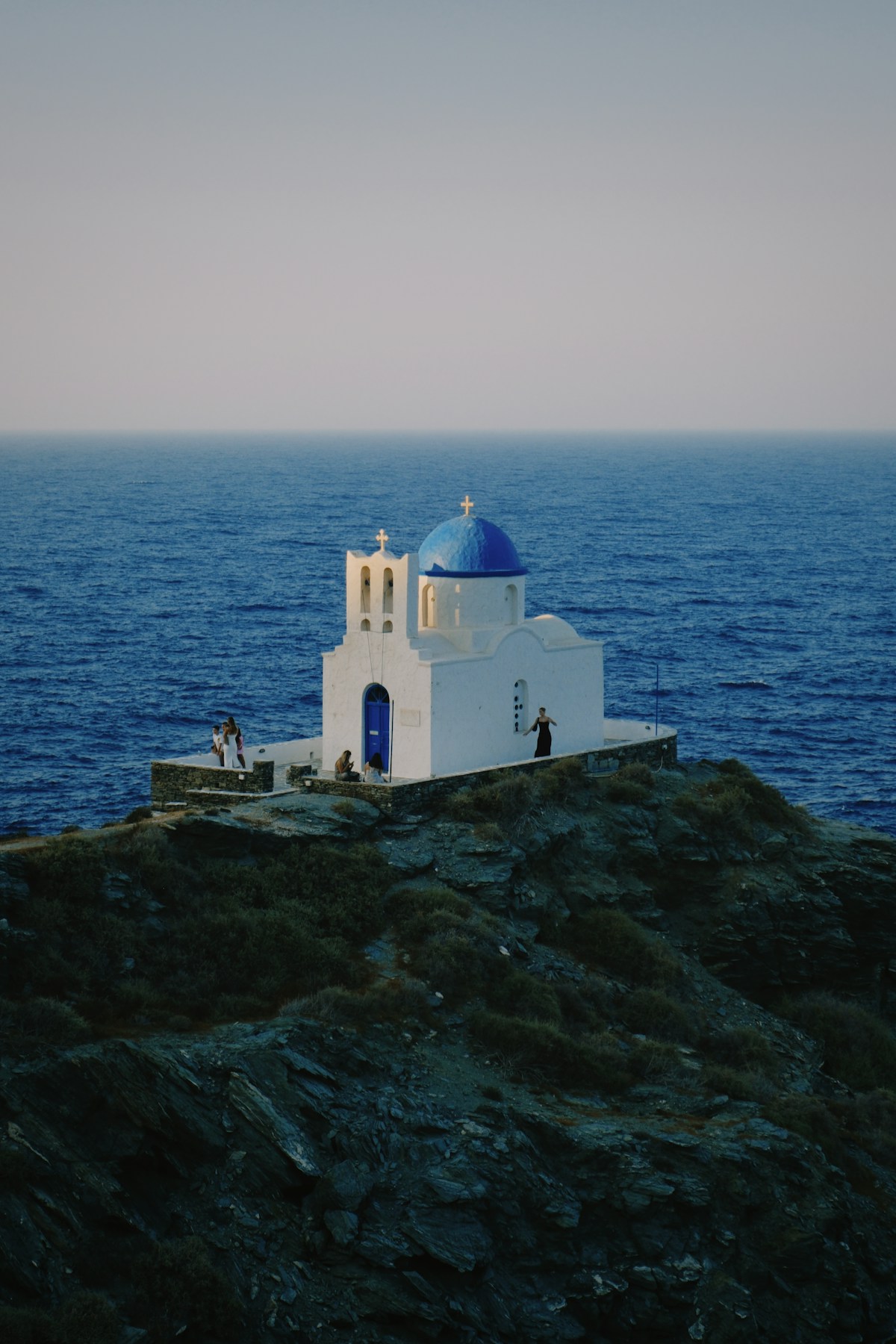
Paros Travel Guide: Naoussa, Parikia & Windsurfing
Parikia's marble alleys, Naoussa fishing village backed by Venetian ruins, windsurfing at Golden Beach, and the best Cyclades ferry connections.
Guides for Paros
Paros sits at the centre of the Cyclades - geographically, temperamentally, and practically. It is large enough to have proper infrastructure, beautiful enough to compete with any of its neighbours, and sensible enough to avoid the extreme pricing of Mykonos or Santorini. The island has two distinct centres: Parikia (the port capital, whitewashed and labyrinths) and Naoussa (the fishing harbour turned upscale village). Between them, 16km of good road crosses an island of marble quarries, olive groves, and mountain villages.
Parikia
The main town and port - a classic Cycladic capital that rewards slow wandering. The old kastro (Venetian castle built from the marble of an ancient temple) is the focal point; the warren of whitewashed lanes below it contains the best-preserved historic centre in Paros.
Ekatontapiliani (Church of a Hundred Doors): The most important early Christian basilica in the Cyclades, built in the 4th–6th centuries. Entry free, open 8am–9pm daily. The interior is Byzantine and largely unrestored - unusual and historically significant.
Paros Archaeological Museum: Small but good collection of Cycladic marble figurines and the partial Parian Chronicle (a marble inscription recording events in Greek history from 1581 to 264 BC). Entry €4, open 8am–3pm Tue–Sun.
Naoussa
The island’s second town - a fishing harbour that has reinvented itself as the stylish alternative to Parikia. The inner harbour (with the ruined Venetian fortress half-submerged in the water) is one of the most photographed corners of the Cyclades. Restaurants and bars line the quay; the surrounding area has the island’s best boutique hotels.
Naoussa is expensive relative to the rest of Paros. Dinner at the harbour tavernas runs approximately €30–50 per person. For better value, walk two minutes into the backstreets.
Beaches
Paros has excellent beaches on multiple coastlines - Kolymbithres for the unusual granite rock formations near Naoussa, Golden Beach for windsurfing (consistent Meltemi wind, PWA Windsurf World Cup), and Santa Maria for clear calm water. Our Paros beaches guide covers every beach with directions, facilities, and crowd levels.
Antiparos
A 5-minute ferry crossing from Parikia (from Pounta) brings you to Antiparos - a small island with a different character. The main village has a medieval castle (enter free, walk the lanes inside), and the beaches (Agios Georgios, Sifneiko) are less crowded than comparable Paros beaches. The island’s famous Cave of Antiparos (entry €4, 6km from the village by road or bus) is a stalactite cave with a remarkable interior - visited since antiquity (Lord Byron carved his name here).
Where to Stay in Paros
Naoussa in the north is the most fashionable base, a small fishing harbour with boutique hotels, good restaurants, and a lively evening scene. Parikia (the capital and port) offers better value and the classic Cycladic old town experience. Golden Beach on the east coast suits those who want beach-adjacent accommodation at competitive prices.
Budget (from approximately €60–90/night)
Studios and rooms in Parikia are the most affordable option on Paros, well positioned for the ferries, the old town, and bus connections across the island. The Cycladic lanes of the old town are within walking distance. From approximately €65/night as of 2026.
Golden Beach studios on the east coast provide self-catering accommodation close to one of the best beaches on Paros at prices below the more fashionable Naoussa properties. The area is popular with windsurfers. From approximately €68/night as of 2026.
Guesthouses near Alyki in the south offer quiet, affordable rooms in a less-visited part of the island, suited to visitors with a hire car who want to avoid the crowds. From approximately €60/night as of 2026.
Mid-range (from approximately €120–200/night)
Akrogiali Hotel in Naoussa is a well-run mid-range property close to the fishing harbour, with comfortable rooms and good access to the village’s restaurants and nightlife. From approximately €140/night as of 2026.
Archipelagos Hotel in Parikia offers a step up from budget in terms of finish and amenities, with a pool and a central position in the capital. From approximately €130/night as of 2026.
Paros Agnanti near Naoussa combines good pool facilities with a view toward the Naoussa bay, at prices that represent solid mid-range value for the Cyclades. From approximately €155/night as of 2026.
Luxury (from approximately €300/night)
Yria Island Boutique Hotel near Parikia is a luxurious complex with bungalows set among gardens, a private beach, and a pool, representing the most refined accommodation experience on Paros. From approximately €380/night as of 2026.
Astir of Paros near Naoussa is a long-established luxury resort with beach access, a marina, and comprehensive spa facilities. It is among the best-known high-end properties in the Cyclades. From approximately €320/night as of 2026.
Search hotels in Paros, Greece on Booking.com
Where to Eat in Paros
Naoussa concentrates the most ambitious eating on the island - harbour tavernas run €30–50/person. For better value, the back streets of Parikia and the villages deliver honest Greek cooking at €15–25/person. Our Paros restaurants guide covers both towns.
Paros Marble
Paros has been producing marble for 4,000 years - the Parian marble (lychnites, “lamp-lit stone”) was the most prized white marble in antiquity, quarried by lamplight deep underground to preserve its translucency. The Venus de Milo, the Hermes of Praxiteles, and the frieze of the Siphnian Treasury at Delphi are all Parian marble. The quarries (Marathi, 6km east of Parikia) can be visited - a rough track leads to the marble-carved interior of the main tunnel. Free access; bring a torch.
The Parian Chronicle (a marble stele recording events in Greek history from 1581 to 264 BC) was partly discovered here and is now in the Ashmolean Museum, Oxford. A section remains in the Paros Archaeological Museum in Parikia.
Getting Around Paros
KTEL buses connect Parikia to Naoussa, Golden Beach, Piso Livadi, and Aliki - approximately €1.80–2.50 per journey, reliable in season. Taxi from Parikia to Naoussa approximately €12. Car hire approximately €35–55/day; scooters from approximately €20/day. The island is small enough that a scooter covers most destinations.
Island-Hopping from Paros
Paros is the best ferry hub in the central Cyclades. From Parikia:
- Naxos: 30–45 minutes by fast ferry, several times daily. The largest Cycladic island, significantly cheaper than Paros, with excellent beaches, mountain villages, and the giant marble kouros statues.
- Ios: Approximately 1.5 hours - famous for its party scene (quieter now than its 1980s peak), good beaches.
- Santorini: Approximately 3 hours by conventional ferry, 1.5 hours by high-speed. Regular services year-round.
- Mykonos: Approximately 40 minutes by high-speed, 2.5 hours conventional.
- Antiparos: 5 minutes by regular small ferry from Pounta (a small port 9km south of Parikia, reached by bus or taxi).
No other Cycladic island offers the same frequency and range of connections as Paros. This makes it an excellent base for exploring multiple islands without committing to one at a time.
For detailed guides, see: things to do in Paros, best beaches in Paros, restaurants in Paros, Paros tours, and where to stay in Paros.
Weighing up the central Cyclades? See our Paros vs Naxos comparison.
Book Paros boat trips, sailing tours, and windsurfing lessons with GetYourGuide.
See Also
- Things to Do in Paros - Parikia, Naoussa, the Butterfly Valley, and the best beaches
- Best Beaches in Paros - Golden Beach, Kolymbithres, Santa Maria, and Logaras
- Restaurants in Paros - the best tavernas in Naoussa and Parikia
- Paros Tours - sailing trips, kayaking, and guided tours
- Where to Stay in Paros - Naoussa vs Parikia vs beach accommodation
- Paros vs Naxos - the definitive central Cyclades comparison
- Naxos Travel Guide - the larger, greener island 30 minutes by ferry
- Cyclades Guide - all the Cycladic islands and ferry connections
- Greek Island Hopping Guide - Paros as a central hub for island hopping
- Greece Sailing Guide - Paros is one of the best windsurfing destinations in Europe
Frequently Asked Questions
- Is Paros better than Mykonos?
- Paros offers much of what Mykonos does - Cycladic architecture, excellent beaches, a good nightlife scene in Naoussa - at roughly half the price. It lacks Mykonos's extreme glamour and celebrity cachet, which for most travellers is a significant advantage. Paros is particularly strong for windsurfing (Golden Beach) and as a hub for island-hopping (frequent ferries to Naxos, Ios, Santorini, Antiparos).
- When is the best time to visit Paros?
- June and September are ideal - reliable sun and warmth, far fewer crowds than July and August, and noticeably lower prices. July–August is peak season on Paros but the island handles it better than Mykonos or Santorini. The Meltemi wind is strongest in August - excellent for windsurfers, uncomfortable for sunbathing.
- How do I get to Paros?
- Ferry from Piraeus (approximately 3–5 hours depending on vessel, from €25 conventional or €45 high-speed). Domestic flight from Athens (approximately 45 minutes, from €45). The port is at Parikia, the main town. Paros is a major ferry hub - connections to Naxos (30 minutes), Ios (1.5 hours), Santorini (3–4 hours), and other Cyclades are frequent.
- What is Antiparos?
- Antiparos is a small island 5 minutes by ferry from Parikia - quieter, less developed, with excellent beaches and a well-preserved castle village. Day trips or overnight stays from Paros are easy. The island has attracted celebrity buyers (Tom Hanks has a house there) but remains low-key.
Book an experience
Top experiences in Paros
Explore the best tours and activities in Paros, with instant confirmation and free cancellation on most bookings.