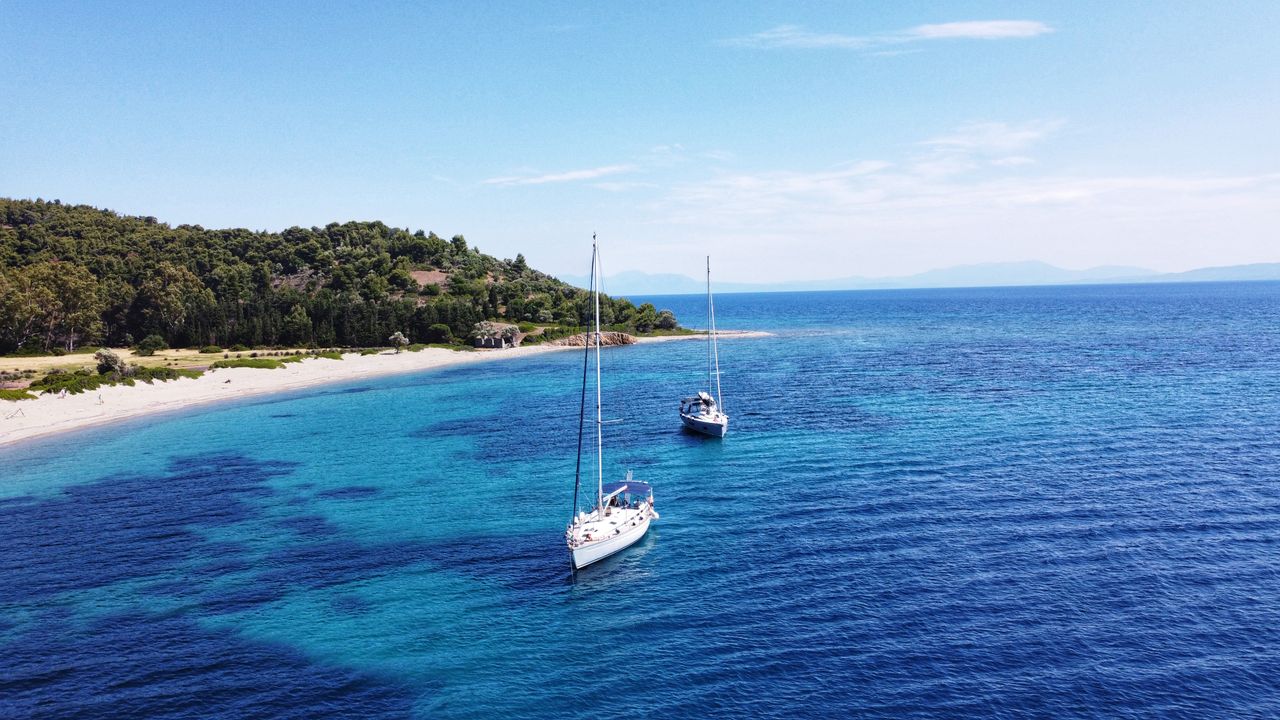
Greece is one of the world’s great sailing destinations - 16,000 km of coastline, 6,000 islands (227 inhabited), crystal-clear water, and a reliable summer wind system that has powered boats across the Aegean for three thousand years. Whether you want a flotilla week with other novice sailors, a skippered gulet cruise along the Turkish coast, or a two-week bareboat passage through the Cyclades, Greece has the infrastructure, the anchorages, and the scenery to deliver.
Here’s a quick comparison of top-rated sailing tours on GetYourGuide - the best option if you want a crewed sailing experience without the commitment of a full charter:
Top Sailing Tours at a Glance
| Tour | Duration | Price (from) | Group Size | Highlights |
|---|---|---|---|---|
| Athens Sunset Catamaran - Saronic Gulf | 3 hrs | from €65 | Up to 12 | Acropolis sea views, mezze and wine |
| Santorini Catamaran Caldera Cruise with BBQ | 5 hrs | from €89 | Up to 20 | Volcano, hot springs, Red Beach, lunch |
| Santorini Sunset Cruise with BBQ & Open Bar | 5 hrs | from €99 | Up to 20 | Caldera at sunset, fully crewed |
| Mykonos Sunset Catamaran Cruise | 3 hrs | from €95 | Up to 20 | Windmills view, champagne, Little Venice |
| Corfu Full-Day Island Boat Tour | 6 hrs | from €55 | Up to 20 | Paleokastritsa, sea caves, Blue Lagoon |
| Greece Island Hopping Sailing Tour | Multi-day | from €350 | Up to 12 | Skippered Cyclades circuit, all-inclusive |
Browse all Greece sailing tours → GetYourGuide
Charter Types Explained
Bareboat Charter
You rent the boat with no crew and sail it yourself. The charter company hands over a fully equipped yacht - charts, safety gear, cooking equipment, dinghy - and you return it a week or two later. You need a recognised skipper’s licence, a competent crew, and enough sea miles to satisfy the operator’s checklist.
Best for: Experienced sailors who want independence, can handle engine problems at anchor, and are comfortable navigating in busy ferry lanes.
Licence requirements: Most operators accept RYA Coastal Skipper, ICC (International Certificate of Competence), or IYT Coastal Skipper. Some will ask for a log book showing a minimum number of miles and overnight passages.
Typical costs (2026 approximate):
- 38ft monohull, Ionian, May: from €1,600–€2,200/week
- 42ft monohull, Cyclades, July: from €3,000–€4,500/week
- 47ft catamaran, any region, peak season: from €5,500–€8,000/week
These are boat-only prices. Add fuel (€100–€200/week depending on motoring), marina fees (€30–€80 per night where you berth), provisioning, and the security deposit (typically €2,000–€3,500, held against damage).
Skippered Charter
You hire the boat and a professional skipper who handles navigation, docking, and engine management. You crew alongside them - or simply relax - while they make all the decisions. Some charters also include a hostess/cook.
Best for: People without sailing qualifications, families with young children, or anyone who wants to explore Greek waters without the responsibility of skippering.
Skipper cost: Add approximately €150–€250 per day to the base bareboat rate. A hostess/cook adds another €100–€150 per day.
Flotilla Sailing
A group of yachts (typically 6–14 boats) sail the same general route together, led by a lead crew on a support vessel. Daily briefings cover the day’s sail, the anchorage or marina for that night, and any weather concerns. The lead crew circulates by dinghy, helps with tricky berths, and runs social evenings ashore.
Best for: Sailors who want some independence but also community, assistance when needed, and a built-in social group. Very popular with couples and small groups who are competent but not highly experienced.
Costs: Flotilla holidays are sold as per-berth packages - approximately €900–€1,800 per person for two weeks all-in (flights excluded), depending on company, season, and boat size. Sunsail, Sailing Holidays, and Neilson are the main UK-based operators.
Gulet Charter (Blue Voyage)
A traditional wooden motor-sailer (gulet) with a full crew - typically captain, engineer, and cook. Gulets are large, comfortable, and not primarily sailing vessels; the motor does most of the work. Common in the Dodecanese and along the nearby Turkish Aegean coast (the classic Turkish “Blue Voyage”).
Best for: Groups or families who want sea travel with luxury comfort, good food, and no sailing skills required. Not for people who want to actually sail.
The Main Sailing Regions
The Ionian Islands
The Ionian (Corfu, Lefkada, Kefalonia, Ithaka, Zakynthos, Paxos) is the preferred region for first-time charter sailors and flotilla operators. The prevailing wind - the Maestro - blows from the north-west most afternoons, typically Force 3–4, giving a reliable and manageable beat or reach. Anchorages are sheltered, the sea is calmer than the Aegean, and there are marinas at Corfu Town, Lefkada (Nidri and Lefkada Town), Fiskardo (Kefalonia), and Zakynthos Town.
Flotilla bases: Most UK operators run Ionian flotillas from Lefkada, which sits in a sheltered lagoon accessible via a swing bridge, giving excellent protection in all weather. Recommended for: beginners, families, flotilla sailing.
The Saronic Gulf and Argolis
The Saronic - the islands visible from Athens’ southern suburbs (Aegina, Hydra, Spetses, Poros) - is the most accessible Greek sailing ground. Bareboat charters leave from Alimos Marina near Piraeus or from Lavrion on the Attica coast. Hydra and Spetses are car-free, their waterfront villages unchanged for decades. The sailing is gentle, distances are short (Hydra is 65 km from Piraeus), and the Saronic works well as a weekend sail or a one-week loop.
The Cyclades
The Cyclades - Paros, Naxos, Milos, Ios, Folegandros, Sifnos, Amorgos - sit in the heart of the Aegean and offer the most iconic Greek island scenery: white cube houses, blue-domed churches, volcanic rock, and water so clear you can read the anchor on the seabed.
The challenge is the meltemi. This is a strong, dry north wind that funnels down the Aegean each summer, typically starting in mid-June and lasting until early September. In July and August it regularly blows Force 5–6 across open water, with gusts to Force 7 in channels between islands. It drops at night and picks up again mid-morning, which dictates sailing schedules: depart early, arrive by early afternoon. Anchorages are well-documented in the pilot books; the north-facing sides of islands take the full force.
Recommended for: experienced sailors or those with a competent hired skipper. May, June, and September are manageable for intermediate crews.
The Dodecanese
Rhodes, Kos, Leros, Patmos, Symi - the Dodecanese chain runs along the Turkish coast of the Aegean. Winds here are more variable than the Cyclades; the meltemi still arrives but is broken up by the Turkish landmass. The bonus is easy access to Turkish anchorages and ports (day cruises from Kos to Bodrum are popular). Charter bases at Rhodes Marina and Kos Marina.
The Sporades
Skiathos, Skopelos, Alonnisos - the Sporades sit north of Evia and are covered in pine forest down to the waterline. The National Marine Park of Alonnisos (Northern Sporades) is one of the best places in the Mediterranean to spot Mediterranean monk seals. Winds are generally lighter than the Cyclades and more variable. Charter bases at Skiathos.
When to Go
| Season | Winds | Crowds | Notes |
|---|---|---|---|
| April | Light, variable | Very few | Water cold, some marinas not fully open |
| May | Building NW, Force 2–4 | Low | Ideal: comfortable, anchorages uncrowded |
| June | Meltemi begins, Force 3–5 | Medium | Good balance of wind and warmth |
| July–Aug | Meltemi Force 5–7 Cyclades | Peak | Experienced crews only in open Aegean |
| September | Meltemi easing, Force 3–4 | Falling | Often the best month overall |
| October | Variable, some storms | Low | Days still warm; strong low-pressure possible |
Booking a Charter
Most bareboat and skippered charter boats in Greece are marketed through aggregator platforms including Sailogy, Boatbookings, Navalia, and Click&Boat. Booking direct with a charter company (Vernicos, Posidon Yachts, Kiriacoulis, Sun Odyssey) sometimes gives better prices and clearer contract terms.
Key things to check before booking:
- Deposit amount and refund conditions if the trip is cancelled
- Security deposit held during the charter and how it is returned
- What is and is not covered by the company’s insurance (propeller damage is commonly excluded)
- Age and condition of the boat - ask for the construction year and last antifouling date
- Whether VAT (Greek FPA) is included in the quoted price - it often is not
Book for July–August at least 6–9 months in advance for popular boats and regions. May, June, and September can often be booked 2–3 months out.
Practical Checklist for First-Time Greece Charter Sailors
- Charts: The Imray Ionian and Aegean pilot books are essential. Greek waters are not fully covered by digital chart providers to the same standard. Download Navionics as backup but carry paper or PDF charts.
- Safety gear: Lifejackets should be checked and re-armed before departure. Know where the flares and life raft are stowed.
- Ferry lanes: Greek ferries are large, fast, and do not give way. Especially around Piraeus, Heraklion, and the Cyclades ferry crossings, keep a sharp watch.
- Harbour entry: Many Greek ports have very limited space. Anchor bow-out and run a stern line to the quay (Mediterranean mooring) is standard. Practice before you need it.
- Meltemi planning: The meltemi typically picks up around 11:00 and drops at sunset. Plan your passage to arrive by 14:00 in July–August.
Sailing Greece rewards preparation. With the right boat, the right crew, and a flexible approach to weather, a week among the islands - anchoring in deserted coves, swimming off the stern at sunset, eating grilled fish in a harbour taverna - is one of the most satisfying ways to travel.
Book tours and activities across Greece with GetYourGuide. Pick up a Greece eSIM before you fly - keeps you connected without roaming charges.
See Also
- Greek Island Ferry Guide - alternative to sailing for island-hopping
- Greek Island Hopping Itinerary - the same route possible by sail or ferry
- Best Greek Islands Guide - choosing which islands to include on your route
- Paros Island Guide - a popular sailing base in the Cyclades
- Best Time to Visit Greece - meltemi wind patterns and optimal sailing windows
- Greece Car Rental Guide - getting to marina departure points