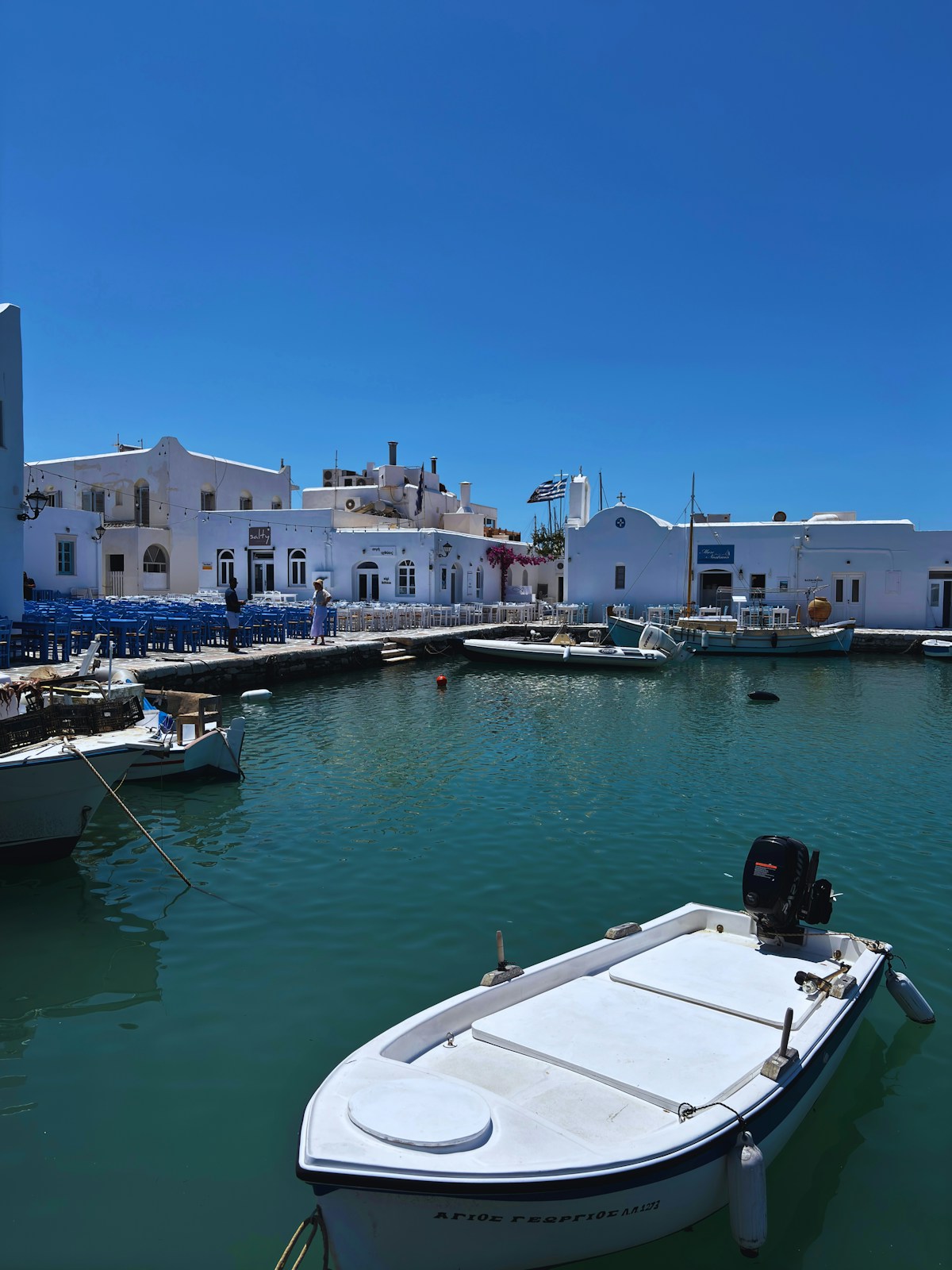
Paros is the best-connected and arguably the most complete of the smaller Cycladic islands. It has good beaches, an attractive Old Town (Parikia), the charming fishing harbour of Naoussa, the world’s finest sculptural marble still being cut from the hillside, and a relaxed pace that Mykonos and Santorini no longer offer. It also serves as a ferry hub - practically every island-hopping route through the Cyclades passes through Paros. Here are the best ways to explore it.
Top Tours at a Glance
| Tour | Duration | Price (from) | Group Size | Highlights |
|---|---|---|---|---|
| Antiparos Cave and Island Day Trip | Half day | from EUR 35/person | Small group | Stalactite cave (EUR 5 entry), Antiparos village, Venetian tower |
| Naoussa Harbour Boat Trip | 2–3 hrs | from EUR 15/person | Small group | Monastiri Beach, Santa Maria, sea caves, snorkelling stops |
| Paros Marble Quarry Heritage Tour | 3 hrs | from EUR 40/person | Small group | Ancient quarry, marble museum at Marathi, Ekatontapiliani Church |
| Full-Day Caique Trip from Parikia | 5–6 hrs | from EUR 35/person | Small group | North coast beaches, Naoussa stop, circumnavigation, lunch included |
Browse all Paros tours → GetYourGuide
Naoussa Harbour Walk and Village Tour
Naoussa is a former fishing village on the north coast of Paros - still a fishing village in character, though considerably upmarket in profile. The inner harbour is ringed by whitewashed houses with blue shutters, the remains of a Venetian fortification sit on a promontory in the water, and fishing boats tie up alongside the restaurant terraces. In the evening it’s one of the most photogenic harbours in the Cyclades.
Self-guided walk (1–2 hours): Start at the harbour. The Venetian fortress (15th century, partially submerged) is free to enter and worth 20 minutes for the view back over the harbour. Walk the main alley through the old quarter - the architecture is more intact here than in Parikia. The church of Agios Nikolaos at the northern end has good 17th-century icons.
Naoussa harbour boat trip: Several small operators run 2-hour morning tours from the harbour into the surrounding bays - Monastiri Beach, Santa Maria, and the sea caves at Agii Anargyri. From EUR 15–25 per person. Primarily snorkelling and swimming. No advance booking needed except in July–August.
Food and drink: Barbarossa is the classic Naoussa seafood restaurant (harbour terrace, fresh fish EUR 18–28 per person). Glafkos is the better-value alternative, similar quality. The village has several good coffee shops for morning visits - Café Linardo has the best harbour-view terrace.
Getting there: Bus from Parikia every 30–60 minutes, fare approximately EUR 2, journey 20–25 minutes. Water taxis from Parikia Old Port take 20 minutes and run to 11:00pm in season (approximately EUR 10 per person).
Duration: 1–3 hours
Difficulty: Easy
Best time: Morning or evening; avoid midday in summer
Best season: May–October
Antiparos Island Trip
Antiparos is a small island 1.5 km off the west coast of Paros - connected by ferry (10 minutes from Pounda port, which is 13 km south of Parikia) or by water taxi from Parikia directly (20 minutes, from EUR 10 per person).
The island has one main village (also called Antiparos), one main attraction (the cave), and beaches that are noticeably quieter than Paros’s main beaches. The character is noticeably more relaxed - fewer shops, slower pace.
Antiparos Cave (Spileos Antiparou): The stalactite cave above Antiparos village is one of the deepest and most impressive in the Cyclades - 90 metres deep, with impressive formations including stalactites up to 5 metres long. Entry EUR 5 as of 2026 (prices approximate). Open 10:00am–5:30pm in summer. A flight of steps descends through the cave; the circuit takes approximately 30 minutes. The cave is a 30-minute walk uphill from the village, or there are occasional donkey taxis. A minibus also runs from the village in season.
Note: The cave was used as a writing surface by notable visitors for centuries - inscriptions from rulers and travellers, including a Christmas Mass celebrated inside by Duke Charles de Nointel in 1673 with 500 guests. Look for the oldest inscriptions near the main chamber.
Antiparos village: One main street with tavernas, a Venetian tower at the entrance to the old town, and a harbour that’s considerably quieter than Naoussa. Lunch at Yam (harbour taverna, good fish at EUR 14–22 per person) before the return crossing.
Combined Antiparos day trip from Parikia: Some operators offer a guided half-day (4 hours) covering the ferry, cave, and village with a licensed guide, from EUR 35–45 per person. Alternatively, the ferry is cheap and straightforward to do independently.
Duration: Half-day (cave + village)
Difficulty: Easy (cave stairs are steep but handrailed)
Best season: April–October
Parian Marble Quarry Visit
Parian marble has been exported continuously from Paros for at least 2,500 years. The quarry site above the village of Marathi (8 km north of Parikia, accessible by car or scooter) is still active - the same marble that produced the Hermes of Praxiteles and the Venus de Milo continues to be cut today.
The ancient quarry (Spilies tis Nymfis): The ancient workings are partially open to visitors as a free archaeological site. The entrance to the main cave quarry reveals the ancient extraction method - pick marks are still visible on the walls. Inside, you can see where blocks were cut and lowered down the hillside. A water channel running through the quarry floor was used to transport blocks. Bring a torch. Open access (no entry fee, no official guide); allow 1 hour.
Marble museum at Marathi village: A small outdoor museum adjacent to the quarries displays quarrying tools, examples of different grades of Parian marble (from coarse to the translucent Lychnites variety used for sculpture), and historical documentation. Free entry.
Guided marble heritage tour: Some Paros-based cultural tour operators offer a 3-hour guided visit combining the quarry, the marble museum, and the Byzantine collection at Ekantopiliani Church in Parikia - from EUR 40–55 per person. Worth it for the depth of explanation on the marble’s ancient significance.
Duration: 1–3 hours
Difficulty: Easy to moderate (cave quarry on rough ground)
Best season: Year-round (sheltered quarry, not weather dependent)
Watersports: Windsurfing and Kitesurfing
Paros has two internationally recognised watersports beaches.
Chryssi Akti (Golden Beach) on the southeast coast is the main windsurfing hub - it has hosted the PWA World Windsurfing Championship repeatedly. The bay faces southeast, perpendicular to the Meltemi, creating consistent side-on conditions for intermediate and advanced riders. Several schools here (Eurosurf, Paros Windsurfing Club) offer:
- Windsurfing group lessons: EUR 45–60 per hour
- Equipment rental: EUR 30–40 per hour
- IKO kitesurfing courses: from EUR 150 for a 2-day beginner course
Pounda Bay (west coast, near the Antiparos ferry terminal) is the kitesurfing centre - flatter water and slightly different wind angle than Golden Beach, preferred by freestyle riders. Pounda Kite Club and other operators offer instruction from EUR 60–80 per 2-hour session.
Beginners: Golden Beach is better for learning windsurfing (more sheltered and the school infrastructure is stronger). Pounda is better for kitesurfing beginners (flat water makes learning easier).
Best season: June–September for consistent Meltemi. July and August have the strongest wind - suitable for intermediate and advanced riders but can be challenging for complete beginners.
Boat Trip: Lageri, Monastiri, and North Beaches
The north coast of Paros - particularly the beaches north of Naoussa - has some of the clearest water on the island. Lageri Beach (clothing-optional), Monastiri Beach (in front of a functioning Byzantine monastery), and Santa Maria Beach are accessible by road, but much more enjoyably reached by boat.
Naoussa boat tours (north coast circuit): 2–3 hour excursions from Naoussa harbour cover Monastiri, Lageri, and Santa Maria with swimming stops. From EUR 15–25 per person. Depart 9:30am and 1:00pm. Snorkelling equipment available on board.
Full-day caique trip from Parikia: Longer format (5–6 hours) combining north coast beaches, Naoussa harbour stop, and a circumnavigation of the northern headland. From EUR 35–50 per person including lunch. Good choice for those based in Parikia who want to combine a beach day with seeing Naoussa.
Duration: 2–6 hours
Difficulty: Easy
What’s included: Swimming stops, snorkelling gear; lunch varies
Best season: May–October
Booking Tips
Paros is less crowded than Santorini and Mykonos, which means walk-up availability is good for most tours in shoulder season. The windsurfing and kitesurfing schools in July–August book up for full days and multi-day courses well ahead - reserve at least a week in advance if you’re targeting a specific date. The Antiparos cave and ferry are both no-booking operations. Naoussa harbour boat trips are casual - operators shout from the dock to fill seats. Car and scooter rental in Parikia starts at EUR 25–35 per day (scooter) or EUR 40–55 per day (small car), which makes the independent marble quarry and village circuit much more efficient than waiting for tour departures.
Book Paros tours and excursions with GetYourGuide. Pick up a Greece eSIM before you fly - keeps you connected without roaming charges.
See Also
- Paros Island Guide - full island overview with villages, beaches, and transport
- Things to Do in Paros - independent sightseeing alongside the tours
- Where to Stay in Paros - Parikia vs Naoussa vs beach areas
- Best Tours in Naxos - the larger neighbouring island
- Paros vs Naxos - comparing the two for your Cyclades trip
- Greek Island Hopping Itinerary - where Paros fits in a Cyclades route