Sifnos Travel Guide: Gastronomy, Pottery and Villages
Guide to Sifnos: the Cyclades' gastronomy island. Kastro village, Chrissopigi Monastery, 100km of hiking trails, pottery tradition, and ferry routes.
Guides for Sifnos
Sifnos punches well above its weight. It’s a small island - roughly 14km long - but it has a depth of culinary tradition, a network of ancient footpaths, a medieval walled village, and a monastery perched on a headland above the sea that makes it one of the most rewarding destinations in the Cyclades. It’s less dramatic than Santorini and less crowded than Mykonos, but visitors who know Greece well consistently put it near the top.
The island is primarily agricultural - terraced hillsides with olive trees, almond groves, and vegetable plots that supply the tavernas. The main settlement, Apollonia, is a connected cluster of four villages on a plateau above the port. Kastro, the medieval capital, is 3km to the east, perched on a headland above the sea. Most visitors split their time between these two areas.
Kastro
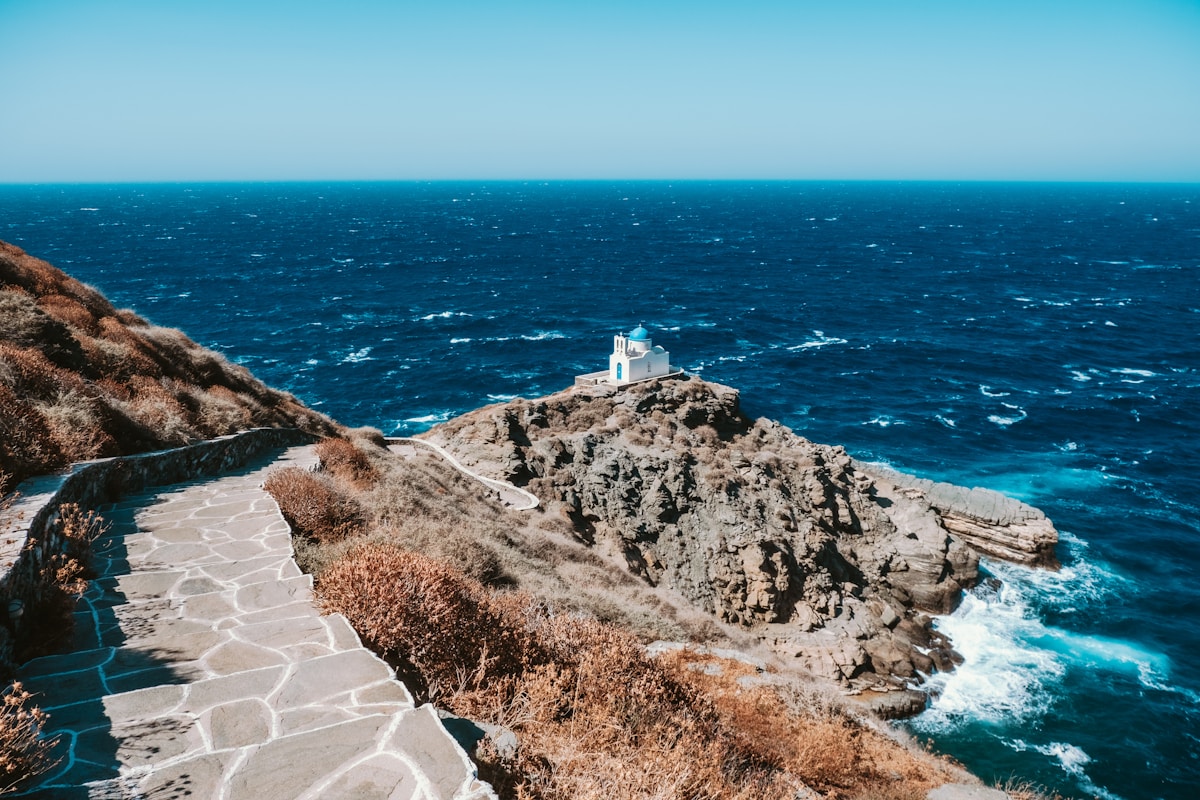
The best-preserved medieval village in the Cyclades and arguably in all of Greece. Kastro was the island’s capital until the late 19th century, and its original defensive form - a ring of outer houses whose back walls form the outer wall, with narrow passages through the rock - is completely intact. Walking through it, you’re inside a working village that has barely changed in 500 years. Cats sleep on doorsteps; laundry hangs between whitewashed walls; the Byzantine church of the Seven Martyrs hangs over the sea.
The Archaeological Museum of Kastro (free entry, limited opening hours - check locally) houses finds from the Archaic temple of Apollo that once stood on the site. The views from the eastern edge of the village down to the sea are among the best in the Cyclades.
Allow 1–2 hours to explore properly. No vehicles can enter - parking is outside the walls.
Chrissopigi Monastery
The most photographed spot on Sifnos. The monastery of Chrissopigi sits on a narrow rocky promontory connected to the south coast by a stone bridge. The approach is a short walk from the nearby beach, and the position - isolated on a rock with sea on three sides - is genuinely dramatic. The monastery was founded in the 17th century around an icon of the Virgin Mary that was found floating in the sea.
The chapel is open to visitors (women are asked to cover shoulders and legs). There’s a small café at the beach below. The walk from Faros beach to Chrissopigi is one of the nicest easy walks on the island (approximately 30 minutes).
Revithada and the Food Tradition
The dish most associated with Sifnos is revithada - a thick chickpea stew cooked overnight in a sealed clay pot (tsikali). The slow cooking method concentrates the flavour; a good revithada has a creaminess to the chickpeas and a depth of olive oil and herbs that a quick version can’t achieve. Traditionally it was cooked on Saturday nights and eaten after church on Sunday morning - some tavernas still serve it only on Sundays.
Beyond revithada, Sifnos is known for mastelo (lamb or goat cooked in wine and rosemary in a sealed clay pot), loukoumades (honey doughnuts), and a good local wine. The island’s bakeries open early and the sesame bread rings (koulouri) are worth the trip alone.
Hiking
The island has over 100km of marked trails connecting villages, monasteries, and beaches - a network maintained partly by the municipality and partly by volunteers. The trails are signposted with blue-and-white markers.
Apollonia to Kastro: The most walked route, approximately 3km, 45 minutes one-way. Gentle descent through terraced farmland, arriving at Kastro’s north gate. Return by bus or the same path.
Kamares to Apollonia: The traditional donkey path connecting the port to the capital, approximately 3.5km, 1 hour. Steep in sections, excellent views.
Chrissopigi Coastal Walk: From Faros around the headland to Apokofto and Platy Yialos. Approximately 5km, 1.5–2 hours. Clifftop views with multiple swimming stops.
Vathi Circuit: Full-day hike to the isolated bay of Vathi on the east coast, through some of the quietest parts of the island. Approximately 12km return, 4–5 hours.
Pottery
Sifnos has produced ceramics since ancient times. The most recognised form is the traditional Sifniot style - hand-thrown, painted in earthy blues and whites, often featuring geometric patterns or simple fish motifs. Active pottery studios are concentrated near Kamares and in Artemonas. The Benaki Museum in Athens has an important collection of historic Sifniot ceramics; on the island, the Folklore Museum in Kastro has examples of traditional domestic pottery.
Beaches
Kamares: The port beach, pebble and sand mix, calm water, good for a quick swim while waiting for a ferry. Several tavernas right on the beach.
Platy Yialos: Long south-coast beach with clear shallow water, sun loungers, and the best facilities on the island. Very busy in high summer.
Vathi: Remote east-coast bay accessible by boat or a full-day hike. Remarkably calm water - the bay is completely enclosed. A single taverna operates in summer.
Faros: Small cove below the fishing settlement of the same name, near Chrissopigi. Three small beaches close together, each slightly different in character.
Getting to Sifnos
Ferry from Piraeus: High-speed catamaran (Seajets, Fast Ferries) approximately 2.5–3 hours, from approximately €50 one-way. Conventional ferry approximately 5–6 hours, from approximately €28 deck class. Summer services daily; winter services 2–3 times per week. The port is Kamares, on the west coast - the port village has accommodation, car hire, and a taxi rank. Buses from Kamares to Apollonia run regularly in summer (approximately €2, 15 minutes).
Where to Stay in Sifnos
Apollonia (the capital village) is the best all-round base, sitting in the centre of the island with good connections to the beaches and trails. Kamares (the port) suits those arriving late by ferry or departing early. Platy Yialos on the south coast has beachfront accommodation and the island’s longest sandy beach.
Budget (from approximately €60–85/night)
Afroditi Rooms in Kamares is a simple, clean guesthouse in the port village at the most accessible prices on Sifnos. It suits those arriving or departing by ferry who want a practical overnight stop. From approximately €65/night as of 2026.
Petali Village Hotel in Apollonia provides basic but well-located rooms in the island’s capital, within walking distance of the best restaurants and the main square. From approximately €78/night as of 2026.
Budget rooms in Artemonas are available from small guesthouses in the village adjacent to Apollonia, at slightly lower prices than the main capital with easy walking connections. From approximately €62/night as of 2026.
Mid-range (from approximately €110–200/night)
Hotel Anthousa in Apollonia is a traditional-style property in the village with comfortable rooms and a good position for the evening dining scene. From approximately €125/night as of 2026.
Eleonas Hotel in Apollonia occupies a restored building with a pool, one of the better mid-range options in the capital. Rooms are well equipped and the pool is a genuine draw in July and August. From approximately €145/night as of 2026.
Verina Astra in Artemonas offers design-forward suites with a pool and wide sea views, at the upper end of mid-range. It is among the most stylish accommodation on the island. From approximately €195/night as of 2026.
Luxury (from approximately €220/night)
Elies Resort is Sifnos’s flagship luxury property, a clifftop hotel with a pool, spa, and an exceptional position above the coast with panoramic sea views. It is consistently rated as the standout accommodation on the island. From approximately €350/night as of 2026.
Verina Hotel in Artemonas is a restored manor house offering suites and rooms with a pool and garden in a quieter village setting. From approximately €260/night as of 2026.
Search hotels in Sifnos, Greece on Booking.com
Where to Eat
Manolis (Kamares): Reliable port taverna, good grilled fish and meze, popular with locals returning from the ferry. Approximately €20–30 per person.
Exambela (Apollonia): Village taverna in the old quarter, serves revithada on Sundays along with good grills. Approximately €18–28 per person.
Omega3 (Platy Yialos): Beachside fish restaurant with reliably good fresh catch, sea views. Approximately €28–42 per person.
Best Time to Visit
Late May to mid-June and September. The hiking paths are at their best in spring (wildflowers, green hillsides). The food scene operates year-round but peaks when all the tavernas are open in summer. July and August are warm and busy - the island fills with Athenians in August. October through March, most restaurants and hotels close, though Apollonia and Kamares remain open.
Prices listed are approximate as of 2026 - verify current rates before booking.
Browse food tours, hiking excursions, and island activities on Sifnos with GetYourGuide.
Sifnos is part of the Western Cyclades - neighbouring islands include Milos (40 minutes by fast ferry, known for volcanic beaches and the Kleftiko caves), Folegandros (clifftop Chora village), and Paros. For a broader Cyclades overview, see our best Greek islands guide and Greek island hopping itinerary. Planning your Greece trip timing? See best time to visit Greece.
See Also
- Milos Travel Guide - the volcanic island 40 minutes by fast ferry
- Folegandros Travel Guide - the quiet clifftop alternative on the same western route
- Paros Travel Guide - the central Cyclades hub, also on many ferry routes
- Greek Food Guide - Sifnos has the richest gastronomic tradition in the Cyclades
- Cyclades Guide - all the Cycladic islands and how they connect
- Greek Island Hopping Guide - building a western Cyclades island-hopping circuit
- Greek Island Ferry Guide - how to get to Sifnos from Piraeus
- Best Greek Islands Guide - where Sifnos fits in the wider picture
- Best Time to Visit Greece - Sifnos is excellent in May and September
Frequently Asked Questions
- Why is Sifnos known for food?
- Sifnos has a culinary tradition that outpunches its size. The island gave Greece one of its most influential cookbook authors, Nikolaos Tselementes, and a cooking style that emphasises slow-cooked clay pot dishes, especially revithada (chickpea stew cooked overnight in a sealed pot). The island's bakeries, tavernas, and home cooks have maintained this tradition. Sifnos now hosts regular food events and is considered one of the best places in Greece to eat traditional Cycladic food.
- How do I get to Sifnos from Athens?
- Ferry from Piraeus (Athens port). The journey takes approximately 2.5–3 hours on a high-speed catamaran (from approximately €50 one-way with Seajets or Fast Ferries) or approximately 5–6 hours on a conventional ferry (from approximately €28 deck class). The port on Sifnos is Kamares, a small bay on the west coast. Services are most frequent June through September.
- Is Sifnos good for hiking?
- Yes - it's one of the best hiking islands in the Cyclades. The island has over 100km of marked paths, including the E4 European long-distance trail. The most popular walk runs from Apollonia to Kastro (approximately 3km, easy). The coastal path around Chrissopigi and the longer routes to Vathi and Cheronissos take hikers through landscapes that feel almost untouched. Best hiked in spring or autumn when temperatures are manageable.
- What is the pottery tradition on Sifnos?
- Sifnos has been producing ceramics for centuries - the clay deposits in the hills around Kamares made it a natural centre for pottery. The island's characteristic blue-and-white glazed pieces include the tsikali (the clay pot used for revithada). Pottery workshops are concentrated in Artemonas and near Kamares. Several potters sell directly from their studios; quality ranges from tourist-grade to genuine craft work.
- What's the best base on Sifnos?
- Apollonia, the capital, is the most convenient base - central to all the main sites, with good restaurant and bar options. Kamares (the port) is quieter and good if you want early access to ferries. Faros and Platy Yialos on the south coast are beach-focused. Kastro has a few rooms and is the most atmospheric choice if you want to be inside the medieval village.
Book an experience
Top experiences in Sifnos
Explore the best tours and activities in Sifnos, with instant confirmation and free cancellation on most bookings.