Milos Travel Guide: Volcanic Island, Sarakiniko, and Sea
Sarakiniko's lunar white pumice, Kleftiko sea caves, colourful fishing villages, volcanic beaches, and ferry connections from Athens and Santorini.
Guides for Milos
Milos is the result of a volcanic eruption that shaped one of the most unusual coastlines in the Mediterranean. The island has over 70 beaches, more than any other Cycladic island, ranging from white volcanic rock formations to sheltered coves with turquoise water. It’s been growing in reputation - frequently described as the next Santorini - but remains quieter and more affordable than its famous neighbours.
The island is roughly oval, about 23km long, with most of the population concentrated in the villages around Milos Bay on the north coast. Adamas is the port and main town; Plaka, the old capital, sits above it on the hill. The rest of the island is a patchwork of mining roads, small beaches, and fishing settlements that require a car to explore properly.
Sarakiniko
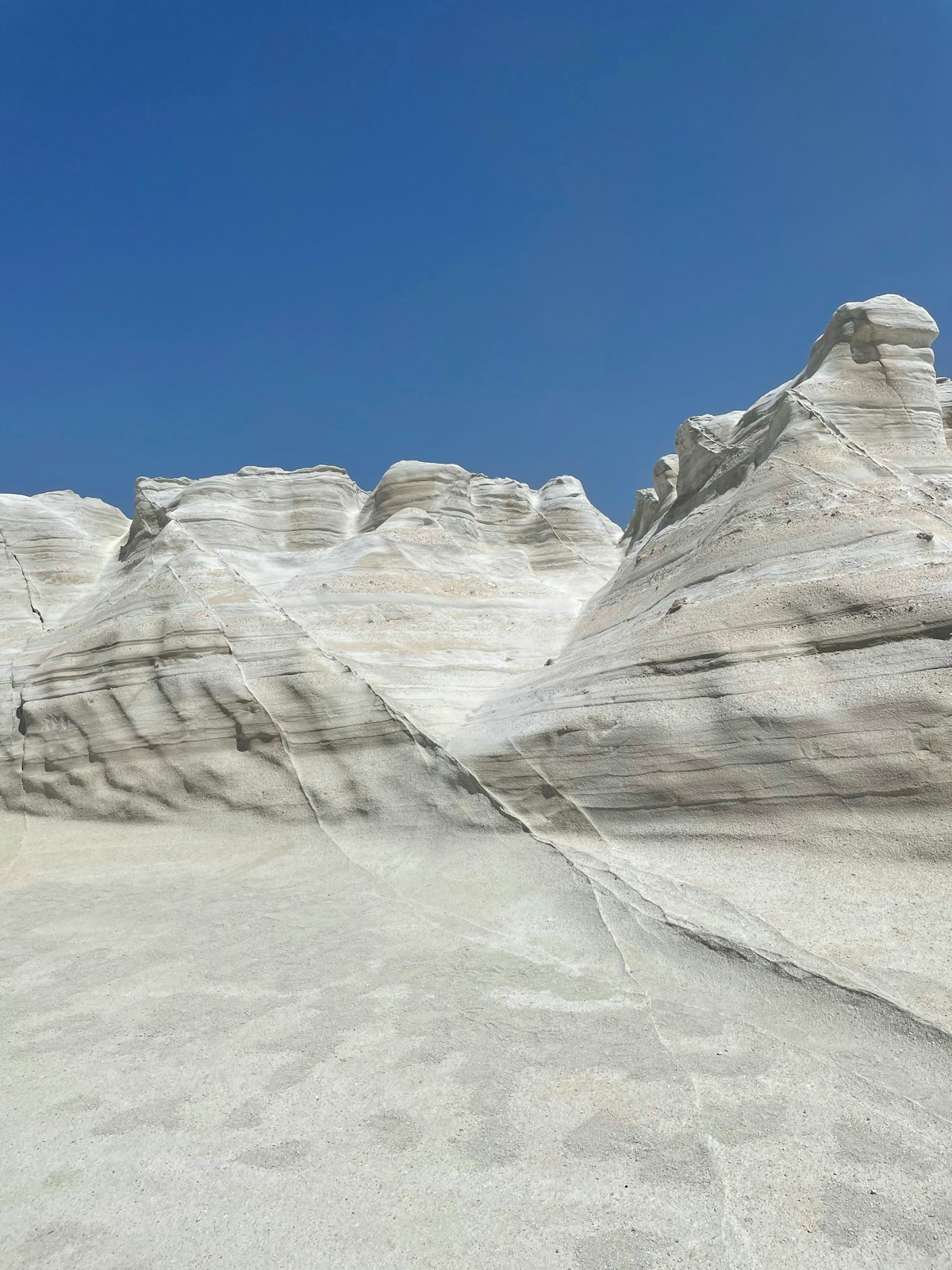
The most famous beach in Greece that isn’t sand. Sarakiniko is a stretch of white volcanic pumice rock on the north coast, carved by wind and sea into smooth curves and overhangs that resemble a lunar landscape. The rock is brilliant white against the deep blue of the Aegean. In summer the flat rocks fill with people sunbathing; in the early morning or off-season it’s nearly empty and genuinely extraordinary.
There’s no shade and no facilities - bring water, sunscreen, and arrive early. It’s a 10-minute drive or a €12 taxi from Adamas. Free access, no entry fee.
Kleftiko
The most dramatic sea cave complex in the Cyclades, accessible only by boat. Kleftiko is a series of white rock arches, sea caves, and crystal-clear water at the southwest tip of the island. The caves were historically used by pirates (the name means “thieves’ hideout”) and the walls still show anchor marks from old boats.
Boat tours from Adamas run daily in season (approximately €35–50 per person, full day, includes multiple swimming stops and usually lunch or snacks). Half-day tours are cheaper (approximately €25–35) but skip the best anchorages. The boat approach through the cave arches at low tide is the standout experience - you can’t access Kleftiko by land.
Coloured Fishing Villages
Milos has a series of small fishing settlements with distinctive coloured boat garages (called syrmata) built into the cliff face at water level. The most photographed is Klima, on the south side of Milos Bay - the primary colours of the wooden doors contrast against the white rock. Firopotamos on the north coast is similarly photogenic and less visited. Mandrakia near Sarakiniko is another small harbour worth a stop.
These villages are largely residential - there are few restaurants, and the syrmata are private boathouses. The best time to visit is early morning when the light is best and the heat is still manageable.
Beaches
Milos has an unusual variety of beaches for an island its size. The geology creates constant variation - from volcanic black sand to white chalky rock to red clay cliffs.
Tsigrado: A narrow beach reached by ladder and rope through a crack in the cliffs. Small, sheltered, and excellent - one of the best swims on the island. The approach is part of the experience. No facilities.
Paliochori: Long beach on the south coast with a geothermal spring warming the water near the shore. Good facilities, beach bar, and a reliable taverna. Approximately 20 minutes’ drive from Adamas.
Fyriplaka: Remote south-coast beach with dramatic red and orange cliffs behind it. Worth the drive. No facilities - bring everything you need.
Paleochori: Accessible beach with services near the village of the same name. Popular with families.
Plaka Village
Plaka is the old capital of Milos, built inland on the hilltop to avoid pirate raids. It’s worth the climb for the views across Milos Bay from the kastro (castle ruins) and the Church of Panagia Korfiatissa. The Archaeological Museum of Milos (in Plaka, approximately €3 adult, open Tuesday–Sunday 8:30am–3:30pm) houses a plaster cast of the Venus de Milo - the original was discovered on the island in 1820 and is now in the Louvre. The museum is small but the context is useful.
The village has a few good tavernas and a more local feel than the port town.
Getting to Milos
Ferry from Piraeus: High-speed (Seajets, Hellenic Seaways) approximately 3.5 hours, from approximately €55 one-way; conventional ferry 6–7 hours, from approximately €30 deck class. Book in advance for July and August - summer ferries fill quickly. The ferry port is Adamas, which is also the island’s main town.
Domestic flights: Athens to Milos approximately 40 minutes with Sky Express or Olympic Air, from approximately €40 each way. Summer bookings fill fast. The airport is small - limited flights per day.
Where to Stay in Milos
Adamas (the port) has the most options across all budgets - studios and simple hotels from approximately €70/night in peak season; well-run mid-range properties with pools from approximately €110–130/night. Design hotels and private-pool suites in Pollonia and the Plaka area reach €280–350/night peak (shoulder season runs 25–40% lower). Our Milos where-to-stay guide covers all budgets and locations.
Search hotels in Milos, Greece on Booking.com
Where to Eat
The best seafood is at the Adamas waterfront, with fresh fish and mezedes running approximately €35–55 per person; more affordable tavernas in Plaka village run approximately €20–30. Full picks - including the beachside options at Paliochori - are in our Milos restaurants guide.
Best Time to Visit
Late May to mid-June and the first half of September are the sweet spot. Boat trips to Kleftiko run daily, the water is warm, and the island hasn’t yet reached summer capacity. July and August are peak season - beaches are busy, accommodation is pricier, and Kleftiko boats can be crowded. The island effectively shuts down in winter (November to March), with most restaurants and hotels closed.
Prices listed are approximate as of 2026 - check current rates before booking.
For detailed guides, see: things to do in Milos, best beaches in Milos, restaurants in Milos, and our Milos vs Santorini comparison if you’re deciding between the two.
Explore boat tours, Kleftiko sea cave excursions, and island activities with GetYourGuide.
See Also
- Things to Do in Milos - Sarakiniko, Kleftiko boat trip, and the catacombs
- Best Beaches in Milos - Sarakiniko, Tsigrado, Firiplaka, and Kleftiko
- Restaurants in Milos - the best tavernas in Pollonia and Adamas
- Milos vs Santorini - volcanic island comparison
- Sifnos Travel Guide - the gourmet island 40 minutes by ferry
- Folegandros Travel Guide - the quiet clifftop island, also on the western Cyclades route
- Cyclades Guide - the full Cyclades overview with island-hopping tips
- Greek Island Hopping Guide - building a western Cyclades circuit
- Greece Sailing Guide - sailing the Cyclades including Milos
Frequently Asked Questions
- Is Milos worth visiting?
- Yes - Milos is one of the most geologically dramatic islands in Greece. Sarakiniko and Kleftiko are genuinely unlike anywhere else in the Cyclades. The island is growing in popularity but remains calmer than Santorini or Mykonos. It's best visited in May–June or September when boats to Kleftiko run reliably and accommodation is easier to book.
- How do I get to Milos from Athens?
- Ferry from Piraeus (Athens port): approximately 3.5 hours on a high-speed catamaran (from approximately €55 one-way) or 6–7 hours on a conventional ferry (from approximately €30). Seajets and Hellenic Seaways run the high-speed routes in summer. Domestic flights from Athens take approximately 40 minutes (from approximately €40 with Sky Express or Olympic Air).
- Do I need a car in Milos?
- Yes, strongly recommended. The island is hilly and the main attractions (Sarakiniko, Kleftiko, Firopotamos, Tsigrado) are spread out. Taxis and buses exist but are limited. [Renting a car](/go/car-hire-greece) or ATV (approximately €35–60/day for a car) gives you the flexibility the island requires.
- What is the best time to visit Milos?
- Late May to mid-June and September are ideal - warm enough to swim, boat tours to Kleftiko running daily, and significantly fewer visitors than July and August. July and August are peak season with higher prices and crowded beaches. The island is essentially closed from November to March.
Book an experience
Top experiences in Milos
Explore the best tours and activities in Milos, with instant confirmation and free cancellation on most bookings.