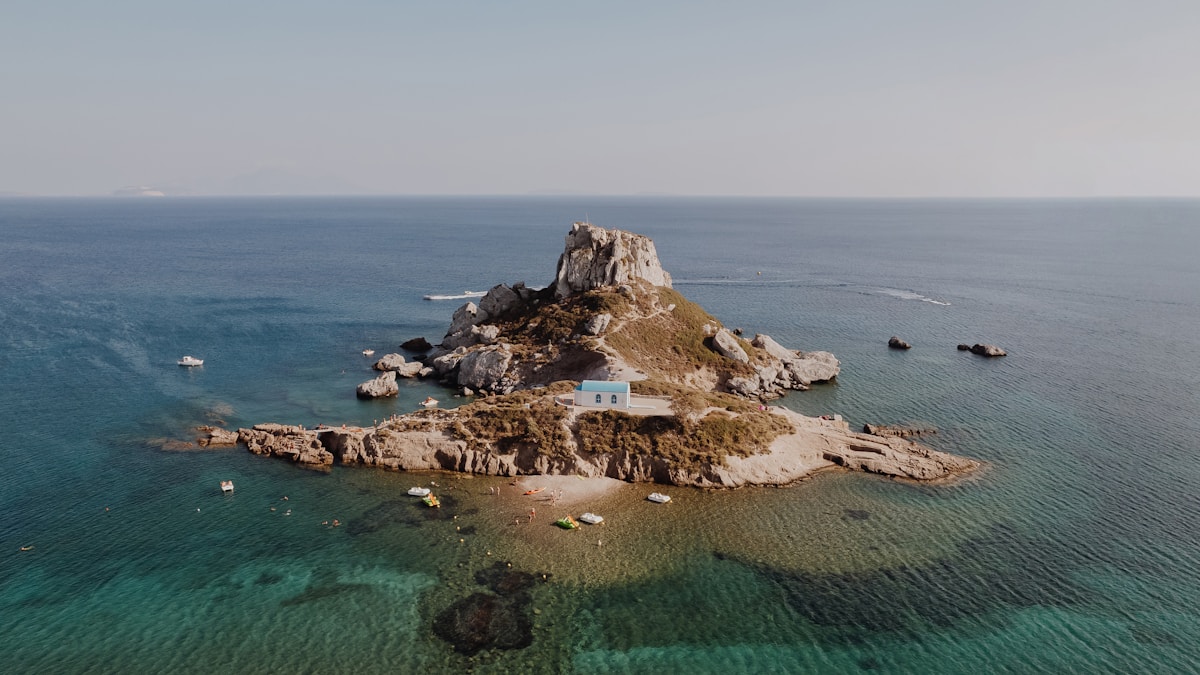
Kos Travel Guide: Hippocrates, Ruins and Beaches
Hippocrates' birthplace, the Asklepion healing sanctuary, cycling-friendly flat terrain to reach beaches, and a short ferry crossing to Bodrum.
Guides for Kos
Kos is one of the larger Dodecanese islands, sitting in the southeastern Aegean close to the Turkish coast. It has a lot of things that most Greek islands don’t: flat cycling terrain, a well-preserved medieval old town, direct ferry connections to Turkey, and one of the most significant ancient medical sites in the world. It’s also a major package holiday destination with a large British, German, and Scandinavian tourist infrastructure along the northern coast.
The combination makes Kos simultaneously one of the most accessible and most underrated islands in Greece - it’s easy to visit, has genuine historical depth, and the tourism infrastructure means practical logistics are straightforward. The challenge is getting past the resort strip and engaging with what the island actually offers.
Kos Town
The island capital is a layered mix of ancient ruins, a medieval Crusader castle, and a working Greek town. The Archaeological Museum of Kos (Eleftherias Square, approximately €6 adult, open Tuesday–Sunday 8am–3pm) houses finds from across the island including Hellenistic and Roman period sculpture.
The Castle of the Knights of St John (Neratzia Castle) guards the harbour entrance - a 14th-century fortification built by the Knights Hospitaller using stones from ancient ruins. Entry approximately €4 adult, open Tuesday–Sunday 8am–3pm. The harbour views from the battlements are worth the climb.
The Hippocrates Plane Tree in the central square (Plateia Platanous) is traditionally identified as the tree under which Hippocrates taught his students. It’s one of the oldest known trees in Europe - estimated at over 500 years old, though the claim that Hippocrates himself sat under it requires a tree over 2,400 years old, which is biologically implausible. The square is pleasant regardless.
The Asklepion
Four kilometres from Kos Town on a pine-forested hillside, the Asklepion is the island’s most significant historical site. It was built in the 4th century BC, after the death of Hippocrates, partly as a sanctuary and partly as a medical school that continued Hippocratic traditions.
The site is built on three terraces. The lower terrace has Roman baths and a small museum. The middle terrace has the main temple precinct. The upper terrace gives the best views over the Aegean and across to Turkey.
Entry approximately €8 adult (as of 2026), open daily 8am–8pm in summer. Reachable by bicycle from Kos Town (pleasant 20-minute flat ride), by local bus, or by taxi (approximately €10). A guided walking tour from Kos Town is also available through local operators and makes the historical context clearer.
Beaches
Kos has a range of beaches along both coasts, with the northern shore closest to town.
Lambi Beach: The closest beach to Kos Town, a long stretch of grey-pebble and sand beach with good facilities and plenty of sunbeds (approximately €8–12 per pair). Easily reached by bicycle.
Tigaki Beach: On the north coast, about 12km from Kos Town - one of the better sandy beaches on the island with watersports facilities. A flat cycling route follows the coast road.
Paradise Beach: On the south coast near Kefalos - considered the best beach on the island. White sand, clear water, and beach bars. Approximately 45 minutes’ drive from Kos Town, or accessible by boat in summer.
Camel Beach and Banana Beach (Agios Stefanos): Near Kefalos in the southwest, these adjacent beaches have good snorkelling around the ruins of an early Christian basilica just offshore.
Day Trip to Bodrum, Turkey
The short crossing to Bodrum makes Kos uniquely positioned among Greek islands. Day-trip boats run from Kos Town harbour daily in summer (approximately 30–45 minutes, from approximately €30 return including port taxes). Some operators offer evening trips timed for the Bodrum restaurants and bazaar.
Bring your passport - this is an international border crossing. Turkish e-visas (for most nationalities, approximately €35) are purchased online before departure. Bodrum offers a completely different atmosphere: Turkish bazaars, Ottoman castle, excellent seafood restaurants, and significantly different prices on textiles and leather goods.
Note: verify current visa requirements before travel as these change.
Cycling on Kos
Kos is widely regarded as the most cycle-friendly island in Greece. The main town has dedicated cycle paths and the coastal road north is flat enough for riders of any fitness level. Hire shops throughout Kos Town rent basic bikes for approximately €5–10/day and better-quality bikes for approximately €15–20/day. Electric bicycles are also available for the longer routes.
The route from Kos Town to the Asklepion and back is a good half-day cycling itinerary. A longer route takes you along the north coast to Tigaki and Marmari beaches (approximately 25km return). Mountain bikes are available for the hillier southern routes.
Getting to Kos
By air: Athens to Kos (Hippocrates Airport) approximately 50 minutes with Aegean Airlines or Sky Express, from approximately €40. Several European airports also have direct summer charter connections.
By ferry from Piraeus: Overnight conventional ferry approximately 12–15 hours, from approximately €45 deck class. Blue Star Ferries runs this route regularly.
From Rhodes: Fast catamaran approximately 2.5–3 hours, from approximately €25. Rhodes is an easy connection point.
From Bodrum, Turkey: Day boats in summer from approximately €30 return - a practical way to combine a Turkish coastal town with your Kos stay.
Where to Stay in Kos
Kos Town is the most versatile base, combining the Castle of the Knights, the plane tree of Hippocrates, and beach access with the widest range of restaurants and transport connections. The resort areas around Psalidi, Tigaki, and Kardamena suit those wanting a pure beach holiday with more organised facilities.
Budget (from approximately €50–85/night)
Small hotels in Kos Town offer air-conditioned rooms within walking distance of the harbour, ancient ruins, and the main beach strip. Several reliable budget properties cluster near the centre. From approximately €55/night as of 2026.
Apartments near Tigaki Beach are available from various owners and provide self-catering options at lower prices than the main resort hotels. Tigaki is one of the best beaches on the island and is within easy reach of Kos Town. From approximately €58/night as of 2026.
Guesthouses near the old town put visitors within walking distance of the archaeological sites and the evening restaurant scene without the resort hotel markup. From approximately €60/night as of 2026.
Mid-range (from approximately €110–180/night)
Kos Aktis Art Hotel on the Kos Town waterfront combines a contemporary design approach with a harbour-facing position and a rooftop pool. Views across to the Turkish coastline from the upper floors are a genuine draw. From approximately €155/night as of 2026.
Kipriotis Village Resort near Psalidi is a large, well-organised resort hotel with multiple pools, sports facilities, and direct beach access. It works well for families and for those who want a comprehensive resort experience rather than a town-based holiday. From approximately €140/night as of 2026.
Astron Hotel in Kos Town occupies a good position near the harbour and the main archaeological attractions, with comfortable rooms and useful amenities at a reasonable price point. From approximately €115/night as of 2026.
Luxury (from approximately €250/night)
Grecotel Kos Imperial is the island’s leading luxury resort, set on a headland near Psalidi with multiple pools, private beach access, a thalassotherapy spa, and extensive sporting facilities. From approximately €280/night as of 2026.
Mitsis Blue Domes Resort and Spa at Kardamena offers a large-scale luxury resort with a private beach, overwater facilities, and a comprehensive spa. It is among the most complete all-inclusive luxury options in the Dodecanese. From approximately €260/night as of 2026.
Search hotels in Kos, Greece on Booking.com
Where to Eat
Kos Town has a solid restaurant scene for a Dodecanese port - fish restaurants near the castle and creative Greek cuisine in the old town run approximately €25–45 per person, with more affordable waterfront tavernas east of town around €20–35. Full picks are in our Kos restaurants guide.
Best Time to Visit
May and June are the best months - warm enough to swim, the Asklepion can be visited comfortably without summer heat, and the island hasn’t reached peak-season capacity. July and August bring the island to full operation: beaches are at their busiest, ferry connections most frequent, and the Bodrum day trips in highest demand. September is a good shoulder-season option with warm water and lower prices. Most of the resort infrastructure closes between November and April.
Prices listed are approximate as of 2026.
For detailed guides, see: things to do in Kos, best beaches in Kos, restaurants in Kos, and our Greece vs Turkey comparison if you’re weighing both destinations.
Book Asklepion guided tours, Bodrum day trips, and cycling excursions with GetYourGuide.
See Also
- Things to Do in Kos - Asklepion, Kos Town, Camel Beach, and the Castle of the Knights
- Best Beaches in Kos - Tigaki, Paradise Beach, Camel Beach, and Agios Stefanos
- Restaurants in Kos - the best tavernas in Kos Town and the village restaurants
- Rhodes Travel Guide - the main Dodecanese island, 1 hour by fast ferry
- Symi Travel Guide - the beautiful harbour island accessible from both Kos and Rhodes
- Patmos Travel Guide - the sacred island further north in the Dodecanese
- Greece vs Turkey - comparing the two destinations (Bodrum is 30 minutes from Kos)
- Greek Island Ferry Guide - ferries from Kos to Rhodes, Patmos, and the mainland
- Best Time to Visit Greece - May and June for Kos before peak season
Frequently Asked Questions
- Is Kos good for cycling?
- Yes - Kos is one of the flattest islands in Greece and has a well-developed cycling infrastructure, particularly around Kos Town and along the northern coast. Hire shops are common (approximately €5–10/day for a basic bicycle) and the main tourist beaches are easily reached by bike from the town. The southern part of the island is hillier and requires more effort.
- How close is Kos to Turkey?
- Very close - Bodrum in Turkey is approximately 8km across the strait from Kos. Day trips and even evening boat trips between Kos and Bodrum operate regularly in summer (approximately 30–45 minutes by boat, from approximately €30 return). This proximity means Turkish architecture, food, and shopping are easily combined with a Kos stay.
- What is the Asklepion of Kos?
- The Asklepion is an ancient healing sanctuary dedicated to Asclepius, the god of medicine, built partly in honour of Hippocrates, who was born on Kos around 460 BC. The site is on a pine-forested hillside 4km from Kos Town, built on three terraces with views over the Aegean. Entry approximately €8 adult, open daily 8am–8pm (summer). It's one of the best-preserved ancient medical sites in the Mediterranean.
- How do I get to Kos from Athens?
- Domestic flights from Athens approximately 50 minutes (from approximately €40 with Aegean or Sky Express). Ferry from Piraeus approximately 12–15 hours overnight on conventional ferry (from approximately €45 deck class). Faster catamaran services also run in summer. Many visitors fly to Rhodes and connect by ferry (approximately 2.5–3 hours).
Book an experience
Top experiences in Kos
Explore the best tours and activities in Kos, with instant confirmation and free cancellation on most bookings.