Symi Travel Guide: Neoclassical Harbour, Panormitis
Guide to Symi: neoclassical harbour, Panormitis Monastery, boat-access beaches at Nanou and Marathounda, and how to visit independently from Rhodes.
Guides for Symi
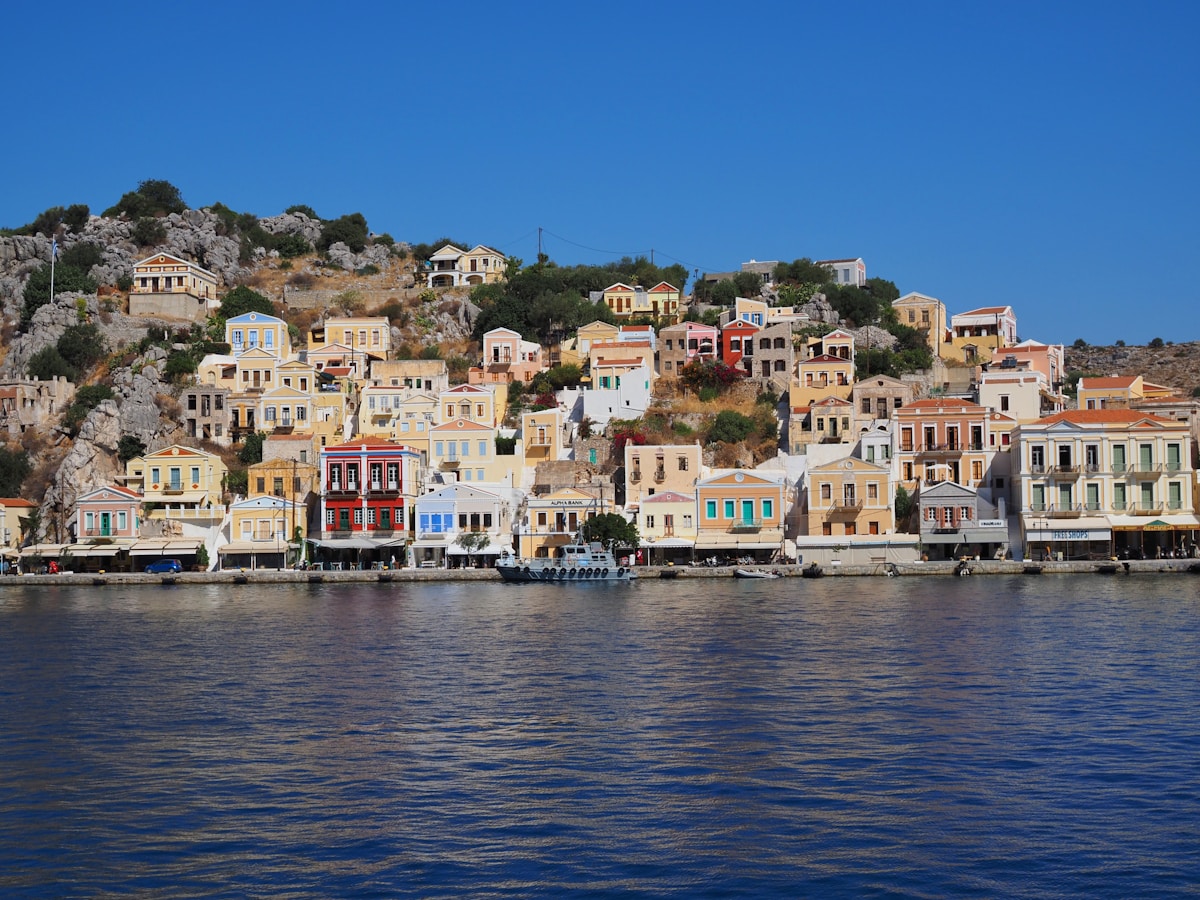
Symi has what may be the finest harbour view in Greece. The approach by sea reveals a hillside stacked with tall, narrow neoclassical mansions in ochre, terracotta, and white - a legacy of the island’s 19th-century prosperity when Symi was one of the wealthiest islands in the Dodecanese, with a sponge-diving industry and a merchant fleet that traded across the eastern Mediterranean. The industry collapsed in the 20th century, the population fell sharply, and the mansions were abandoned. Since the 1970s many have been restored, but the settlement pattern and architectural quality remain intact.
The island is small - approximately 14km long - rocky, and largely without cars outside the main town. Most of the population and all of the tourist infrastructure are concentrated in Symi Town (which locals call either Gialos or simply Symi), with a smaller community at Pedi on the east coast and a monastery at Panormitis in the south.
Gialos - The Harbour Town
The lower harbour (Gialos) is the first thing most visitors see, and it lives up to its reputation. The waterfront is lined with restaurants and cafés; behind it, the lanes climb the hillside through restored mansions. The neoclassical architecture reflects a building boom in the 1870s–1890s when Symi’s sponge-diving wealth was at its peak - the style shows strong Italian influence, with ornate pediments, tall windows, and decorative iron balconies.
The central square at the harbour is the social focus of the island in summer. The quayside restaurants are the most visible but not always the best - the lanes behind the waterfront have several better options.
A small but worthwhile Maritime Museum (approximately €2) in Gialos covers the island’s sponge-diving history with equipment, photographs, and documents.
Chorio - The Upper Town
Reached by the Kali Strata - a staircase of 357 broad stone steps that climbs from the harbour to the old settlement above. The climb takes 15 minutes at a leisurely pace. At the top, Chorio is a quieter, more residential neighbourhood with older buildings (some pre-neoclassical, with more traditional Aegean flat-roofed forms), Byzantine churches, and a ruined kastro at the highest point. The views from the kastro down to the harbour and across to the Turkish coast are outstanding - especially at dawn and at dusk, when the light on the harbour houses is at its best.
The kastro itself has limited access but the fortification walls and the church inside (Megali Panagia) can be visited. Open most mornings.
Panormitis Monastery
The Monastery of the Archangel Michael at Panormitis is the most important religious site in the Dodecanese after Rhodes. It sits at the head of a deeply sheltered bay in the south of the island - a large complex of buildings around a small baroque church containing an icon of the Archangel believed to have miraculous powers. Votive offerings fill the nave - silver boats, crutches, photographs - and the treasury holds a remarkable collection of religious objects including an 18th-century carved wooden iconostasis.
The monastery was founded in the 8th century, though most of the current buildings date from the 18th and 19th centuries. The main Festival of Panormitis on 8 November draws pilgrims from across Greece, many arriving by private boat. At other times, the monastery is open to visitors and maintains a guesthouse (very basic accommodation, primarily for pilgrims).
Getting there: boat trip from Gialos (approximately €15–20 return, 40 minutes, multiple operators in summer) or water taxi. There’s no road access from the north of the island.
Beaches
Symi’s beaches require effort but reward it. Most are accessible by boat; the island’s rocky terrain means few road connections to the best coves.
Nanou: Deep sheltered bay on the east coast, accessible by boat (approximately 20–25 minutes from Gialos, approximately €10–15 per person return). Fine pebbles, crystal-clear turquoise water, a simple cantina in summer. One of the best beaches in the Dodecanese.
Marathounda: Long pebble beach on the southeast coast. Accessible by boat only. More exposed than Nanou in north winds; calm and excellent when sheltered. No facilities - bring food and water.
Agios Georgios (St George): Small, sheltered cove south of Gialos, accessible by a 30-minute walk or by boat. Better for swimming than Nos, less visited.
Nos: The closest beach to Gialos, reachable on foot in about 20 minutes (path along the waterfront and over a small headland). Pebble beach with a taverna and sun loungers. Convenient rather than outstanding, but popular for its accessibility.
Pedi Beach: East-coast beach near the small settlement of Pedi. Sandy, accessible by taxi or a 30-minute walk. The most family-friendly beach on the island.
Day Trip vs Staying Overnight
The question most visitors face. The day-trip boats from Rhodes are efficient and show you the harbour in its most photogenic form - but they also arrive at the same time as every other day-trip boat, creating a brief rush between 11am and 3pm. The waterfront fills up; restaurants are busy; boats from several operators crowd the quay.
Staying overnight or for two nights removes all of this. The early morning in Gialos - before the day-trippers arrive - is the best time to appreciate the harbour architecture, with light on the painted houses and the quay nearly empty. Similarly, the evening after 5pm when the day boats have left returns the island to its own rhythm.
One night is enough to see Panormitis, take a boat to Nanou, and eat dinner in the harbour with the calm of the evening around you. Two nights allows a fuller exploration.
Getting to Symi
From Rhodes Town: Catamaran (Dodekanisos Seaways) approximately 50 minutes, from approximately €16 one-way. Conventional ferry approximately 1.5–2 hours. Daily services in summer, fewer in winter. Day-trip packages from Rhodes approximately €25–35 return (all operators).
From Piraeus: No direct ferry - the route goes Rhodes→Symi or via other Dodecanese islands. Journey from Athens is typically a Rhodes flight plus the Symi ferry.
No airport: Rhodes is the nearest airport. From Athens to Rhodes approximately 50 minutes by air (from approximately €35 with Ryanair, Sky Express, or Olympic Air).
Where to Stay
Prices are approximate peak-season rates; shoulder season is 25–35% lower.
Budget: Rooms Kokona (Chorio, basic rooms in a traditional house, from approximately €65/night peak). Niriides Hotel (Gialos, simple and well-located, from approximately €75/night peak).
Mid-range: Hotel Aliki (Gialos, converted neoclassical mansion with small pool, from approximately €130/night peak). Omiros Hotel (Gialos, restored building, sea-view rooms, from approximately €120/night peak).
Upmarket: Symi Visitor Accommodation (multiple restored mansions with character, from approximately €180/night peak). Fiona Hotel (Chorio upper town, views over the harbour, from approximately €160/night peak).
Search hotels in Symi on Booking.com
Where to Eat
Manos Fish Restaurant (Gialos): One of the best seafood spots on the waterfront - fresh fish priced by weight, good octopus, and daily catches. Approximately €30–50 per person.
Giorgio’s (Chorio): Local taverna in the upper town, away from the tourist strip, good grilled meats and mezedes. Popular with islanders. Approximately €18–28 per person.
The Old Markets (Gialos): In a converted 19th-century building, the best restaurant on the island for setting - good mezedes and creative cooking using Dodecanese produce. Approximately €28–42 per person.
Best Time to Visit
May to mid-June and September to early October. The harbour is most atmospheric in shoulder season when the day-trip crowds are smaller and the evening village life is more visible. July and August are the busiest months - the harbour can feel overwhelmed at lunchtime when multiple day boats arrive simultaneously. October is excellent - warm enough to swim, very few tourists, the best restaurants still open.
Prices listed are approximate as of 2026 - verify current rates before booking.
Browse day trips from Rhodes and island excursions in the Dodecanese with GetYourGuide.
Symi is most often visited as a day trip from Rhodes - the island with the medieval Old Town and Lindos, 50 minutes away by fast boat. For the broader Dodecanese chain, see our Kos travel guide and Patmos guide. For island sailing routes - Symi is on many Dodecanese sailing itineraries - see our sailing guide. Planning your Greece itinerary? See the 10 days in Greece guide and best time to visit Greece.
See Also
- Rhodes Travel Guide - the main Dodecanese island, 50 minutes south by fast boat
- Kos Travel Guide - the Dodecanese island with the best beaches
- Patmos Travel Guide - the sacred island further north in the Dodecanese
- Best Tours in Rhodes - Symi day trips are bookable from Rhodes
- Greece Sailing Guide - Symi is a key stop on Dodecanese sailing routes
- 10 Days in Greece Itinerary - building a Dodecanese section into your trip
- Greek Island Ferry Guide - ferry connections in the Dodecanese
- Best Time to Visit Greece - Symi is best from May to October
Frequently Asked Questions
- Is Symi worth visiting independently or just as a day trip from Rhodes?
- Both are valid but give completely different experiences. The day-trip boats from Rhodes arrive at around 11am and leave at 4pm - you get a few hours in the harbour, a swim, and lunch. That's enough to appreciate why Symi looks so spectacular in photographs, but it's not enough to reach Panormitis Monastery, take a boat to Nanou or Marathounda beach, or experience the island after the day-trippers have left. Staying one or two nights changes the character completely - the evenings and early mornings are when Symi is at its most beautiful.
- How do I get to Symi from Rhodes?
- Regular ferry and catamaran services from Rhodes Town. Journey time approximately 50 minutes to 1.5 hours depending on the service. Dodekanisos Seaways runs daily catamarans (from approximately €16 one-way); ANES Ferries runs a slower conventional service. Day-trip boats also operate from Rhodes (price includes return, approximately €25–35 per person). Note: there is no airport on Symi - Rhodes is the nearest.
- Are there good beaches on Symi?
- Yes, though most of the best beaches require a boat to reach. Nos beach is the closest to the harbour on foot (20 minutes from Gialos). Nanou, Marathounda, and St George (Agios Georgios) are the standout beaches - all accessible by boat taxi from Gialos (approximately €8–15 per person return). The water throughout the island is among the clearest in the Dodecanese.
- What are the two parts of Symi Town?
- Symi Town consists of two distinct areas: Gialos (the harbour and lower town) and Chorio (the upper town, the original settlement, reached by the Kali Strata staircase of 357 steps). Gialos is where the ferries arrive, where most restaurants are, and where the neoclassical mansions are most concentrated. Chorio is quieter, has a ruined castle (kastro) and several Byzantine churches, and gives the best views down to the harbour. The walk between them takes about 15 minutes.
- Can I visit Panormitis Monastery as a day trip?
- Yes - boat trips from Gialos to Panormitis run daily in summer (approximately €15–20 round trip, often combined with a beach stop). Journey time approximately 40 minutes. Alternatively, the monastery has simple accommodation (cells available to pilgrims and visitors, very basic, from approximately €20/person) if you want to stay overnight. The monastery is one of the most important sites in the Dodecanese - the Festival of Panormitis on 8 November draws pilgrims from across Greece.
Book an experience
Top experiences in Symi
Explore the best tours and activities in Symi, with instant confirmation and free cancellation on most bookings.