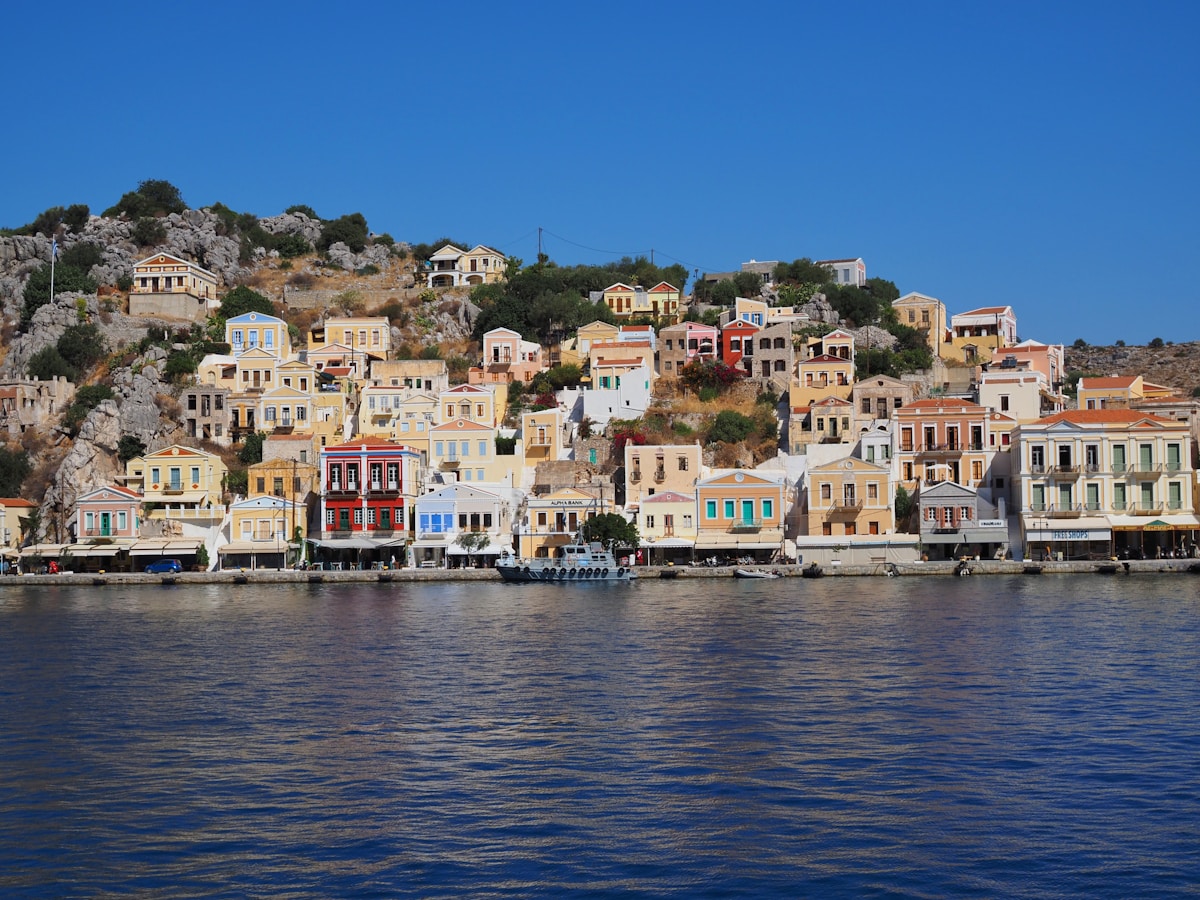
Symi rewards slow travel more than almost any island in the Dodecanese. The neoclassical harbour - a hillside of tall, narrow mansions in ochre, terracotta, and cream, stacked above a waterfront still used by fishing boats - is genuinely one of the most beautiful approaches in Greece. But the island has more layers than the photographs suggest: the medieval upper town of Chorio, the southern monastery of Panormitis, and a collection of boat-access beaches on otherwise inaccessible coves make for a fuller experience than a day trip can deliver.
Prices listed are approximate as of 2026.
Top Tours in Symi
| Tour | Duration | Price (from) | Group Size | Highlights |
|---|---|---|---|---|
| Symi Day Trip from Rhodes | 7 hrs | from €25/person | Excursion boat | Gialos harbour, Panormitis Monastery, Nanou beach swim |
| Symi Island Boat Tour with Beach Stops | 5 hrs | from €35/person | Up to 20 | Nanou, Marathounda beach, snorkelling at sea caves |
| Private Boat Charter Rhodes to Symi | 8 hrs | from €80/person | Private | Flexible itinerary, secluded cove access, Chorio walk |
Browse all Symi tours → GetYourGuide
Explore Gialos Harbour and the Neoclassical Architecture
Gialos - the lower harbour - is where the ferry arrives and where the day-trippers concentrate. The waterfront mansions date from the 1870s–1890s, the peak of Symi’s sponge-diving wealth, when the island’s fleet exported sponges across the eastern Mediterranean and accumulated enough capital to build on a grand scale. Many of the mansions were abandoned in the 20th century as the industry collapsed, but since the 1970s substantial restoration has taken place, and the streetscape is now remarkably intact.
Take the lane immediately behind the waterfront rather than the waterfront itself for the best architecture: the secondary streets have unrestored examples alongside restored ones, giving a sense of what the whole hillside looked like before repair work began. The mansions have tall windows, ornate pediments, and in several cases decorative mosaics (hochlakia) made from river pebbles in the courtyards.
The Clock Tower (Roloi) at the north end of the harbour is a useful landmark and the starting point for the stairs to Chorio.
Climb the Kali Strata to Chorio
Chorio is the original settlement of Symi - inhabited continuously since at least Byzantine times, while Gialos developed later as the harbour trade grew. The two are connected by the Kali Strata (“the good staircase”), a flight of 357 stone steps that climbs the hillside from the harbour.
The climb takes 15–20 minutes at a moderate pace and is not strenuous if you pace it correctly. The reward is a quieter character - fewer restaurants, narrower lanes, and a genuinely residential community - and access to the ruined Venetian-Byzantine kastro at the top. The kastro walls still stand to a reasonable height; the interior has the church of Megali Panagia and views over both the north harbour and the southern coastline.
Chorio has several Byzantine churches open to visitors; the church of Agios Georgios in the lower part of the upper town has notable 18th-century frescoes. The small local museum in Chorio covers island history from the sponge-diving era to the post-war period.
The Kali Strata road (a cobbled but level alternative for those who prefer to avoid steps) switchbacks up the same hillside and is usable by the island’s few vehicles.
Visit Panormitis Monastery
Panormitis is the most important religious site in the Dodecanese after Patmos - a large Orthodox monastery in a bay on Symi’s southern coast, dedicated to Archangel Michael. It functions as an active monastery, houses a small museum and guesthouse for pilgrims, and draws significant religious tourism from across Greece, particularly around the festival on 8 November (the Feast of the Archangel).
Getting there: boat trips from Gialos run daily in summer, typically departing 10–11am and returning 3–4pm, with a beach stop at Nanou or Marathounda en route. Cost approximately €15–25 per person return including stops. Alternatively, the monastery has simple accommodation - cells available to both pilgrims and secular visitors for approximately €20–30 per person per night, extremely basic but an unusual overnight experience.
The monastery complex includes the main church (Katholikon), a small museum with votive offerings - model ships, silver ornaments, and personal objects left by supplicants - and the guesthouse. Dress code strictly observed: no shorts, shoulders covered.
Take a Boat Taxi to the Best Beaches
Most of Symi’s best swimming is accessible only by sea. Boat taxis operate from the main quay at Gialos from approximately 9am–5pm in summer; the skipper can usually be found at the quay or arranged through your accommodation.
Nanou (approximately 20 minutes by boat, €10–15 return) is the most popular destination: a shingle beach at the head of a narrow inlet, with a single seasonal taverna and water so clear the seabed is visible at 4–5 metres. Marathounda (approximately 30 minutes, €12–18 return) is longer and quieter, with fewer day-trippers. Agios Georgios (approximately 25 minutes) has good snorkelling off the rocks. Agios Emilianos, the furthest at approximately 40 minutes, is reached only occasionally but has a small chapel on a headland and is often deserted.
Nos beach, the only one reachable on foot from Gialos (20 minutes south along the coastal path), is pebbly but good for a swim without boat logistics.
Eat and Drink Well
Symi has a small but decent restaurant scene, with the better options concentrated in the lanes behind the Gialos waterfront rather than the front-row tourist tables. Shrimp from the Symi boats are the local speciality - the island’s small fishing fleet supplies a distinctive small prawn (Symian shrimp) that appears on menus as a grilled starter or in pasta. Fresh fish is similarly good, with obvious ferry access to mainland markets for variety.
The best ouzo-and-mezedes experience is typically at the older kafeneions in Chorio rather than the harbour-side restaurants. Evening dining on the waterfront is a reliable pleasure despite the slightly elevated prices.
For the full island overview including getting to Symi and where to stay, see our Symi travel guide. For the broader Dodecanese context, see our Rhodes travel guide and Dodecanese island guide.
Book Symi tours and boat trips through GetYourGuide. Pick up a Greece eSIM before you travel.