Ten days opens up Greece properly. You get the archaeological depth of Athens, the mainland’s most important oracle site at Delphi, and enough island time to visit three distinct Cycladic and Cretan destinations without the trip feeling like a ferry schedule with meals attached. The pace here is comfortable - no overnight boats, no 5:00am departures, and enough flexibility built in that a slow morning or a longer lunch doesn’t derail the plan.
The route: Athens (2 nights) → Delphi day trip → ferry to Naxos (2 nights) → ferry to Santorini (3 nights) → ferry to Crete/Heraklion (2 nights). You can fly home from Heraklion directly - most European airlines have direct routes, and there are connecting flights to Athens if needed.
Days 1–2: Athens
Day 1: Acropolis and Acropolis Museum
Arrive and head to your base. Plaka Hotel (Kapnikareas 7) is a reliable mid-range option from EUR 100 per night with a rooftop terrace facing the Acropolis. AthenStyle (Agias Theklas 10, Monastiraki) works for budget travellers at from EUR 70 per night.
Search hotels in Athens on Booking.com
Start at the Acropolis - south slope entrance, 8:00am opening. The combined archaeological ticket (EUR 30 as of 2026) covers seven sites across Athens and is valid for five days. Allow 90 minutes for the hilltop, then walk downhill to the Acropolis Museum (EUR 15, open 8:00am–8:00pm in summer). The Parthenon Gallery on the top floor and the Archaic sculpture collection on the ground floor are the essential stops.
Lunch at Tzitzikas kai Mermigas (Mitropoleos 12) - modern taverna, meze plates EUR 8–14. Afternoon in Plaka and Anafiotika. Dinner at To Kafeneio in Plaka - traditional Greek cooking, EUR 15–25 per person.
Day 2: Ancient Agora, Museums, and Monastiraki
Morning at the Ancient Agora (combined ticket). Temple of Hephaestus, Stoa of Attalos museum - allow 60–90 minutes. Then metro to the National Archaeological Museum (EUR 12, Line 1 to Victoria). The Mycenaean gold, Cycladic figurines, and Antikythera Mechanism require at least two hours.
Afternoon: Monastiraki flea market, then walk through Psyrri. Dinner at Bairaktaris (Monastiraki Square, since 1879, gyros and souvlaki EUR 8–12) or Avli in Psyrri (EUR 20–30 per person, courtyard setting).
Day 3: Delphi Day Trip
Delphi sits 180 km northwest of Athens on the slopes of Mount Parnassus. In antiquity it was considered the centre of the world - the site of the Oracle of Apollo and the most important prophecy centre in the Greek world.
Getting there: KTEL buses depart from Athens’ Liosion terminal (Terminal B) at 7:30am and 10:30am. Journey time: approximately 2.5–3 hours. Return buses leave Delphi at 4:30pm and 6:00pm. Round-trip fare: approximately EUR 35 as of 2026. A private driver or organised tour costs EUR 100–150 per person.
The archaeological site (EUR 12 entry, open 8:00am–8:00pm in summer) terraces up the hillside: the Sacred Way, the Treasury of the Athenians, the Temple of Apollo (where the Oracle delivered prophecies), and the theatre with a view over the valley of olive groves running to the Gulf of Corinth. Allow 90 minutes for the site.
The Delphi Archaeological Museum (EUR 6 entry, or EUR 12 combined site + museum ticket) holds the Charioteer of Delphi - one of the finest surviving Greek bronzes - plus the Sphinx of Naxos, the Twins of Argos, and extensive votive offerings.
Lunch in Delphi village: Taverna Vakhos on the main street - traditional Greek dishes at EUR 12–20 per person with panoramic valley views from the terrace.
Return to Athens by evening. Sleep in Athens (same hotel as Days 1–2).
Days 4–5: Naxos
Getting There
Ferry from Piraeus to Naxos: approximately 3.5–4 hours by high-speed (SeaJets or Blue Star Ferries), EUR 40–55 per person as of 2026. Morning departures get you to Naxos by midday. With luggage and an early sailing, a pre-booked transfer to Piraeus is the low-stress option - the port gates are a 15-minute walk from the metro station.
Day 4: Naxos Town and Beaches
Naxos is the largest of the Cyclades and the least dependent on tourism - it has its own agricultural economy, a mountainous interior with marble-quarrying villages, and some of the best beaches in the Aegean.
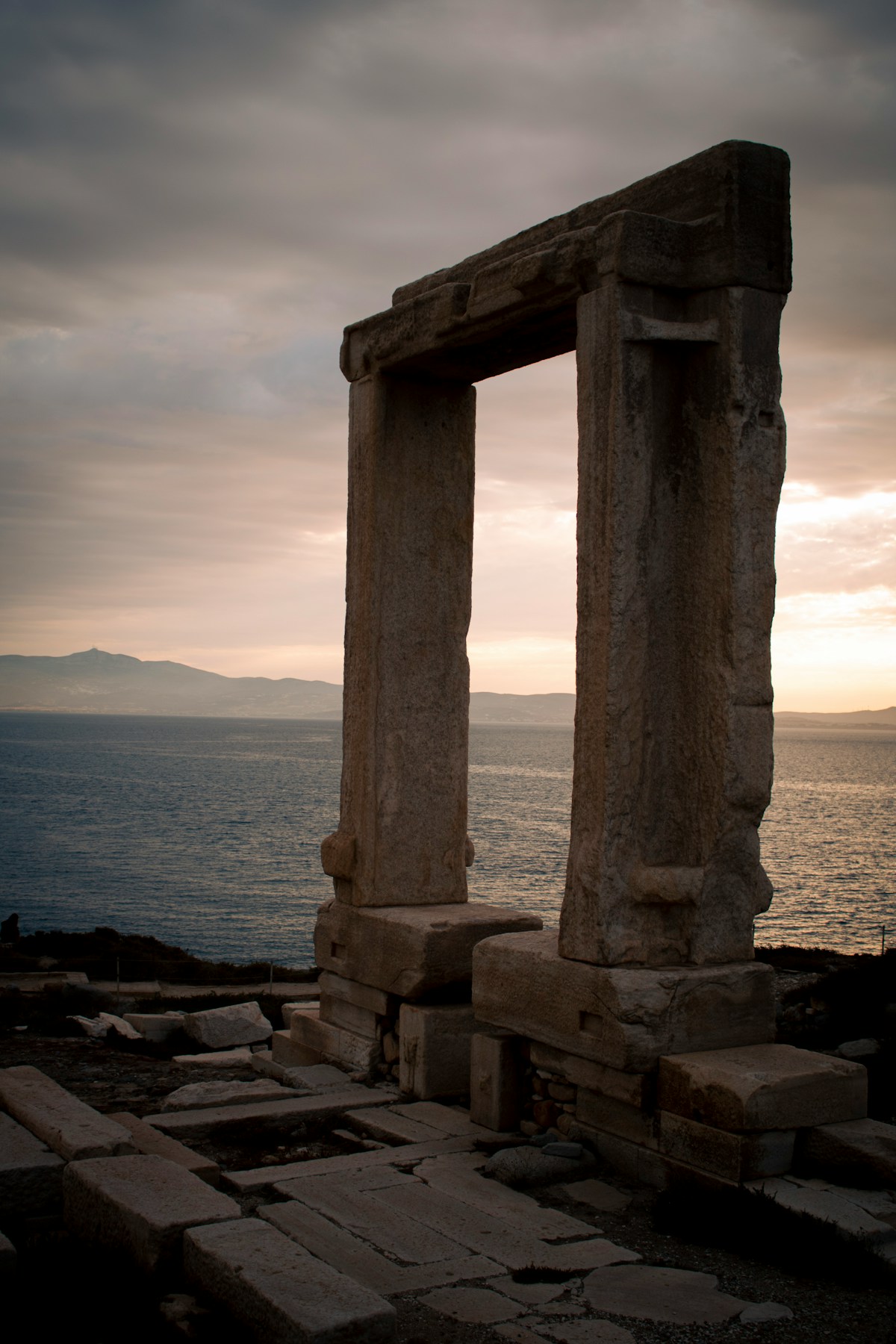
Start in Naxos Town (Chora). The Portara - the massive marble doorway of an unfinished Temple of Apollo from the 6th century BC - stands on a peninsula connected to the town by a causeway. It’s the island’s defining landmark, especially at sunset.
Walk through the Kastro (Venetian castle quarter) above the harbour - narrow alleys, 13th-century towers, and the Venetian Museum (EUR 5 entry). Lunch at Meze2 on the waterfront - creative Greek dishes at EUR 10–18 per plate.
Afternoon: head to Agios Prokopios Beach (bus from Naxos Town, EUR 2, 10 minutes) or the longer Plaka Beach further south. Both have fine sand and clear water. Sunbed rentals approximately EUR 10–15 for two.
Dinner at To Elliniko in Naxos Town - traditional Naxian dishes including local cheeses (graviera, arseniko) and potato dishes (Naxos potatoes are famous across Greece). EUR 12–20 per person.
Day 5: Mountain Villages and Interior
Rent a car for the day (from EUR 35–45 per day from local agencies on the harbour) or join a guided tour (approximately EUR 50–70 per person). The interior of Naxos is dramatically different from the coast.
Drive to Halki - a former capital with Byzantine churches, the Vallindras Citron Distillery (free tastings of kitron liqueur, the island specialty), and tower houses. Continue to Apiranthos - a marble-paved mountain village at 600 metres elevation, built by Cretan refugees, with three small museums (EUR 2–3 each) and a distinct architectural character.
Stop at the Temple of Demeter near Sangri (EUR 4 entry) - a partially reconstructed 6th-century BC temple in a rural setting. The marble was quarried from the mountains directly behind.
Lunch at Platia Taverna in Halki - local dishes and Naxian wine at EUR 10–16 per person.
Return to Naxos Town for a final evening. Sunset from the Portara is worth repeating.
Where to stay on Naxos: Hotel Grotta (Naxos Town) - from EUR 80 per night, sea views, breakfast terrace overlooking the Portara. Naxos Resort Beach Hotel (Agios Georgios Beach) - from EUR 110 per night, beachfront with pool.
Search hotels in Naxos on Booking.com
Days 6–8: Santorini
Getting There
Ferry from Naxos to Santorini: approximately 1.5–2 hours by high-speed, EUR 35–50 per person. Multiple daily departures in season.
Day 6: Fira and Caldera Walk
Arrive at Athinios Port, bus to Fira (EUR 2.30). Walk the caldera path between Fira and Imerovigli - approximately 3 km, 45–60 minutes, with continuous views over the volcanic crater. The path continues to Oia (a further 7 km) for those with the stamina, but Fira to Imerovigli is the most scenic stretch.
Visit the Museum of Prehistoric Thera in Fira (EUR 6, Minoan frescoes from Akrotiri). Dinner at Koukoumavlos in Fira - fine-dining Greek-Mediterranean cuisine at EUR 40–60 per person with caldera views. For something simpler, Ouzeri near the cable car station does meze and local wine at EUR 15–25 per person.
Day 7: Akrotiri and Beaches
Morning at Akrotiri archaeological site (EUR 12, open 8:00am–8:00pm in summer). This Minoan settlement was buried by the catastrophic eruption around 1600 BC and preserved in volcanic ash. Multi-storey buildings, indoor plumbing, and sophisticated frescoes indicate a wealthy, advanced civilisation. Allow 90 minutes.
Afternoon at Red Beach (600 metres from Akrotiri on foot) or Perissa Beach (black volcanic sand, full facilities, sunbeds approximately EUR 10–15). Perissa has beachfront tavernas - God’s Garden serves decent fish dishes at EUR 12–20 per person.
Evening sunset in Oia - arrive 90 minutes early for a position at the castle ruins.
Day 8: Wineries and Boat Tour
Morning wine tasting: Santo Wines (Pyrgos, flights from EUR 15, four wines) and Venetsanos Winery (similar prices, more intimate). Assyrtiko is the must-try varietal - mineral, citrus, pairs perfectly with seafood.
Afternoon: caldera boat tour to Nea Kameni (volcanic crater hike) and Palea Kameni (hot springs swim). Half-day tours approximately EUR 40–55 per person. Full-day catamaran tours with meal and multiple swimming stops run EUR 100–150.
Final dinner: Ammoudi Fish Tavern below Oia - 300 steps down to the bay, fresh seafood EUR 20–35 per person. Worth every step.
Where to stay on Santorini: Hotel Atlantis (Fira, caldera-view) - from EUR 130 per night. Aroma Suites (Fira) - from EUR 160 per night, cave suites with private terraces. Art Maisons Oia - from EUR 250 per night for luxury cave suites.
Search hotels in Santorini on Booking.com
Days 9–10: Crete (Heraklion)
Getting There
Ferry from Santorini to Heraklion: approximately 2 hours by high-speed (SeaJets), EUR 55–70 per person. Blue Star runs a slower conventional ferry (approximately 4 hours) from EUR 35.
Day 9: Knossos and Heraklion
The Palace of Knossos - 5 km south of Heraklion - is the largest Bronze Age archaeological site on Crete and the ceremonial centre of the Minoan civilisation. Entry EUR 15 as of 2026 (or EUR 16 combined with the Heraklion Archaeological Museum). Open 8:00am–8:00pm in summer. Allow 90 minutes.
The partially reconstructed areas (Sir Arthur Evans’ controversial restorations from the early 1900s) include the Throne Room, the Grand Staircase, and the dolphin frescoes. The site is more comprehensible with a guide - audio guides are available on site for EUR 5, or hire a licensed guide (approximately EUR 80–120 for a private 2-hour tour).
Afternoon: Heraklion Archaeological Museum (EUR 12, or combined Knossos ticket EUR 16). One of the finest museums in Greece - the Phaistos Disc, the Bull-Leaper fresco, the Snake Goddess figurines, and the Minoan gold jewellery are all here. Allow two hours.
Walk through Heraklion’s old town - the Venetian Fortress (Koules) at the harbour (EUR 4 entry), Morosini Fountain on Lion Square, and the market street (1866 Street) for Cretan cheeses, olive oil, herbs, and raki.
Dinner at Peskesi (Kapetan Haralampi 6) - Cretan cuisine using recipes from 16th–19th century sources, all ingredients sourced from their own farms. EUR 20–35 per person. Reservation essential.
Day 10: Rethymno or Beach Day
Two options depending on your departure time:
Option A - Rethymno day trip: Drive or bus to Rethymno (80 km west, approximately 1.5 hours by KTEL bus, EUR 8 each way). The Venetian harbour, Fortezza fortress (EUR 4 entry), and the old town are worth a half-day. Lunch at Avli in the old town - Cretan fine dining at EUR 25–40 per person in a restored Venetian building.
Option B - Beach morning: Head to Amoudara Beach (8 km west of Heraklion, bus EUR 2) or Matala Beach (70 km south, EUR 8 bus fare) for a final swim before your departure.
Fly home from Heraklion International Airport - direct flights to most European capitals, or connect through Athens.
Where to stay in Heraklion: GDM Megaron Hotel (Beaufort 9) - from EUR 110 per night, harbour views, excellent breakfast. Lato Boutique Hotel (Epimenidou 15) - from EUR 90 per night, directly overlooking the Venetian harbour and Koules fortress.
Search hotels in Heraklion on Booking.com
Budget Summary
| Category | Approximate Cost (per person) |
|---|---|
| Athens combined ticket | EUR 30 |
| Acropolis Museum + National Museum | EUR 27 |
| Delphi site + museum | EUR 12 |
| Delphi bus (return) | EUR 35 |
| Piraeus–Naxos ferry | EUR 48 |
| Naxos–Santorini ferry | EUR 42 |
| Santorini–Heraklion ferry | EUR 62 |
| Knossos + Heraklion Museum | EUR 16 |
| Akrotiri entry | EUR 12 |
| Wine tastings | EUR 15–30 |
| Caldera boat tour | EUR 48 |
| Car rental Naxos (1 day) | EUR 40 |
| Meals (10 days) | EUR 250–400 |
| Local transport | EUR 40–60 |
| Total (excl. accommodation + flights) | EUR 677–862 |
For tours booked on arrival, our last-minute tours page lists same-day and next-day options across the islands.
All prices are approximate as of 2026. Ferry schedules are seasonal - confirm times on ferries.gr or ferryscanner.com before booking. See our Greek island ferry guide for booking tips.
Related Guides
- One Week in Greece - shorter Athens, Mykonos, Santorini loop
- Two Weeks in Greece - extended version with the Peloponnese
- Ancient Delphi Guide - full guide for the oracle site day trip
- Where to Stay in Santorini - neighbourhood breakdown for the Santorini leg
- Best Time to Visit Greece - seasonal planning for the full route
Book Your Trip
- Flights - Flights to Greece guide · Find the best fares to Greece
- Travel Insurance - Greece travel insurance guide · Get covered before you go
- eSIM - Greece eSIM guide · Stay connected from landing
- Airport Transfers - Pre-book your transfer from Athens or Thessaloniki
- Car Rental - Greece car rental guide · Compare prices across providers
- Tours & Activities - Browse Greece tours on GetYourGuide