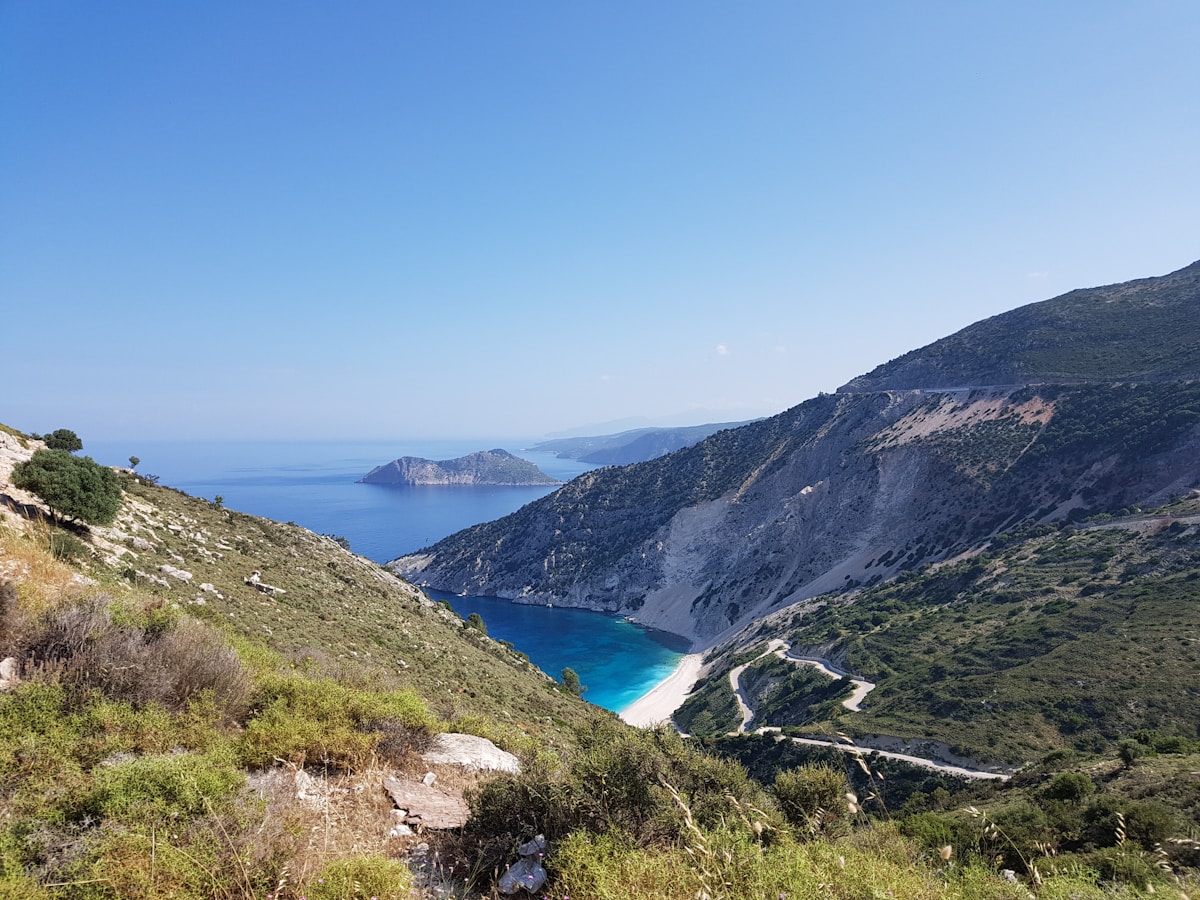
Kefalonia and Zakynthos are neighbouring Ionian islands that are often considered together, but they deliver quite different experiences. Both are greener than the Cyclades, both have clear Ionian Sea water, and both attract a predominantly British and western European holiday market. Beyond that, the similarities thin out.
Quick Verdict
| Category | Kefalonia | Zakynthos |
|---|---|---|
| Beach drama | ★★★★★ | ★★★★★ |
| Beach quantity | ★★★★ | ★★★ |
| Scenery / landscape | ★★★★★ | ★★★★ |
| Hiking | ★★★★★ | ★★★ |
| Nightlife | ★★★ | ★★★★ |
| Wildlife (turtles) | ★★ | ★★★★★ |
| Romantic / couples | ★★★★★ | ★★★★ |
| Family-friendly | ★★★★ | ★★★ |
| Budget value | ★★★★ | ★★★ |
Go to Kefalonia for dramatic mountain and coast scenery, some of Greece’s most beautiful beaches, hiking on Mount Ainos, a more adult and less party-focused atmosphere, and the island’s literary connection (Louis de Bernières’s Captain Corelli’s Mandolin is set here). Go to Zakynthos for the Navagio Shipwreck Beach experience, loggerhead sea turtle watching, and the Laganas party scene.
Beaches
Kefalonia
- Myrtos Beach: The single most dramatic beach in the Ionian Islands. A 300m-wide crescent of white limestone pebbles at the base of 200m limestone cliffs, with water that is genuinely the most intense blue-to-turquoise colour in Greece. The view from the cliff road above is one of the great photographs in Greek travel. Sunbeds available (approximately €10/day); very crowded in July and August - arrive before 9am.
- Antisamos: A pebble beach east of Sami, set in a deep bay with forested hills. Less famous than Myrtos but arguably better for swimming (calmer water).
- Melissani Lake: Not a beach but an underground sea cave where a collapsed ceiling floods the interior with turquoise light - one of the most beautiful natural sites in Greece. Boat tours run inside the cave (approximately €7 as of 2026, best in midday when the sun is directly overhead).
- Petani: A quiet beach on the west coast similar to Myrtos but less visited.
- Skala: A long sandy beach in the south, more family-oriented.
- Lourdas: A wide bay beach with good facilities and good swimming.
Zakynthos
- Navagio (Shipwreck Beach): The most iconic beach in Greece after Santorini’s caldera - a white sand crescent with a rusting shipwreck (the Panagiotis, stranded 1980) framed by 200m white limestone cliffs, accessible only by boat. Boat trips from Porto Vromi take approximately 15 minutes and cost €20–25 return. The cliff viewpoint above is accessible by road and free.
- Xi Beach: Unusual dark red sand beach in the south - photogenic and distinctive.
- Makris Gialos (Planos area): Clear water and a gentler atmosphere in the north.
- Agios Nikolaos (north): A small harbour village with calm, clear water suitable for families.
- Laganas Bay: Long sandy beach; also the sea turtle nesting area. Signs and rules restrict where you can set up - follow them.
Verdict: Both have extraordinary individual beaches. Myrtos vs Navagio is a genuine draw.
Landscape and Hiking
Kefalonia is the largest Ionian island (781 sq km) and has significant mountain terrain. Mount Ainos (1,627m) is the highest peak in the Ionian Islands and a national park - covered in the endemic Kefalonian fir tree. Hiking trails from the villages of Troianata and Zola reach the summit; the views on a clear day cover the entire Ionian Sea. The island’s interior has dramatic gorges, caves, and fertile valleys.
Zakynthos is smaller and flatter. The western coast has dramatic cliff scenery but is largely inaccessible by land. Most beaches require boat access. The island is more oriented toward the coast than the interior.
Food
Kefalonia has a stronger tradition of distinct local dishes than most Ionian islands. Kreatopita (a meat pie with thick pastry, made for celebrations and sometimes found in traditional tavernas) is the island’s signature dish. Robola wine - a crisp white from the mountainous interior with a citrus-mineral character - is Kefalonia’s best-known product and worth seeking out specifically by name. For restaurants: Tassia in Fiskardo (run by the same family since the 1970s; the owner’s cookbooks are sold at the door) is the island’s most famous, with fresh fish at approximately €25–40 per main course. To Archontariki in Argostoli is a better-value local taverna (€15–25/person with wine). The fish tavernas along the Katelios waterfront in the south are good for a long, quiet lunch.
Zakynthos has a solid taverna scene with strong seafood, particularly in the fishing villages of Keri (south coast) and Alikanas (north coast). Malanos, on the road towards Vassilikos, has a long-standing reputation for fresh fish at local prices (€18–30/person). For value eating, the back streets of Zakynthos Town have good unpretentious options away from the waterfront tourist strip. The local mandolato (hard nougat with honey and almonds) is the island’s best souvenir - buy from Stathis Mandolato rather than supermarket versions.
Verdict: Kefalonia for a stronger local food identity and specific dishes worth seeking out. Both islands deliver good fresh seafood.
Nightlife
Kefalonia: Argostoli’s Lithostroto pedestrian boulevard and the waterfront strip have bars and cafes that fill from around 9pm - the atmosphere is relaxed and predominantly local rather than party-focused. Bass Club on the waterfront is one of the most consistently popular spots. Fiskardo, the island’s upmarket harbour village in the north, has cocktail bars and restaurants where the yacht crowd gathers in summer - expect to pay €8–12 per cocktail. Lixouri has a small bar strip. There is no equivalent to a British-style party zone anywhere on Kefalonia; the island’s nightlife rewards those who want to drink with locals, not those who want to dance until 4am.
Zakynthos/Laganas is a well-established British package-holiday party destination. The Laganas beach road runs for roughly 1km of bars, clubs, and late-night venues - Rescue Club, San Marco Bar, and Cocktails & Dreams are the most-cited spots. Music runs until 4–5am in peak season, and most bars operate happy hours from 6–9pm (€4–6 cocktails). The concentration of this scene is almost entirely in Laganas - Tsilivi, Vassilikos, and Zakynthos Town are significantly quieter.
Verdict: Kefalonia for an adult, local bar atmosphere. Zakynthos/Laganas for a full late-night party scene.
Cost Comparison
| Category | Kefalonia | Zakynthos |
|---|---|---|
| Midrange hotel (per night) | €60–160 | €70–180 |
| Villa rental (per week) | €800–2,500 | €700–2,200 |
| Dinner per person | €20–40 | €22–45 |
| Car hire (per day) | €35–65 | €35–70 |
| Boat trip | €15–30 | €20–30 |
Both islands are in similar price brackets and significantly cheaper than the Cyclades.
Accommodation
Kefalonia:
- Emelisse Nature Resort - 5-star near Fiskardo, €300–600/night
- Ionian Emerald Resort - midrange, €90–160/night
- Aenos Hotel Argostoli - budget, from €50/night
- Fiskardo waterfront guesthouses - good midrange, €80–150/night
Search all Kefalonia hotels on Booking.com
Zakynthos:
- Lesante Cape Resort & Villas - 5-star, private villas, €400+/night
- Ionian Blue Hotel - midrange, north coast, €90–180/night
- Villa Rosaria Zakynthos - family villa with pool, from €100/night
Search all Zakynthos hotels on Booking.com
Wildlife
Zakynthos is Greece’s most important loggerhead sea turtle nesting site. Laganas Bay is a protected marine park - the turtles nest from May to August and hatchlings emerge July to October. Early morning walks along the beach (before 8am) can reveal nest activity. Boat trips from Agios Sostis give the best viewing opportunity. This is a genuinely special wildlife experience and gives Zakynthos a unique reason to visit.
Kefalonia has good snorkelling (the water is exceptionally clear) and the Melissani Cave ecosystem supports an endemic subspecies of Mediterranean monk seal, though sightings are rare.
Getting There
Kefalonia: Argostoli Airport (EFL) has direct seasonal charter flights from UK airports - Jet2 from Leeds and Manchester, TUI from Birmingham and Bristol, easyJet from Gatwick, British Airways seasonal - running approximately April–October. Outside charter season, the only air route is via Athens (Aegean, Sky Express; around 50 minutes, from approximately €40–80 one-way). By ferry from the mainland: from Killini on the Peloponnese, 1.5–2 hours (approximately €20–30/person, €65–90/car as of 2026); from Patras to Sami port, 2.5–3 hours.
Zakynthos: Zakynthos Airport (ZTH) has similar UK charter options plus year-round Athens connections. Ferry from Kyllini (Peloponnese): 1.5 hours (approximately €10–15/person, €50–75/car). Kyllini is roughly 2.5 hours by car from Athens - driving to Kyllini and taking the ferry is a practical option for those hiring a car on the island. By train from Athens to Patras (1.5 hours), then onward by bus to Kyllini ferry terminal is possible but time-consuming.
Note: there is no direct ferry between Kefalonia and Zakynthos - travel between the two islands requires going via the mainland (the Killini–Kyllini ferry terminals are close together on the Peloponnese coast).
Our Verdict
Kefalonia is the better island for most travellers. It’s larger, more varied, has more to explore in a week, better suits couples and nature lovers, and has the edge on scenery overall. The combination of Myrtos Beach, Melissani Cave, Mount Ainos, and Fiskardo makes it one of the most complete islands in Greece.
Zakynthos is the better choice if Navagio Shipwreck Beach is a specific goal, if you want the turtle nesting experience, or if Laganas nightlife is a draw. It’s a smaller island that can feel limited after 4–5 days without specific goals.
The combination of both islands - particularly if you’re driving through the Peloponnese - is very achievable. See our full island profiles: Kefalonia and Zakynthos.
Search flights to Greece across multiple airlines in one place. Pick up a Greece eSIM before you fly - keeps you connected without roaming charges. Sort out travel insurance for Greece before you leave.
Related Guides
- Corfu vs Zakynthos - another Ionian comparison
- Best Greek Islands Guide - all major islands compared
- Peloponnese Road Trip - combining the Peloponnese and Ionian islands
- Greece Car Rental Guide - essential for exploring Kefalonia
- Corfu vs Crete - for a different Ionian vs Aegean comparison
- Rhodes vs Crete - Greece’s two largest islands compared
- Which Greek Island Should You Visit? - the full decision guide
Plan Your Trip
✈️ Book your flights to Greece 🛡️ Get travel insurance 📱 Stay connected with an eSIM 🚗 Rent a car