Kefalonia Travel Guide: The Complete Island Guide
Myrtos Beach with jaw-dropping cliffs, Melissani underground lake cave, Fiskardo Venetian harbour, and the Ionian's largest unspoiled island.
Guides for Kefalonia
Kefalonia (also spelled Cephalonia) is the largest of the Ionian Islands - at 781 sq km, it is substantial enough to feel like a real place rather than a beach resort. The 1953 earthquake destroyed most of its historic buildings, but the landscape itself is extraordinary: steep limestone mountains dropping into turquoise water, underground caves, vineyards producing the excellent Robola white wine, and harbours that range from the lively capital Argostoli to the perfectly preserved Fiskardo in the north.
Myrtos Beach
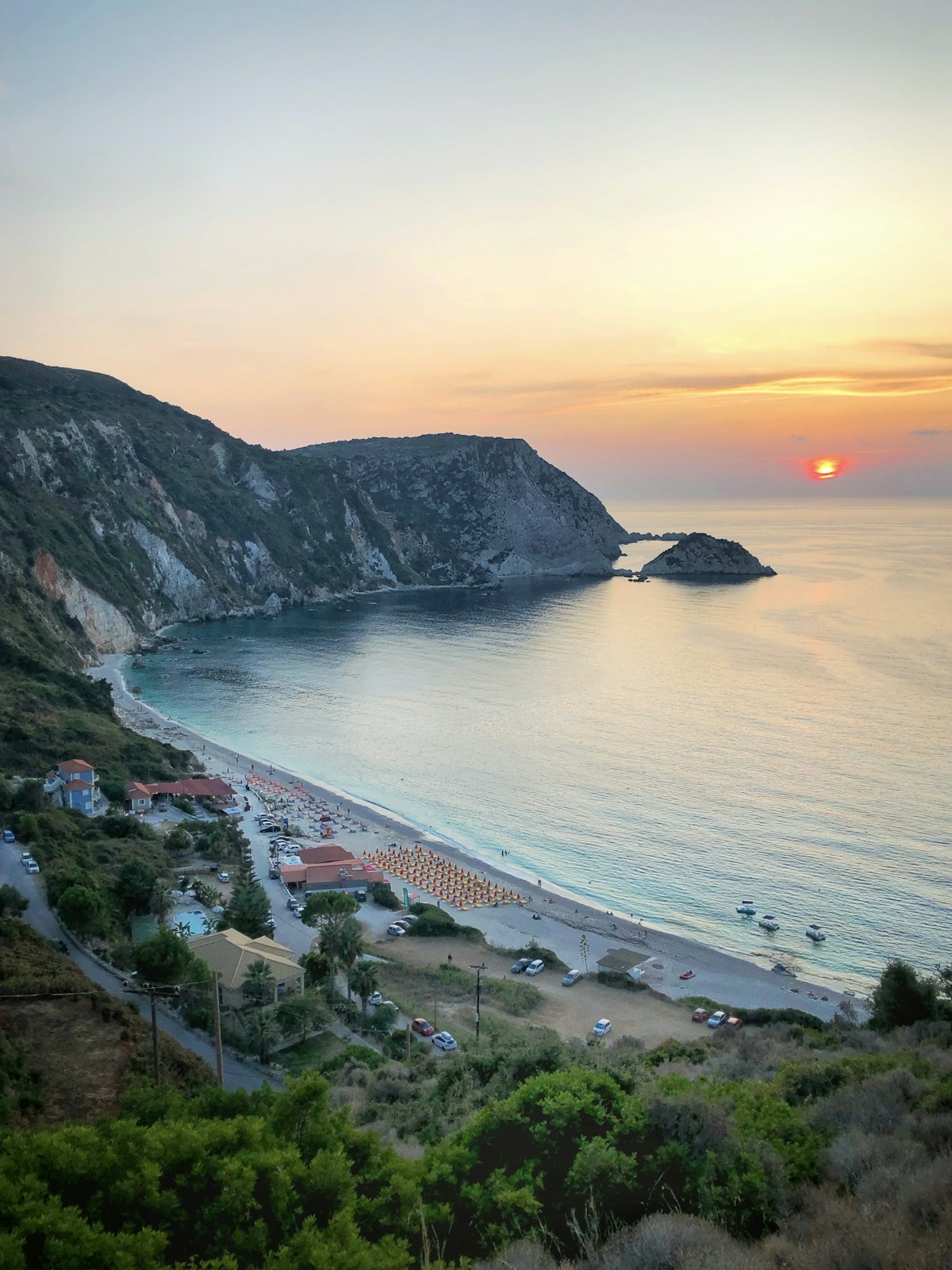
Consistently voted one of the most beautiful beaches in Europe - a white pebble beach at the base of a 250m vertical limestone cliff, accessible by a winding road from the clifftop viewpoint. The water is an extraordinary blue-white colour from the pale limestone seabed.
The viewpoint: Pull-off layby 12km north of Argostoli on the main coast road. The best photography position; free. Visit at different times of day - the colour changes significantly with the sun angle.
The beach: 750m descent by road (drive or walk). White pebbles (not sand), no shade outside the small beach bar area. The water is cold even in August. Sunbeds approximately €10–15 per pair. Extremely busy from 11am–3pm in peak season.
Melissani Cave
An underground lake in a collapsed cave system, where the water glows electric blue-green when the sun reaches the opening in the cave ceiling. Boats row through the two chambers - the experience lasts approximately 15–20 minutes. Entry €7 adult (as of 2026), open 9am–7pm daily in season. Located near Sami on the east coast.
When to go: The colour is most intense around noon (the sun hits the water directly through the collapsed roof). Go between 11:30am and 1:30pm for the best effect.
Nearby: Drogarati Cave (2km from Melissani) - a stalactite cave with good acoustics, used occasionally as a concert venue. Entry €5 adult.
Fiskardo
The only village in Kefalonia that survived the 1953 earthquake intact - a perfectly preserved Venetian harbour settlement in the far north of the island. The houses are 18th-century Venetian, painted in terracotta and ochre; the harbour is filled with sailing yachts; the seafood restaurants line the waterfront.
Fiskardo is expensive - the village has positioned itself at the upmarket end of the Ionian market. Dinner at the harbourfront restaurants runs approximately €35–60 per person. Worth visiting for lunch or an afternoon rather than as a base unless budget is not a concern.
Assos
A small village between Fiskardo and Argostoli - a narrow isthmus connects the village to a pine-forested peninsula with a Venetian fortress at the top. One of the most photogenic villages in the Ionian Islands. Limited accommodation; good for a half-day stop.
Argostoli
The island’s capital - rebuilt after 1953 in a plain but functional style. The Korgialenios History and Folklore Museum (Ilia Zervou 12, entry €4) has good documentation of pre-earthquake Kefalonia. The Drapano bridge crosses the lagoon; the sea turtles that gather near the quay in the evenings are a well-known local phenomenon.
Robola wine: The PDO white wine of Kefalonia, made from the Robola grape - dry, crisp, mineral. The Robola Cooperative winery (12km south of Argostoli, in Omala) offers tastings (free, Monday–Saturday).
Where to Stay in Kefalonia
Fiskardo is the most atmospheric base - boutique hotels in restored Venetian buildings from approximately €180/night peak - while the Argostoli area offers better value from approximately €70/night. The south coast and Agia Efimia have beach-adjacent options from approximately €65/night. Our Kefalonia where-to-stay guide covers all zones and budgets.
Search hotels in Kefalonia on Booking.com
Where to Eat in Kefalonia
Tassia in Fiskardo (run by cookbook author Tassia Dendrinou) is the island’s standout restaurant at approximately €40–65 per person; more affordable tavernas in Argostoli and along the east coast run approximately €15–30 per person. Full picks are in our Kefalonia restaurants guide.
Kefalonia’s Wines
Robola is the island’s signature white wine - made from the indigenous Robola grape in the vineyards around Omala, at 600–900m altitude in the interior. The Robola of Kefalonia PDO covers a defined area on the Omala plateau. Characteristics: dry, light-bodied, crisp acidity, mineral and citrus notes. Pairs well with fresh seafood and light cheeses.
Robola Cooperative Winery (Omala, 12km south of Argostoli): The main producer - a cooperative of local growers. Offers free tastings and bottle sales (Monday–Saturday, approximately 8am–5pm). A worthwhile stop on the road toward the south of the island.
Gentilini Winery: A small private estate near Minies, producing Robola alongside Muscat and a local rosé. Open for tastings by appointment; approximately €10 per person for a guided tasting.
The 1953 Earthquake
The Ionian earthquake of August 12, 1953 (magnitude 7.2) destroyed approximately 90% of buildings on Kefalonia, Zakynthos, and Ithaka. Of Kefalonia’s 365 villages, fewer than 10 survived intact - Fiskardo in the far north was sheltered by its position and survived virtually undamaged.
The post-earthquake rebuilding was rapid but architecturally undistinguished - most of the island’s historic character was lost. What remains is a landscape of impressive natural beauty overlaid with 1950s–1970s construction. This context matters when visiting: the apparent “lack of historic architecture” in Argostoli and most villages is not neglect but erasure.
Getting Around Kefalonia
Kefalonia is large - getting around without a car is difficult. KTEL buses run from Argostoli to Sami, Fiskardo, Poros, and Skala, but services are infrequent (typically 2–3 times daily per route). Car hire is strongly recommended - approximately €40–60/day for a small car. Taxis from Argostoli to Fiskardo approximately €60–70 one-way.
Ferry Connections
Kefalonia has three ports, which can be confusing:
- Sami (east coast): Main port for ferries from Patras (approximately 2.5 hours). Also ferries to Ithaka and occasional routes to Zakynthos.
- Poros (southeast): Ferries to Killini (Peloponnese), approximately 1.5 hours.
- Argostoli (west coast): Seasonal ferries to Zakynthos (approximately 2.5 hours) and some routes to Brindisi (Italy) via a longer voyage.
When booking travel to Kefalonia, confirm which port your ferry uses - Sami and Poros are on opposite ends of the island and the drive between them is over an hour.
For more detail, see our Kefalonia tours guide and our Kefalonia vs Zakynthos comparison.
Book Kefalonia boat trips, cave tours, and wine tastings with GetYourGuide.
See Also
- Kefalonia Tours - Melissani Cave, Myrtos Beach tours, and boat excursions
- Zakynthos Travel Guide - the southern Ionian island, ferry connections available
- Kefalonia vs Zakynthos - choosing between the two southern Ionian islands
- Corfu Travel Guide - the most cosmopolitan Ionian island
- Lefkada Travel Guide - the Ionian island connected to the mainland by road
- Corfu vs Zakynthos - Ionian island comparison
- Greece Car Rental Guide - essential for exploring Kefalonia’s varied landscape
- Greece Sailing Guide - sailing the Ionian Sea
- Best Greek Islands Guide - where Kefalonia fits in the wider picture
Frequently Asked Questions
- Is Kefalonia worth visiting?
- Kefalonia is the largest Ionian island and arguably the most naturally beautiful - Myrtos Beach has some of the most dramatic cliff and sea scenery in the Mediterranean, Melissani Cave is extraordinary, and Fiskardo is one of the prettiest small harbours in Greece. It is less developed than Corfu and less overrun than Zakynthos, with a more independent traveller character.
- When is the best time to visit Kefalonia?
- June and September are ideal - the sea is warm, the island is not overrun, and accommodation is 30–40% cheaper than peak season. July–August is busy but manageable except at Myrtos Beach (which gets very crowded). May is good for hiking; the island is lush after the winter rains.
- How do I get to Kefalonia?
- Domestic flight from Athens to Kefalonia Airport (EFL), approximately 1 hour, from €40. Ferry from Killini (Peloponnese) to Poros (approximately 2.5 hours), or Patra to Sami (approximately 2.5 hours). Ferry from Argostoli to Zakynthos (approximately 2.5 hours). The island has three ports - check which port serves your route.
- Is Myrtos Beach worth the effort?
- Yes, but manage your expectations. The view from the clifftop viewpoint (free) is one of the most dramatic in Greece. The beach itself (750m descent by road) is white pebbles rather than sand, the water is cold even in summer, and it gets crowded by late morning. Go early (before 9am), park at the top and walk down, and leave before noon. It is genuinely spectacular.
Book an experience
Top experiences in Kefalonia
Explore the best tours and activities in Kefalonia, with instant confirmation and free cancellation on most bookings.