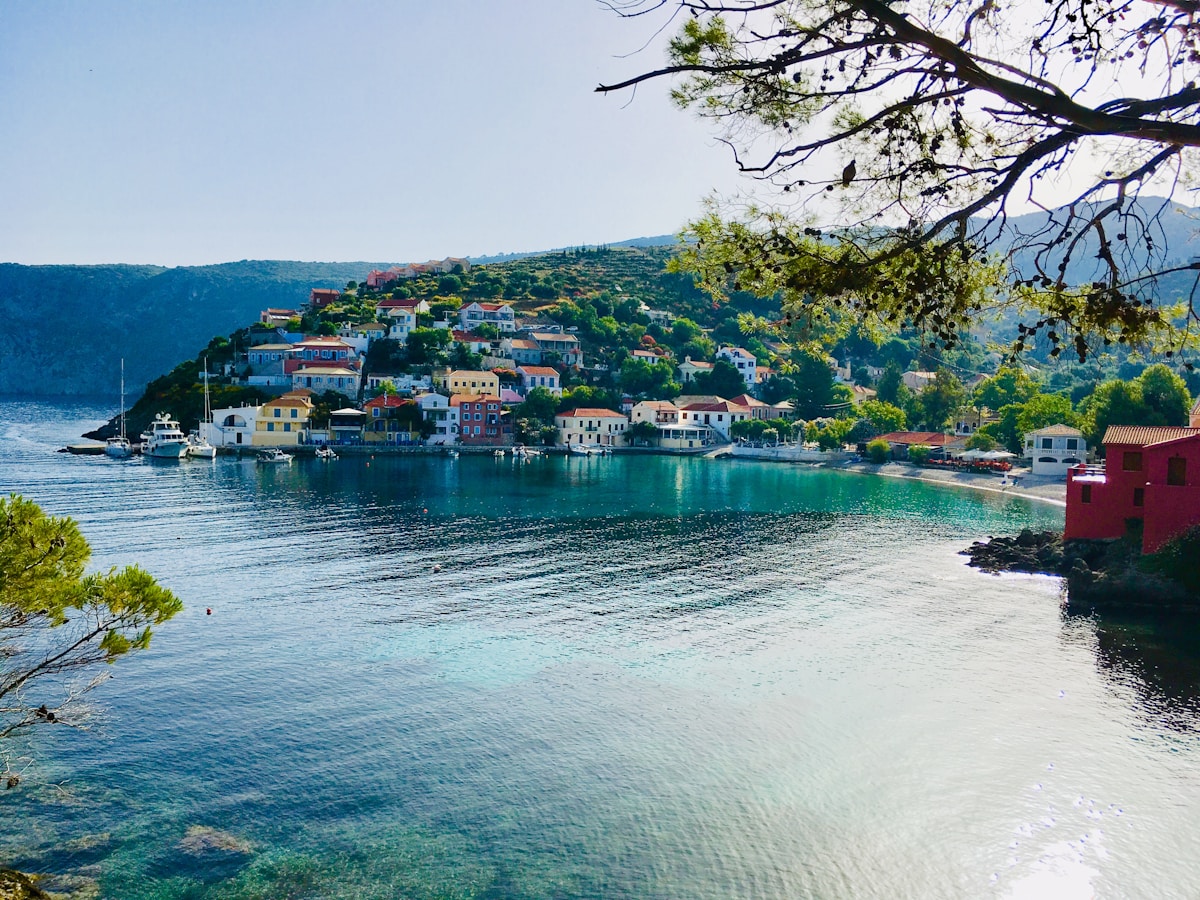
Kefalonia is the largest of the Ionian Islands - mountainous, densely forested with Aleppo pine, and home to some of the most dramatic coastal scenery in Greece. A series of 1953 earthquakes destroyed most of the island’s traditional architecture, but what remains is a combination of striking natural landscapes: the collapsed cave lake at Melissani, the famous white-pebble beach at Myrtos, the well-preserved Venetian harbour at Fiskardo in the north, and clear blue water throughout. Here are the best ways to experience the island.
Top Tours at a Glance
Here’s a quick comparison of top-rated tours on GetYourGuide:
| Tour | Duration | Price (from) | Group Size | Highlights |
|---|---|---|---|---|
| Melissani Cave & East Coast Day Tour | 5 hrs | from $38/person | Group | Melissani Lake boat ride, Drogarati Cave, Sami |
| North Kefalonia Day Trip: Myrtos, Assos & Fiskardo | 8 hrs | from $45/person | Group | Myrtos Beach, Venetian village, harbour views |
| Myrtos Coast Sea Kayaking | 4 hrs | from $58/person | Small group (max 10) | Cliff-base paddle, sea caves, guide |
| Robola Wine Tasting & Agricultural Tour | 4 hrs | from $48/person | Small group | Omala Cooperative, olive oil, local cheese |
| Kefalonia & Ithaca Boat Trip | Full day | from $72/person | Group | Swimming stops, Ithaca ferry, Fiskardo |
Browse all Kefalonia tours → GetYourGuide
Melissani Cave Boat Ride
Melissani Cave (officially Melissani Lake) is one of the most unusual geological formations in Greece. The cave roof collapsed approximately 5,000 years ago, creating an open-air chamber above an underground saltwater lake connected to the sea. In the 1950s, speleologists discovered clay tablets and pottery suggesting the cave was a place of worship dedicated to the god Pan.
The main chamber is toured by rowing boat - a 15-minute circuit of the lake that passes through the part of the cave that remains roofed. The unroofed section, where the sky is visible above and sunlight pours in, is the most dramatic part: the light refracts through clear water to produce vivid blue and turquoise reflections on the cave ceiling and walls. The effect is strongest between approximately 11:00am and 1:30pm (exact timing varies by season and the sun’s position).
Visiting independently: Melissani is 3 km from the village of Sami, on the east coast. Entry includes the boat ride: EUR 7 as of 2026. Open daily 9:00am–7:00pm in summer. A local bus runs from Sami (approximately EUR 2); car hire from Argostoli (45 minutes) or Sami (10 minutes) is more convenient.
Melissani as part of a guided day tour: Most Kefalonia island tours include Melissani as one stop on a wider east-coast circuit, combined with the nearby Drogarati Cave and the village of Sami harbour. Combined tours from Argostoli start from EUR 30–40 per person, 4–5 hours.
Drogarati Cave - 4 km from Melissani, an active limestone formation with impressive stalactite and stalagmite formations. Entry EUR 5. Remarkable acoustics; Kefalonia occasionally uses it for chamber concerts. A good 45-minute add-on to any Melissani visit.
Duration: 15 minutes (cave boat ride, excluding travel)
Difficulty: Easy
What’s included: Entry and boat ride
Best time: 11:00am–1:30pm for best light
Best season: May–October (cave accessible year-round but tours from Argostoli operate seasonally)
Myrtos Beach Day Excursion
Myrtos Beach is frequently listed among the top ten beaches in Europe - a 900-metre arc of white limestone pebbles at the foot of near-vertical cliffs on the island’s northwest coast. The water ranges from pale turquoise at the shore to deep cobalt further out.
Getting there: The beach is 26 km north of Argostoli. The coastal road descends 300 metres in steep switchbacks to the beach level - impressive scenery in itself. By car (from EUR 30–40 per day from Argostoli rental agencies): approximately 35 minutes. By organised tour (mini-bus, from EUR 20–30 per person): usually part of a north Kefalonia circuit also including Assos village and Fiskardo.
Assos: 15 km north of Myrtos, a small fishing village on a narrow isthmus with a Venetian castle above. The village itself survived the 1953 earthquakes largely intact - one of the few places on Kefalonia where you can still see traditional Ionian architecture. A good lunch stop: Platanos Taverna on the harbour serves fresh fish and local dishes at EUR 14–22 per person.
On the beach: Facilities at Myrtos include sunbeds and umbrellas (approximately EUR 10–15 for two), a small kiosk selling drinks and snacks, and toilet facilities. No shade from trees - the canyon walls don’t block the sun until mid-afternoon. The steep pebble shore means the water deepens quickly; strong swimmers benefit from the beach; non-swimmers should stay close to shore. A life-saving buoy is positioned in the water. Swell can make entry and exit rough in windy conditions.
Duration: Half-day to full day
Difficulty: Easy (getting there), moderate (swimming in swell)
What’s included (tours): Transport, typically a guide
Best time: Morning, before the site fills up (car park gets congested by 11:00am)
Best season: June–September; open year-round but facilities close in winter
Fiskardo Village and North Kefalonia Tour
Fiskardo, in the far north of Kefalonia, is the only village on the island that largely escaped the 1953 earthquakes. Its Venetian-era buildings remain intact along the waterfront - coloured neoclassical facades, a small Byzantine lighthouse, and a harbour full of yachts. It’s the most aesthetically refined village on the island.
North Kefalonia day tour from Argostoli - organised coach/minibus tours visit Myrtos Beach, Assos, and Fiskardo in a single day circuit (approximately 8 hours, from EUR 35–50 per person). This is the most efficient way to see the three highlights of the north without renting a car.
Self-drive to Fiskardo: From Argostoli, approximately 50 km via the north coast road - 1 hour 15 minutes. The road through the interior via Zola offers a shorter (45 km) but narrower mountain route. The coastal road is more scenic but follows the cliff edge - perfectly safe but not for nervous drivers.
In Fiskardo: A 45-minute walk covers the waterfront, the Byzantine lighthouse at the headland (free, 10 minutes from the village), and the small archaeological museum (open June–October, free). Lunch options on the waterfront: Tassia Restaurant is the well-known option (fresh fish and Robola wine at EUR 20–35 per person); Café Tselenti is more casual and less expensive (EUR 10–18).
Ithaca day trip from Fiskardo: Ferries connect Fiskardo to Frikes on Ithaca (20 minutes, EUR 6–8 as of 2026). Ithaca is small and easily explored by scooter or on foot - the village of Vathi (the capital), the Bay of Agia Kiriaki, and the monastery of the Taxiarchs are the main draws. A full day allows Ithaca exploration with an afternoon return to Kefalonia.
Duration: Full day (north tour) to multi-day (including Ithaca)
Difficulty: Easy
What’s included (tours): Transport, guide
Best season: May–October
Sea Kayaking
Kefalonia’s coastline - particularly the west and north coasts - offers some of the best sea kayaking in the Ionian Islands. The combination of limestone cliffs, sea caves, and clear water makes for memorable paddle routes.
Myrtos Coast kayak tour - guided 4-hour kayaking excursion along the cliff base below Myrtos Beach, entering sea caves inaccessible on foot. From EUR 55–70 per person, including equipment and guide. No prior experience necessary. Maximum group size typically 8–10 for safety in the kayaking area.
Full-day north coast kayak expedition from Fiskardo to Assos (approximately 15 km, 6 hours paddling with breaks) for experienced kayakers. From EUR 90–110 per person, including lunch on the beach and all equipment. Guide mandatory.
Half-day kayak from Argostoli - shorter introduction focusing on the southern bay and the underwater lake area near Sami (the same system that feeds Melissani Cave). From EUR 40–55 per person. Good for families with older children (minimum age usually 10).
Duration: 3–6 hours
Difficulty: Moderate (basic fitness required; no prior kayak experience needed for standard tours)
What’s included: Kayak, paddle, buoyancy aid, guide, typically water and snacks
Best season: May–October
Robola Wine Tasting
Kefalonia produces one of Greece’s most distinctive white wines: Robola (PDO Robola of Cephalonia), made from the Robola grape grown in the Omala Valley above Argostoli. The variety is found almost nowhere else - it is essentially a Kefalonia-specific cultivar, producing dry whites with high acidity and citrus and mineral notes that pair naturally with the island’s seafood.
Robola Cooperative, Omala (12 km from Argostoli) is the main producer and the most accessible tasting venue. Free entry, free tastings, guided winery tour available (ask on arrival). Open daily including weekends, approximately 9:00am–5:00pm. The cooperative produces several Robola expressions - try the unfiltered version if available. Bottles approximately EUR 12–18 at the winery.
Gentilini Winery (Minies, 7 km west of Argostoli) is a smaller producer with a more focused portfolio. Appointment preferred for tastings (gentilini.gr). Atmospheric tasting room with vineyard views.
Wine tasting tour from Argostoli - combined tours visiting the Robola Cooperative, an olive oil producer, and typically a local cheese producer run approximately 4 hours, from EUR 45–60 per person. Good introduction to Kefalonian agricultural production as a whole.
Duration: 1–3 hours
Difficulty: Easy
What’s included (cooperative): Free tasting; tour by request
Best season: Year-round; harvest time (late August–September) is most interesting
Booking Tips
Melissani Cave entry and the basic Drogarati Cave visit need no advance booking except in peak season (July–August) when short queues form at opening. The kayaking tours (particularly the full-day north coast expedition) have limited group sizes - book 3–5 days ahead. North coast driving tours fill quickly in July–August; book one week ahead. The Robola Cooperative takes visitors without prior notice year-round. For all boat-based activities, cancellation due to sea conditions is always possible - operators reschedule rather than refund, so allow flexibility in your itinerary.
Book Kefalonia tours and excursions with GetYourGuide. Pick up a Greece eSIM before you fly - keeps you connected without roaming charges. Compare car hire options in Greece - essential for exploring beyond the main towns.
See Also
- Kefalonia Island Guide - full island guide with beaches, transport, and villages
- Kefalonia vs Zakynthos - comparing the two Ionian islands
- Best Tours in Zakynthos - the Navagio beach and sea turtle tours on the neighbouring island
- Where to Stay in Corfu - the largest Ionian island for comparison
- Corfu vs Crete - if you’re choosing between Ionian and Aegean islands
- Greece Car Rental Guide - essential for Kefalonia’s north coast beaches