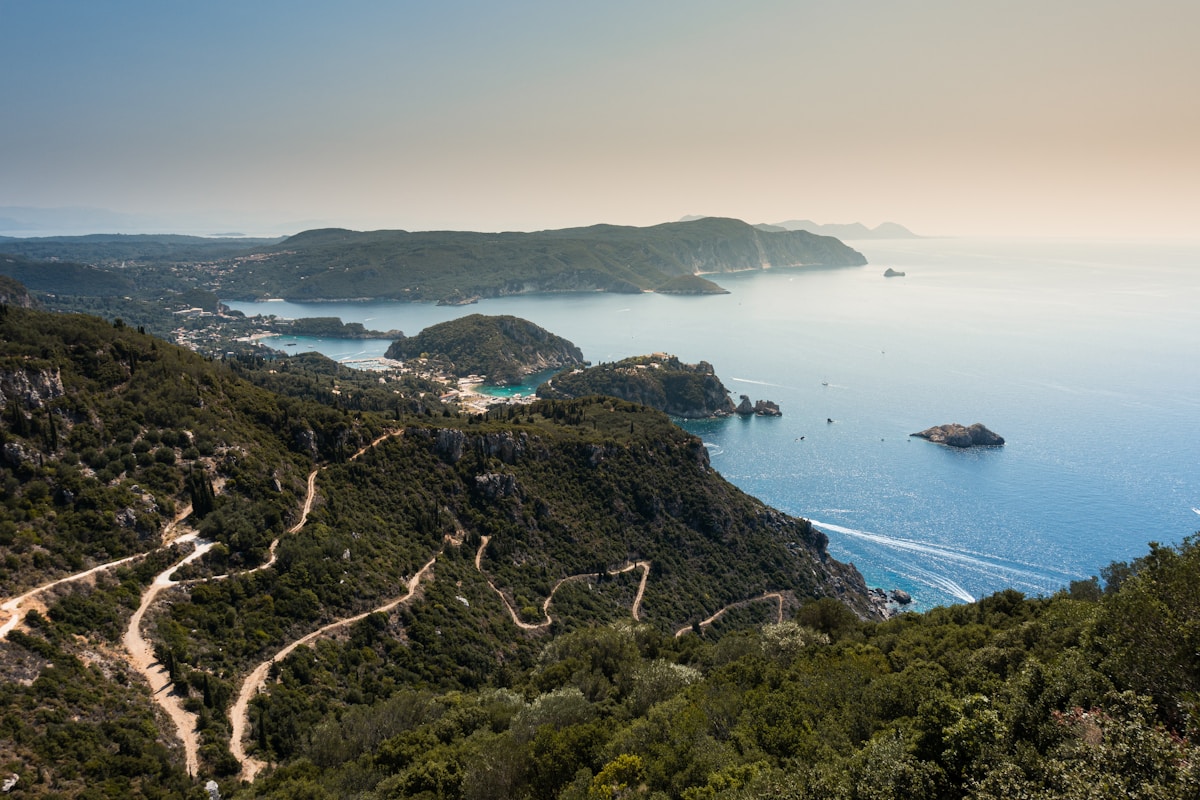
Corfu and Crete are both excellent Greek island choices, but they operate at different scales and deliver different things. Corfu is a single, comprehensible island with a beautiful capital and good beaches. Crete is effectively a small country - ancient civilisations, mountain gorges, four distinct coastal areas, and more archaeological sites than most nations.
Quick Verdict
| Category | Corfu | Crete |
|---|---|---|
| Ancient history | ★★★ | ★★★★★ |
| Medieval/Venetian history | ★★★★★ | ★★★★ |
| Beach variety | ★★★★ | ★★★★★ |
| Wild beaches | ★★★ | ★★★★★ |
| Capital city | ★★★★★ | ★★★★ |
| Size / depth for long trips | ★★★ | ★★★★★ |
| Family-friendly | ★★★★★ | ★★★★ |
| Budget value | ★★★★ | ★★★★ |
| Ease of getting around | ★★★★ | ★★★ |
Go to Corfu for a manageable, beautiful island with a UNESCO capital, Venetian architecture, good family beaches, and a week-long holiday without needing to plan logistics carefully. Go to Crete for the deepest, most varied Greek island experience - ancient Minoan history, mountain gorges, wild south coast beaches, and enough to fill two weeks without repetition.
History and Culture
Corfu
Corfu Town (Kerkyra) is a UNESCO World Heritage Site and one of the finest towns in the Mediterranean. The old town’s Venetian influences are evident everywhere: the Liston arcade (modelled on the Rue de Rivoli), the Two Venetian Fortresses (Old and New), the narrow lanes called kantounia, and the distinctive 18th-century apartment buildings with shuttered windows. The Venetians ruled Corfu for four centuries (1386–1797), followed by the French and then the British - the cricket pitch on the Esplanade and the ginger beer tradition date from British rule.
The Corfu Museum of Asian Art (housed in the Palace of St Michael and St George on the Esplanade) is unexpectedly excellent - a significant collection of Asian art brought by a Corfu-born British diplomat.
Crete
Crete’s history goes back further than almost anywhere in Europe. The Minoan civilisation flourished here from approximately 2700 to 1100 BC - the first advanced European culture, predating classical Greece by a thousand years. The Palace of Knossos (near Heraklion) is the most important Minoan site in the world; entry is approximately €15 as of 2026, and the restored palace includes the famous throne room and fresco reproductions. The Heraklion Archaeological Museum holds the original Minoan artefacts, including the Phaistos Disc.
Beyond the Minoans: Venetian Chania has one of the most beautiful old harbours in the Mediterranean; the lighthouse, the domed Turkish mosque, and the coloured warehouse frontages are among the most photogenic views in Greece. Rethymno’s old town is another Venetian masterpiece. The Byzantine churches scattered across the island are numerous and often extraordinary.
Beaches
Corfu
Corfu has dozens of beaches covering all types:
- Paleokastritsa: The island’s most famous - six coves in a bay of extraordinary blue-green water, backed by forested hills. Very crowded in peak season.
- Glyfada: The largest sandy beach on the west coast, well-organised.
- Canal d’Amour (Sidari): Unique sandstone rock formations and channels.
- Agios Gordios: A long, relaxed west coast beach with good tavernas.
- Avlaki: A quieter pebble beach in the northeast.
- Halikounas: A sand spit beach backed by a lagoon - good for kite-surfing.
The east coast beaches (Benitses, Moraitika, Agios Georgios South) are calmer and better for families.
Crete
Crete has the most varied beach landscape of any Greek island:
- Elafonisi: A pink-sand beach and lagoon near the southwest tip - one of Greece’s most beautiful. Shallow and good for children. Very busy in season.
- Balos: A dramatic lagoon accessible by boat from Kissamos - shallow turquoise water and white sand.
- Preveli: A palm-lined freshwater river flowing into the Libyan Sea - genuinely unique.
- Vai: Europe’s largest natural palm grove behind a beach on the northeast coast.
- Falassarna: A wide, sandy west-coast beach with sunset views.
- Matala: Famous for the Roman-era cave dwellings and 1970s hippie history.
- Seitan Limania: A hidden navy-blue inlet accessible by a steep path - extraordinary colour.
- Agiofarago: A remote south-coast beach accessible only on foot or by boat.
Verdict: Crete for beach variety and quality. Corfu for ease of access and family-friendly organisation.
Food
Corfu has a distinct cuisine shaped by Venetian influence - more olive oil sauces, more robust flavour combinations than mainland Greece. Sofrito (veal in white wine and garlic sauce) is the island’s signature dish. Bourdeto (fish in spicy sauce) and pastitsada (pasta with rich meat sauce) are other local specialities. The Corfu olive oil is excellent.
Crete has one of the strongest regional food traditions in Greece - often cited as the purest Mediterranean diet. Dakos (barley rusk topped with tomatoes and mizithra cheese), lamb with wild greens, apaki (smoked cured pork), Cretan olive oil (frequently winning international competitions), graviera cheese, and local wines from the Dafnes and Peza appellations. The village tavernas in the Cretan interior serve food traditions unchanged for centuries.
Cost Comparison
| Category | Corfu | Crete |
|---|---|---|
| Midrange hotel (per night) | €60–160 | €60–170 |
| Villa (per week) | €600–2,000 | €700–2,500 |
| Dinner per person | €20–40 | €20–40 |
| Car hire (per day) | €35–65 | €30–60 |
| Major site entry | €8–12 | €10–20 |
Both islands are in a similar price bracket. Crete has slightly higher site entry costs (Knossos is expensive relative to Greek site prices generally). Car hire is slightly cheaper in Crete.
Accommodation
Corfu:
- Ikos Dassia - 5-star all-inclusive, Dassia Bay, €350+/night
- Kontokali Bay Resort & Spa - 5-star, private beach, north-east coast, €200–450/night
- Bella Venezia Boutique Hotel - midrange boutique, Corfu Town centre, €90–160/night
- Fundana Villas - rural guesthouse in the interior, €80–130/night
Search all Corfu hotels on Booking.com
Crete:
- Domes Noruz Chania - 5-star, €400+/night
- Avra Imperial Kolymvari - 5-star all-inclusive, €280+/night
- Kyriakos Hotel Chania - midrange, Old Town, €80–150/night
- Lato Boutique Hotel Heraklion - midrange, Heraklion, €85–160/night
Search all Crete hotels on Booking.com
Getting Around
Corfu: Small enough to drive across in under an hour. The KTEL bus network connects major villages and resorts from Corfu Town. A car or scooter opens the island fully. Rental from approximately €35/day.
Crete: Requires more planning. The north coast highway (E75) runs the length of the island and is fast. Getting to south coast beaches requires driving mountain roads. The KTEL bus connects north coast towns and some south coast villages, but many of the best beaches require a car or local taxi. See our car rental guide for Greece.
Getting There
Corfu: Charter flights from UK airports April–October (Jet2, TUI, easyJet, BA). Year-round via Athens. Ferry from Igoumenitsa (mainland) in 1.5 hours.
Crete: Charter flights to both Heraklion and Chania April–October. Year-round via Athens. Overnight ferry from Piraeus to Heraklion (7–8 hours) or Chania (8–9 hours) - an economical option for travellers who enjoy overnight ferries.
Our Verdict
Corfu for a classic 7-day Greek island holiday: beautiful capital, good beaches, easy navigation, and a relaxed atmosphere. It’s the island that delivers exactly what most people imagine from Greece - without surprises.
Crete for a longer trip (10–14 days) with more depth, more history, more beach variety, and the best regional food in Greece. It’s the island that keeps giving the longer you stay.
If you’re a first-time Greece visitor with a week, Corfu delivers more per day because it’s manageable. With 10+ days or a second visit to Greece, Crete is the clear winner.
Full island guides: Corfu and Crete.
Search flights to Greece across multiple airlines in one place. Pick up a Greece eSIM before you fly - keeps you connected without roaming charges. Sort out travel insurance for Greece before you leave.
See Also
- Corfu Island Guide - full guide to Corfu’s beaches, villages, and transport
- Crete Island Guide - Heraklion, Chania, and the best of the island
- Where to Stay in Corfu - Old Town vs beach resorts vs north coast
- Where to Stay in Crete - Heraklion vs Chania vs Rethymno
- Best Greek Islands Guide - how all of Greece’s islands compare
- Kefalonia vs Zakynthos - comparing the two Ionian alternatives
- Rhodes vs Crete - Crete vs Greece’s other large island
- Corfu vs Zakynthos - the other Ionian comparison
- Which Greek Island Should You Visit? - the full decision guide
Plan Your Trip
✈️ Book your flights to Greece 🛡️ Get travel insurance 📱 Stay connected with an eSIM 🚗 Rent a car