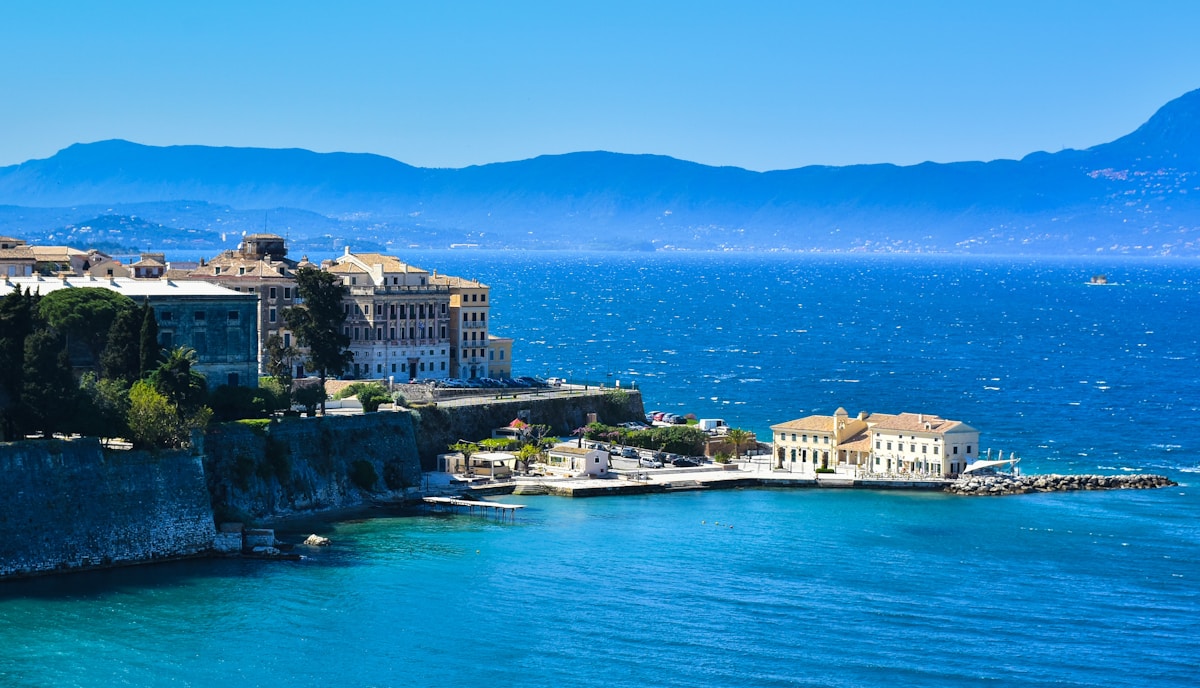
Corfu Travel Guide: UNESCO Forts, Liston & Paleokastritsa
Corfu Old Town UNESCO forts, Liston arcades, Paleokastritsa bay, and the most architecturally rich history of any Greek island: with good beaches.
Guides for Corfu
Corfu has a history unlike any other Greek island. Venetian for four centuries (1386–1797), then briefly French, then British (1815–1864) before joining Greece - the architectural result is extraordinary. The Old Town is the most intact Venetian urban fabric in the Ionian Islands, a UNESCO World Heritage Site that feels genuinely like a small Italian city transplanted to the Adriatic. The island also has exceptional beaches on every coast, a developed food scene, and terrain that ranges from the flat resort south to the lush, wooded hills of the north.
Getting There from Athens
Flight: Domestic flights from Athens to Corfu (Ioannis Kapodistrias Airport, CFU) take approximately 55 minutes. Fares start from approximately €40 with Aegean Airlines or Sky Express; book ahead for shoulder season deals. The airport is 2km from Corfu Town - taxi approximately €10–12, bus approximately €1.50.
Ferry: The most practical route is not from Athens but from the mainland port of Igoumenitsa, a 1.5-hour crossing from approximately €10. From Athens by car or bus, you drive/travel to Patras and take an overnight ferry (approximately 6–7 hours) from approximately €25 deck class. Direct ferry from Piraeus (Athens) is also available but takes 11+ hours.
Top 5 Beaches
Glyfada: The island’s best all-rounder - a wide arc of golden sand on the west coast backed by low cliffs, with clear water and reliable beach facilities. Gets busy but never feels as congested as the south coast resorts. Good bus connection from Corfu Town (approximately €2).
Paleokastritsa: Not one beach but a series of small coves surrounded by steep wooded hillsides, with extraordinary water clarity and a Byzantine monastery on the headland above. The most scenic setting on the island. Arrive before 9am or after 4pm to avoid the worst of the summer crowds.
Porto Timoni: A double-coved beach accessible only by a 45-minute walk from Afionas village on the northwest coast - two crescents of pebble and sand separated by a narrow headland, with no development and no vehicle access. One of the most beautiful beaches in the Ionian Islands.
Canal d’Amour, Sidari: Sandstone rock formations carved by the sea into channels and arches on the north coast - distinctive geology unlike anything else on Corfu. The swimming area between the rocks is sheltered and clear. Crowded in high summer but worth the trip.
Issos (Halikounas): A long, undeveloped beach on the southwest coast backed by Korission Lagoon - a protected wetland that attracts flamingos and migratory birds. Windsurfing conditions are good on the lagoon side; the sea beach is exposed but dramatic. Far less visited than the west coast beaches.
Corfu Old Town
The old town occupies a peninsula flanked by two Venetian fortresses. Between them, the street grid survives largely intact: the Liston arcade (modelled on the Rue de Rivoli, built during French occupation), the Spianada square, narrow lanes called kantounia, and dozens of small Venetian churches.
Old Fortress (Palaio Frourio): Entry €6 adult (as of 2026), open 8am–8pm daily in summer. Built on a naturally defensible promontory, connected to the town by a drawbridge. Good views from the lighthouse tower.
Museum of Asian Art: An unexpectedly excellent museum in the former British Residency - 11,000 Japanese, Chinese, and Indian artefacts. Entry €6 adult, open 8am–3pm Tue–Sun.
Paleokastritsa
The most scenic bay on Corfu, combining sea caves, extraordinary water clarity, and a 13th-century monastery (entry free, open 7am–1pm and 3pm–8pm). Local fishermen run trips to the sea caves from the main beach - approximately €15–20 per person.
Best Time to Visit
May and September are the best months for Corfu. In May the island is green from winter rains, temperatures are 22–26°C, and the beaches are uncrowded. September maintains summer warmth with prices dropping and school holiday crowds gone. July and August see heavy package tourism on the south coast; Kavos becomes a party resort with very little of Greece’s character remaining. The north coast remains more bearable in peak season.
Where to Stay in Corfu
Corfu Town (Kerkyra) is the best base for first-time visitors: the UNESCO-listed Old Town, best restaurants, and main ferry connections are all walkable. The north coast around Kassiopi suits those wanting quieter beaches; the Paleokastritsa area on the west coast suits day-trippers to the most scenic coastline.
Budget (from approximately €50–85/night)
Hotel Konstantinoupolis in Corfu Town occupies a handsome neoclassical building right on the Old Port waterfront. Rooms are basic but the position is exceptional and the building has real character. From approximately €60/night as of 2026.
Hotel Arcadion sits near the Spianada, Corfu Town’s main esplanade, with clean and comfortable air-conditioned rooms in a central location. It is a reliable, no-frills choice well placed for the Old Town lanes and the morning market. From approximately €55/night as of 2026.
Guesthouses in the Old Town are available through various owners offering rooms in Venetian-era buildings. Standards vary, but the best deliver character and location at budget prices. From approximately €65/night as of 2026.
Mid-range (from approximately €110–170/night)
Bella Venezia is a restored neoclassical mansion a short walk from the Old Fortress in Corfu Town. The hotel keeps a quiet garden and serves a good breakfast; rooms in the original building have high ceilings and period detail. From approximately €125/night as of 2026.
Cavalieri Hotel occupies three floors of a converted Venetian mansion on the Liston, the elegant colonnaded street facing the Spianada. The rooftop bar has some of the finest views in Corfu Town. From approximately €145/night as of 2026.
Fundana Hotel in the hills above Corfu Town, around 10 kilometres from the centre, offers a quieter base in a restored country house with pool. Good for visitors with a hire car who want to avoid town centre noise. From approximately €115/night as of 2026.
Luxury (from approximately €280/night)
Domes Miramare Corfu near Moraitika sits on a clifftop with its own private beach, multiple infinity pools, and a spa. It is among the best resort hotels in the Ionian Islands and consistently rated well for service. From approximately €400/night in peak season as of 2026.
Grecotel Corfu Imperial occupies a private peninsula at Kommeno, about 10 kilometres north of Corfu Town. Multiple pools, several restaurants, and extensive gardens make it a self-contained luxury base. From approximately €320/night as of 2026.
Search hotels in Corfu on Booking.com
Where to Eat
Rouvas (Corfu Town, Guilford Street): A traditional lunch taverna with no menu - the day’s dishes are displayed in pots. Corfiot classics: pastitsada, sofrito, bianco fish stew. Approximately €12–20 per person. Opens at noon, closes when the pots run out. No reservations; arrive early.
Etrusco (near Kato Korakiana, 18km from Corfu Town): The island’s most acclaimed restaurant - fine-dining Corfiot cuisine with Italian influences, set in a restored 17th-century mansion with a courtyard garden. Approximately €65–90 per person including wine. Book weeks ahead in season; consistently ranks among the best restaurants in Greece.
Day Trip: Paxos
A tiny island 45 minutes south of Corfu by hydrofoil - just 10km long with no cars in the villages, olive groves covering the interior, and sea caves on the west coast (including the famous Blue Caves of Antipaxos). Day trips run from Corfu Town approximately €45–60 per person including boat. Antipaxos, a further 15 minutes south, has the clearest blue water in the Ionian Sea.
Getting Around
Buses (KTEL Corfu) run from the terminal near the New Port to most villages and beach areas - approximately €1.50–3 per journey. Taxis from Corfu Town to Paleokastritsa cost approximately €35–40. Car hire gives the most flexibility: approximately €35–60/day for a small car. The island’s road network is good by Greek island standards.
Book Corfu tours, sailing trips, and Old Town walks with GetYourGuide.
See Also
- Corfu Day Trips - the best excursions from Corfu with transport and prices
- Things to Do in Corfu - the Old Town, Paleokastritsa, and the best beaches
- Best Beaches in Corfu - Paleokastritsa, Glyfada, Canal d’Amour, and Sidari
- Restaurants in Corfu - Corfiot specialties and the best tavernas
- Best Tours in Corfu - Old Town walking tours, boat trips, and quad adventures
- Where to Stay in Corfu - Corfu Town vs. beach resorts
- Corfu vs Crete - Ionian vs Aegean island comparison
- Corfu vs Zakynthos - Ionian island head-to-head
- Zakynthos Travel Guide - the other major Ionian island to the south
- Lefkada Travel Guide - the Ionian island accessible by road
- Greek Island Ferry Guide - ferries to and from Corfu
- Greece Car Rental Guide - essential for exploring Corfu’s villages
Frequently Asked Questions
- Is Corfu worth visiting?
- Yes - Corfu has one of the most beautiful old towns in the Mediterranean, a UNESCO World Heritage Site, and beaches that range from busy resort strips to near-empty coves. The island is more cosmopolitan than most Greek islands, with a strong Venetian architectural heritage and a well-developed tourist infrastructure. It works for both independent travel and package holidays.
- When is the best time to visit Corfu?
- May–June and September–October are ideal - warm enough to swim, manageable crowds, and prices well below peak season. July–August is peak season: the island gets very busy (especially in the south, around Kavos), and prices rise sharply. The island is essentially closed October–April.
- How do I get to Corfu?
- Ferry from Igoumenitsa on the mainland (approximately 1.5 hours, from €10 - shortest crossing). Ferry from Patras (approximately 6–7 hours overnight). Domestic flight from Athens (approximately 55 minutes, from €40 with Aegean or Sky Express). Corfu Airport (CFU) is 2km south of Corfu Town.
- What is Corfu Old Town like?
- Corfu Old Town (Kerkyra) is a UNESCO World Heritage Site and the most intact Venetian town in Greece. The Liston arcade, the two Venetian forts, the narrow Venetian lanes (kantounia), and the churches give it a distinctly Italian character. It is relatively walkable - the old town peninsula takes about 45 minutes to cross.
Book an experience
Top experiences in Corfu
Explore the best tours and activities in Corfu, with instant confirmation and free cancellation on most bookings.