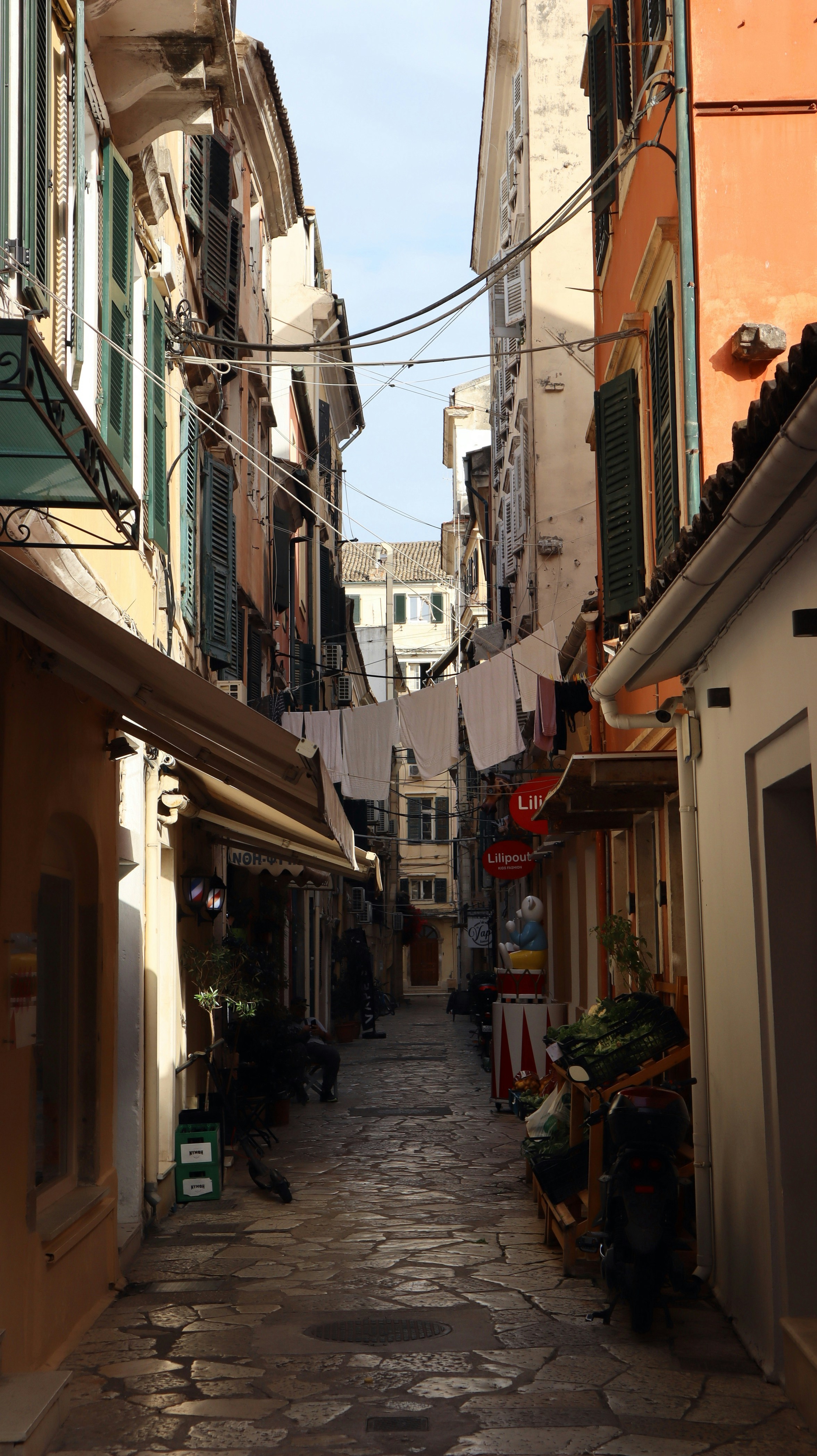
Corfu sits in the Ionian Sea and was shaped by nearly four centuries of Venetian rule - the architecture, the cuisine, and the pace of life all reflect that history. The island is greener than the Cyclades and Dodecanese, with hills covered in olive trees, and the Old Town is a UNESCO World Heritage Site. Prices listed are approximate as of 2026.
Top Tours in Corfu
| Tour | Duration | Price (from) | Group Size | Highlights |
|---|---|---|---|---|
| Paxos, Antipaxos & Blue Caves Day Cruise | 10 hrs | from €55/person | Up to 30 | Emerald waters of Antipaxos, Blue Caves sea grottos, Gaios town |
| Paleokastritsa Sea Caves Boat Trip | 3 hrs | from €46/person | Up to 12 | Kavos Cave sea arch, Blue Lagoon, Paradise Beach swim stop |
| Corfu Old Town Walking Tour | 2 hrs | from €20/person | Small group | Venetian Liston arcade, Old and New Fortresses, Campiello quarter |
| Full-Day Corfu Island Boat Tour | 6 hrs | from €55/person | Up to 20 | Paleokastritsa, Mouse Island, Benitses coastal villages |
| Corfu Private Customised Tour | 6 hrs | from €120/person | Private | Flexible itinerary, Achilleion Palace, Mon Repos, Kassiopi |
Browse all Corfu tours → GetYourGuide
Explore Corfu Old Town (Kerkyra)
Corfu Old Town is compact enough to cover on foot in a morning, but most visitors find themselves staying longer. The key reference points:
The Spianada (Esplanade): One of the largest squares in Greece - a long green space between the Old Fortress and the Liston arcade. The Liston itself is a colonnaded walkway built by the French during the Napoleonic occupation (1807–1814), modelled on the Rue de Rivoli in Paris. Sitting at one of the cafes here with a coffee and the fortress view is an unavoidable pleasure.
Old Fortress (Palaio Frourio): The Venetian fortress on the eastern promontory, built on two rocky peaks separated from the town by an artificial moat. The views from the top cover the entire town and the Albanian coast. Entry approximately €6 as of 2026, open daily.
New Fortress (Neo Frourio): The second Venetian fortress, less visited than the Old and arguably more atmospheric - fewer tour groups, interesting passageways, and good views over the rooftops. Entry approximately €4.
The Lanes (Campiello): The maze of narrow streets between the two fortresses is the best part of the Old Town for wandering - four-storey buildings with washing lines across alleyways, small Orthodox churches, local bakeries, and the occasional surprise square. Get lost deliberately.
Church of Saint Spyridon: The patron saint of Corfu is venerated at this church in the heart of the Old Town. His silver casket is carried through the streets four times a year during major religious festivals. Worth visiting simply for the painted ceiling and the constant local activity around the church entrance.
Visit Achilleion Palace
The Achilleion was built in the 1890s for Empress Elisabeth of Austria (Sisi) as a retreat - she named it after Achilles, whose statues dominate the gardens. After her assassination in 1898, Kaiser Wilhelm II of Germany bought it and used it as a summer residence until World War I. It subsequently served as a casino (famously featured in the 1981 Bond film For Your Eyes Only) and is now a museum.
The gardens, positioned on a hill above Gastouri village in the centre of the island, overlook the sea on three sides - the views are exceptional. Entry approximately €10 as of 2026, open daily. Allow 1.5–2 hours. The interiors are moderately interesting; the gardens and the two Achilles statues (one seated, one triumphant) are the main draws.
Day Trip to Paleokastritsa
Paleokastritsa, on the north-west coast, is the most scenically dramatic part of Corfu - a series of small coves with turquoise water framed by olive-covered headlands and cliffs. The 13th-century monastery sits on the headland above the main beach; entry is free but modest dress is required.
The best way to see the coastline is by small boat, available for hire at the main beach (approximately €15–25 per hour, negotiable). The sea caves accessible by boat are the highlight - several are large enough to enter.
The main beach gets very busy in summer, particularly between 11am and 2pm. Visit early morning for the best light and fewer people.
Take a Boat Trip to Pontikonisi
Pontikonisi (Mouse Island) is a tiny islet south of Corfu Town, visible from the airport runway, topped by a Byzantine chapel and cypress trees. The image of the island is closely associated with Corfu - it appears on postcards and is claimed to be the ship turned to stone by Poseidon in the Odyssey.
Boats run from Kanoni, south of Corfu Town (approximately €2–3 return). The crossing takes about 5 minutes. There is not much to do on the island itself - the chapel can be entered - but the setting is beautiful and photographs well from the hillside at Kanoni above.
Sea Kayak the Coastline
The Corfu coastline - particularly the north-west, around Paleokastritsa and Liapades, and the north-east along the Albanian Riviera coast - is excellent kayaking territory. Several operators offer guided half-day and full-day tours with sea cave exploration. Prices run approximately €40–65 per person as of 2026 for a half-day guided trip including equipment.
The north-east coast has some of the clearest water on the island and is significantly calmer for paddling than the more exposed west side.
Visit the Museum of Asian Art
One of the more unexpected attractions on a Greek island - the Corfu Museum of Asian Art holds one of the most important collections of Asian art in Europe. It was assembled largely by Gregorios Manos, a Greek diplomat, in the early 20th century, and donated to the Greek state. The collection covers Chinese, Japanese, Korean, Indian, Persian, and Egyptian pieces spanning millennia.
Located in the Palace of St Michael and St George on the north end of the Spianada. Entry approximately €6 as of 2026, closed Mondays.
Explore the North of the Island
The north of Corfu - around Kassiopi, Acharavi, and Roda - is less crowded than the resort areas closer to Corfu Town. Kassiopi is a fishing village with a Byzantine castle, a harbour full of small boats, and several good restaurants. Acharavi and Roda have long, sandy beaches with shallow water, good for families.
The drive north through the village of Troumpeta and along the coast offers good views across to Albania - a hire car is the easiest way to do this, and you can compare rental options for Corfu before you fly - on clear days the distance is approximately 2km at the narrowest point.
Walk the Corfu Trail
The Corfu Trail runs approximately 220km from the south of the island to the north, taking 8–10 days to complete in full. Individual sections can be walked in half or full days without committing to the whole route. The trail passes through olive groves, mountain villages, and along coastal paths inaccessible by road.
Detailed maps and waymarking information are available at the Corfu Trail website. No permit is required. The best seasons for walking are April to June and September to October, avoiding the summer heat.
For the full Corfu island overview including where to stay, getting there, and what things cost, see our Corfu travel guide. Comparing islands? See our Corfu vs Crete and Corfu vs Zakynthos guides. For organised tours, see our best tours in Corfu.
Explore Corfu with guided tours and excursions at GetYourGuide.
Search hotels in Corfu on Booking.com
See Also
- Corfu Day Trips - the best excursions from Corfu with transport and prices
- Corfu Travel Guide - island overview with where to stay, getting there, and the Venetian Old Town
- Best Beaches in Corfu - Paleokastritsa, Glyfada, Canal d’Amour, and hidden coves
- Restaurants in Corfu - Corfiot specialties and the best tavernas by area
- Best Tours in Corfu - Old Town walking tours, boat trips, and island excursions
- Where to Stay in Corfu - Old Town boutique hotels vs beach resort areas
- Corfu vs Zakynthos - comparing the two most popular Ionian islands
- Lefkada Travel Guide - the Ionian island accessible by bridge from the mainland