Kefalonia has more depth than most Greek islands. The beaches get the headlines, but the island’s real character is inland - in ancient sea caves, Venetian harbours, mountain forests, and small villages that resisted the 1953 earthquake and kept their original character. All prices are approximate as of 2026.
Top Tours in Kefalonia
| Tour | Duration | Price (from) | Group Size | Highlights |
|---|---|---|---|---|
| Half-Day Tour: Melissani Lake & Drogarati Cave | 4 hrs | from €35/person | Small group | Underground lake boat ride, stalactite cave, Agia Efimia village |
| Full-Day Island Tour - Melissani, Myrtos & Fiskardo | 8 hrs | from €55/person | Small group | Melissani cave, Myrtos Beach, Venetian Fiskardo, wine tasting |
| Myrtos Beach & Argostoli Half-Day Tour | 5 hrs | from €45/person | Small group | Myrtos clifftop viewpoint, beach time, Argostoli lighthouse walk |
| Melissani Lake Fast-Track Entry Ticket | 1 hr | from €10/person | Self-guided | Skip-the-line lake boat ride in the semi-submerged cave |
| Kefalonia Private Full-Island Tour | 8 hrs | from €150/person | Private | Flexible itinerary, all major highlights, hotel pickup included |
Browse all Kefalonia tours → GetYourGuide
Melissani Cave
Melissani is one of the most unusual natural sites in Greece - a partially collapsed sea cave containing a subterranean lake, where the water glows turquoise-blue in the midday light. The cave roof collapsed in antiquity, leaving a large opening that allows sunlight to penetrate the water and illuminate it from below.
Entry is approximately €7 per adult. The experience involves a short rowing boat ride across the lake, guided and narrated, lasting about 15–20 minutes. The best time to visit is between 11am and 1pm, when the sun is directly overhead and the light effect is at its most dramatic - outside that window the cave is beautiful but the famous glow is muted.
Located 2km north of Sami on the east coast. Car park on site. Expect queues in July and August; arrive at opening time (usually 9am) or just before noon for the light effect with slightly fewer people. Combine with Antisamos beach and Drogarati Cave on the same day.
Drogarati Cave
Drogarati is a dry stalactite cave near Sami, approximately 4km south of Melissani. It is large enough to contain a concert chamber used occasionally for classical music performances - the acoustics are reportedly excellent. Entry approximately €5 per adult as of 2026.
The cave features impressive stalactite and stalagmite formations developed over 150 million years, and the main chamber descends steeply below ground level. The visit takes about 30 minutes. Good lighting installed throughout. Combine with Melissani and Antisamos to fill an east coast day without backtracking.
Assos Village
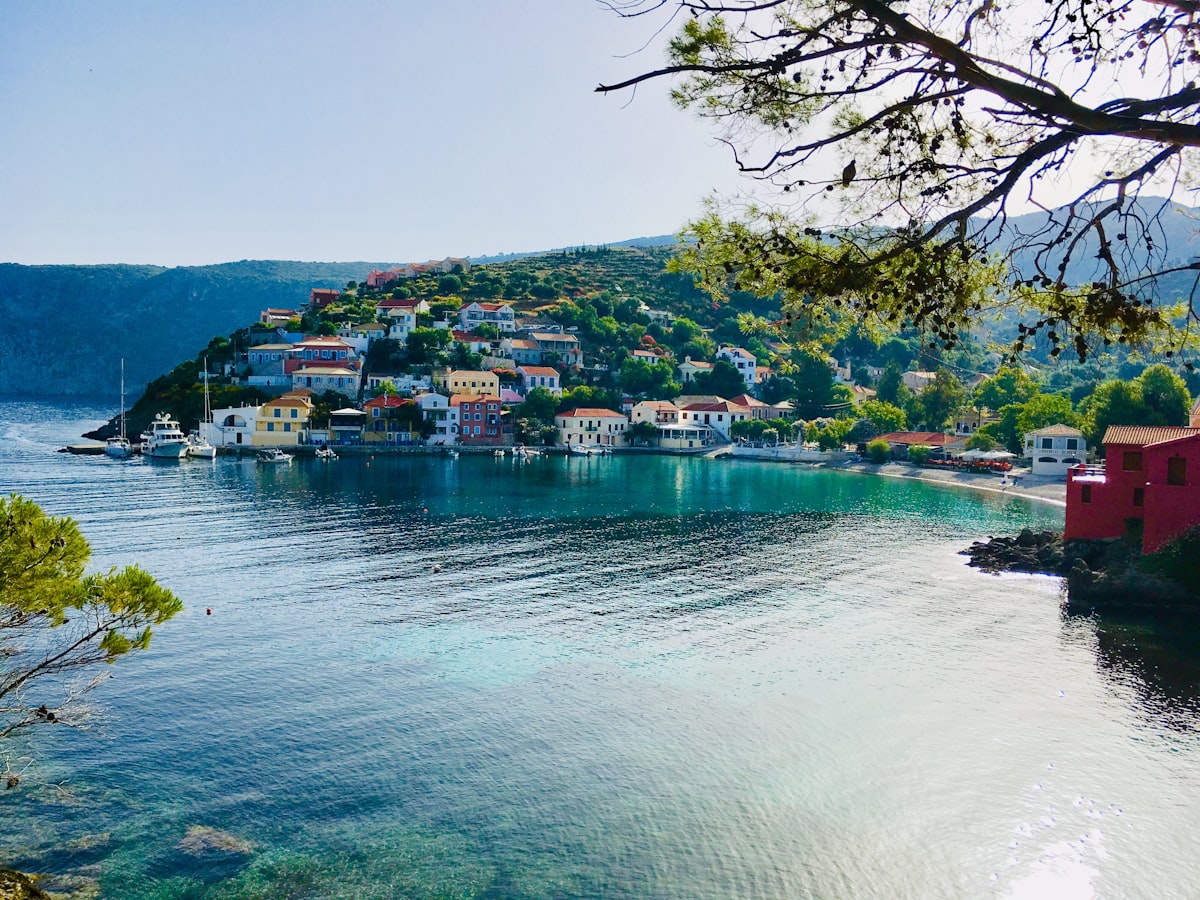
Assos is a small harbour village on the northwest coast, built on a narrow isthmus connecting a wooded peninsula to the mainland. The peninsula is topped by a ruined Venetian fortress. The village survived the 1953 earthquake that destroyed most of Kefalonia and retains a genuine 18th and 19th-century character - colourful houses, a small harbour, pine trees, and a pebble beach.
The walk up to the Venetian castle takes about 30 minutes and gives panoramic views over the bay and coastline. No entry charge. The village has a handful of tavernas and small cafes - To Platanaki by the harbour is well-regarded for simple grilled fish (mains approximately €12–18). No mass tourism infrastructure here; Assos is genuinely quiet.
Best reached by car from Argostoli (35km, about 50 minutes) or as part of a loop drive via Myrtos and Fiskardo.
Fiskardo
Fiskardo is the northernmost village on Kefalonia and the only settlement that survived the 1953 earthquake largely intact. The result is a rare example of pre-earthquake Ionian architecture - pastel-coloured Venetian buildings around a working yacht harbour, no concrete reconstruction visible in the old centre.
The village is busy with yachts and upmarket visitors in summer. Waterfront restaurants include Tassia (known for its cookbook and fresh fish, mains approximately €18–30) and Nicolas (more casual, slightly lower prices). Worth coming for lunch rather than staying the night unless budget is not a concern - accommodation here is at the top end of the island’s price range.
Allow 1.5 hours driving from Argostoli (55km). Seasonal boat connections from Sami make a car-free visit possible. The road north from Assos to Fiskardo is one of the most scenic coastal drives on the island.
Mount Ainos National Park
Mount Ainos, at 1,628m, is the highest point in the Ionian Islands and forms the spine of Kefalonia’s southern half. The National Park protects the endemic Kefalonian fir (Abies cephalonica), a species found almost nowhere else in the world, which covers the upper slopes in dense forest.
A rough road leads from the village of Razata up to the National Park entrance (passable in a standard car in dry conditions, but high clearance is useful). From the park entrance, a hiking trail through the fir forest leads to the summit ridge - approximately 2–3 hours return, moderate difficulty. The views from the top extend to Ithaca, Zakynthos, and on clear days the Peloponnese coast.
No entry fee. Best visited in spring (May–June) when wildflowers cover the lower slopes, or early September before the autumn rains make the road muddy. Take water, as there is no infrastructure on the mountain.
Argostoli
Argostoli, the island capital, is worth at least half a day. The British-built stone bridge (Drapano Bridge) across the lagoon is the longest in Greece. The Korgialenios History and Folklore Museum documents island life before and after the 1953 earthquake - entry approximately €4. The Napier Gardens waterfront and main square are pleasant in the evening.
The produce market on Lithostrato street is the best place to buy Kefalonia’s food specialities: robola wine (the island’s designated white wine grape), Kefalotiri cheese, and thyme honey. The market runs mornings only.
Getting Around
A hire car is essential for reaching most of these sites. Car hire from operators on Lithostrato in Argostoli costs approximately €35–55 per day as of 2026. Organised day tours from Argostoli cover the main cave and village combination - book through GetYourGuide or at agencies in town (approximately €35–55 per person). Taxis from Argostoli to Sami (for the caves) cost approximately €20–25 one way.
For the complete Kefalonia guide including ferry connections, see our Kefalonia travel guide. For beach information - Myrtos, Antisamos, Petani, and Xi - see best beaches in Kefalonia. The Greek Island Ferry Guide covers connections from Patras, Killini, and Ithaca.
Book Kefalonia tours and cave trips through GetYourGuide. Rent a car in Greece - most sites require one. Get an Airalo eSIM for Greece before departure.
Search hotels in Kefalonia on Booking.com
See Also
- Kefalonia Travel Guide - island overview, where to stay, and getting there
- Best Beaches in Kefalonia - Myrtos, Antisamos, Petani, Xi, and Makris Gialos
- Lefkada Travel Guide - the closest Ionian island, connected to the mainland by bridge
- Zakynthos Travel Guide - Shipwreck Beach and loggerhead turtle nesting sites
- Lefkada Travel Guide - the Ionian island connected to the mainland by bridge