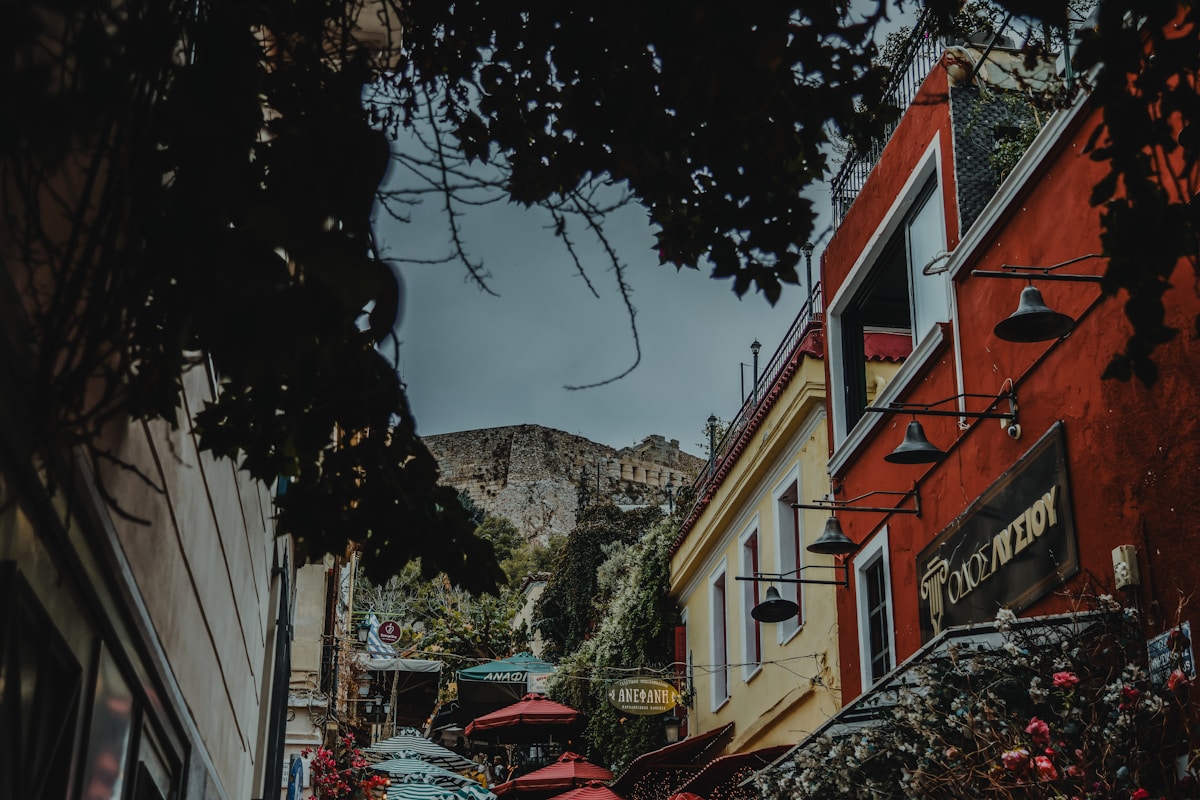
Athens rewards visitors who look beyond the headline sites. The Acropolis deserves its reputation, but the city has ten square kilometres of archaeological material, a museum collection that spans four millennia, and neighbourhoods where ancient ruins sit between coffee shops and street-food stalls. Here are the ten experiences that matter most, with practical details for each.
Top Guided Experiences in Athens
| Tour | Duration | Price (from) | Group Size | Highlights |
|---|---|---|---|---|
| Acropolis Guided Tour | 3 hrs | from EUR 35/person | Small group | Parthenon, Erechtheion, Propylaia with expert commentary |
| Athens Street Food Tour | 3.5 hrs | from EUR 35/person | Small group | Varvakios market, Monastiraki, Psyrri; souvlaki, loukoumades, bougatsa |
| Cape Sounion Half-Day Tour | 5 hrs | from EUR 30/person | Coach | Coastal drive, Temple of Poseidon, sunset views |
| Athens City Walking Tour | 2.5 hrs | from EUR 20/person | Small group | Plaka, Ancient Agora, Monastiraki, key archaeological sites |
| Acropolis Museum + Site Combo | 4 hrs | from EUR 45/person | Small group | Skip-the-line entry, Acropolis Museum (EUR 10), site (EUR 20) |
Browse all Athens tours → GetYourGuide
The Acropolis
The Acropolis is the non-negotiable first stop. The Parthenon, built between 447 and 432 BC, is the most complete surviving example of Classical Greek architecture - and it still stops people in their tracks on first sight. The other buildings on the rock are worth as much time: the Erechtheion with its Caryatid porch, the Temple of Athena Nike, and the Propylaia gateway.
Entry: Approximately EUR 20 standard, EUR 10 reduced (as of 2026). The combined seven-site ticket is approximately EUR 30 and valid for five days - strongly recommended if you plan more than one day of ancient-site visits.
Opening hours: Open daily 8am–8pm in summer (May–October), 8am–5pm in winter (November–April). Hours shift seasonally - check the official website before visiting.
Practical tips: Book tickets online in advance at odysseus.culture.gr to skip the on-site queue. The path up from Dionysiou Areopagitou Street is steep and uneven - wear shoes with grip. The midday heat between June and September is punishing; bring water. The Acropolis Museum at the foot of the hill (EUR 10 entry) should be your first stop if you want context before the site itself.
Ancient Agora of Athens
The Ancient Agora was the civic heart of ancient Athens for over a thousand years - the place where Socrates argued philosophy, where Athenians voted, and where Paul preached. What remains is extensive: the Temple of Hephaestus (the best-preserved ancient Greek temple in existence), the reconstructed Stoa of Attalos (which now houses an excellent museum of daily life objects), the Church of the Holy Apostles, and dozens of foundations across a large, walkable site.
Entry: Approximately EUR 10 standard (as of 2026), included in the combined seven-site ticket.
Opening hours: Daily 8am–8pm in summer. The site is quieter than the Acropolis and often overlooked by visitors who spend all their time on the rock - a mistake.
Insider tip: Enter from the Adrianou Street gate (the main Monastiraki entrance is busier). The Temple of Hephaestus from the terrace above is one of the most quietly impressive views in Athens.
Plaka Walk
Plaka is the oldest continuously inhabited neighbourhood in Athens, climbing the northern slopes of the Acropolis. The streets are narrow, largely car-free, and lined with 19th-century neoclassical houses, Byzantine churches, and the occasional ancient ruin breaking through the pavement. It rewards slow walking rather than ticking landmarks.
The route from Monastiraki Square up through Plaka to Anafiotika - the tiny Cycladic-style enclave built by island craftsmen in the 1800s - is around 30 minutes of walking and passes through several distinct layers of the city’s history. Anafiotika is one of the few places in Athens that genuinely feels removed from the noise of the modern city.
Cost: Free to walk. Expect heavy tourist-trap restaurant pressure along Adrianou Street - save food for the streets to the north and west.
Monastiraki Flea Market
Monastiraki’s main flea market (centred on Ifestou Street and the square itself) runs daily but the serious market is on Sunday mornings, when dealers spread antiques, military memorabilia, records, used books, and general junk across the surrounding streets. It’s chaotic and you have to sort through quantity to find quality - which is part of the appeal.
Even outside Sunday market days, Monastiraki is worth an hour for the street atmosphere, the view up to the Acropolis from the square, and the small Roman Forum ruins a few steps north.
Hours: Daily, Sunday mornings for the full flea market from around 8am.
Cost: Free to browse. Prices on everything are negotiable.
National Archaeological Museum
The National Archaeological Museum on Patission Street is the most important collection of ancient Greek artefacts in the world. The Minoan frescoes from Santorini (Thera), the Antikythera Mechanism (the world’s oldest analogue computer), the Mask of Agamemnon, the Bronze Statue of Poseidon - this is the museum that puts all the archaeological sites into context.
Allocate at least three hours. The prehistoric and Cycladic collections alone are worth a morning. The sculpture halls charting the transition from Archaic to Classical to Hellenistic style are as good a visual history of ancient Greece as you will find anywhere.
Entry: Approximately EUR 15 standard, EUR 8 reduced (as of 2026).
Opening hours: Tuesday–Sunday 8am–8pm in summer, 9am–4pm in winter. Closed Mondays.
Getting there: A 15-minute walk from Omonia Square or Metro Line 1 to Victoria station.
Lycabettus Hill
Lycabettus is the limestone hill that rises 277 metres above sea level in the Kolonaki district - the highest point in Athens and the place to see the entire city spread out below. On a clear day you can see the Saronic Islands and the mountains of the Peloponnese.
The main path up takes 30–40 minutes on foot from the Kolonaki end. There’s also a funicular (approximately EUR 7 return as of 2026) from Plutarchou Street for those who prefer not to walk. The summit has a small café and the chapel of Agios Georgios, and a good outdoor theatre that hosts summer concerts.
Cost: Free to climb on foot. Funicular approximately EUR 7 return.
Best time: One hour before sunset, when the light hits the Acropolis and the city cools slightly.
Athens Street Food Tour
Athens has a strong street-food culture that most visitors miss because they default to the tourist-trap restaurants in Plaka. The essentials:
Koulouri: Sesame-covered bread rings sold from street carts across Athens, particularly around Monastiraki Square and the main shopping streets. Approximately EUR 0.50–0.80 each (as of 2026). Eat them plain or with cheese.
Souvlaki: Pork or chicken skewers served either on a skewer or wrapped in pita with tomato, onion, and tzatziki. Kalamaki (the skewer format) is the Athenian version. Reliable spots include the area around Mitropoleos Street in the centre. Expect approximately EUR 2.50–3.50 per skewer or wrap.
Loukoumades: Greek doughnuts - small, deep-fried, drenched in honey and sesame or other toppings. The area around Monastiraki has several dedicated shops. Approximately EUR 4–6 for a portion (as of 2026).
Spanakopita / Tiropita: Spinach-and-feta or cheese pastry triangles from any bakery (fourno). One of the cheapest and most satisfying things to eat in Athens - under EUR 2 each.
For a structured experience, guided street-food tours of the central market and surrounding streets run approximately EUR 35–55 per person and cover the Varvakios central market, Monastiraki, and Psyrri.
Stavros Niarchos Foundation Cultural Centre (SNFCC)
The SNFCC in the Kallithea district (20 minutes by tram from central Athens) is the city’s most ambitious modern building - a Renzo Piano-designed complex housing the Greek National Opera and the National Library of Greece, set on an artificially created hill with a rooftop park and canal.
The grounds are entirely free to enter and genuinely good: a 210,000 sq metre park with olive groves, Mediterranean garden, children’s playground, and views toward the sea. The rooftop walkway above the main building offers a panoramic view across Athens to Piraeus. In summer, outdoor performances and film screenings run in the park (check the SNFCC website for the programme).
Entry: Free. Tram from Syntagma/Syngrou-Fix approximately EUR 1.40 (as of 2026).
Psyrri Nightlife District
Psyrri, immediately northwest of Monastiraki Square, is the most concentrated area for bars, live music, and late-night eating in central Athens. During the day it’s quiet; from around 9pm it comes alive with local Athenians rather than tourists.
The neighbourhood has a mix of underground rock bars, more polished cocktail spots, and traditional ouzo bars (ouzeries) where the food is as serious as the drink. Taf (The Art Foundation on Normanou Street) combines a courtyard bar with a contemporary art gallery - a good entry point to the neighbourhood. Live rembetika (traditional Greek blues) occasionally plays in some of the older bars.
Budget: Drinks EUR 8–14 per cocktail; draught beer EUR 4–6 (as of 2026). Late kitchen stops are generally better here than Plaka.
Temple of Olympian Zeus
The Temple of Olympian Zeus (Olympieion) is one of the largest temples ever built in the ancient world - begun in the 6th century BC and not completed until the reign of Hadrian in 131 AD. Of the original 104 Corinthian columns, 15 remain standing. One lies on its side where it fell during a storm in 1852.
The site is compact and takes 45 minutes to explore. It’s adjacent to Hadrian’s Arch (free to view from outside) and a 5-minute walk from the Acropolis. Entry is approximately EUR 6 standard as of 2026, or included in the combined seven-site ticket.
Opening hours: Daily 8am–6pm in summer (check seasonally).
Tip: The view from inside the site looking back toward the Acropolis is among the best in central Athens - better than the Acropolis view in the other direction.
For guided tours covering the Acropolis and ancient sites, see our best Athens tours guide. For a full city orientation including where to stay and how to get around, read our Athens travel guide.
Book Athens tours and day trips with GetYourGuide. Pick up a Greece eSIM before you fly - keeps you connected without roaming charges.
Search hotels in Athens on Booking.com
See Also
- Athens Travel Guide - full city guide with accommodation, transport, and neighbourhood overview
- Best Restaurants in Athens - where to eat across Athens’s neighbourhoods
- Day Trips from Athens - Sounion, Delphi, Nafplio, and Aegina
- Acropolis Guide - the Parthenon, Erechtheion, and Propylaia in detail
- Cape Sounion Guide - the Temple of Poseidon overlooking the Aegean
- Best Athens Tours - guided Acropolis tours, food tours, and day trips
- Day Trips from Athens - organised excursion options
- 2-Day Athens Itinerary - a condensed best-of Athens visit
- 3-Day Athens Itinerary - including a day trip from Athens
- Where to Stay in Athens - the best neighbourhoods by budget