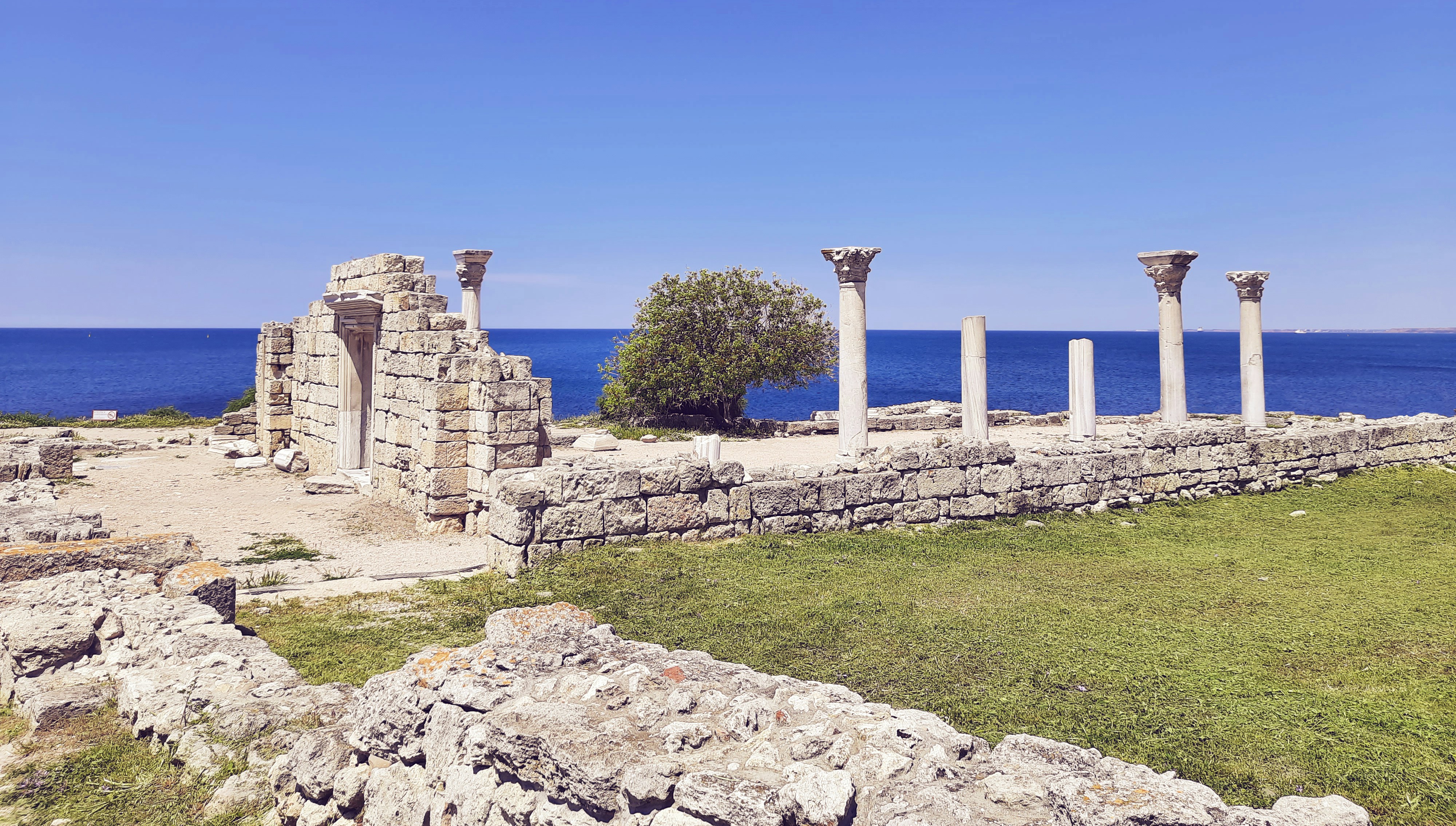
Delos is one of the most significant archaeological sites in the Aegean - a tiny, uninhabited island at the centre of the Cyclades that was, for centuries, one of the holiest and wealthiest places in the ancient Greek world. In mythology, Apollo and Artemis were born here; in practice, the island was a major religious sanctuary, a commercial hub, and briefly in the 2nd to 1st centuries BC the busiest port in the Mediterranean. Today it holds a UNESCO World Heritage site, visited in a day from Mykonos, 9km to the north.
The island is entirely archaeological - no hotels, no restaurants beyond a small cafe at the museum, no permanent residents. The ruins spread across a compact area and the Aegean views from the summit of Mount Kynthos add a landscape dimension to the historical interest.
History of Delos
Mythological foundation: Apollo, god of music, arts, and prophecy, and Artemis, goddess of the hunt, were said to have been born on Delos - the only fixed land in a floating sea, granted stability by Zeus. The myth underpinned the island’s sacred status and drew religious pilgrims and political delegations from across Greece.
The Sanctuary period: From at least the 8th century BC, Delos functioned as a major pan-Hellenic sanctuary. The Athenians conducted periodic purifications of the island - removing graves and forbidding births and deaths on sacred ground, which is why Delos today has no indigenous population.
Commercial peak: After the Roman conquest of Greece, Delos was declared a free port in 166 BC and became the central slave market of the eastern Mediterranean, with estimates of 10,000 slaves sold per day at peak operations. The island’s population reached approximately 30,000 - remarkable for an island less than 5km long. Merchants from across the Mediterranean and beyond - Greeks, Romans, Syrians, Italians, Egyptians - built their own temples and quarters here.
Destruction: In 88 BC, the forces of Mithridates VI of Pontus (at war with Rome) sacked Delos, killing approximately 20,000 inhabitants and enslaving the rest. The island never fully recovered and was gradually abandoned over the following century.
Modern excavation: Systematic French excavation has continued since 1873 under the École française d’Athènes, making Delos one of the most extensively excavated sites in the Aegean.
Key Sites on the Island
Terrace of the Lions: The most famous image of Delos - a row of marble lions, originally numbering perhaps 16 but now reduced to 5 originals, which once flanked the Sacred Way approaching the sanctuary. They were dedicated by the people of Naxos around 600 BC. The originals are in the Delos Museum (replicas stand on the terrace). Dating from the Archaic period, the lions show Egyptian artistic influence - unusual in the Aegean.
The Sanctuary of Apollo: The central complex of the site, containing three temples to Apollo constructed at different periods. The foundations of the main temples (the Temple of the Delians, the Temple of the Athenians, and the Porous Temple) are visible in an overlapping complex that reflects centuries of construction. Fragments of an enormous kouros (Archaic male statue) - originally among the largest ever made - stand in the sanctuary.
The Sacred Lake: Now drained (17th century, due to malaria risk) but its outline is visible - the lake was sacred as the birthplace of Apollo. A palm tree stands at its edge, referencing the mythological story of Leto grasping a palm tree during the birth.
The Theatre Quarter: On the south slope of Mount Kynthos, a dense residential and commercial area with mosaic floors intact in several houses. The House of the Dolphins and the House of the Masks contain some of the finest Roman-period mosaics in Greece - intricate floor designs using coloured marble tesserae, showing dolphins, theatrical masks, and Dionysiac scenes. These houses are the most visually impressive domestic remains on the island.
Mount Kynthos: The highest point of Delos at 113m - a 30-minute climb on a stepped path from the theatre area. The summit has remains of a sanctuary to Zeus and Athena and an unobstructed 360-degree view of the Cyclades: Mykonos to the north, Naxos to the south, Paros and Syros to the west. The view alone justifies the climb.
The Delos Museum: On site, holding the original Terrace Lions, the mosaic finds too fragile to leave in situ, sculptural fragments, and artefacts from the sanctuary and residential areas. Entry included in the site ticket.
Practical Information
Getting there: Ferries from Mykonos Old Port, approximately 30 minutes. Departures typically at 9am, 10am (and sometimes later in peak season). Return boats from Delos at 12pm, 1pm, and 3pm. Important: check current return boat times carefully and do not miss the last departure - there is no accommodation on the island and no way to leave after the boats stop. Ticket prices approximately €20–25 return as of 2026, purchased at the dock or from agencies in Mykonos.
From Paros and other islands: Less frequent boats also run from Paros in peak season - check operators in Parikia for summer schedules. A day trip from Paros is possible but involves an earlier start.
Entry: Approximately €12, paid at the ticket office on the island.
Opening hours: 9am–3pm daily. Closed Mondays. Last entry 2:30pm. The site and museum close at 3pm - the last return ferry aligns with this. Note: no shading, no water available within the site beyond the cafe near the museum. Bring water from Mykonos.
Heat: Delos is fully exposed - a low, flat island with no natural shade except the museum building. Summer visits in July and August are hot by 11am. Wear sun protection; start walking the outer parts (Mount Kynthos, the Theatre Quarter) before the midday heat if possible.
Guides: Licensed guides meet the morning boats from Mykonos and offer 1.5–2 hour tours of the main site (approximately €15–25 as of 2026). Without a guide or audio guide, the ruins require background reading to make sense of - the signage on site is limited.
Delos is reached from Mykonos - for the full island guide, see our Mykonos travel guide. For things to do on Mykonos beyond Delos, see the Mykonos things to do guide. Day trips to Delos are also possible in peak season from Paros - see the Paros travel guide. For a broader Cyclades overview including island hopping routes, see the Cyclades guide and Greek island hopping guide. Choosing between nearby islands? See our Santorini vs Mykonos comparison.
Book Delos tours with GetYourGuide. Pick up a Greece eSIM before you fly - keeps you connected without roaming charges.
Search hotels in Delos, Greece on Booking.com
See Also
- Mykonos Travel Guide - the departure point for Delos day trips
- Things to Do in Mykonos - Mykonos activities beyond the Delos boat trip
- Paros Travel Guide - alternative departure point for Delos in peak season
- Cyclades Guide - the Cyclades island group in which Delos sits at the centre
- Santorini vs Mykonos - deciding between the two most visited Cyclades islands
- Greek Island Hopping Guide - Mykonos and Delos as part of a Cyclades circuit
- Greek Island Ferry Guide - ferries to Mykonos from Athens and other islands