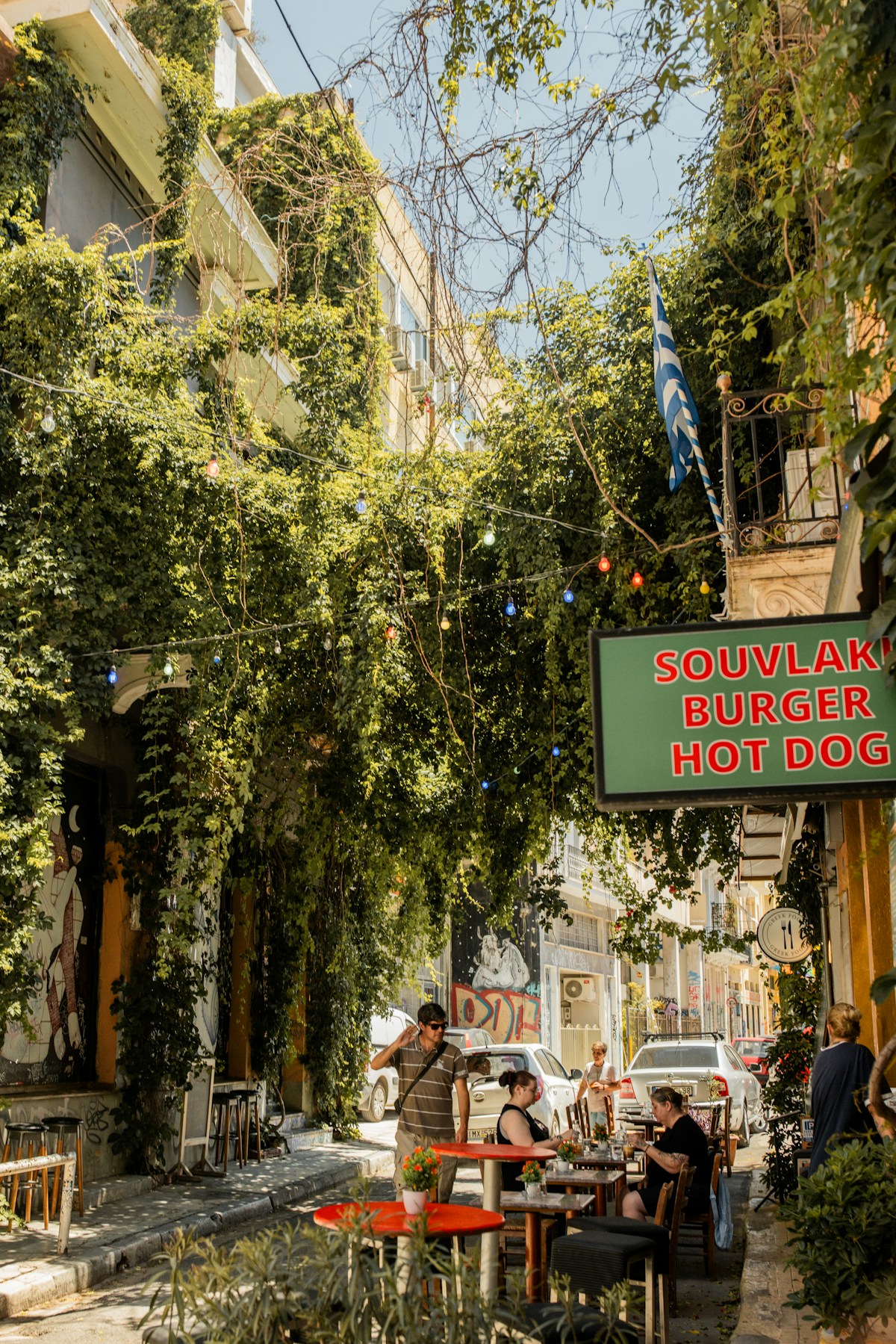
Greece’s street food scene is one of the most honest in Europe. Almost everything costs under EUR 5, almost everything is made fresh rather than reheated, and the best stalls in Athens have been operating on the same street corners for decades. The learning curve is small - there are only five or six things you really need to know - but the differences between a good stall and a mediocre one matter considerably.
The Souvlaki vs Gyros Question
This is the first thing everyone asks and it deserves a clear answer. They are different foods.
Souvlaki (plural souvlakia) is marinated meat - most commonly pork, less commonly chicken or lamb - cut into chunks and threaded onto a metal or wooden skewer, then grilled over charcoal. At a dedicated souvlaki stand (souvlatzidiko), you order by the skewer. You can eat it straight off the skewer (kalamaki, meaning straw) or wrapped in warm pita with tomato, raw white onion, and tzatziki. The pita wrap version is what most people mean when they say “a souvlaki.”
Gyros is rotisserie meat - a vertical stack of meat (pork in Athens and central Greece, chicken increasingly common, veal in Thessaloniki) that slowly rotates on a spit in front of an electric or gas heater. The outer layer caramelises and the cook shaves it directly onto pita or a plate. A gyros wrap includes the same accompaniments as souvlaki (tomato, onion, tzatziki) and almost always includes French fries stuffed inside the wrap, which souvlaki wraps do not.
The key practical difference: souvlaki made at a good stall uses visibly better cuts of meat. The pork you can see grilling on the skewer is identifiable as good meat. Gyros quality is harder to assess because you cannot see the full stack - a bad gyros stand uses lower-grade processed meat mixture that looks indistinguishable from good cuts until you taste it.
The verdict: at a good stand, both are excellent. The street food experience is the same price. If you are unsure of a place’s gyros quality, order the souvlaki instead.
Tiropita and Spanakopita: The Bakery Circuit
Every Greek bakery (fournos) sells tiropita (feta cheese pie) and spanakopita (spinach and feta pie) throughout the day. Both are made in large trays and cut to order, wrapped in paper, and eaten on the walk.
Tiropita is the more popular: filo pastry layered with eggs and feta, baked until golden and flaky. The feta should be properly salty. The best examples come from bakeries in residential neighbourhoods where locals actually buy their bread - not from tourist-facing cafés near major sights, where tiropita often sits under a heat lamp for three hours.
Spanakopita adds wilted spinach, onion, and fresh dill to the feta filling. It has a slightly more complex flavour and is slightly more filling. For a breakfast on the move, a slice of spanakopita and a Greek coffee costs around EUR 3–4.
Bougatsa is the Thessalonian version - a thicker, richer pie filled with semolina cream (or minced meat in the savoury version) that is dusted with icing sugar and cinnamon. Athens bakeries sell it but Thessaloniki is where to eat it properly. EUR 2–3 a portion.
Koulouri: The Sesame Ring
Koulouri is a ring-shaped bread encrusted with sesame seeds, sold from wooden carts and street stalls throughout Athens and every major Greek city. It has been a Greek street food for centuries and is still one of the cheapest things you can eat - typically EUR 0.50–1 per ring.
The koulouri from Athens street carts comes from a handful of bakeries in the early morning. It is best eaten within a few hours of baking, when the sesame is still fragrant and the bread has a slight chew. By afternoon, the rings can get dry. Buy it from a cart near a metro station at 8am and eat it on the move.
You will sometimes see koulouri sold stuffed with feta or cream cheese. These are filling and cost EUR 1.50–2.
Loukoumades: The Ancient Doughnut
Loukoumades have been eating in Greece for over 2,500 years. Ancient texts from the Olympic Games describe them being given to winning athletes as an early energy food. The modern version - golf ball-sized fried dough spheres, drizzled with honey and sometimes chocolate or fruit syrups, dusted with cinnamon - has not changed the essentials.
At a good loukoumades stall, the dough balls are fried to order in hot oil, so they arrive warm and slightly crisp on the outside with a soft, airy interior. The honey caramelises slightly against the hot dough. They should not be greasy.
At a bad stand, they are fried in batches and sit in a tray. The difference in texture is significant.
In Athens: Lukumades (Mitropoleos 19, Monastiraki) is the most famous and one of the few that justifiably lives up to the reputation. A portion of ten costs approximately EUR 4.50 with honey and cinnamon. Lines form in the afternoon and evening but move quickly.
Where to Eat Street Food in Athens
Monastiraki and Psyrri are the heart of the souvlaki belt. The best stalls operate until late - some until 3am on weekends. Thanasis (Mitropoleos 69) has been making souvlaki since 1969 and grills over real charcoal, which you can smell from a block away. The pork skewers are the standard order. Budget EUR 3.50–4 per kalamaki.
Exarchia is the neighbourhood most Athenians consider the honest street food district. The souvlaki stalls are cheaper, there are fewer tourist menus, and the koulouri carts operate from early morning. Walk along Harillaou Trikoupi or Themistokleous and eat wherever the Greek university students are eating.
Monastiraki Square early morning is where to find proper koulouri vendors and fresh cheese pie from the bakeries tucked behind the flea market. The tourist restaurants on the square are overpriced; the bakeries are not.
Varvakios Central Market (Athens Central Market, Athinas Street) is the wholesale fish and meat market where restaurant owners buy in the early morning, but it has a ring of small eateries serving offal-based dishes (lamb liver, tripe soup) from around 6am. If you are curious about traditional Athenian breakfast culture - which historically involved soup and grilled offal rather than pastries - this is where it still survives.
Peristeriona (Psyrri neighbourhood) makes what many consider the best gyros in Athens using pork from a specific farm in the Peloponnese. The lines at peak lunch and dinner times are the surest indication of quality at a street food stall.
Take a Guided Street Food Tour of Athens
Athens has one of the best street food scenes in southern Europe, and a guided street food tour of Monastiraki, Psyrri, and Exarcheia covers more ground in two hours than most visitors find independently in a week. Good Athens street food guides take you to the souvlaki counter used by the taxi drivers at 2am (different from the tourist-facing stall with the glossy menu board), the koulouri vendor who supplies the morning commuters, the specific loukoumades shop that fries them to order versus the one that pre-batches them, and the tiropita bakery in Exarcheia that sells to the students rather than the tourists. The street food tradition in Athens connects to the city’s Anatolian refugee heritage, its Ottoman-era market culture, and its current working-class neighbourhood identity - a guide who knows this story transforms what is otherwise a sequence of cheap snacks into an education.
Browse Athens street food tours → GetYourGuide
Eating Cheaply in Athens: The Budget Framework
A very good street food day in Athens looks roughly like this:
- Breakfast: Koulouri from a cart (EUR 0.60) and Greek coffee from a café (EUR 1.50–2). Total: EUR 2.50.
- Lunch: Two pork souvlaki in pita from a neighbourhood stall (EUR 7–9).
- Afternoon snack: Slice of tiropita from a local bakery (EUR 1.80–2.50).
- Dinner: Gyros wrap with chips from a good stall (EUR 4.50–5.50).
Total: EUR 16–20 for the day on food alone, and you will not have eaten badly at any point. This is why Greece remains one of the better European destinations for budget travellers - the street food culture is genuine and the quality ceiling is high relative to the price floor.
Book Athens street food tours with GetYourGuide. Find hotels in Athens on Booking.com. Pick up a Greece eSIM before you fly. Cover your trip with travel insurance for Greece.