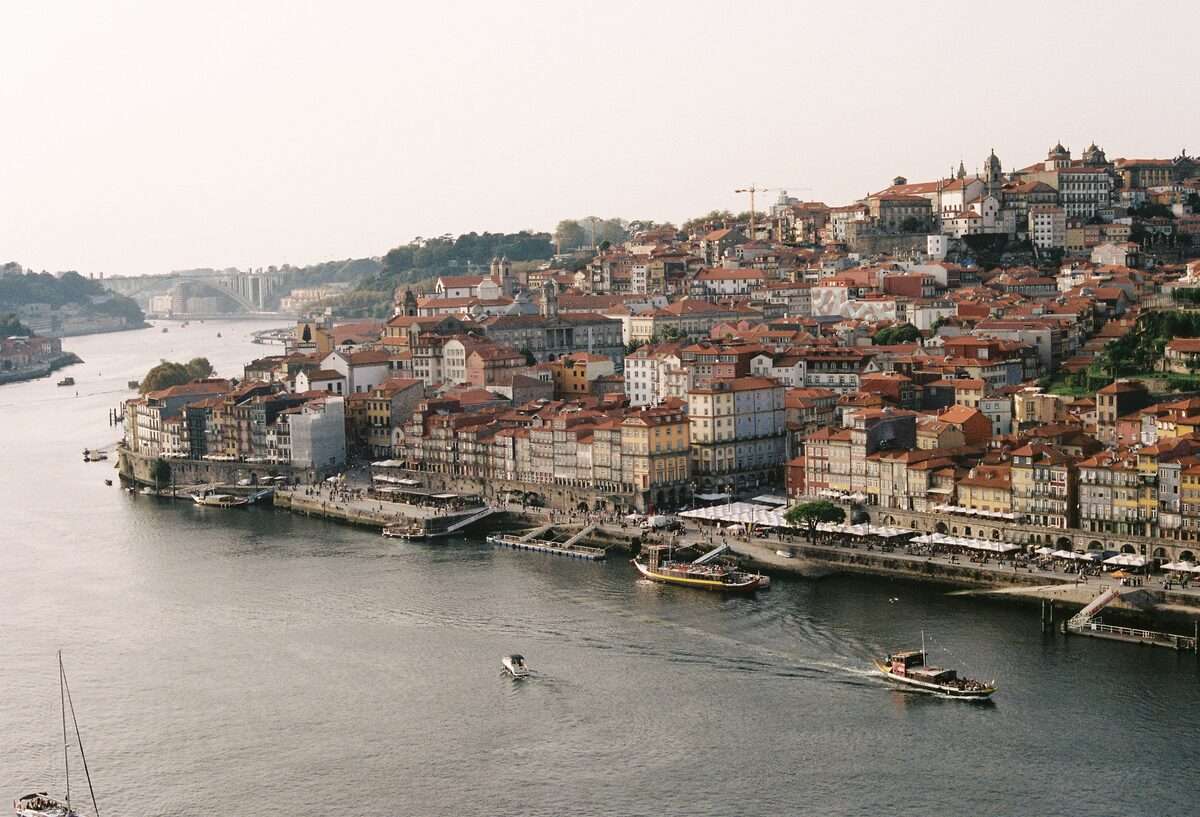
Greece and Portugal are Europe’s two most popular Mediterranean and Atlantic sun destinations that consistently surprise visitors by exceeding expectations. Both have world-class beaches, ancient history, exceptional food, and a warmth of character that makes them among the most enjoyable countries in Europe to travel in. They sit at opposite ends of the continent’s southern edge and deliver quite different holidays.
Quick Verdict
| Category | Greece | Portugal |
|---|---|---|
| Island options | ★★★★★ | ★★★ |
| Ancient history | ★★★★★ | ★★★ |
| Beach variety | ★★★★★ | ★★★★ |
| Surf and Atlantic coast | ★ | ★★★★★ |
| Architecture and cities | ★★★★ | ★★★★★ |
| Food and wine | ★★★★★ | ★★★★★ |
| Budget value | ★★★★ | ★★★★ |
| Ease of travel | ★★★★ | ★★★★★ |
| Culture and arts scene | ★★★★ | ★★★★★ |
Choose Greece if your trip is centred on island-hopping, Aegean beaches, ancient ruins, and Cycladic scenery. Choose Portugal if you want a compact, road-trip-friendly country with excellent cities, Atlantic coast drama, and more architectural depth per square kilometre. Both belong on any serious European travel list.
Ancient History
Greece’s historical weight is unrivalled in Europe. The Acropolis in Athens - the Parthenon, the Erechtheion, the Theatre of Dionysus - represents the foundation of Western civilisation in stone. The sites of Delphi, Olympia, Epidaurus, and Mycenae each carry that weight; they are not merely interesting ruins but the literal birthplaces of democracy, philosophy, the Olympic Games, and classical drama. Crete’s Minoan sites (Knossos, Phaistos) push Greece’s historical narrative back to 1700 BC. Santorini’s Akrotiri, a Bronze Age city buried by volcanic eruption in 1627 BC, is among the best-preserved prehistoric settlements in the world.
Portugal’s history is more recent in classical terms but extraordinary in its own right. Lisbon contains Roman foundations beneath its streets (the Museu Nacional de Arqueologia is excellent). The 15th- and 16th-century Age of Exploration left the world’s finest Manueline architecture (Jerónimos Monastery, Tower of Belém - both UNESCO World Heritage Sites) and a global cultural legacy. The fortified hill towns of Évora (Roman temple intact, UNESCO-listed) and Óbidos, the megalithic stone circles of the Alentejo (older than Stonehenge), and the Moorish old town of Silves all reward slower travel.
Verdict: Greece for classical antiquity and a history that shaped civilisation. Portugal for medieval and Age of Exploration history with better architectural preservation in its cities.
Beaches
Greece
Greece’s beaches trade on the particular quality of Aegean and Ionian water - the colour and clarity are exceptional. Island beaches vary dramatically by geography: the pink-tinged lagoon of Elafonisi on Crete, the volcanic drama of Santorini’s black and red sand, the turquoise coves of the Ionian islands (Kefalonia, Lefkada), the organised beach culture of Mykonos, and the serene sandy bays of Paros and Naxos. With over 6,000 islands and islets, Greece simply has more beach options than any comparable country in Europe.
Water temperature is reliably warm from late June through October. Crowds in July and August are significant on the popular islands but manageable with earlier or later travel.
Portugal
Portugal’s beaches divide into the Atlantic-facing coast and the more sheltered southern Algarve. The Algarve’s beaches - particularly the dramatic cliff-backed coves around Lagos and Carvoeiro - are among Europe’s most photographed: golden limestone formations, arched sea caves, and sandy beaches with clear water, though distinctly cooler than the Aegean (18–22°C in peak summer vs 24–27°C in Greece). Comporta’s vast pine-backed Atlantic beaches and Ericeira’s surf breaks add a wilder character. Madeira and the Azores (volcanic Atlantic islands) have dramatic coastal scenery but limited classic beach swimming.
Verdict: Greece for warm, turquoise swimming beaches and sheer volume of island choice. Portugal for dramatic Atlantic cliff scenery and surf conditions.
Cities
Athens (Greece)
Athens is not a conventional city-break in the way Lisbon or Porto are. Its skyline is dominated by the Acropolis, its old town (Monastiraki, Plaka, Psyrri) is chaotic and characterful, and its museum scene (National Archaeological Museum, Acropolis Museum) is exceptional. But Athens is primarily a gateway to the islands and a mandatory stop for the ancient sites. Allow 2–3 days before heading to the islands. Thessaloniki, Greece’s second city, has a livelier café culture and a more relaxed pace than Athens; its Ottoman and Byzantine legacy is significant and under-visited.
Lisbon and Porto (Portugal)
Lisbon is one of Europe’s most compelling cities - seven hills of crumbling tile-fronted buildings, a cable car network, the sweeping view from Miradouro da Graça at dusk, Fado music drifting from doorways in Alfama, and the Alfama and Mouraria neighbourhoods that mix medieval lanes with modern wine bars. Belém (15 minutes from the centre) contains the Jerónimos Monastery and the Tower of Belém - extraordinary. Porto’s granite-and-tile architecture, the Douro riverfront, and the port wine lodges of Vila Nova de Gaia make it one of the most visually cohesive cities in Europe. Both cities repay 3–4 days each.
Verdict: Portugal for city tourism - Lisbon and Porto consistently outrank European cities for atmosphere and photographic value. Athens is essential for the ancient world; Thessaloniki is underrated.
Food and Wine
Greece
Greek food is the Mediterranean diet at its source. The greatness is in the ingredients: olive oil (particularly from Crete), fresh-caught fish served simply grilled, lamb from mountain pastures, feta and graviera cheeses, and the mezedes culture of shared small plates. Crete has the most developed regional cuisine in Greece - dakos, slow-cooked lamb, wild greens (horta), and cheeses made from the previous day’s milk. Greek wine has made significant international strides: Assyrtiko from Santorini, Xinomavro from Naoussa, Moschofilero from the Peloponnese.
Portugal
Portuguese food is built around exceptional raw materials: the Atlantic’s fish and seafood, Serra da Estrela and Azeitão cheeses, Alentejo black pork (Pata Negra), and the extraordinary variety of bacalhau preparations. Petiscos (Portuguese tapas) in Lisbon’s Alfama are excellent for evening eating. The pastéis de nata (custard tarts, best at Pastéis de Belém, the original since 1837) are a point of national pride. Portuguese wine is one of Europe’s most undervalued: Vinho Verde (young, light, slightly sparkling white), Douro reds (Touriga Nacional, Tinta Roriz), and the fortified Ports of Vila Nova de Gaia are internationally underpriced for their quality.
Verdict: Tie - exceptional cuisines built on different traditions. Greece for seafood, mezedes culture, and Cretan regional food. Portugal for bacalhau traditions, pastéis, and the best-value wines in Western Europe.
Cost Comparison
| Category | Greece (midrange) | Portugal (midrange) |
|---|---|---|
| Hotel per night | €70–200 | €80–200 |
| Dinner per person | €25–45 | €25–50 |
| Museum entry | €10–20 | €10–20 |
| Domestic flight | €40–100 | €40–90 |
| City coffee | €2–3 | €0.80–1.50 |
Costs are broadly similar - both countries are mid-range by Western European standards. Exceptions: Mykonos and Santorini are expensive; Portugal’s rural interior (Alentejo, Beiras) is very cheap. Coffee is notably cheaper in Portugal. Accommodation in Porto and Lisbon has risen sharply since 2020 and now rivals Greece’s popular islands.
See our Greece budget travel guide for detailed breakdowns.
Getting Around
Portugal is compact and extremely easy to travel - it’s roughly the size of Greece without the island complication. The Lisbon–Porto rail corridor takes 3 hours by IC train. Rental car routes from Lisbon to Sintra, the Alentejo, the Algarve, and the Douro Valley are scenic and straightforward. No ferries required for mainland travel.
Greece requires more planning because of the island geography. See our Greek island ferry guide for how to navigate the network. Car hire is essential on Crete and useful on larger islands.
Accommodation
Athens:
- Hotel Grande Bretagne - 5-star, Syntagma, €300+/night
- Athens Tiare Hotel - boutique, Monastiraki, €120–200/night
- Plaka Hotel Athens - midrange, old town, €80–150/night
Search all Athens hotels on Booking.com
Lisbon (via The Portugal Guides):
- Bairro Alto Hotel - boutique, five-star, €350+/night
- Memmo Alfama - design hotel with Tagus views, €180–300/night
- Search Lisbon hotels on Booking.com
Our Verdict
Greece and Portugal are different enough that the choice should be driven by what the trip is actually for:
- Island-hopping + ancient ruins + warm swimming beaches: Greece, clearly. The island network, Aegean clarity, and depth of ancient history have no equivalent in Portugal.
- City tourism + architecture + road trips + Atlantic surf: Portugal. Lisbon and Porto are among Europe’s best city destinations, and the country is uniquely road-trip-friendly.
- Both: Entirely possible on a 2-week trip. Budget airlines link the two countries cheaply, and they serve completely different purposes in a longer European itinerary.
For Greece planning, start with which Greek island to visit and best time to visit Greece. For Portugal planning, visit The Portugal Guides - our sister site.
Search flights to Greece across multiple airlines in one place. Pick up a Greece eSIM before you fly - keeps you connected without roaming charges. Sort out travel insurance for Greece before you leave.
See Also
- Best Greek Islands Guide - how to choose between Santorini, Crete, Mykonos, and more
- Greece vs Italy - another close southern Europe comparison
- Greece vs Spain - Mediterranean rivals
- Greece vs Croatia - Adriatic coastline alternative
- Athens City Guide - what to do and see in 2–3 days
- The Portugal Guides - full planning resource for Portugal: Lisbon, Porto, Algarve, Madeira
Plan Your Trip
✈️ Book your flights to Greece 🛡️ Get travel insurance 📱 Stay connected with an eSIM 🚗 Rent a car