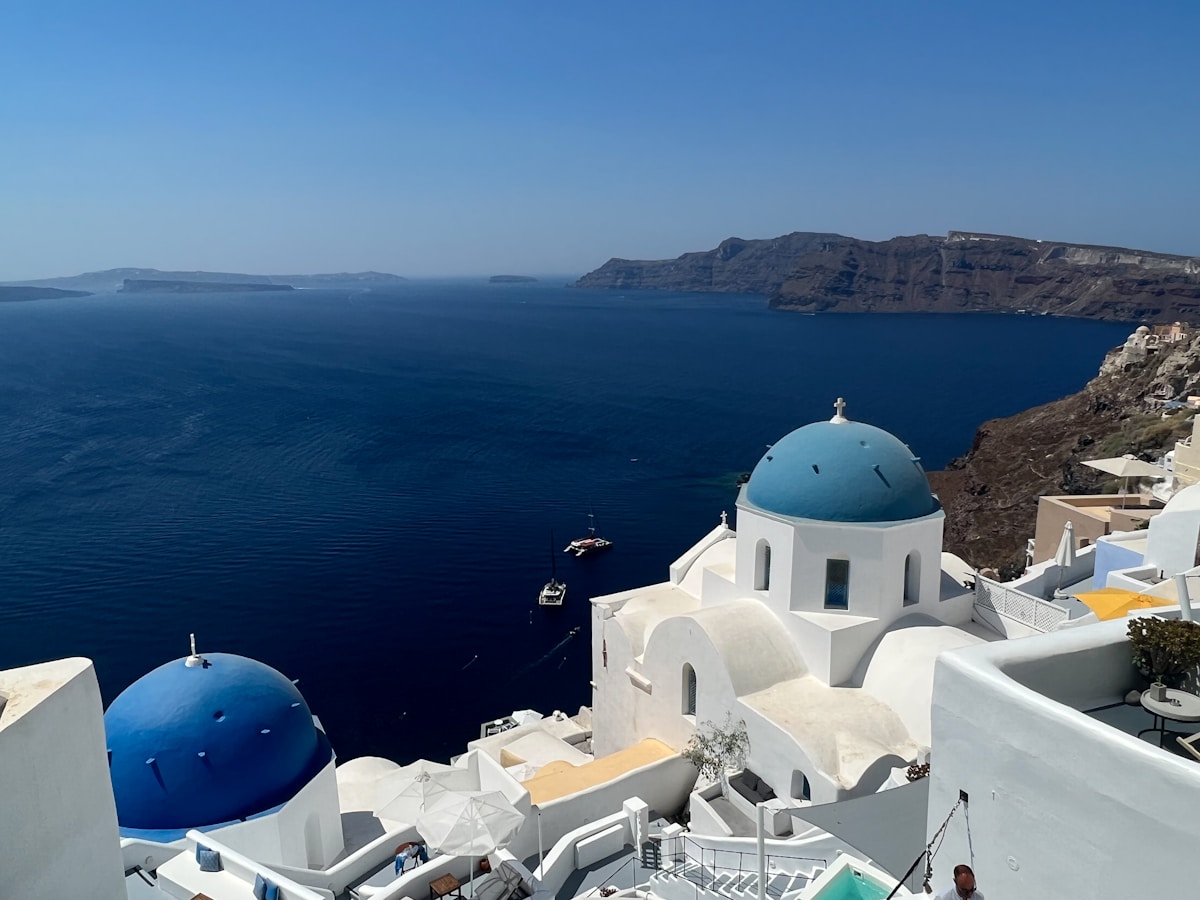
Greece and Spain are two of the Mediterranean’s great travel destinations, and comparing them comes up constantly among European holiday planners. Both offer ancient history, excellent food, beautiful coastlines, and warm sunshine. What they deliver is distinctive enough that knowing which suits you matters.
Quick Verdict
| Category | Greece | Spain |
|---|---|---|
| Ancient history | ★★★★★ | ★★★★ |
| Moorish/medieval history | ★★ | ★★★★★ |
| Beach island network | ★★★★★ | ★★★★ |
| Food and wine diversity | ★★★★ | ★★★★★ |
| City culture | ★★★★ | ★★★★★ |
| Budget value | ★★★★ | ★★★★ |
| Nightlife | ★★★ | ★★★★★ |
| Ease of travel (transport links) | ★★★★ | ★★★★★ |
Go to Greece for Greek and Byzantine ancient history, an island-hopping culture unmatched in Europe, a simpler and more food-focused Mediterranean pace, and a holiday that feels further removed from the familiar. Go to Spain for greater city diversity, extraordinary food culture spanning multiple distinct cuisines, world-class art (Prado, Guggenheim Bilbao, Dalí), and the most varied regional landscapes in western Europe.
Ancient History
Greece
Greece is the anchor of Western classical civilisation. The Acropolis in Athens is one of humanity’s most significant monuments - the Parthenon has been standing in some form since 432 BC. Delphi, Olympia, Epidaurus, and the Minoan palace at Knossos on Crete add a further dimension to what classical Greece means in physical terms. The National Archaeological Museum in Athens is one of the world’s great museums.
Spain
Spain’s ancient heritage is different in emphasis - Roman, Visigothic, Moorish. The Roman theatre and aqueducts at Mérida and Segovia are extraordinary. The Alhambra in Granada is one of the finest examples of Moorish architecture anywhere in the world and requires advance booking months ahead (entry approximately €15 as of 2026). The Mezquita in Córdoba and the Alcázar in Seville add further weight to Spain’s Islamic period. The Camino de Santiago covers 2,000+ years of pilgrimage history.
Verdict: Greece for classical Greek antiquity; Spain for Roman, Visigothic, and Moorish layers.
Food and Wine
Greece
Greek cuisine centres on the Mediterranean diet: olive oil, fresh vegetables, grilled fish, lamb, cheese (feta, graviera, kefalograviera), pulses, and bread. The excellence is in the ingredients - Greek olive oil is among the world’s finest, the seafood is genuinely fresh in coastal areas, and the cheese tradition runs deep. Wine has improved dramatically - Assyrtiko from Santorini is now internationally recognised, and indigenous reds (Xinomavro, Agiorgitiko) are world-class. A good taverna meal costs €20–35 per person with wine.
Spain
Spanish food culture has both extraordinary depth and significant regional variety. Basque cuisine (both traditional and in the form of New Basque Cuisine) is considered among the world’s best - San Sebastián has more Michelin stars per capita than almost any city. Catalonia has its own distinct food tradition. Andalusia contributes gazpacho, salmorejo, and a strong seafood culture. Galicia is known for octopus and outstanding white wine (Albariño). Castile contributes roast suckling pig and lamb. The jamón ibérico culture is sui generis.
Wine: Spain’s wine regions (Rioja, Ribera del Duero, Priorat, Rías Baixas, Cava) are internationally significant.
Verdict: Spain for culinary variety and depth. Greece for simplicity done perfectly.
Beaches and Islands
Greece’s island network is unmatched in Mediterranean Europe - over 200 inhabited islands, covering everything from the Cycladic caldera scenery of Santorini to the lush green of Corfu, the wild beaches of Milos, and the crystal-clear Ionian water around Kefalonia and Zakynthos. Island hopping by ferry across the Cyclades, the Dodecanese, or the Ionian Islands is one of Europe’s great slow travel experiences.
Spain’s island options are excellent but different:
- Balearics: Mallorca (the well-rounded option), Ibiza (the party-and-luxury option), Menorca (the quiet one), Formentera (the boutique-beautiful one).
- Canary Islands: Year-round warmth, Tenerife, Gran Canaria, Lanzarote (volcanic landscape), La Palma, La Gomera.
The Canaries are closer in character to Madeira or Cape Verde than to European beach destinations and offer winter sun when Greece is cold.
Verdict: Greece for the island-hopping culture, variety of island types, and Aegean/Ionian scenery. Spain for winter sun (Canaries) and the Balearic luxury-party circuit.
Cities
Spain has a stronger city culture overall. Barcelona (architecture, Gaudí, food, beach) and Madrid (art, food, nightlife) are both world-class cities. Seville, Granada, Bilbao, San Sebastián, Valencia - Spain’s secondary cities all offer distinctive identities and itineraries.
Greece has Athens (extraordinary for ancient history, improving rapidly in food and nightlife) and Thessaloniki (Greece’s best food city, strong Byzantine history, excellent nightlife). Both are excellent but sit in a different tier from Barcelona and Madrid for city tourism.
Nightlife
Spain’s nightlife - particularly in Madrid, Barcelona, and Ibiza - is in a global top tier. Spain doesn’t really begin eating dinner until 10pm or later; clubs open at 2am and close at dawn. The Ibiza club circuit (DC10, Amnesia, Pacha, Ushuaïa) is internationally significant. San Sebastián’s pintxos bar culture is a form of social eating that constitutes its own nightlife category.
Greece’s nightlife is strong in Athens (Gazi, Psyrri) and on specific islands (Mykonos, Ios, Kavos/Corfu), but doesn’t have Spain’s depth or consistency.
Cost Comparison
| Category | Greece (midrange) | Spain (midrange) |
|---|---|---|
| Hotel per night (city) | €80–180 | €80–200 |
| Hotel per night (islands/coast) | €60–250 | €70–250 |
| Dinner per person | €25–45 | €25–50 |
| Coffee | €2–4 | €1.50–3 |
| Museum entry | €10–20 | €8–18 |
| Budget airline flight (London) | €50–150 return | €40–120 return |
Both countries are broadly similar in cost for midrange travel, with Spain perhaps marginally more expensive in cities and Greece more expensive on the premium islands.
Accommodation
Athens:
- Hotel Grande Bretagne - 5-star, €300+/night
- Periscope Hotel Kolonaki - boutique, €120–200/night
- Athens One Smart Hotel - midrange, €75–130/night
Search all Athens hotels on Booking.com
Madrid:
- Hotel Ritz Madrid - 5-star, €600+/night
- Hospes Madrid - 5-star, €250–450/night
- Hotel Laris - midrange, €90–160/night
Search all Madrid hotels on Booking.com
Barcelona:
- Arts Barcelona - 5-star, €400+/night
- Hotel Yurbban Trafalgar - midrange, €120–220/night
- Alberg Juvenil Itaca Hostel - budget, from €25/night dorm
Search all Barcelona hotels on Booking.com
Getting There
Greece: Well-served by European budget airlines. Aegean Airlines is a strong network carrier. Athens is the main hub with connections to dozens of European cities.
Spain: Iberia, Vueling, and budget airlines (easyJet, Ryanair) from most European cities. Multiple gateway airports - Barcelona, Madrid, Malaga, Palma. Generally slightly better connected than Greece from Northern Europe.
Our Verdict
Greece and Spain are both excellent choices. The honest answer depends on what matters to you:
- If ancient history is the draw: Greece, definitively. Spain’s Roman-era sites are excellent but Greece is in another category.
- If food is the priority: Spain for variety and depth; Greece for simplicity and ingredient quality.
- If island hopping is the plan: Greece, with no European rival.
- If city culture and variety matter most: Spain, with Athens and Thessaloniki as solid but secondary options.
- If nightlife is central: Spain.
- If budget is tight: Similar, but Greece’s non-premium islands edge slightly cheaper.
Many experienced travellers will tell you: do Spain first for its variety, then Greece for its islands and ancient world. Both rewards repeat visits.
Start with the best time to visit Greece to plan your trip.
Search flights to Greece across multiple airlines in one place. Pick up a Greece eSIM before you fly - keeps you connected without roaming charges. Sort out travel insurance for Greece before you leave.
See Also
- Best Greek Islands Guide - choosing the right island for your travel style
- Greece vs Italy - the other main Mediterranean comparison
- Greece vs Croatia - for Adriatic vs Aegean decisions
- Best Time to Visit Greece - shoulder season comparisons with Spain
- Athens Travel Guide - the anchor destination for any Greece trip
- Greece Budget Travel Guide - cost breakdown across the islands
- Greece vs Turkey - eastern Mediterranean alternative
Plan Your Trip
✈️ Book your flights to Greece 🛡️ Get travel insurance 📱 Stay connected with an eSIM 🚗 Rent a car