Greece and Croatia are two of the most searched summer holiday destinations in Europe, and the comparison comes up constantly for good reason - both offer clear water, historic old towns, beautiful islands, and Mediterranean food and wine. The differences matter when deciding which suits you better.
Quick Verdict
| Category | Greece | Croatia |
|---|---|---|
| Island quantity | ★★★★★ | ★★★★ |
| Water clarity | ★★★★★ | ★★★★★ |
| Ancient history | ★★★★★ | ★★★ |
| Medieval history | ★★★ | ★★★★★ |
| Food and wine | ★★★★ | ★★★★ |
| Budget value | ★★★★ | ★★★ |
| European accessibility | ★★★★ | ★★★★★ |
| Tourist infrastructure | ★★★★★ | ★★★★ |
Go to Greece for ancient history, a wider island network, better value outside the tourist centres, and the Cycladic aesthetic that Croatia can’t match. Go to Croatia if you want medieval walled cities, the Dalmatian coast’s particular beauty, a driving-based coast road holiday, or you prefer staying within the Balkans region.
Islands
Greece
Greece has over 200 inhabited islands and a ferry network connecting them. The sheer variety is unmatched in Europe: from the iconic caldera of Santorini to the party scene of Mykonos, the green hills of Corfu, the remote wild beaches of Milos, the family-friendly stretches of Crete, and the dramatic limestone of Kefalonia. Island hopping across Greece can fill multiple holidays without repetition.
The ferry network is extensive. High-speed catamarans connect the Cyclades; conventional ferries run overnight routes from Piraeus. Read our Greek island ferry guide for full details.
Croatia
Croatia’s Dalmatian coast has around 700 islands, though most are uninhabited. The standout destinations are Hvar (the premium one - beautiful harbour, lavender fields, good restaurants but very expensive in summer), Brač (Zlatni Rat beach is one of the Adriatic’s most photographed spots), Vis (the remote, authentic option - limited tourist infrastructure, serious local food scene), Mljet (national park, two saltwater lakes), and Korčula (walled town, alleged birthplace of Marco Polo).
Croatia’s ferry network is well-organised but covers a smaller area than Greece’s.
Verdict: Greece for island quantity and variety; Croatia for specific Dalmatian island character.
History and Culture
Greece
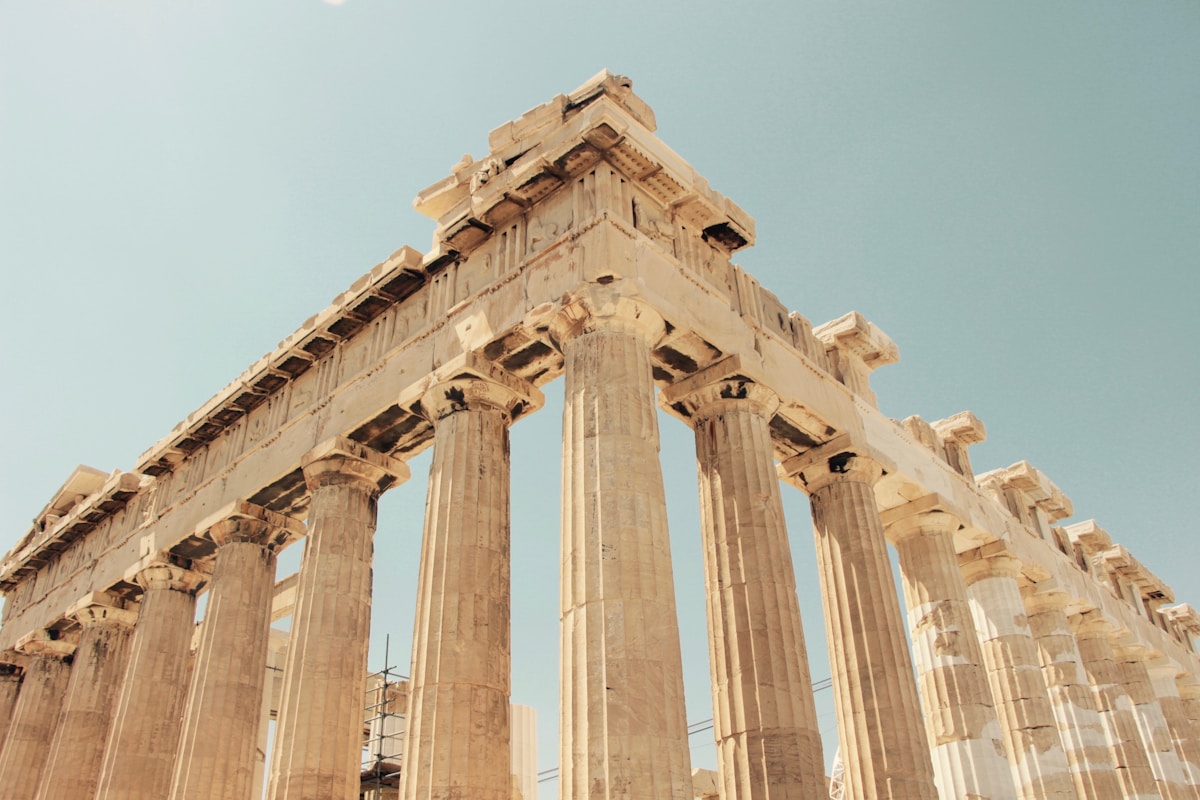
Ancient history in Greece runs 3,000+ years deep and is accessible everywhere. The Acropolis and National Archaeological Museum in Athens are unmissable. Delphi, Olympia, Epidaurus, and Knossos (on Crete) round out an extraordinary ancient circuit. Byzantine churches, Venetian fortresses, and Ottoman mosques add later layers, particularly in Crete and Rhodes.
Croatia
Croatia’s history is medieval and coastal - the Venetian empire, the Habsburgs, and the Ottoman buffer zone. Dubrovnik’s old town (a UNESCO World Heritage Site) is one of the finest medieval walled cities in Europe. Split’s Diocletian’s Palace (also UNESCO) is an ancient Roman imperial palace that became a medieval city - people still live inside the palace walls. Trogir, Šibenik, and Zadar are all compelling historic towns along the coast.
Verdict: Greece for ancient history; Croatia for medieval walled cities.
Food and Wine
Greece
Greek food is simple and ingredient-driven: grilled fish, fresh salads, lamb, cheese, olive oil. The mezé culture of shared small plates is social and relaxed. Wine is increasingly impressive - Assyrtiko white from Santorini is exported worldwide, and indigenous reds (Xinomavro, Agiorgitiko) are serious. A good taverna meal costs €25–40 per person with wine.
Croatia
Croatian cuisine on the Dalmatian coast is heavily Italian-influenced - pasta, risotto, and grilled seafood dominate. Peka (slow-roasted meat or seafood under a bell dome) is the signature preparation and genuinely excellent. Prstaci (date mussels) and grilled lamb are other highlights. Local wine from islands like Hvar (Plavac Mali grape) and Korčula is worth seeking out. Prices in Dubrovnik and Hvar have inflated sharply and can match London restaurant prices in peak season.
Verdict: Greece for better value in food; Croatia for coastal Italian-influenced cuisine in the right setting.
Cost Comparison
| Category | Greece (midrange) | Croatia (midrange) |
|---|---|---|
| Hotel per night | €70–180 | €80–200 |
| Dinner per person | €25–45 | €30–55 |
| Beer | €4–6 | €4–7 |
| Entry to main sites | €10–20 | €15–30 |
| Ferry between islands | €15–40 | €10–30 |
Dubrovnik is now one of Europe’s more expensive destinations - a direct consequence of Game of Thrones tourism and cruise ship traffic. If you’re set on Dubrovnik, budget at least €120–200/night for midrange accommodation. The Greek budget travel guide gives a realistic breakdown for Greece.
Getting Around
Greece: Domestic flights are cheap and frequent - Aegean Airlines and Sky Express connect Athens to Heraklion, Rhodes, Santorini, Mykonos, Kos, Corfu, and other islands (tickets from approximately €40–80 with advance booking). Ferries are the main island-hopping tool: Blue Star Ferries and Hellenic Seaways run extensive routes from Piraeus (Athens), with overnight ferries to Crete (8–9 hours) and Dodecanese islands, and fast catamarans through the Cyclades (2–4 hours between islands). See the Greek island ferry guide for booking and routes. On larger islands like Crete and Rhodes, renting a car is the most practical way to explore beyond the main towns - car hire from approximately €35–60/day.
Croatia: Car hire is the most flexible option and often necessary for seeing more than the main towns. The Magistrala coastal road (E65) running from Rijeka to Dubrovnik is one of Europe’s great drives - cliffs above the Adriatic, island views at every bend, but narrow in places. Split to Dubrovnik is approximately 3 hours by car. Ferries from Split and Dubrovnik connect to the main islands (Brač, Hvar, Vis, Korčula); tickets are inexpensive (€5–20 per person, more for a car). Croatia has a solid intercity bus network covering Split, Dubrovnik, Zagreb, and Zadar.
When to Go
Both countries peak in July and August - and both have significant overtourism problems in that window. Dubrovnik in particular has become one of Europe’s most overcrowded summer destinations, with cruise ship days bringing 8,000–12,000 visitors to a walled city designed for far fewer. The popular Greek islands (Santorini, Mykonos) are similarly saturated in peak summer.
Best months for both: May–June and September–October. Temperatures of 22–28°C, clear water, and dramatically smaller crowds. May and June have the additional advantage of lower prices - accommodation and flights are noticeably cheaper than the July–August peak. September is arguably the best single month for both countries: the sea is at its warmest (24–26°C), the crowds have thinned, and the light in both places is exceptional.
Greece vs Croatia by season:
- Winter (Nov–Mar): Athens is mild and worth visiting year-round; most Greek islands close. Croatia’s coast largely shuts down, though Dubrovnik remains open and is genuinely pleasant in winter without the summer crush.
- Spring (Apr–May): Both countries open up progressively. Greece is excellent from mid-April; Croatia from May.
- Autumn (Oct): Greece stays warm well into October. Croatia cools faster but remains attractive into mid-October.
See our best time to visit Greece for a month-by-month breakdown.
Our Verdict
Both countries are excellent. The choice often comes down to the type of history you find most compelling (ancient vs medieval), and your travel style:
- If you want to island-hop for 2+ weeks: Greece. The network is larger and more varied.
- If you want a single-base coastal holiday with day trips: Croatia, particularly Split or Hvar.
- If you’re on a tighter budget: Greece (outside the premium islands).
- If you’re a first-time Mediterranean visitor: Greece, for the broader range of experiences.
Can’t choose? A 2-week itinerary covering Athens, one Greek island, Split, and Dubrovnik is genuinely achievable. Two flights and some planning - worth every euro.
Search flights to Greece across multiple airlines in one place. Pick up a Greece eSIM before you fly - keeps you connected without roaming charges. Sort out travel insurance for Greece before you leave.
See Also
- Best Greek Islands Guide - which island suits your trip type
- Two Weeks in Greece Itinerary - a structure that leaves room to add Croatia
- Greece vs Italy - if you’re choosing between the other main Mediterranean option
- Greece vs Turkey - another neighbouring destination comparison
- Greece Budget Travel Guide - cost breakdown compared to European alternatives
- Greek Island Ferry Guide - ferry logistics vs Croatian catamaran networks
- Greece vs Spain - another Mediterranean alternative worth comparing
Plan Your Trip
✈️ Book your flights to Greece 🛡️ Get travel insurance 📱 Stay connected with an eSIM 🚗 Rent a car