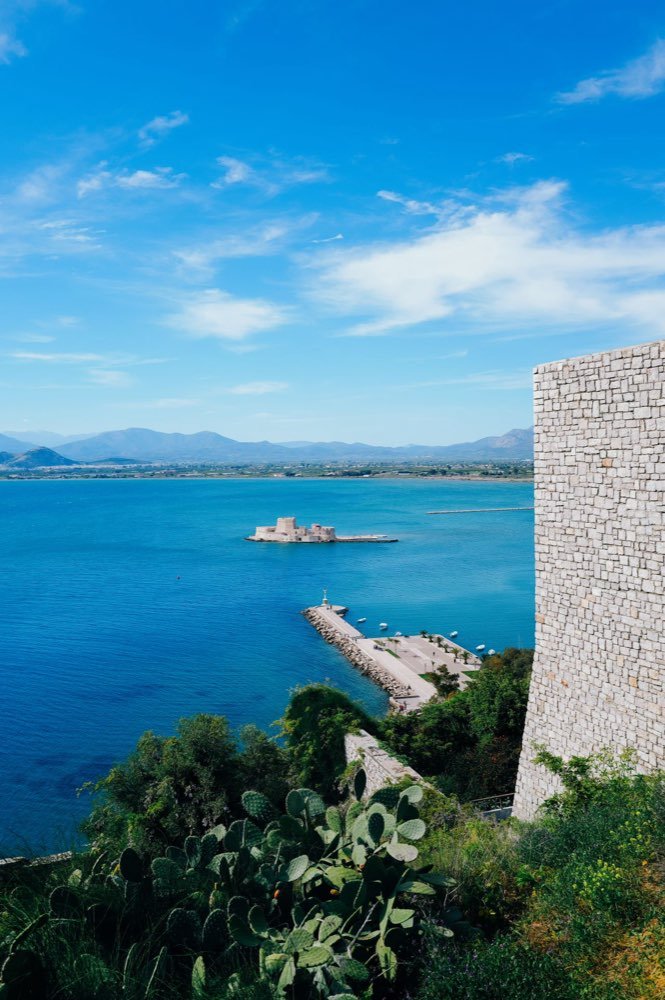
The Peloponnese is the large southern peninsula of mainland Greece, and it holds more of the country’s ancient and medieval history than almost anywhere else: Mycenae, Epidaurus, Olympia, Mystras and Monemvasia are all here, within a few hours’ drive of each other. This page is the overview. It explains how the peninsula divides, how to reach it, where to base yourself and which sites earn the time. If you want a day-by-day route, use our Peloponnese road trip itinerary after reading this.
Prices below are approximate as of 2026.
The Peloponnese at a Glance
| Topic | Details |
|---|---|
| Distance from Athens | Corinth approximately 85 km, Nafplio approximately 145 km, Kalamata approximately 240 km |
| Best bases | Nafplio (Argolis), Kalamata (Messinia and the Mani), Sparta or Mystras area (Laconia), Olympia (one night) |
| Time needed | 4 days for the highlights, 7 for a full loop, 10 with the Mani and Pylos |
| Getting around | Car strongly recommended; KTEL buses link the main towns |
| Best months | April to early June, September to October |
| Main site tickets | Mycenae, Epidaurus, Olympia and Mystras approximately 12 euros each |
The Regions of the Peloponnese
Travellers tend to think in historic regions rather than administrative ones, and each has a different character.
Argolis: Nafplio, Mycenae and Epidaurus
Argolis is the easiest introduction and the best base for first-timers. Nafplio is a Venetian-era harbour town below the Palamidi fortress, with the Bourtzi sea castle in the bay. From it you can reach the Bronze Age citadel of Mycenae and the ancient theatre at Epidaurus, which seats around 14,000 and still hosts summer performances. Our Nafplio day trips guide sets out the options, and Tiryns, a Mycenaean fortress close to Nafplio, is a quieter extra.
Corinthia: the gateway
Corinthia is where you enter the peninsula. Most visitors only see the Corinth Canal, but Ancient Corinth (the Temple of Apollo and the Roman agora) and the Nemea wine district, known for Agiorgitiko reds, reward a stop if you are driving through slowly.
Arcadia: mountains and villages
Arcadia is the green, mountainous centre. Its capital Tripoli is a transit town, but the stone villages of Dimitsana and Stemnitsa, the Lousios gorge monasteries and the remote Temple of Apollo Epicurius at Bassae (a UNESCO site) suit travellers who want quiet. Arcadia is best added by car in spring or autumn.
Laconia: Sparta, Mystras and Monemvasia
Laconia is the south-east. Modern Sparta offers little to see beyond a small archaeological museum, but it is the practical base for Mystras, a Byzantine hill city that was the capital of the Despotate of Morea. Further south-east, the fortified rock town of Monemvasia sits on a causeway-linked islet and is car-free inside its walls. Read our Monemvasia travel guide for the rock town and our Sparta things to do guide for Mystras detail.
Messinia: Kalamata, Pylos and the olive coast
Messinia, in the south-west, is the Peloponnese’s beach and food region. Kalamata is the main town, famous for its olives and with its own airport (seasonal international flights). Pylos and Navarino Bay are the site of the 1827 naval battle that helped secure Greek independence, and nearby are the Mycenaean Palace of Nestor, the curved beach of Voidokilia and the castles at Methoni and Koroni. Our Pylos travel guide and Kalamata day trips guide cover the coast.
The Mani: the wild south
The Mani is the central of the three southern fingers, known for stone tower houses (best seen at Vathia), the town of Areopoli and the Diros Caves, which you tour by boat. The roads are narrow and slow, so allow at least two nights, usually from a Kalamata or Stoupa base. Our Mani peninsula travel guide lays out the route. Beyond the Peloponnese, our Parga guide covers a popular Ionian beach town on the north-west mainland coast.
Elis and Achaea: Olympia and Patras
In the north-west, Olympia is home to the original Olympic sanctuary (see Ancient Olympia), and Patras is the region’s port and main city, with ferries to Italy and a lively Carnival season.
How to Get to the Peloponnese
By car from Athens
The usual route is the A8 / E94 motorway west from Athens to Corinth, then the A7 toward Tripoli and Kalamata or the road south to Nafplio. You cross the 6.3 km Corinth Canal, completed in 1893, by bridge, and a stop at the canal viewpoint takes about 30 minutes (see our Corinth Canal guide). Allow about 2 hours to Nafplio and about 2.5 to 3 hours to Kalamata. Toll plazas on the main motorways cost approximately 3 to 4 euros each, and a full loop typically costs 25 to 35 euros in tolls. Our Greece car rental guide explains insurance and pick-up, and you can compare prices through car hire search for Greece. Pick up at Athens airport, where choice is widest.
By bus (KTEL)
KTEL buses leave Athens’ Kifissos terminal for Nafplio (approximately 2.5 hours, around 15 to 18 euros one way), Sparta, Kalamata and Patras. Timetables and operators are listed at KTEL, and schedules thin out in the evenings and on Sundays. See getting around Greece for the wider picture.
By air and ferry
Kalamata airport takes seasonal international flights, which can save the drive for Messinia and Mani trips. From Italy, ferries arrive at Patras. If you are starting in Athens, our Athens travel guide covers the city end, and an private transfer from Athens can take you straight to Nafplio or Corinth.
Where to Base Yourself
- Nafplio: the best first base. Walkable, good restaurants, and close to Mycenae and Epidaurus. See where to stay in Nafplio or search hotels in Nafplio.
- Kalamata: best for beaches, the Mani and Pylos. See where to stay in Kalamata or search hotels in Kalamata.
- Sparta: the practical base for Mystras; search hotels in Sparta. Choose Monemvasia instead if you want atmosphere over convenience: search hotels in Monemvasia.
- Olympia: a single night is enough for the sanctuary and museum. See where to stay in Olympia.
Rates vary widely by season, so check current prices on Booking.com rather than relying on a guide.
The Top Sites
Mycenae: the hilltop citadel with the Lion Gate and the royal grave circle, usually visited with Epidaurus in a single day from Nafplio. Entry approximately 12 euros. Start early to avoid tour buses and heat.
Epidaurus: the best-preserved ancient theatre in Greece, famous for its acoustics, part of an ancient healing sanctuary. Entry approximately 12 euros, with an additional ticket for summer festival performances.
Olympia: the birthplace of the Olympic Games, with the stadium, the Temple of Zeus and an excellent museum. Allow 3 to 4 hours. Entry approximately 12 euros.
Mystras: a UNESCO-listed Byzantine city on a hillside above Sparta, with frescoed churches and a ruined palace. Wear sturdy shoes, as the paths are steep, and allow 3 to 4 hours. Entry approximately 12 euros. Details of the listing are on the UNESCO World Heritage page for Mystras.
Monemvasia: a medieval fortified town on a rock, with Byzantine churches in the lower town and a ruined fortress above. Cars stop on the mainland side, so you walk the causeway and the lanes. Plan an overnight stay if you can, as it is calmest after the day visitors leave.
Pylos and Navarino Bay: a good mix of history and coast, with the Palace of Nestor, Voidokilia beach and the Venetian-Ottoman fortresses of Methoni and Koroni. The area suits a slower beach stay after the heavy sightseeing.
Ministry of Culture ticket prices and hours change, and some sites close early in winter, so confirm opening times before a long drive.
What to Eat and Drink
Food is a reason to come in its own right. Messinia produces Kalamata olives and olive oil, and the Mani is known for syglino (cured pork). Around Nafplio and Nemea, look for tavernas serving local lamb and Agiorgitiko red wine. In Monemvasia the old Malvasia sweet wine takes its name from the town. Eat where locals do, usually a short walk from the main square, and expect a meal in a village taverna to cost approximately 15 to 25 euros per person. Our Nafplio restaurants guide and Kalamata restaurants guide name specific places.
Planning Your Trip
When to go: spring and autumn are best for sightseeing. Midsummer heat makes midday ruins hard work, and the Taygetos and Arcadian mountain roads suit daylight driving only. Winter is quiet and many Mani guesthouses close.
Driving: main motorways are good, but the Taygetos pass between Sparta and Kalamata and the Mani roads are narrow with tight bends. Fill up before rural stretches.
Tours: if you would rather not drive, see Peloponnese tours for guided options, or Nafplio tours for Mycenae and Epidaurus day trips.
Suggested lengths:
- 3 to 4 days: Athens, Corinth Canal, Nafplio, Mycenae and Epidaurus, then Olympia.
- 7 days: add Kalamata, Monemvasia and Mystras (see the Peloponnese road trip).
- 10 days: add the Mani, Diros Caves and Pylos.
Related Guides
- Peloponnese road trip itinerary - the day-by-day route
- Nafplio, Sparta, Kalamata, Olympia, Patras - city guides
- Mycenae, Epidaurus, Ancient Olympia - history guides
- Greece car rental guide