Sparta Travel Guide: Ancient History, Mystras and the Mani
Mystras UNESCO ghost city, ancient Spartan battle sites, the Archaeological Museum, and gateway to the wild Mani peninsula from the Peloponnese.
Guides for Sparta
Modern Sparta - officially called Sparti - sits in the Laconian plain between the Taygetos and Parnon mountain ranges, on the banks of the Eurotas River. It is a working provincial town of around 16,000 people, nothing like the dramatic ruins-in-the-landscape you find at Olympia or Delphi. What it offers instead is a quieter kind of encounter with antiquity: a genuinely excellent archaeological museum, the scattered remains of the ancient city within walking distance of the centre, and one of Greece’s most underrated UNESCO sites 6km up the hill.
Most travellers pass through on a Peloponnese road trip. That is the right call - Sparta works best as part of a wider circuit rather than a destination in isolation - but it deserves more than a half-day.
Archaeological Museum of Sparta
The Archaeological Museum (Lykourgou 71, central Sparta) is the best starting point and better than its modest exterior suggests. The collection spans the Neolithic period through Roman times, with the strongest material from the Archaic and Classical periods when Sparta was at its height.
The standout pieces are the votive offerings from the Sanctuary of Artemis Orthia - bronze figurines, lead votive objects, and ivory carvings, many depicting Spartan warriors. There is also a fine marble bust identified as Leonidas, the Spartan king who held the pass at Thermopylae in 480 BC, and a Roman-era mosaic floor depicting Achilles and Odysseus.
Entry: Approximately €6 adult, reduced rate available (as of 2026). Check current hours on arrival - opening times shift seasonally, typically 8am–3pm.
Ancient Sparta Ruins
The remains of ancient Sparta are spread across a low hill north of the modern town, largely unexcavated and unfenced. This is not Pompeii - most of what stood here was dismantled over the centuries for building material. What survives is atmospheric but fragmentary: sections of a theatre (partially excavated), a Roman stoa, the site of the ancient sanctuary, and the low ridge that formed the ancient acropolis.
The most evocative way to experience it is to walk the site at dusk, when the Taygetos mountains (snow-capped from November to April) glow behind the ruins and the noise of the modern town fades. There is no charge to enter and no formal hours.
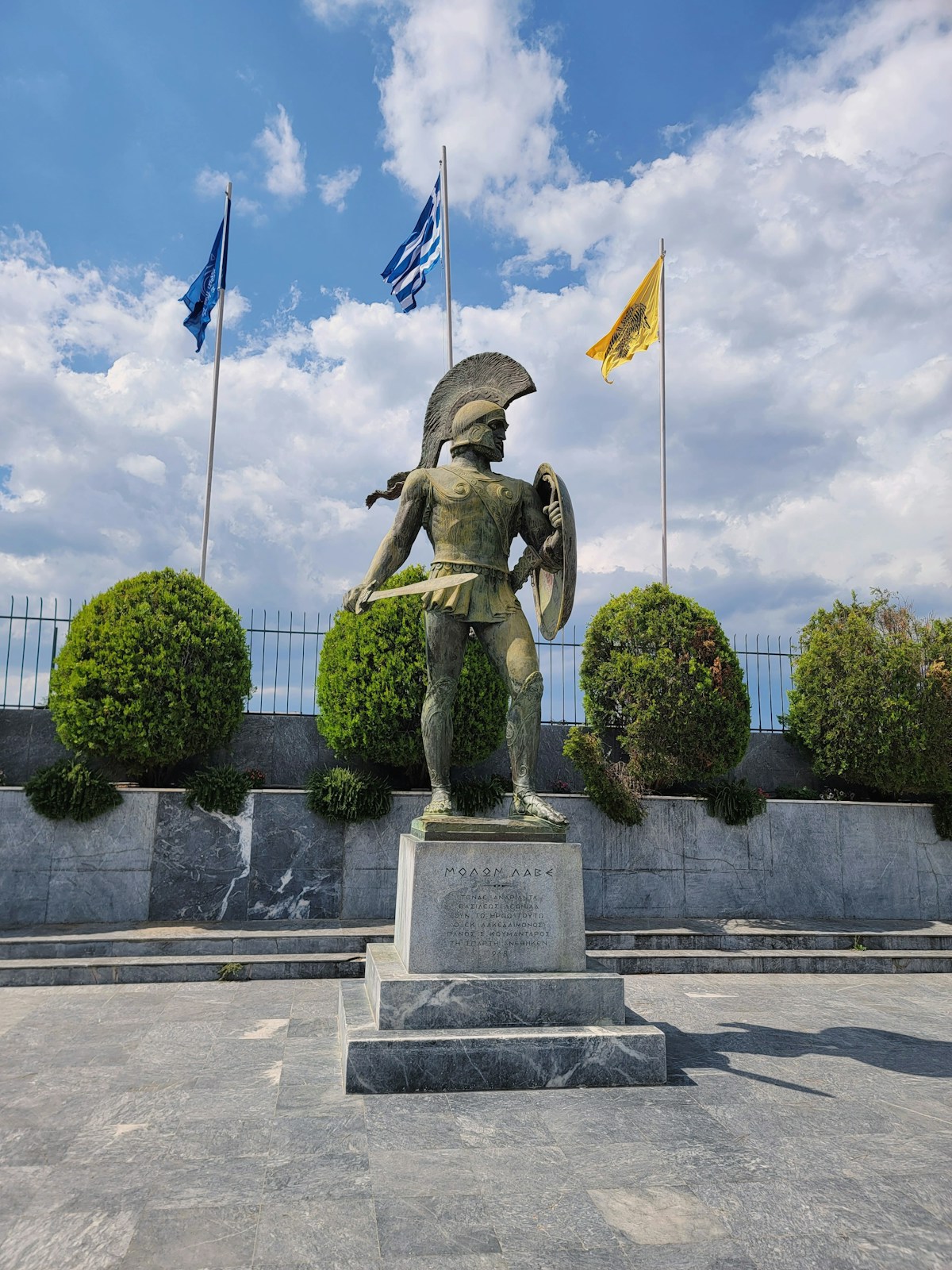
The Leonidas Monument, a bronze statue of the Spartan king, stands on Konstantinou Palaiologou Street in the town centre - the obvious photograph and a focal point for the town’s fierce pride in its ancient identity.
For a full rundown of what to see in the area, see our things to do in Sparta guide.
Mystras: Byzantine Ghost City
Mystras is 6km west of Sparti and deserves its UNESCO World Heritage status. Built on a steep spur of the Taygetos range, it was the last major Byzantine capital before the Ottoman conquest in 1460. What remains is a ghost city: churches with original frescoes, a palace complex, monasteries, and fortifications spread across a hillside.
The frescoes in the Peribleptos monastery are among the finest surviving examples of late Byzantine painting anywhere - they date from the mid-14th century and show a naturalism and emotional range that prefigures the Renaissance. The Pantanassa monastery is still occupied by a small community of nuns.
Allow 3–4 hours for the full site. Start early in summer - the path is steep and exposed. The lower entrance is easier to drive to; the upper entrance gives access to the castle first and lets you walk downhill.
Entry: Approximately €12 adult (combined site ticket, as of 2026). Open daily - hours vary seasonally, typically 8am–8pm in summer, 8am–3pm in winter.
Where to Stay in Sparta
Sparta has a modest but sufficient range of accommodation, almost entirely in Sparti town itself.
Budget (under €60/night): Hotel Cecil (central location, simple rooms, from approximately €45) and Hotel Laconia (clean and well-positioned, from approximately €50) are reliable options.
Mid-range (€70–120/night): Maniatis Hotel (the most established hotel in town, on the main Palaiologou Street, professional staff, from approximately €85) and Sparta Team Hotel (quieter, good breakfasts, from approximately €80) are the best options in this bracket.
Upmarket: Sparta has limited luxury options. If comfort is the priority, consider staying in Nafplio (90km north) or Kalamata (60km southwest) and visiting Sparta and Mystras as day trips.
For restaurant recommendations - tavernas serving Laconian sausage, slow-cooked lamb, and local olive oil - see our Sparta restaurants guide.
How to Get to Sparta
By bus: KTEL services from Athens (Kifissos Bus Terminal) run several times daily to Sparti bus station, approximately 3.5 hours, around €22–25 as of 2026. There are also connections from Tripoli, Kalamata, and Nafplio.
By car: From Athens, take the E65/A7 (Corinth–Tripoli motorway) then continue south on the E961 through Tripoli to Sparti. Total distance approximately 230km; allow 2.5–3 hours. Parking in Sparti town is free and easy. A car is strongly recommended if you plan to explore the Mani Peninsula or Monemvasia after Sparta.
By train: There is no direct rail connection to Sparti. The nearest major rail hub is Corinth, from which you would need a bus or car.
Day Trips from Sparta
Sparta sits in a strong position for Peloponnese exploration. The main day trip options:
Mystras (6km): The Byzantine ruins above the town - see above. Easy half-day.
Monemvasia (90km): A medieval fortress town built on a rock connected to the mainland by a causeway. One of the most dramatic townscapes in Greece. Allow a full day - the drive through the Laconian countryside is part of the appeal.
The Mani Peninsula (starting from 70km): Greece’s most austere landscape - tower houses, medieval villages, and a coastline with almost no tourist infrastructure. The deep Mani (Exo Mani and Mesa Mani) is worth a full day or an overnight.
Nafplio (90km): The most elegant small city in the Peloponnese, with a Venetian old town and a clifftop castle. Manageable as a day trip.
For organised excursions and guided tours around Sparta and the Peloponnese, GetYourGuide lists options departing from Athens and from within the region.
See also: day trips from Sparta for driving distances, timings, and what to prioritise.
See Also
- Things to Do in Sparta - Archaeological Museum, ancient ruins, Mystras, and outdoor options
- Best Restaurants in Sparta - Laconian cuisine, tavernas, and where locals eat
- Day Trips from Sparta - Monemvasia, the Mani Peninsula, Nafplio, and more
Frequently Asked Questions
- Is Sparta worth visiting?
- Yes, particularly if ancient history is your interest. The ruins of ancient Sparta are less dramatic than Olympia or Delphi, but the Archaeological Museum is excellent, and Mystras - a UNESCO World Heritage site 6km away - is one of the finest Byzantine ruins in Greece. The combination makes Sparta a rewarding two-day stop.
- How do I get to Sparta from Athens?
- KTEL buses from Athens (Kifissos Bus Terminal) to Sparti run several times daily; journey time is approximately 3.5 hours and tickets cost around €22–25 as of 2026. By car, it is 230km via the E65/A7 Corinth–Tripoli motorway, taking approximately 2.5–3 hours. There is no direct train.
- How many days do you need in Sparta?
- Two days is the sweet spot. Day one covers the Archaeological Museum and the ancient Sparta site within town. Day two is Mystras - allow 3–4 hours for the ruins and views. If you are also visiting Monemvasia or the Mani Peninsula, three days gives you more breathing room.
- What is the best time to visit Sparta?
- Spring (April–May) and autumn (September–October) are ideal - temperatures in the 20s°C, lower crowds, and the olive groves and Taygetos mountains look their best. July and August can exceed 38°C in the Laconian plain; Mystras in particular is brutal midday. Avoid peak summer unless you start very early.
Book an experience
Top experiences in Sparta
Explore the best tours and activities in Sparta, with instant confirmation and free cancellation on most bookings.